
Want a houseplant that stays small, forgives the odd missed watering and comes in more shapes than you can count? Peperomias fit the bill. Some form neat rosettes, some grow upright and bushy, and some trail over the edge of a hanging basket.
The baby rubber plant, Peperomia obtusifolia, is the classic, and the most widely produced peperomia. The watermelon peperomia is probably the best-known species. The rest of the genus is waiting to be explored.
Here’s a tour of the peperomia types you’re most likely to find, grouped by how they grow, with the basics that keep all of them happy.
Peperomia at a Glance
- Genus: Peperomia, over 1,000 species
- Family: Piperaceae, the black pepper family
- Native range: Central and South America; wider ranges add Africa, Southeast Asia and parts of Australia
- Growth habits: Rosettes, upright or bushy plants, and trailing or vining plants
- Size: Most stay small; listings range from 6 to 12 inches high and wide to 8 to 15 inches
- Light: Bright, indirect light; no direct sun
- Water: Let the mix dry out between waterings
- Soil: Well-drained houseplant or cactus potting mix
- Common problems: Root rot from overwatering; mealybugs, spider mites, fungus gnats, scale and whiteflies
- Pets: Most are considered safe for pets; several are listed as non-toxic
What Is a Peperomia?
Peperomias are small, herbaceous perennials in the black pepper family. NC State Extension says the genus name comes from the Greek peperi (pepper) and homoios (resembling), a nod to their relative, the black pepper plant, Piper nigrum. It counts over 1,000 species, as do Clemson Extension and UF/IFAS.
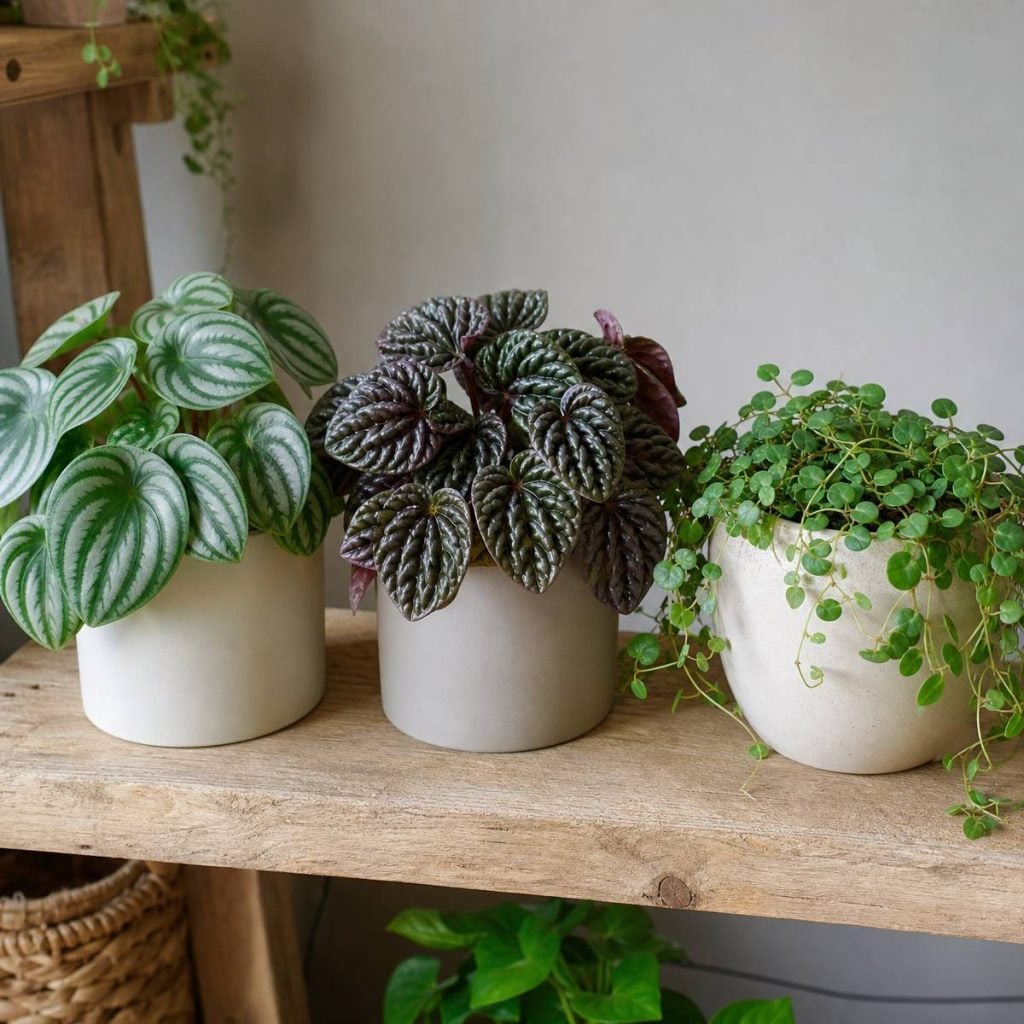
Peperomias are native to Central and South America, where they live in the forest understory, and many are epiphytes: they grow on another plant for support, the way many orchids and bromeliads do, without harming it. Range descriptions vary; wider ones also take in Africa, Southeast Asia and parts of Australia.
Only a few of those 1,000-plus species are grown widely. Over 100 are cultivated in the United States, many of them by collectors, and some forms seen in the trade have never been properly named. So don’t be surprised when two nurseries sell the same plant under different names. The Royal Horticultural Society warns that peperomias are sold under a confusing array of common names and suggests checking the label for the botanical name.
Are Peperomias Succulents?
Many of them are close. Many peperomias have thick, fleshy leaves similar to succulents, and many species are succulent and can store water in their fleshy leaves. Here’s why: plants that grow high in the tree canopy have less access to water, so many developed fleshy leaves to store moisture. Most still come from shady, humid forests, and only a few succulent species from drier habitats need a free-draining cactus compost.
Growing All Types of Peperomia
The good news is that most peperomias want the same few things. These are the genus-wide basics; each variety guide linked below has the details.
Light. Choose indirect light from an east- or south-facing window; peperomia can even tolerate somewhat low light near a large north-facing window. They prefer bright indirect light but tolerate low light. Direct sun can scorch the leaves.
Water. Peperomia prefers to dry out between waterings, and an overwatered plant drops its leaves. Water, let the pot drain, then put it back in its saucer. Root rot and yellowing or curling leaves point to overwatering, and peperomia roots are very sensitive to waterlogged soil. If you have had a peperomia rot on you before, try again and simply water less often.
Soil and pots. Use a well-drained houseplant or cactus potting mix; a peperomia can stay in the same pot for several years. When it does need a new one, go just slightly larger. Commercial growers use peat-lite mixes with coarse particles such as perlite or bark char for aeration.
Food. Feed lightly. Fertilize only while the plant is actively growing in spring and summer, with a low-strength liquid fertilizer now and then or a slow-release granular fertilizer once a year.
Warmth and humidity. The common name radiator plant refers to the genus’s preference for warm conditions, so protect peperomias from cold drafts. Most do fine in ordinary household humidity, though a humidifier helps in a very dry home and in winter. Peperomias are happy at 65 to 86°F (18 to 30°C); keep them always above 50°F (10°C). If you summer your plants outdoors, wait until nights stay at 60°F or higher, then keep them in bright shade out of direct sun.
Water quality. Peperomias are sensitive to fluoride in tap water, which can turn leaf tips brown, so use rainwater or filtered water when possible.
Pests and diseases. Mealybugs, spider mites, fungus gnats, scale and whiteflies are the pests most often found on peperomias. Root rot is the most common disease, and fungal leaf spots can be prevented by keeping the leaves dry when you water.
Go deeper with our guides to peperomia plant growing and care, controlling peperomia pests and diseases and how to propagate peperomia.
Rosette-Forming Peperomia Varieties
In this group the plants are nearly stemless, and the leaves rise on long stalks from the center to form a neat rosette. The watermelon, emerald ripple and ivy-leaf peperomias are usually propagated from leaf cuttings.
Watermelon Peperomia (Peperomia argyreia)
The watermelon peperomia is sold as Peperomia argyreia. It is also spelled Peperomia argyraea, and Peperomia sandersii is its former name. It forms a rosette of slightly cupped, dark green leaves with silvery-gray zones radiating from the center, on long reddish leaf stalks. It is probably the best-known species.
It is a small, bushy plant that grows to 8 inches tall, which makes it a good fit for an office or a small space. Its native range is northeastern and southeastern Brazil.
Ivy Peperomia (Peperomia griseoargentea)
Peperomia griseoargentea, also called P. hederifolia, is the ivy-leaf peperomia: a rosette of silvery-green, glossy, nearly round leaves on long stalks, with slightly sunken veins darker than the rest of the leaf. It is also listed as platinum peperomia and silver leaf peperomia. Kew’s World Checklist of Vascular Plants, as carried by the Global Biodiversity Information Facility (GBIF), gives its native range as southeastern Brazil.
Emerald Ripple Peperomia (Peperomia caperata)
Peperomia caperata, the emerald ripple or ripple peperomia, is one of the most popular types. The Missouri Botanical Garden describes a dense, mound-forming plant that typically grows to 8 inches tall and as wide, with wrinkled, deeply corrugated, heart-shaped dark green leaves on long red-tinged stalks. Sizes vary, and the bushy plants can reach 10 inches. It is native to Brazil.
In summer and early fall it sends up thin spikes of tiny whitish-green flowers reminiscent of mouse tails. Removing the spikes lets the plant put its energy into leaves.
There are many caperata cultivars, including ‘Emerald Ripple’, ‘Red Ripple’ (bright purplish red leaves that turn light green as they mature), ‘Burgundy’, ‘Pink Lady’, ‘Silver’ and these two with their own guides:
- Peperomia Frost: silvery green leaves, small and pointed
- Peperomia Rosso: thin, pointed dark green leaves, red on the underside (often listed here, but the US plant patent for ‘Eden Rosso’ says it came from crossing Peperomia marmorata with P. metallica)
See also the crinkle leaf peperomia.
Peperomia Albovittata ‘Piccolo Banda’
Peperomia albovittata ‘Piccolo Banda’ is compact and semi-succulent, with silvery green leaves, dark veins and fleshy red stems. The species is native to Ecuador.
More Rosette and Mounding Types
These popular cultivars have their own care guides:
Upright and Bushy Peperomia Types
These grow on visible stems, upright at first, and many sprawl with age. This group, the baby rubber plant and the red edge peperomia, is usually propagated by stem cuttings.
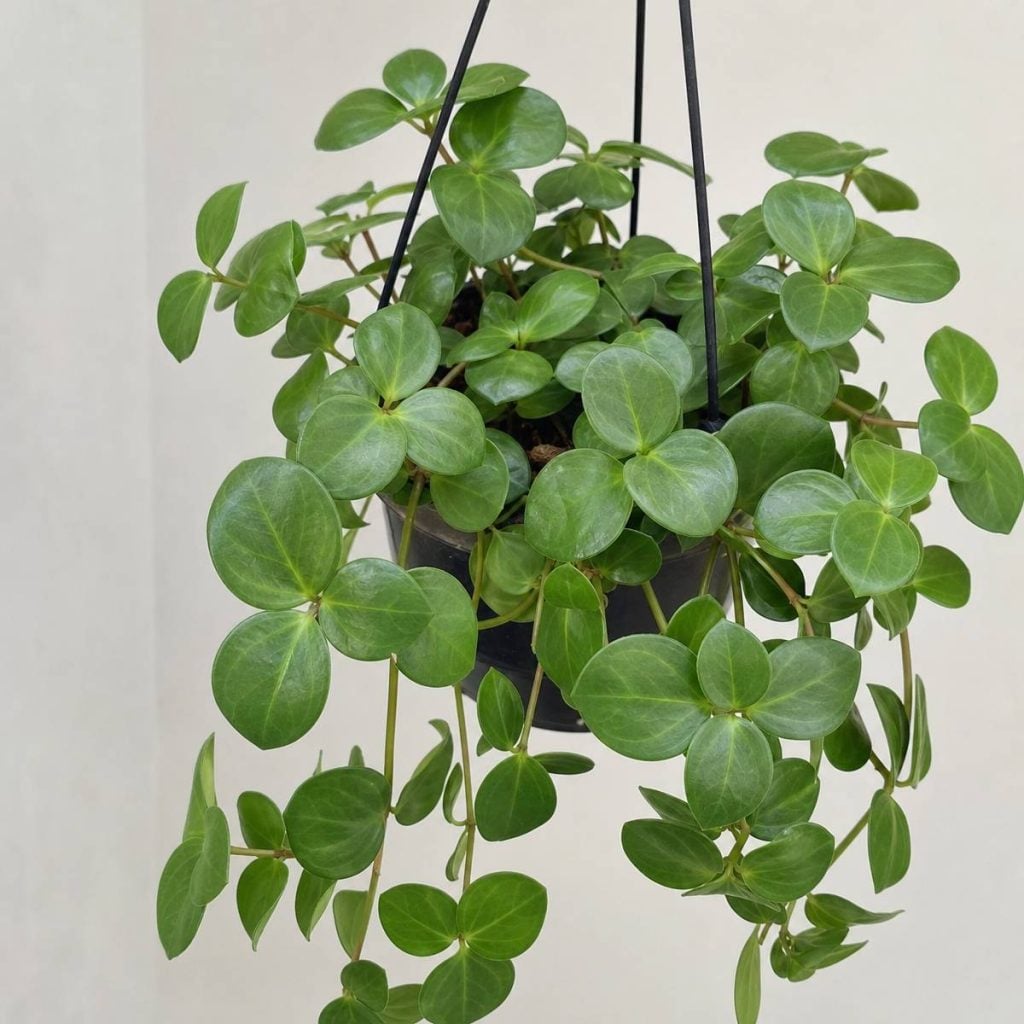
Baby Rubber Plant (Peperomia obtusifolia)
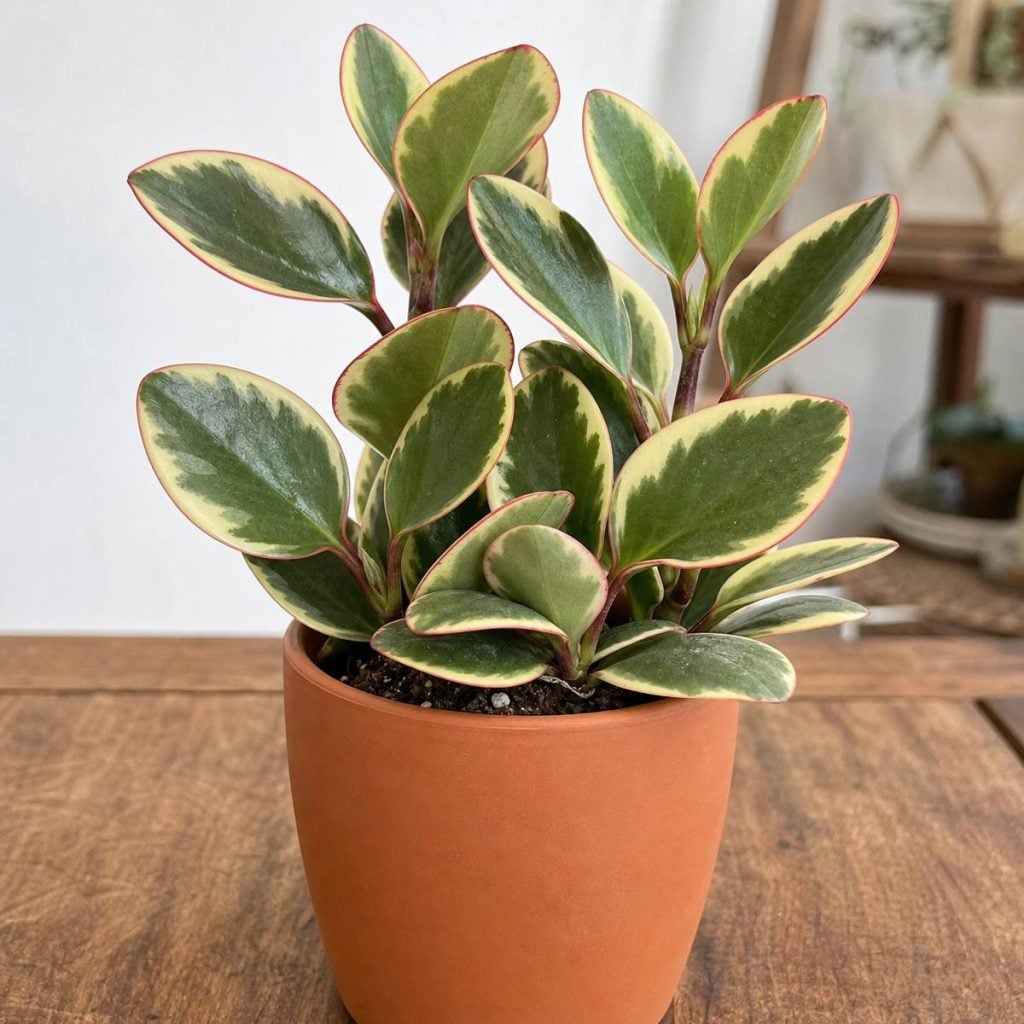
The baby rubber plant also goes by pepper face and American rubber plant. It is an upright, sprawling plant with dark green, glossy, nearly oval leaves, native to Florida as well as tropical America and parts of the Caribbean. Sizes vary by source, from seldom taller than 12 inches to as much as 2 feet. It is very easy to grow, with low water needs.
It comes in several forms, including these cultivars:
- Variegata: leaves with a creamy white border around a central zone of dark green and grayish green
- ‘Minima’: a compact form about half the size of the species, with leaves 1 to 2 inches long
- ‘Marble’: a variable pattern of dark green, creamy white and grayish green
- ‘Albomarginata’: grey-green leaves with a silvery border
- ‘Alba’: new growth entirely white-yellow, marked with bright red
Red Edge Peperomia (Peperomia clusiifolia)
Peperomia clusiifolia looks like a bigger baby rubber plant: it is similar in habit and leaf shape to P. obtusifolia, only slightly larger, with more elongated leaves edged in dark red. It is its own species, though it was previously known as Peperomia obtusifolia var. clusiifolia. It is native to Jamaica, and its common names include jelly plant, red edged peperomia and red edge peperomia. It grows up to 12 inches tall. This plant is sometimes called the baby rubber plant too, a name more often given to P. obtusifolia, so check the botanical name on the label.
Cultivars include ‘Ginny’, ‘Jelly’, ‘Red Margin’ and ‘Variegata’. The best known is Peperomia ‘Ginny’, a tricolor variegated cultivar with green and cream leaves and a pink edge. It is slow-growing.
Raindrop Peperomia (Peperomia polybotrya)
Peperomia polybotrya is the raindrop plant, named for its shiny, green, teardrop-shaped leaves, and it grows to 12 inches tall and wide. It is often mistaken for the Chinese money plant (Pilea peperomioides), but it is easier to grow. Its native range is Colombia, Ecuador and Peru. Read more in our Peperomia Raindrop guide.
Belly Button Peperomia (Peperomia verticillata)
Peperomia verticillata, the belly button peperomia, is an upright grower with leaves green on top and red underneath, on red stems. You’ll also see it sold as Peperomia rubella, a name now treated as a synonym of P. verticillata. Its native range is Cuba, the Dominican Republic, Haiti and Jamaica.
Ruby Glow (Peperomia graveolens)
Peperomia graveolens ‘Ruby Glow’ is fleshy and succulent, with V-shaped leaves that are green on top and red underneath, on red stems. Its native range is Ecuador.
Pincushion Peperomia (Peperomia ferreyrae)
Peperomia ferreyrae has bright green, slender, bean-like leaves and is drought tolerant. Its native range is Peru.
Peperomia Nivalis
Peperomia nivalis has oval leaves shaped like taco shells. Its native range is Peru.
Felted Peperomia (Peperomia incana)
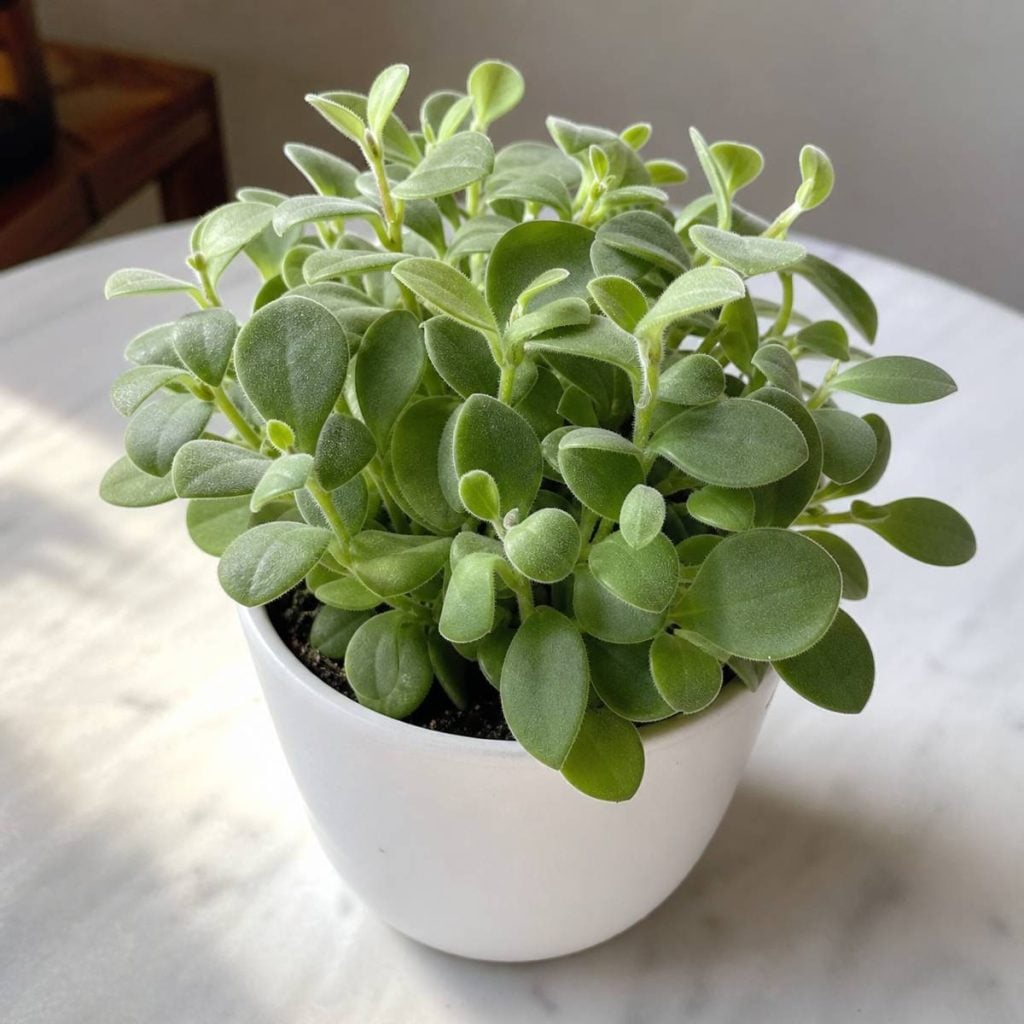
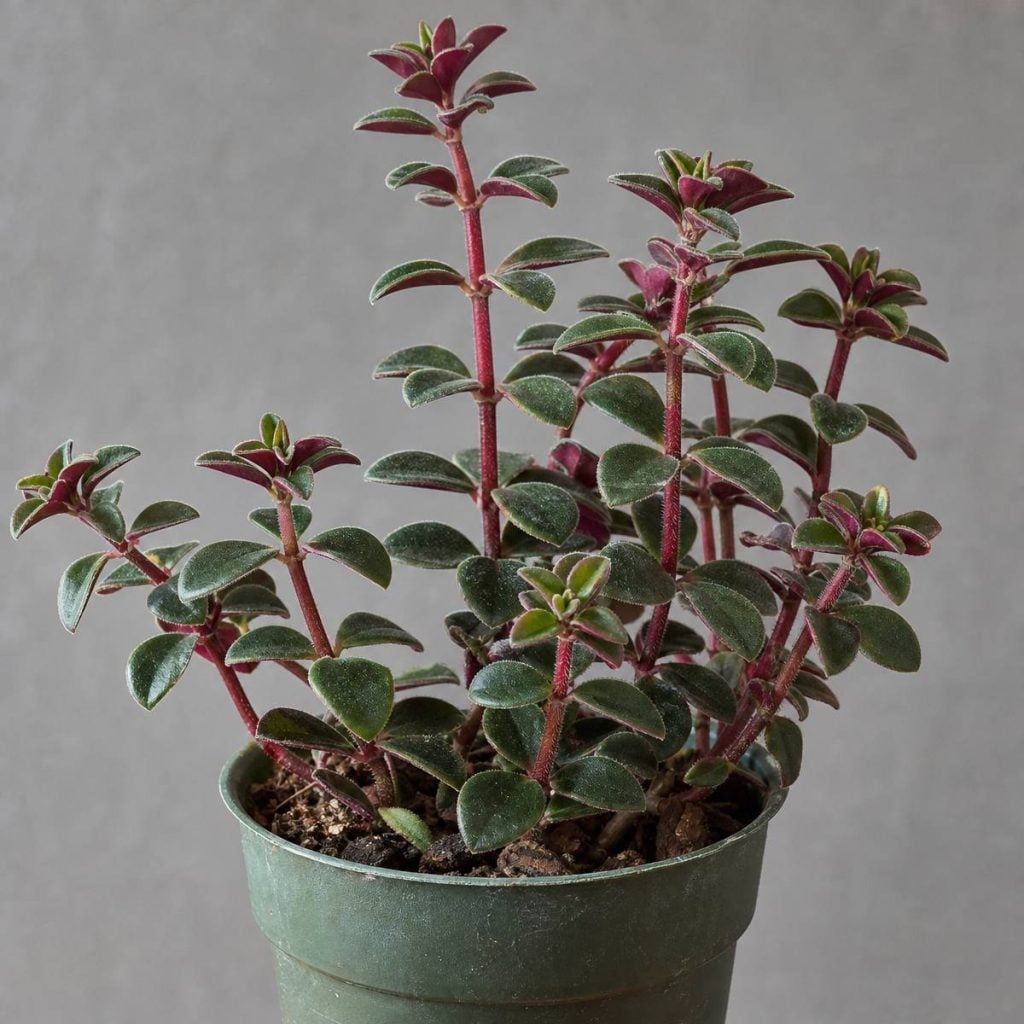
Peperomia incana has a rambling habit, thick stems and oval, grayish-green leaves covered with fuzzy white hairs. Its native range is northeastern and southeastern Brazil.
Prayer Peperomia (Peperomia dolabriformis)
Peperomia dolabriformis, the prayer peperomia, is a curiosity: its thick, fleshy leaves are folded together, a bit like pea pods or small purses. Its native range is Ecuador and Peru.
Peperomia Pixie (Teardrop Peperomia)
Peperomia Pixie is sold as Peperomia orba ‘Pixie’, or teardrop peperomia. The International Plant Names Index records that Peperomia orba was described in 1966 from cultivated material, so its wild origin is not recorded.
Peperomia Pepperspot
Peperomia Pepperspot has its own care guide.
Trailing and Vining Peperomia Types
The prostrate (trailing) peperomias suit hanging baskets or pots, while upright and rosette types look best in pots. Some species are perfect for hanging baskets and others for terrariums.
String of Turtles (Peperomia prostrata)
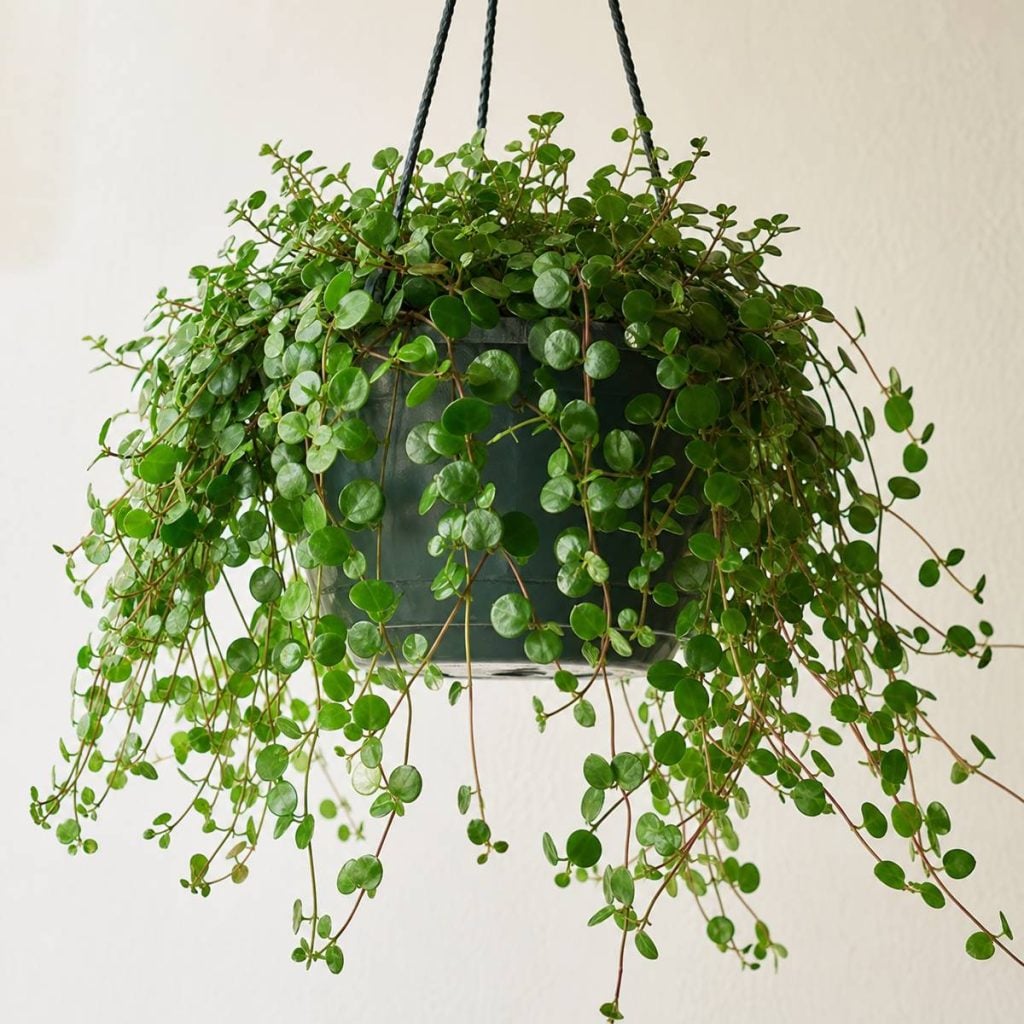
Peperomia prostrata, the string of turtles, is a delicate trailing plant with tiny, round, succulent leaves marbled like a turtle’s shell, on stems that reach about 12 inches at maturity. It is native to the wet tropical areas of Ecuador, and it is sensitive to being overwatered.
Creeping Buttons (Peperomia rotundifolia)
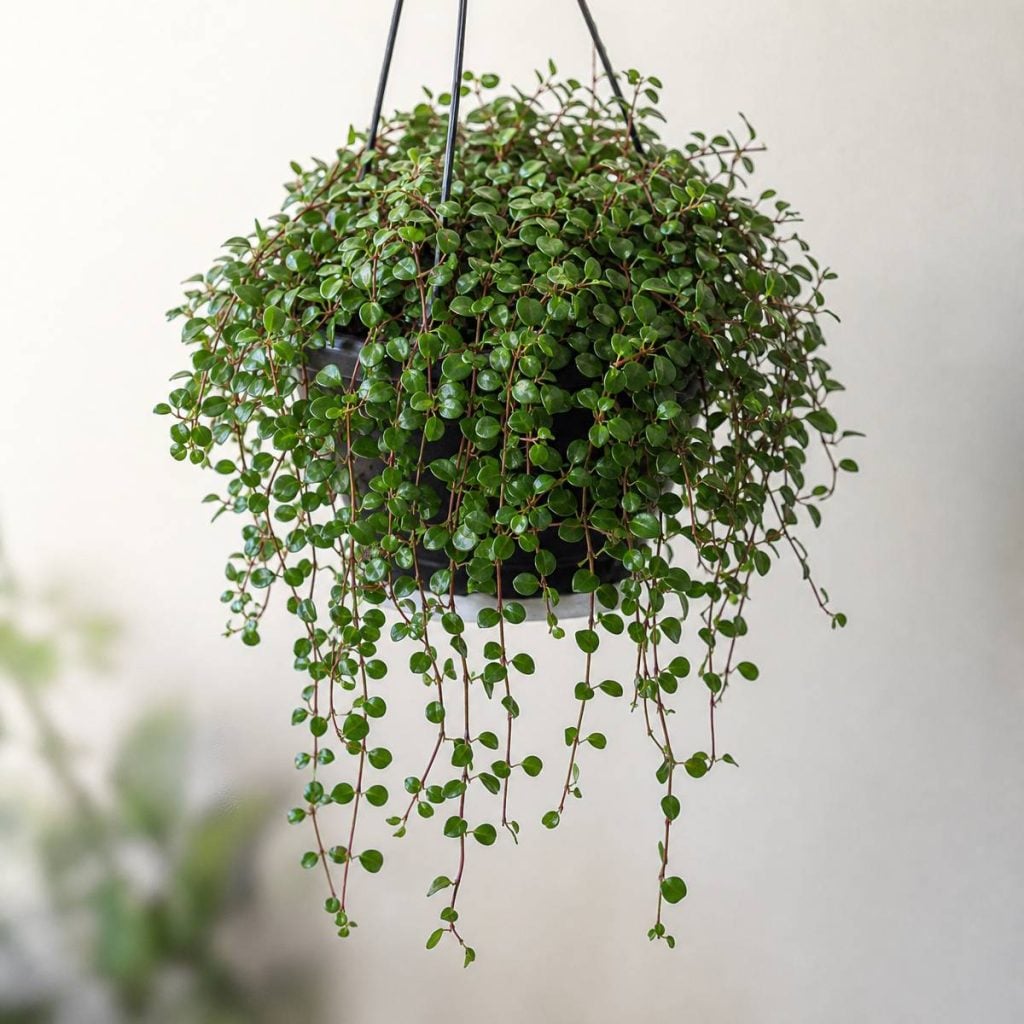
Peperomia rotundifolia goes by creeping buttons or Yorba Linda. It looks similar to the string of turtles, but its leaves are larger, less marbled and closely spaced on the stem, in solid green or variegated forms, with a trailing, bushy habit with small, thin, green leaves.
Cupid Peperomia (Peperomia serpens)
Peperomia serpens, formerly Peperomia scandens, is the cupid or vining peperomia. Its glossy, mid-green, heart-shaped leaves closely resemble a philodendron, and there is a variegated form. Plant it in a hanging basket or pot where it can trail. It is also listed as the false-philodendron peperomia, and it and its cultivar ‘Variegata’ are often used in hanging baskets. See also our Peperomia scandens guide.
Beetle Peperomia (Peperomia quadrangularis)
Peperomia quadrangularis, the beetle peperomia, is a slow-growing trailing plant with fleshy, striped leaves, formerly known as Peperomia angulata.
Peperomia Hope
Peperomia ‘Hope’ is a modern hybrid. Its US plant patent (PP24794), issued by the US Patent and Trademark Office, names the cross Peperomia deppeana x quadrifolia, made in February 2007 in Sint-Oedenrode, the Netherlands. Yet ‘Hope’ is also listed as a cultivar of P. rotundifolia, with a low, trailing habit and miniature round green leaves. The patent describes broad, nearly round, slightly glossy leaves held opposite or in whorls of four.
Parallel Peperomia (Peperomia puteolata)
Peperomia puteolata, the parallel peperomia, has long, pointed, dark green leaves marked with lighter parallel veins. P. puteolata is now treated as a synonym of Peperomia tetragona, native to parts of South America from Ecuador and Peru to southern Brazil.
Peperomia Pellucida
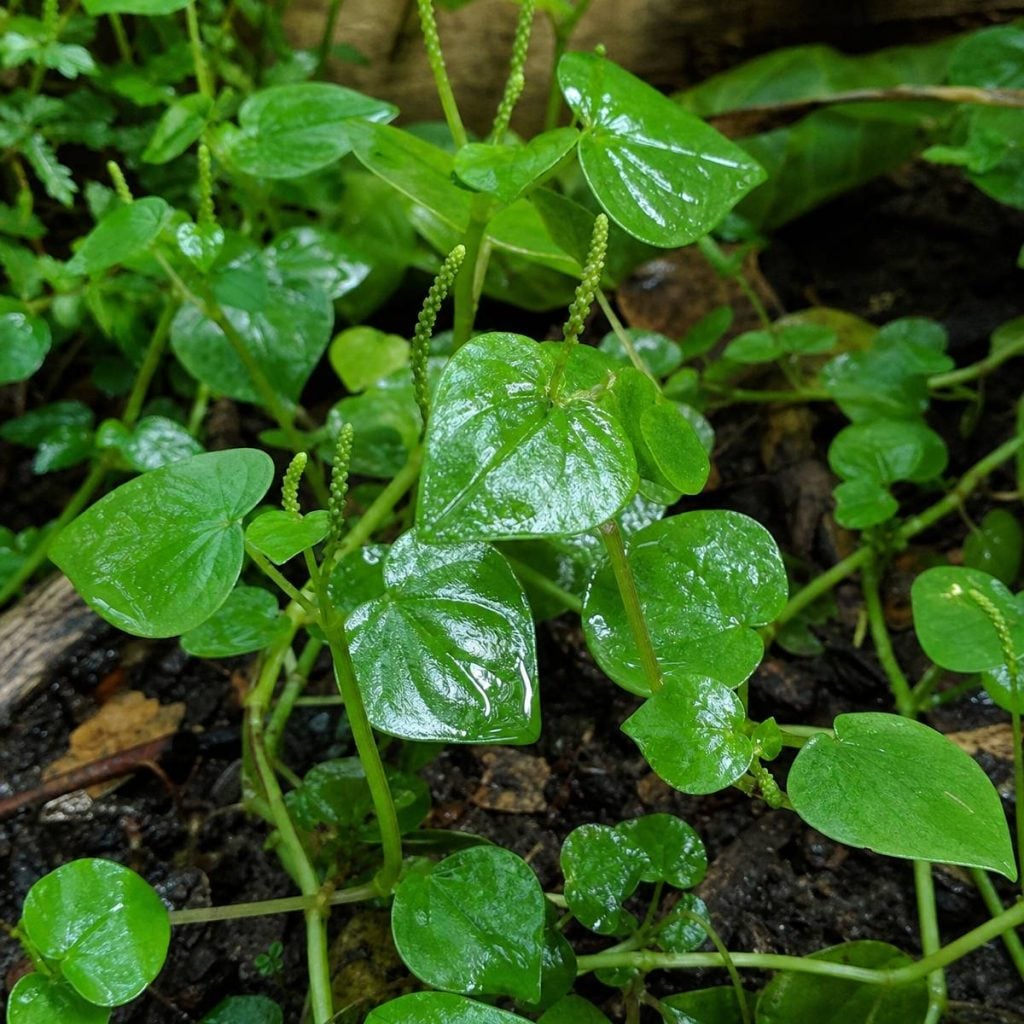
Peperomia pellucida has thin, waxy, heart-shaped green leaves with deep veins and a succulent-like look. It is one of the most widespread peperomias, native across much of tropical America and Africa.
Peperomia Metallica
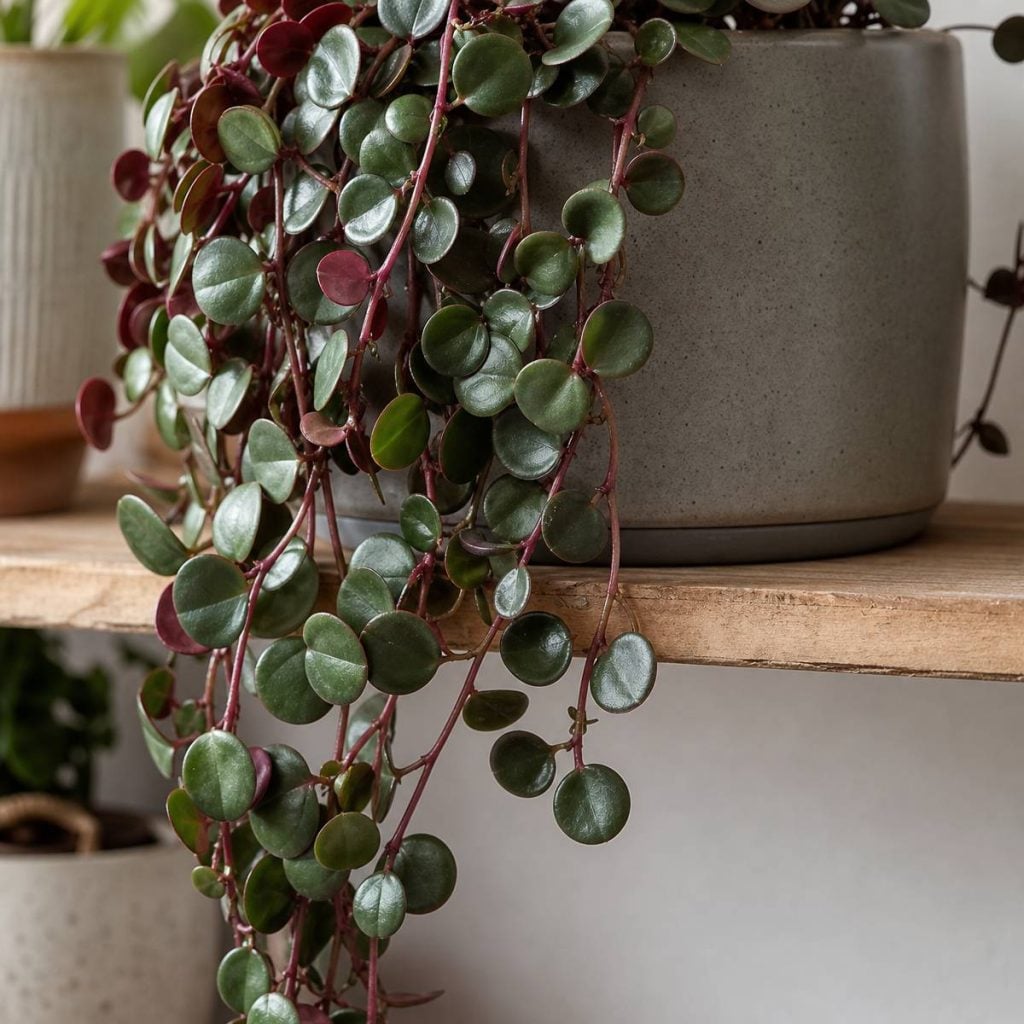
Peperomia metallica is a low, creeping plant with glossy, chocolate brown leaves, a silver stripe along the midvein and a red underside. Its native range is Peru.
Peperomia Ruby Cascade
Peperomia Ruby Cascade is another trailer with its own care guide.
Are Peperomias Safe for Pets?
Generally, yes. Most peperomia are considered safe for pets. The ASPCA lists the baby rubber plant (Peperomia obtusifolia), emerald ripple peperomia (P. caperata), watermelon peperomia (P. argyreia), red edge peperomia (P. clusiifolia) and ivy peperomia (P. griseoargentea) as non-toxic to dogs and cats. Its lists of plants non-toxic to cats and to dogs also include trailing peperomia (P. prostrata, listed as “Peperomia prostata”), vining peperomia (P. serpens ‘Variegata’) and P. rotundifolia. Not every peperomia is on the list, so check it for your plant. More in is peperomia toxic to cats?
The Bottom Line
Whichever peperomia catches your eye, the care is much the same: bright, indirect light, a well-drained mix, and water only after the mix has dried out. Get the watering right and these little plants will reward you for years. Which peperomia is your favorite? Tell us in the comments!
Frequently Asked Questions
How many types of peperomia are there?
There are over 1,000 species of peperomia. Only a few are grown widely, and over 100 species are cultivated in the United States, many of them by collectors. Add in cultivars such as ‘Ginny’, ‘Frost’ and ‘Red Ripple’, and the number of types you can buy keeps growing.
Are peperomias succulents?
Many are succulent-like. Many peperomias have thick, fleshy leaves similar to succulents, and many species store water in their fleshy leaves. Still, most houseplant peperomias come from humid tropical forests, and only a few succulent species from drier habitats need cactus compost. Either way, peperomia prefers to dry out between waterings.
What is the most popular peperomia?
The baby rubber plant, Peperomia obtusifolia, is a strong candidate: it is the most widely produced peperomia. The watermelon peperomia is probably the best-known species. The baby rubber plant is very easy to grow, and the watermelon peperomia grows to 8 inches tall. Start with our baby rubber plant guide.
Which peperomias trail or hang?
String of turtles (Peperomia prostrata), cupid peperomia (P. serpens, formerly P. scandens) and beetle peperomia (P. quadrangularis) are trailing plants, and creeping buttons (P. rotundifolia) has a trailing, bushy habit. Prostrate peperomias suit hanging baskets or pots, while upright and rosette types look best in pots. String of turtles is sensitive to overwatering.
Are peperomias safe for cats and dogs?
Most are. Most peperomia are considered safe for pets, and the baby rubber plant, emerald ripple, watermelon, red edge and ivy peperomias are listed as non-toxic to dogs and cats. Not every species is on that list, so check it for your plant. See is peperomia toxic to cats? for more.