
Want a tiny plant that looks like a handful of ruby-backed jewels? Meet Peperomia graveolens, better known as Ruby Glow peperomia.
Its fleshy, succulent, V-shaped leaves are green on top and wine red underneath, carried on red stems. It stays small, it forgives a missed watering, and it fits on any bright shelf.
You will also see it sold as Ruby peperomia or Ruby Red peperomia. Here is how to keep yours compact, colorful and out of trouble.
Peperomia Graveolens Quick Care Tips
- Botanical name: Peperomia graveolens (cultivar sold as ‘Ruby Glow’)
- Common names: Ruby Glow peperomia, Ruby peperomia, Ruby Red peperomia
- Family and origin: Piperaceae (the black pepper family); native to Ecuador
- Growability: Easy, low maintenance
- Hardiness zones: USDA 10a to 12b for the genus; grow it as a houseplant elsewhere
- Size: Small; 6 to 12 inches for peperomias in general, though some guides say 8 to 15 inches
- Flowering: Thin, greenish “rat’s tail” spikes; not showy
- Light: Bright, indirect light; no direct sun
- Temperature: Warm rooms, away from cold drafts; 65 to 86°F for peperomias, always above 50°F
- Humidity: Average home humidity is fine; a humidifier helps in a very dry winter home
- Soil: Well-drained houseplant or cactus potting mix
- Water: Let the soil dry out between waterings; let the pot drain before it goes back in its saucer
- Fertilizer: Low-strength liquid fertilizer now and then in spring and summer, or slow-release granules once a year
- Pests and problems: Mealybugs, spider mites, fungus gnats, scale, whiteflies; root rot and oedema from overwatering
- Propagation: Stem or leaf cuttings
- Pet safety: Several peperomias are listed as non-toxic; Ruby Glow is not listed
What Makes Ruby Glow Peperomia Different
Where It Comes From
Peperomia is a big genus. NC State Extension counts over 1,000 species in the black pepper family (Piperaceae), native to tropical and subtropical areas of Central and South America, Africa, Southeast Asia and parts of Australia.
Ruby Glow has a much smaller home. The species was described in 1975 by the botanists Werner Rauh and Wilhelm Barthlott, according to the International Plant Names Index. Kew’s World Checklist of Vascular Plants, as carried by the Global Biodiversity Information Facility (GBIF), gives its native range as Ecuador, and its IUCN Red List category is recorded as Vulnerable.
Leaves With a Built-In Window
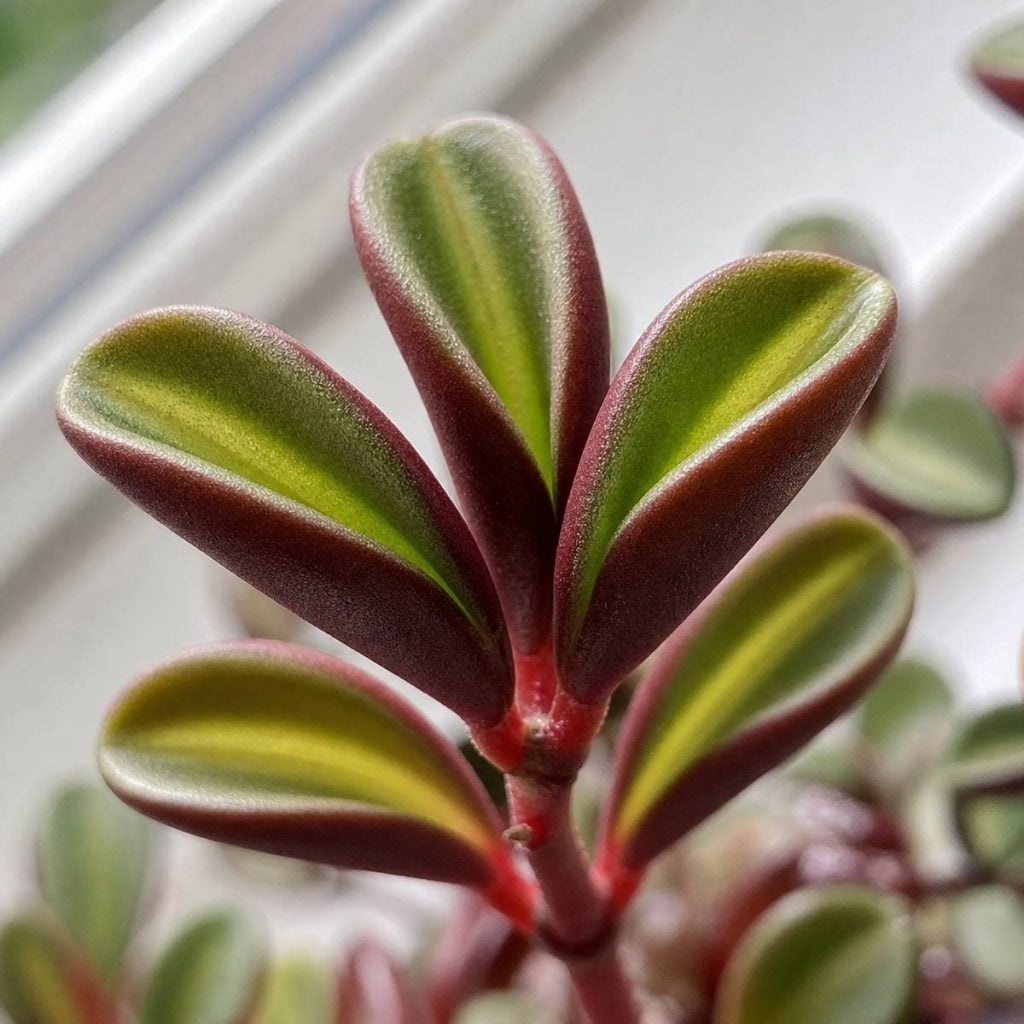
Look down at a Ruby Glow leaf and you are looking into a window. Researchers at the University of Kansas, writing in the Journal of Experimental Botany in 2008, studied six succulents with epidermal windows, including Peperomia graveolens. They found that light levels inside Peperomia leaves often greatly exceeded the light hitting the leaf, which points to a lot of light scattering and focusing inside the leaf. Covering the windows with reflective tape cut the light inside Ruby Glow leaves substantially.
Size and Growth
Ruby Glow is a small, bushy plant. Peperomias are typically slow-growing and grow 6 to 12 inches high and wide, though some guides give 8 to 15 inches for the group. Neither figure is for Ruby Glow alone, so think “tabletop plant,” not “floor plant.”
Flowers
Don’t buy Ruby Glow for the flowers. Clemson Extension says peperomia flower spikes appear in spring and summer while the plant is actively growing, are considered unattractive, and are said to resemble a rat’s tail. It adds that removing them lets the plant focus its energy on leaves. The blooms are small, non-showy, brown and greenish-white spikes, and peperomias rarely bloom as houseplants. More in our guide to the peperomia flower spike.
Peperomia Graveolens Care Tips
Light
Bright, indirect light suits Ruby Glow best. Place peperomias where they get indirect light from east- or south-facing windows. They can tolerate somewhat low light near a large north-facing window, but direct sun may scorch the leaves.
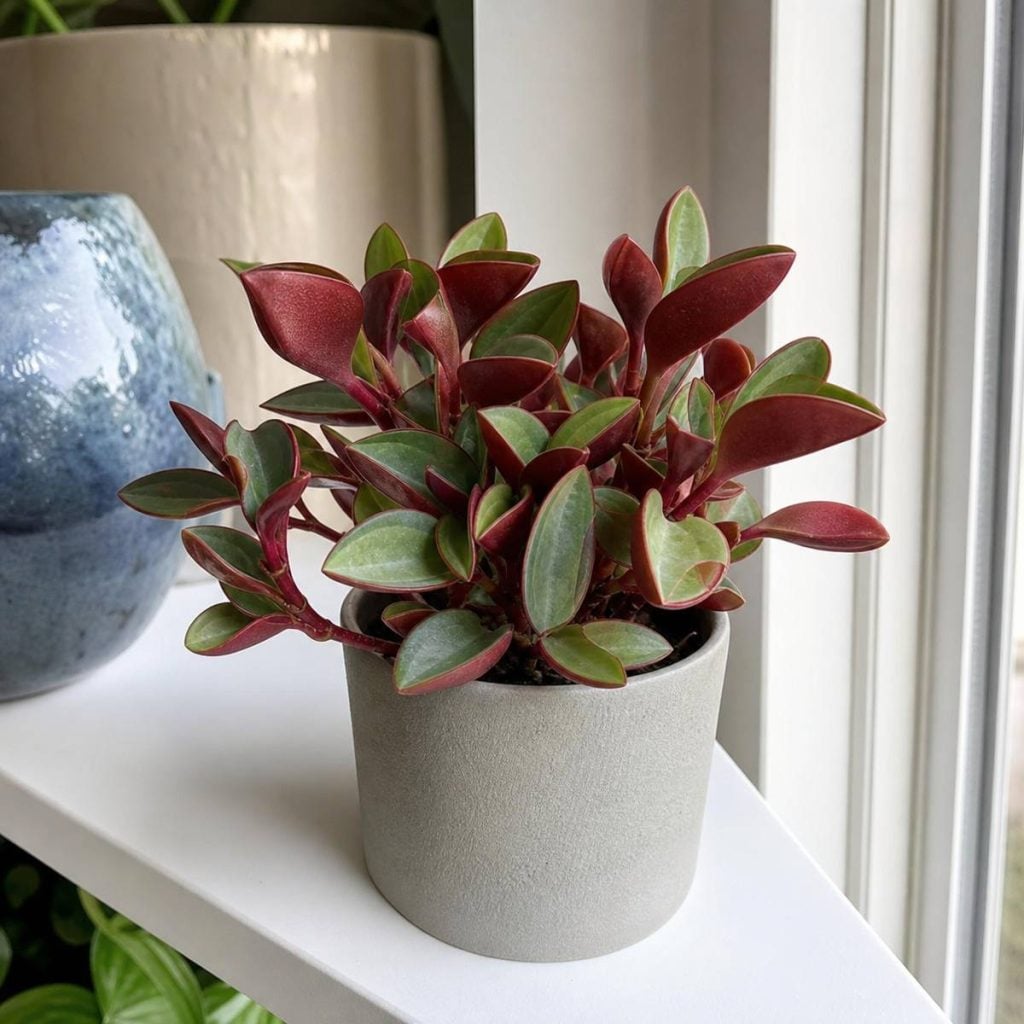
Short on window space? Ruby Glow also does well under plant grow lights. If the stems start stretching and the leaves spread out, it is asking for more light.
Temperature and Humidity
Keep it warm. Protect peperomias from cold drafts; the common name “radiator plant” refers to their liking for warm conditions. The RHS peperomia page gives 18 to 30°C (65 to 86°F) for the genus and says to keep peperomias out of cold draughts and always above 10°C (50°F). Peperomias can go outdoors for the summer only after night temperatures are consistently 60°F or higher, and then only in a bright but shady spot with no direct sun.
Humidity is easy. Peperomias can thrive in the humidity levels of most homes, but a humidifier helps if your home is very dry, especially in winter.
Watering
Most Ruby Glow problems start with the watering can. Peperomias prefer to dry out between waterings and will drop their leaves if overwatered. Water, let the pot drain, and only then set it back in its saucer. For the related baby rubber plant (Peperomia obtusifolia), it is best to err on the dry side, and the plant must have good drainage to avoid stem and root rot.
Water less in winter, when the plant grows more slowly and the soil stays wet longer. Use a pot with a drainage hole, and empty the saucer after every watering.
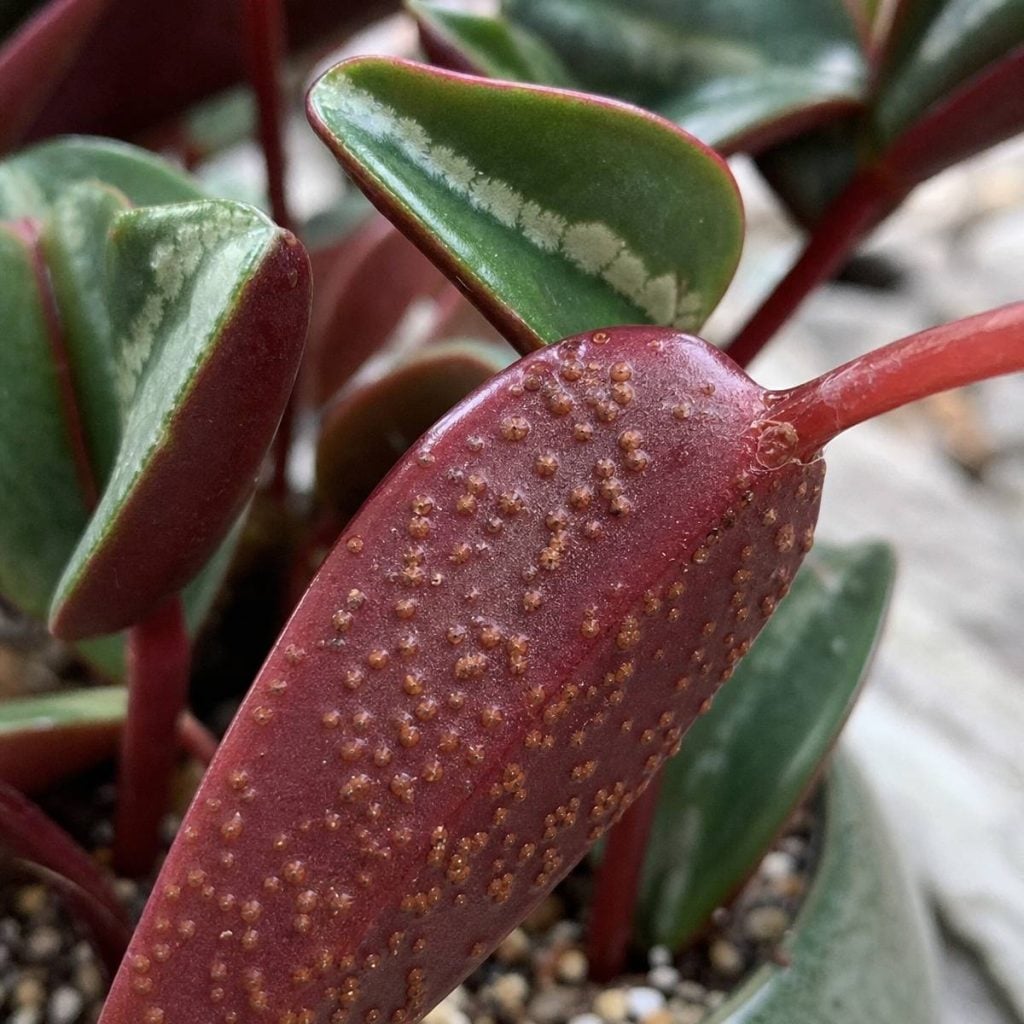
Bumps under the leaves? The Connecticut Agricultural Experiment Station describes corky scab, or oedema, on peperomia as raised, scab-like swellings on the undersides of the leaves. They start as water-soaked blisters and can turn rust-colored. It links the problem to overwatering, especially in cloudy, cool weather, and says careful attention to soil moisture keeps it down.
Soil and Repotting
Use a well-drained houseplant or cactus potting mix, or a moist, well-drained mix of loam and sand. Either way, the mix should drain fast so the roots never sit wet.
Ruby Glow does not need frequent repotting. A peperomia can stay in the same pot for several years and should go into a pot only slightly larger than the grower’s pot when you do move it. Peperomias are slow-growing and will not need repotting often.
Fertilizing
Go light. Fertilize peperomias only while they are actively growing in spring and summer, using a low-strength liquid fertilizer occasionally, or a slow-release granular fertilizer once a year. Follow the label for the amount.
Pruning and Grooming
Ruby Glow needs very little grooming. Trim off old leaves when needed, and prune a stem just above a leaf node to make the plant branch and look fuller. That same trim gives you cuttings to start new plants.
Tips On Propagating Peperomia Graveolens
Related: Check out our article on How To Propagate Peperomia.
Peperomias are easy to propagate from stem and leaf cuttings.
- Stem cuttings: Cut a 3- to 5-inch piece of stem, remove the leaves on the lower third, dip the end in rooting hormone and insert it into potting soil or a rooting medium. Cover with clear plastic and keep it out of direct sun.
- Leaf cuttings: Remove a leaf with at least an inch of its leaf stem (petiole) and insert it into a rooting medium. New plants form at the base of the leaf stem and can be potted once they grow.
Leaf cuttings, stem cuttings and division all work for peperomias, depending on the species.
Ruby Glow Pests and Diseases
Too much water is behind Ruby Glow’s most common problem. Root rot caused by overwatering is the most common disease of peperomia, and fungal leaf spots can be prevented by keeping the leaves dry when you water. Root rot and yellowing or curling leaves point to overwatering; avoid wet leaves and provide good air circulation to prevent leaf spots.
Insects show up now and then. Mealybugs, spider mites, fungus gnats, scale and whiteflies are the most frequent pests, and aphids turn up too. Mealybugs are small, soft, wax-covered insects; white, cottony egg masses are one sign of them.
For mealybugs on houseplants, UC IPM says to dab them with a solution of 70% (or less) isopropyl alcohol and water, testing a small part of the plant first and watching for leaf burn. It adds that insecticidal soaps, horticultural oils and neem oil applied directly to young mealybugs can reduce their numbers. Be aware that the sources do not agree on alcohol: UF/IFAS Extension calls alcohol phytotoxic, meaning it causes leaf burn, and says it should not be applied to plant tissues. If you use a swab, keep it to the bugs and test first. See our mealybug control guide for more options.
Is Ruby Glow Peperomia Safe for Pets?
As a group, most peperomias are considered safe for pets, and the ASPCA lists several peperomias, including the baby rubber plant (Peperomia obtusifolia) and watermelon peperomia (Peperomia argyreia), as non-toxic to dogs and cats.
Ruby Glow itself is not on that list, so the genus-wide “most are safe” line is the only pet-safety guidance available for it. It is still smart to keep any houseplant out of reach of pets that like to chew. More in are peperomias poisonous to cats.
Suggested Uses For Ruby Glow Peperomia
Small and slow, Ruby Glow is made for tight spots: desks, tabletops, shelves and bright office windows. Peperomias are perfect for a desk or tabletop, and they suit containers, terrariums and hanging baskets. Group a few in a dish garden with other plants that like to dry out between waterings.
Want more ideas? Browse our types of peperomia, or meet Ruby Glow’s window-leaved cousin, the prayer peperomia (Peperomia dolabriformis).
The Bottom Line
Ruby Glow peperomia asks for very little: bright, indirect light, a fast-draining mix, warm rooms, and a watering can you can keep in check. Let it dry out between drinks and it will keep those ruby-backed leaves glowing for years.
Do you have a Ruby Glow on your windowsill? Tell us how yours is doing!
Frequently Asked Questions
Is Peperomia graveolens a succulent?
Yes, it is a succulent peperomia. ‘Ruby Glow’ has fleshy, succulent, V-shaped leaves that are green on top with red undersides and red stems, and many peperomias have thick, fleshy leaves similar to succulents. Treat it like one at watering time: let the soil dry out between waterings and use a well-drained houseplant or cactus mix.
How often should I water Ruby Glow peperomia?
Water only after the soil has dried out. Peperomias prefer to dry out between waterings, drop their leaves when overwatered, and should drain before going back in the saucer. For the related baby rubber plant, erring on the dry side is the advice.
How much light does Ruby Glow peperomia need?
Bright, indirect light suits it best: indirect light from an east- or south-facing window, and peperomias can tolerate somewhat low light near a large north-facing window. Direct sun can scorch the leaves, so keep it out of direct sunlight.
Why does my peperomia have bumps under its leaves?
Raised, scab-like bumps on the undersides of the leaves can be oedema, also called corky scab. They start as water-soaked blisters that can turn rust-colored, and they are linked to overwatering, especially in cloudy, cool weather. Careful attention to soil moisture keeps the problem down. Let the soil dry out between waterings.
Is Ruby Glow peperomia toxic to cats and dogs?
Most peperomias are considered safe for pets, but Ruby Glow itself is not listed either way. Several other peperomias, including the baby rubber plant and watermelon peperomia, are listed as non-toxic to dogs and cats. Keep it out of reach of pets that chew plants, and call your veterinarian if a pet seems unwell. More in are peperomias poisonous to cats.