
Want more peperomias without buying more peperomias? Good news: these little plants are some of the easiest houseplants to multiply.
Peperomias are easy to propagate. As a group, peperomia cuttings are easy to root.
You have four ways to do it: stem cuttings, leaf cuttings, rooting in water and, for some species, division. The best one depends on which peperomia plant you have, and whether its leaves are variegated.
Which Propagation Method Fits Your Peperomia?
The type of cutting to use depends on the species, the variegation pattern of some cultivars and the size of plant you want. Terminal (tip) stem cuttings work with all types. Here’s how the methods line up:
- Stem cuttings: Work for every type. The baby rubber plant (Peperomia obtusifolia) is propagated by stem cuttings, and red-edge peperomia (P. clusiifolia) and P. scandens usually are.
- Leaf cuttings: The usual route for rosette types. Watermelon peperomia (P. argyreia), emerald ripple peperomia (P. caperata) and ivy-leaf peperomia (P. griseoargentea) are usually grown from leaf cuttings.
- Water: Some species, such as the baby rubber plant, are easily propagated in water.
- Division: NC State Extension lists division alongside leaf and stem cuttings, depending on the species, and division is also listed for the baby rubber plant.
- Seed: Not the usual route; peperomias are propagated commercially by cuttings.
Variegated plant? Use stem cuttings. UF/IFAS Extension says stem cuttings that have one or more buds are necessary for propagating variegated cultivars. Leaf cuttings suit the rosette types listed above.
When to Take Peperomia Cuttings
Iowa State University Extension says early spring is the ideal time to propagate houseplants by cuttings, although most houseplants can be propagated successfully any time of year. Spring also suits the parent plant: University of Arkansas Extension advises waiting for spring weather before cutting peperomias back or repotting them. Trim a leggy plant and root the trimmings at the same time.
Fall works too, for example when you bring a plant back indoors after a summer outside. Peperomias can go outdoors once nights stay at 60°F or higher, in a bright but shady spot. Cuttings taken in a cool fall house may need extra warmth (see the temperature section below).
Choose the Right Rooting Mix for Peperomia Propagation
A rooting mix has to hold both water and air. Perlite is a great rooting medium for cuttings, and popular mixtures include perlite with peat moss and sand with peat moss. Potting soil on its own often doesn’t drain or breathe well enough, so use it only as part of a mix.
Commercial growers want the same thing. Media for peperomia propagation should be very well drained and as pathogen-free as possible, and peat-lite mixes with coarse particles such as perlite are very satisfactory because they provide aeration. A simple perlite and peat moss blend fits both recommendations.
Use clean containers with drainage holes, at least 2 inches deep so cuttings stay upright, and moisten the mix before you start (Iowa State).
Steps to Follow for Peperomia Stem Cuttings
This method pulls together the steps from extension guidance:
- Pick a healthy stem. Cut a 3 to 5 inch piece, or up to 6 inches, with at least two nodes (the joints where leaves attach). Use clean, sharp pruners or a knife.
- Strip the lower leaves. Remove the leaves on the lower third of the cutting. Keep the top leaves.
- Add rooting hormone if you like. It’s optional, and too much can sometimes slow root development. Pour a little rooting hormone into a separate dish instead of dipping into the container.
- Stick the cutting. Make a hole with a pencil or chopstick, then insert the stem with at least one node below the surface and no leaves buried (Iowa State). Firm the mix around it.
- Water and drain. Water the rooting mix and let it drain for a few minutes.
- Cover loosely. Cover with clear plastic. High humidity is essential for rooting, but don’t seal the bag tightly, so air can still move. Chopsticks or straws keep the plastic off the leaves.
- Give it bright, indirect light. Keep cuttings out of direct sun. Too much light can burn foliage under plastic, while too little slows rooting.
- Check often. Moisten the mix if it dries, and adjust light, humidity or temperature as needed (Iowa State).
- Label it. Rooting more than one kind of peperomia? A plant tag saves guesswork later.
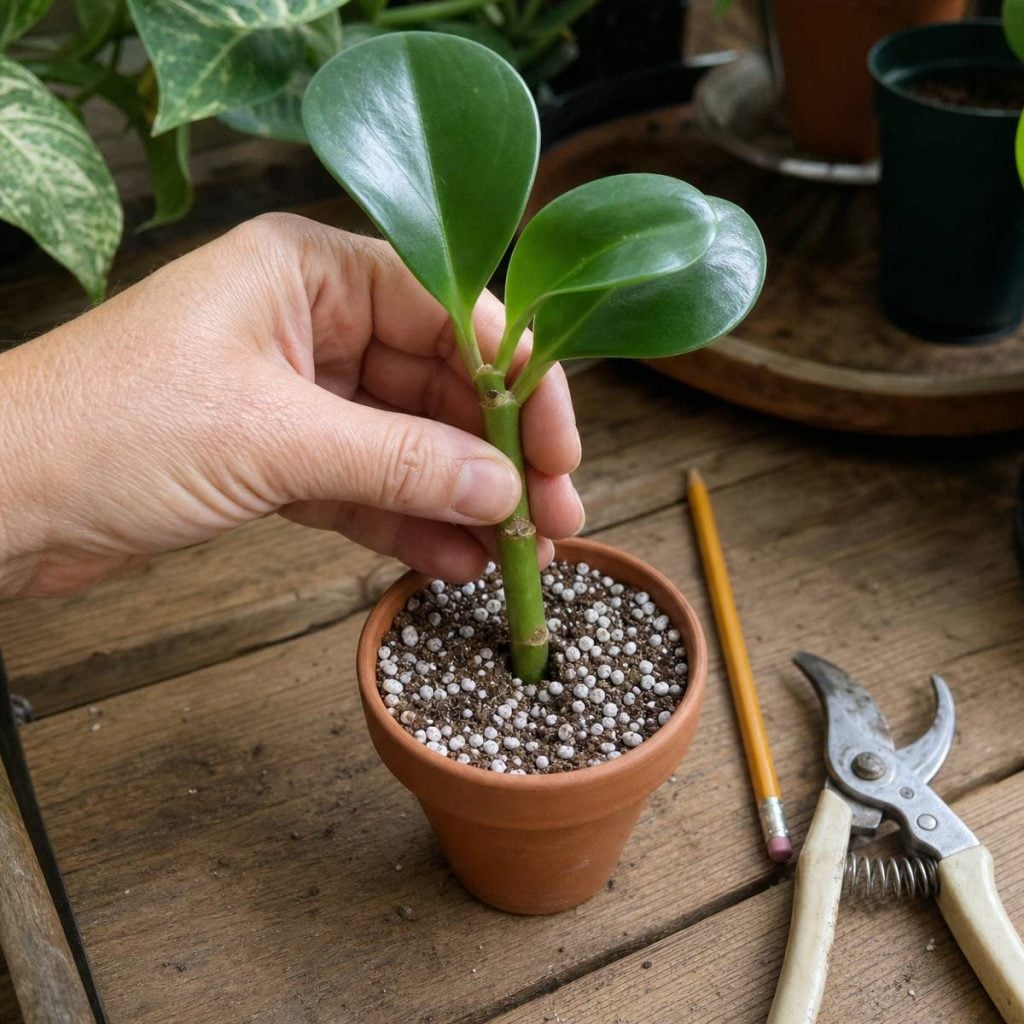
Only one or two cuttings? Root them right in a small pot. Florida growers commonly stick two tip cuttings, each with two to four leaves, in a 3-inch pot, and 3-inch pots are the size they produce most.
Temperature and Timing: How Long Until Roots?
Warmth speeds things up. For houseplants in general, cuttings root faster in warm air and rooting media, and an air temperature of 65 to 75°F is ideal. For good results, use a heat mat to bring the rooting mix to 75 to 80°F. That bottom heat is handy for fall cuttings in a cool house.
Be patient. Most houseplant stem cuttings form roots in 3 to 6 weeks. Florida growers need 3 to 5 weeks to root and finish peperomias in 3-inch pots, depending on the size of the cuttings and the season. When the roots are about an inch long, pot the new plant.
Peperomia Propagation With Leaf Cuttings

Leaf cuttings are the classic way to multiply a watermelon peperomia and other rosette types. Here’s how:
- Cut a firm, healthy leaf with a sharp knife, keeping 1 to 1½ inches of the petiole (leaf stem) attached.
- Treat the end of the petiole with rooting hormone if you want.
- Insert the petiole into the rooting mix at a 45-degree angle and firm the mix around it.
- Water, let it drain, and give the cutting the same warmth, bright indirect light and humidity as a stem cutting.
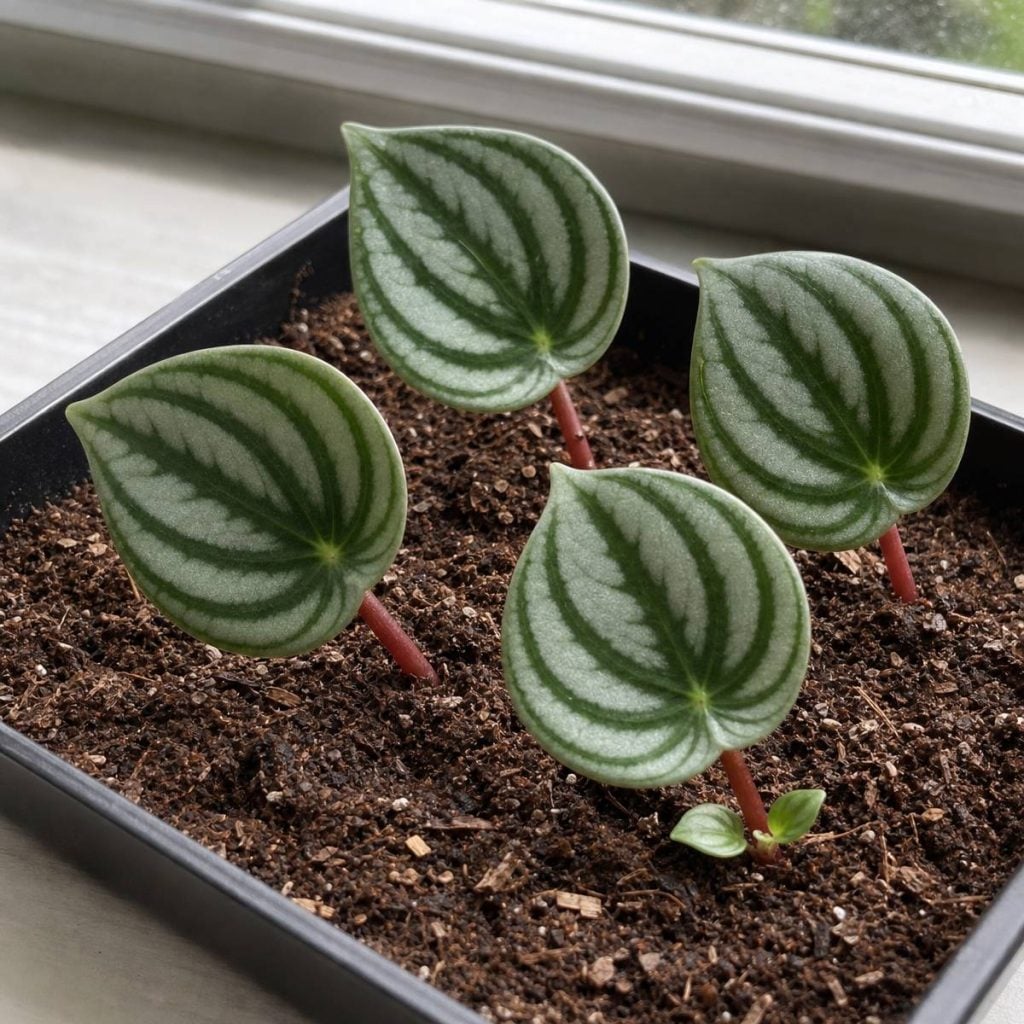
Peperomia is among the houseplants best propagated this way. Roots usually form in three to four weeks, and small plantlets appear at the base of each petiole in six to eight weeks. The new plants can then be removed and potted. Separate them by gently pulling or cutting them apart if needed. The original leaf can come off once it browns or the new plant is established, but you don’t have to remove it.
Can Peperomia Root in Water?
Yes, some can. Clemson Extension says some species, such as the baby rubber plant, are easily propagated in water. Take cuttings 4 to 6 inches long, remove the lower leaves and cut just below a leaf node. Set the cutting in a small container of water where it gets bright, indirect light. After roots and new leaves form, pot it up.
There’s a catch. Roots that form in water are coarser and not well adapted to potting soil, so a newly potted cutting may wilt, drop leaves or brown at the tips. Change the water once or twice a week, never let the water level drop below the roots, and transplant when the roots are about 1 inch long. Steady care after potting helps it recover.
So water is a place to root a peperomia, not a permanent home: the water methods end with potting the new plant.
Dividing a Peperomia
Division is the fourth option. Some peperomias can be divided, depending on the species, including the baby rubber plant. The natural time is when you repot in spring: gently separate the plant into sections that each have their own roots and leaves, and pot each one.
Caring for Your New Peperomia Plants
Peperomias have small, fine roots, so go easy on them. They have a small root system and can be easily overwatered, especially in winter, and they are usually best grown in relatively small pots and allowed to dry out a bit between waterings. Peperomia roots are very fine, easily damaged by excess salts and very sensitive to waterlogged soil.
Pot rooted cuttings in a well-drained houseplant or cactus potting mix. Peperomias prefer to dry out between waterings, and root rot from overwatering is their most common disease, so drain the pot before setting it back in its saucer. Once the young plant is established, begin regular fertilizing; for peperomias, feed only in spring and summer, when the plant is actively growing, with a low-strength liquid fertilizer used occasionally.
Is Peperomia Safe Around Pets?
Good news for pet owners. The ASPCA lists the baby rubber plant (Peperomia obtusifolia) as non-toxic to dogs and cats. Most peperomias are considered safe for pets, but check your species on that plant list before sharing cuttings.
Growing Plants from Cuttings Is a Valuable Skill
Peperomias can get leggy over time. To make a plant look fuller, prune a stem above a leaf node so the plant will branch. The bushy types can be kept compact and tidy by occasional pinching.
Those trimmings are your next cuttings. Root them, then keep the young plants, replace a tired parent, or share them with friends and family. Who wouldn’t want another watermelon peperomia?
Which peperomia are you propagating this year? Tell us in the comments!
Frequently Asked Questions
Can peperomia grow in water?
Yes, for rooting cuttings. Some species, such as the baby rubber plant, are easily propagated in water: take a 4 to 6 inch cutting, cut just below a leaf node and keep it in bright, indirect light. Water roots are coarser and may struggle in soil, so change the water once or twice a week and pot the cutting when roots reach about 1 inch.
How do you propagate a variegated peperomia?
Use stem cuttings. Stem cuttings with one or more buds are necessary for propagating variegated cultivars. Take a 3 to 5 inch piece of stem with the leaves on its lower third removed, stick it in rooting medium, cover it with clear plastic and keep it out of direct sun. Leaf cuttings suit rosette types such as watermelon peperomia.
How long do peperomia cuttings take to root?
Plan on several weeks. Most houseplant stem cuttings root in 3 to 6 weeks, and leaf-petiole cuttings usually root in three to four weeks, with small plantlets in six to eight. Florida growers need 3 to 5 weeks to root and finish peperomias in 3-inch pots. Air at 65 to 75°F is ideal for rooting.
Do peperomia cuttings need rooting hormone?
Not necessarily. Some stem-cutting steps include a dip in rooting hormone, while general houseplant guidance lists it as optional and warns that too much can sometimes slow root development. If you use powder, pour a small amount into a separate dish so you don’t contaminate the container. Peperomia cuttings, as a group, are easy to root.
What is the best soil for rooting peperomia cuttings?
A light, well-drained mix. Perlite is a great rooting medium, and perlite with peat moss is a popular mixture. Peat-lite mixes with coarse particles such as perlite are very satisfactory for peperomia because they provide aeration. Once the cuttings root, use a well-drained houseplant or cactus potting mix.