
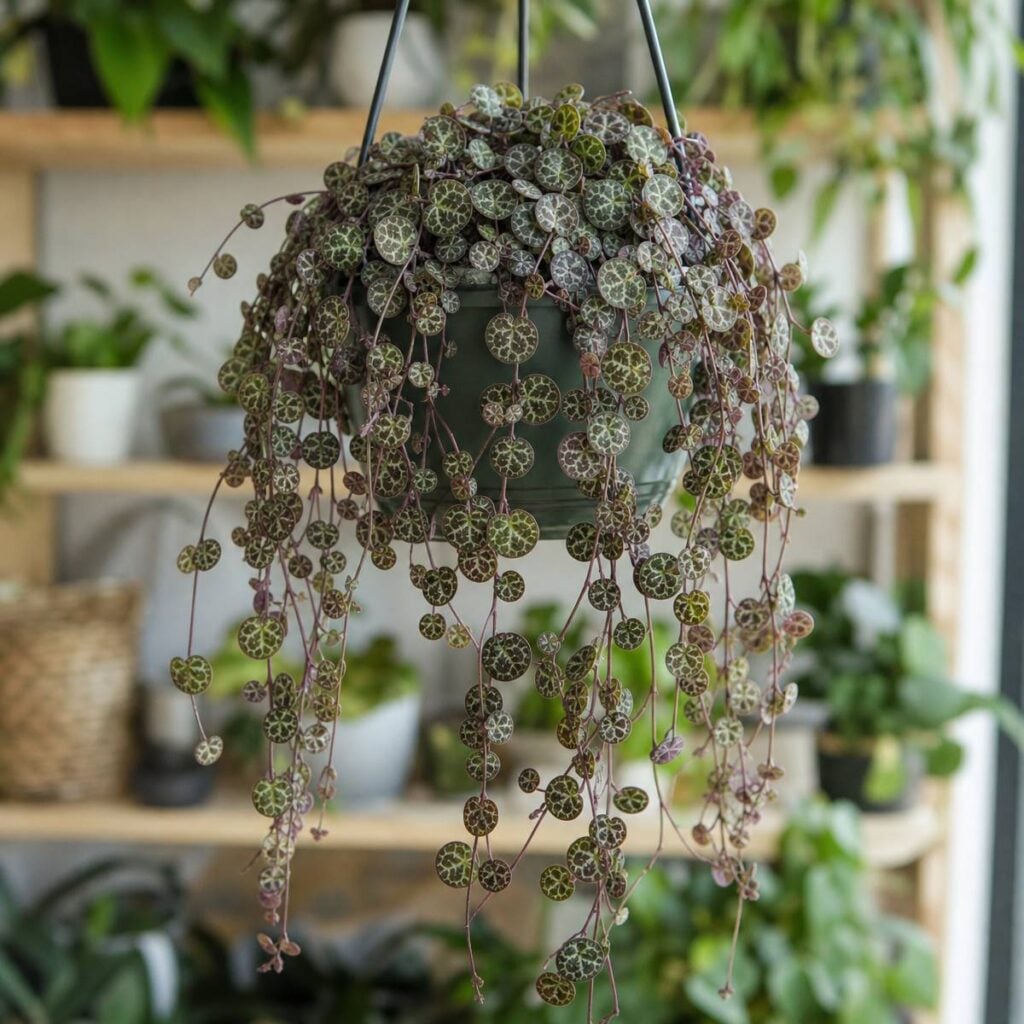
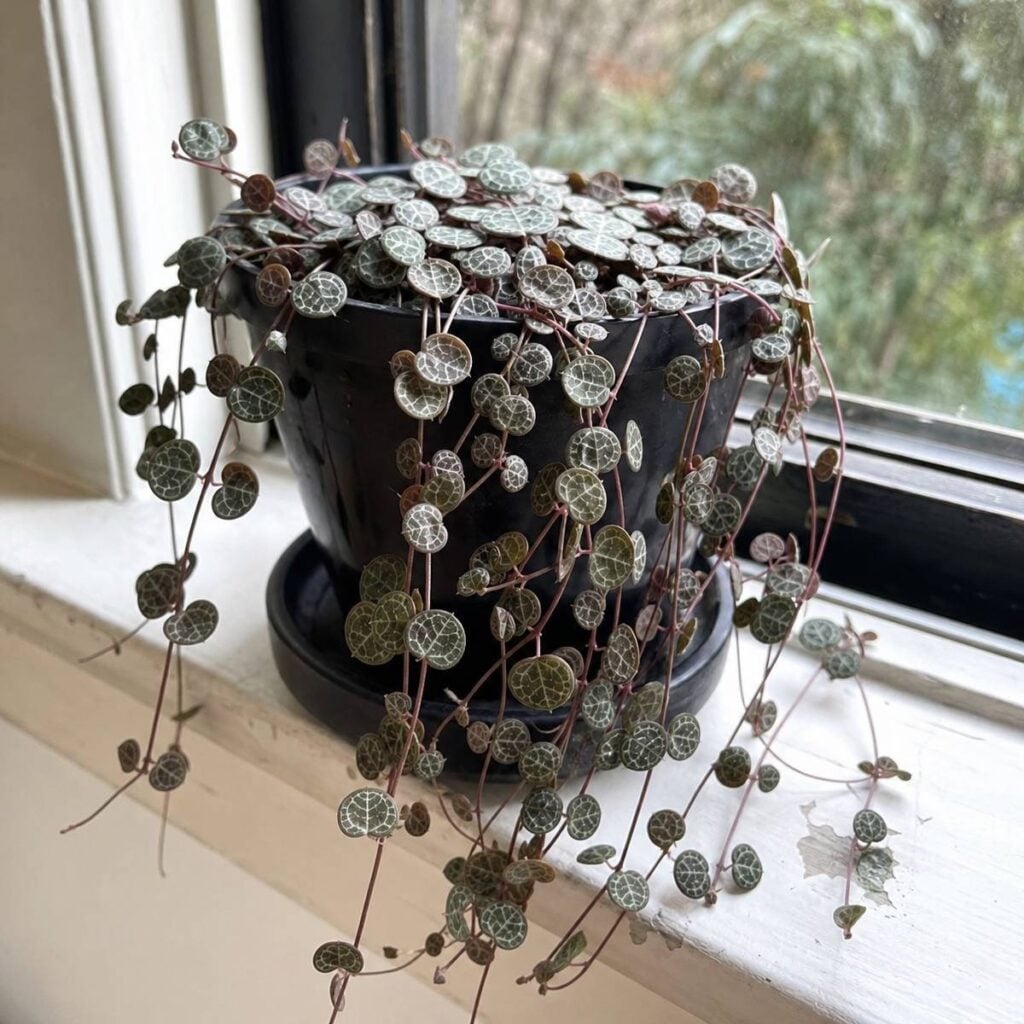
Tiny round leaves, each one marked like a little turtle shell, strung along trailing red stems. That’s the string of turtles, Peperomia prostrata, and once you see one spilling over the edge of a small pot, it’s hard not to want one.
It’s a slow-growing evergreen perennial in the pepper family, Piperaceae, the same family as black pepper. It’s a delicate trailing vine, easy to grow and low maintenance. It is one of the smaller members of a big, easy-going genus; see our guide to Peperomia varieties for its relatives.
The catch? It’s small, slow and fussy about one thing above all: too much water. Get the watering right and the rest is simple.
Peperomia Prostrata Quick Care Tips
- Botanical name: Peperomia prostrata
- Common names: String of turtles, trailing peperomia
- Family and origin: Piperaceae (pepper family); native to Ecuador
- Growability: Easy to grow, low maintenance
- Hardiness zones: USDA 10a to 12b; a houseplant almost everywhere else
- Size: Trailing stems reach about 12 inches; leaves under 1 inch across
- Flowering: Small, brown, tail-like spikes; rarely flowers indoors
- Light: Bright, indirect light; tolerates low light with duller color; no direct sun
- Temperature: A steady 68 to 75°F; avoid cold drafts; for the genus, 65 to 86°F, always above 50°F
- Humidity: Average to higher; a humidifier or pebble tray helps
- Soil: Well-drained houseplant or cactus potting mix
- Water: Let the soil dry out between waterings; never let it sit wet
- Fertilizer: Low-strength liquid fertilizer occasionally in spring and summer, or slow-release once a year
- Pests and problems: Mealybugs, spider mites, scale, aphids, whiteflies, fungus gnats; root rot from overwatering
- Propagation: Leaf cuttings or stem cuttings
- Pets: Listed as non-toxic to cats and dogs (as “Peperomia prostata”)
- Uses: Hanging baskets, small pots, terrariums, desks and shelves
Peperomia Prostrata String Of Turtles Care and Plant Needs
Where String of Turtles Comes From
You’ll often read that this plant comes from the rainforests of Brazil. That’s a mix-up. NC State Extension says it is native to the wet tropical areas of Ecuador, and the World Checklist of Vascular Plants (Royal Botanic Gardens, Kew) also gives Ecuador as its native range.
The wider genus is huge. There are over 1,000 species of peperomia, native to Central and South America, where they grow in the forest understory and many live as epiphytes, growing on other plants for support without harming them. Other references give a wider native range for the genus: the tropical and subtropical areas of Central and South America, Africa, Southeast Asia and parts of Australia.
Size and Growth
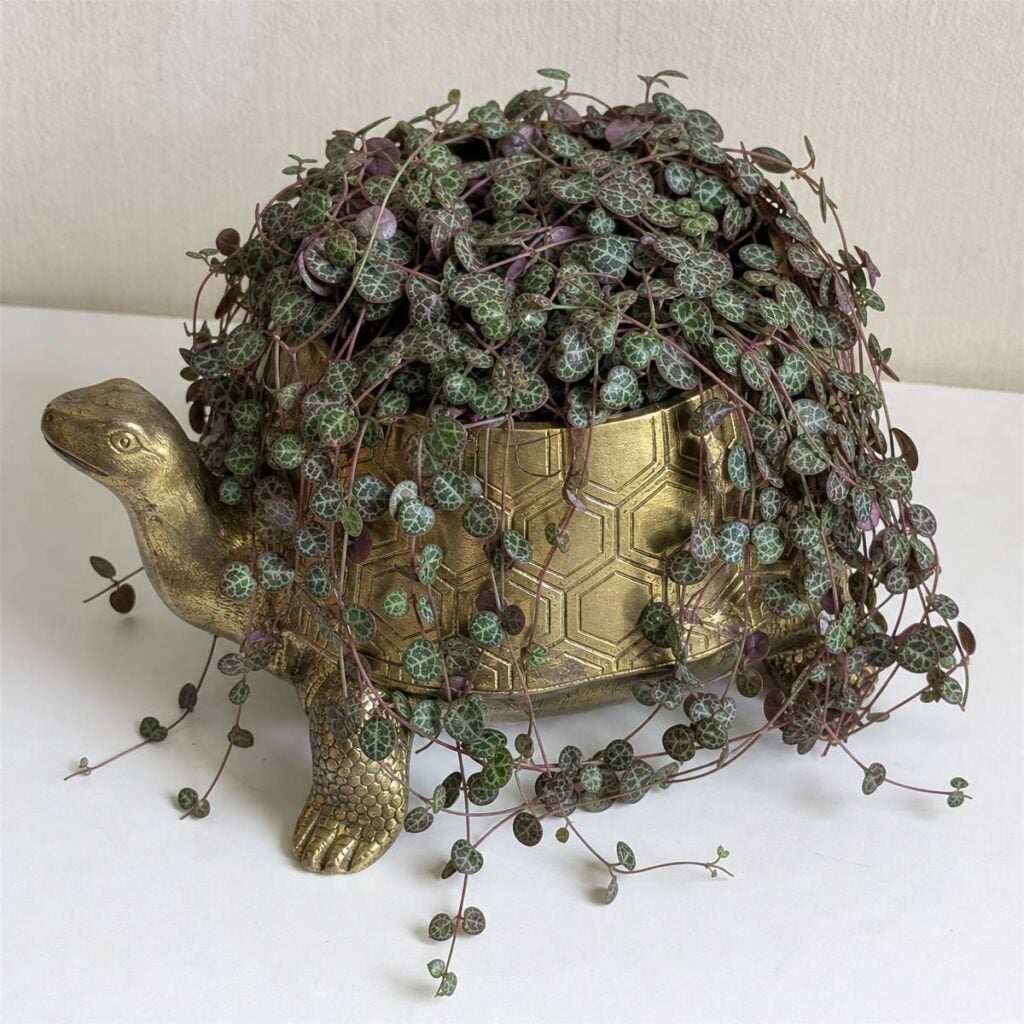
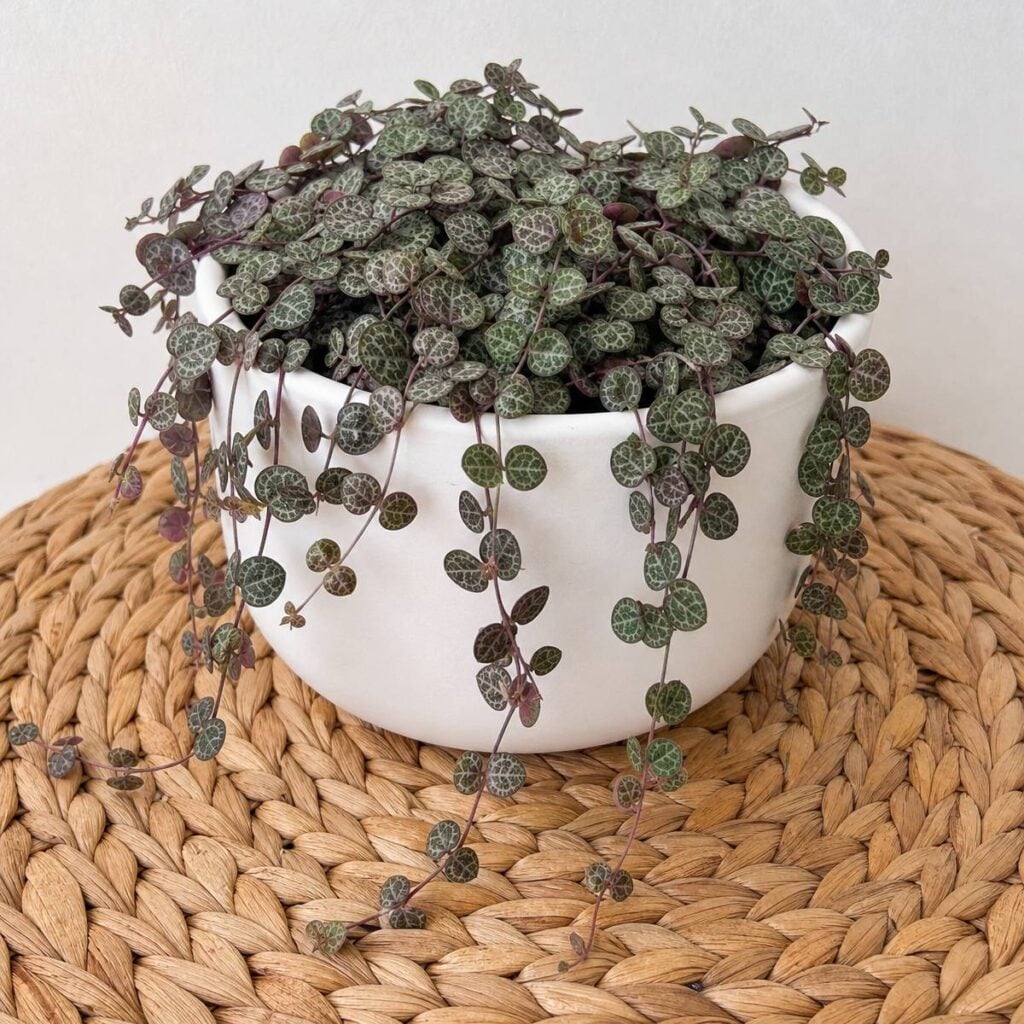
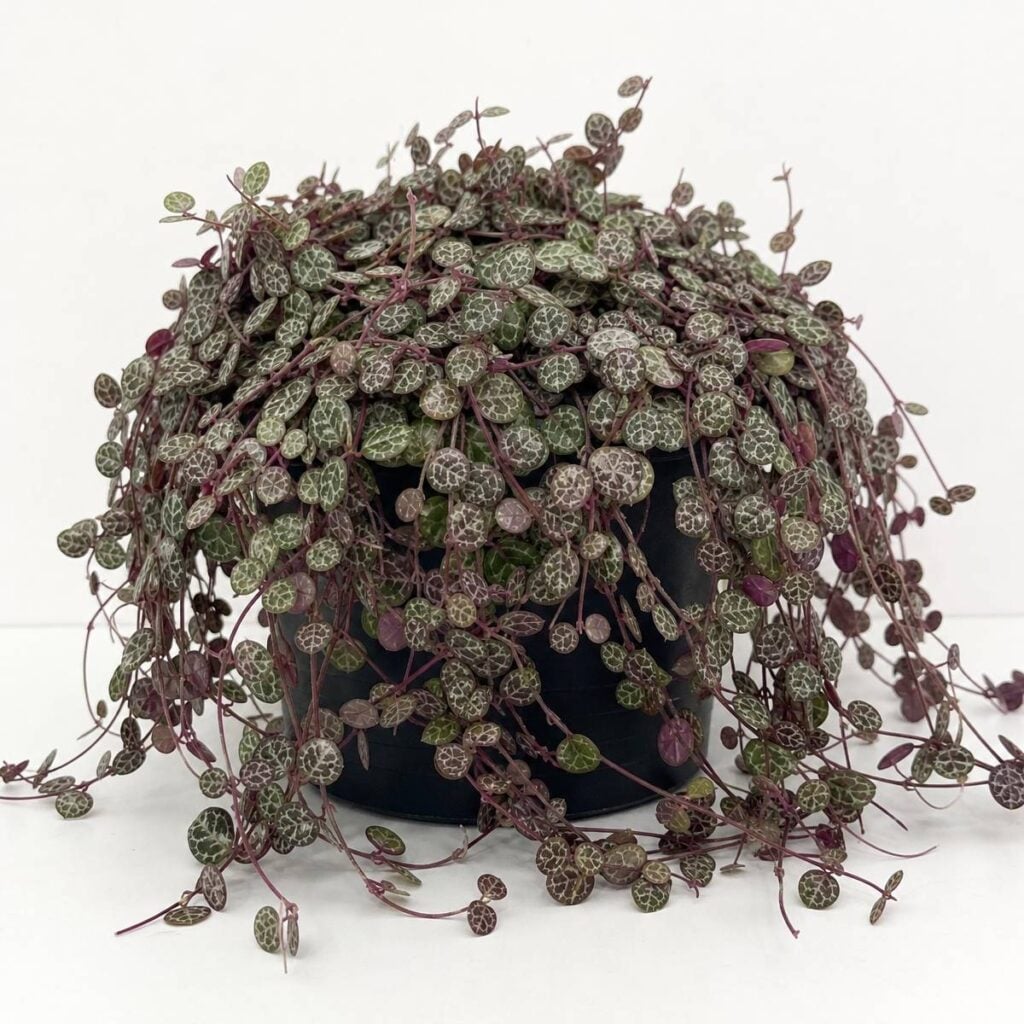
String of turtles is a miniature. It has small, round, succulent leaves less than 1 inch across, carried on delicate red stems that trail to about 12 inches at maturity. Growth is slow, so a small pot stays small for a long time.
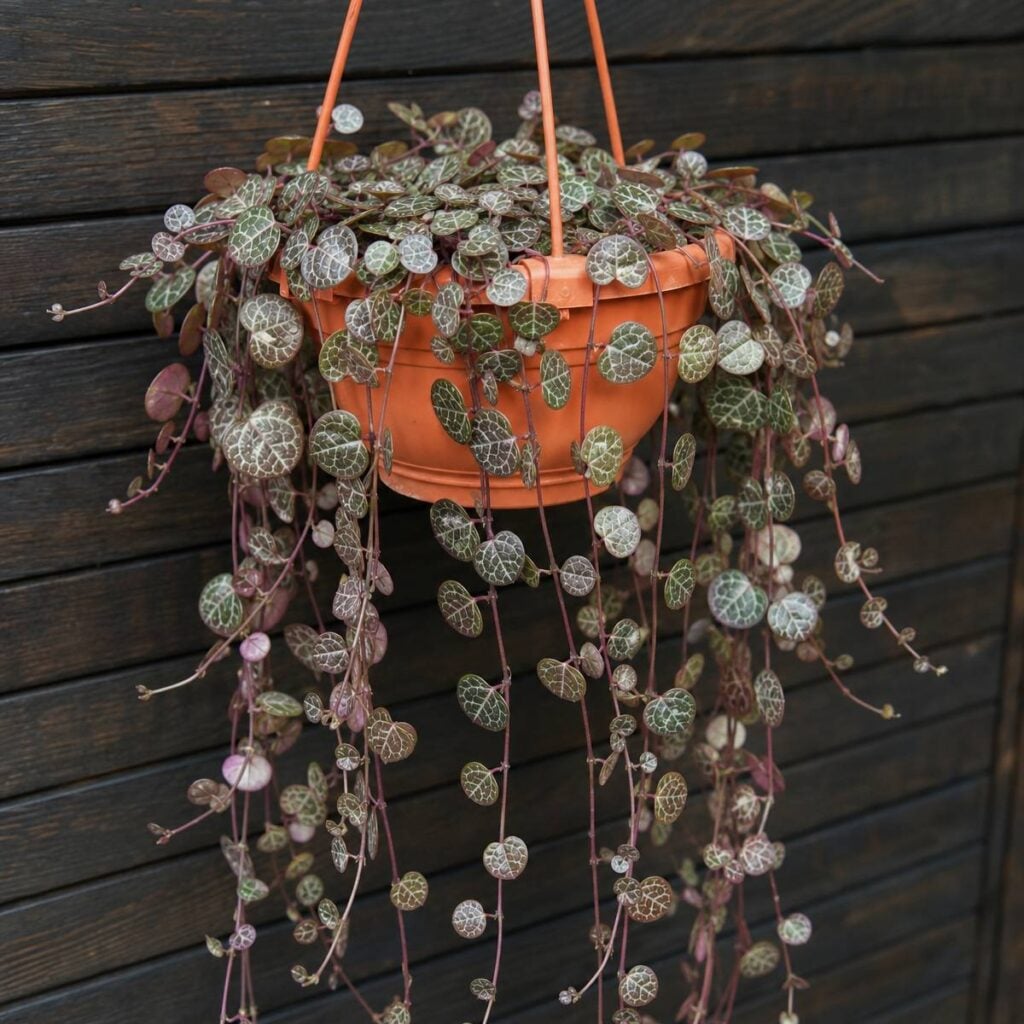
In a pot, the stems creep over the soil and cascade over the rim, which is why it looks so good in a hanging basket or on the edge of a shelf. It trails and spreads but is not aggressive.
Foliage and Flowering
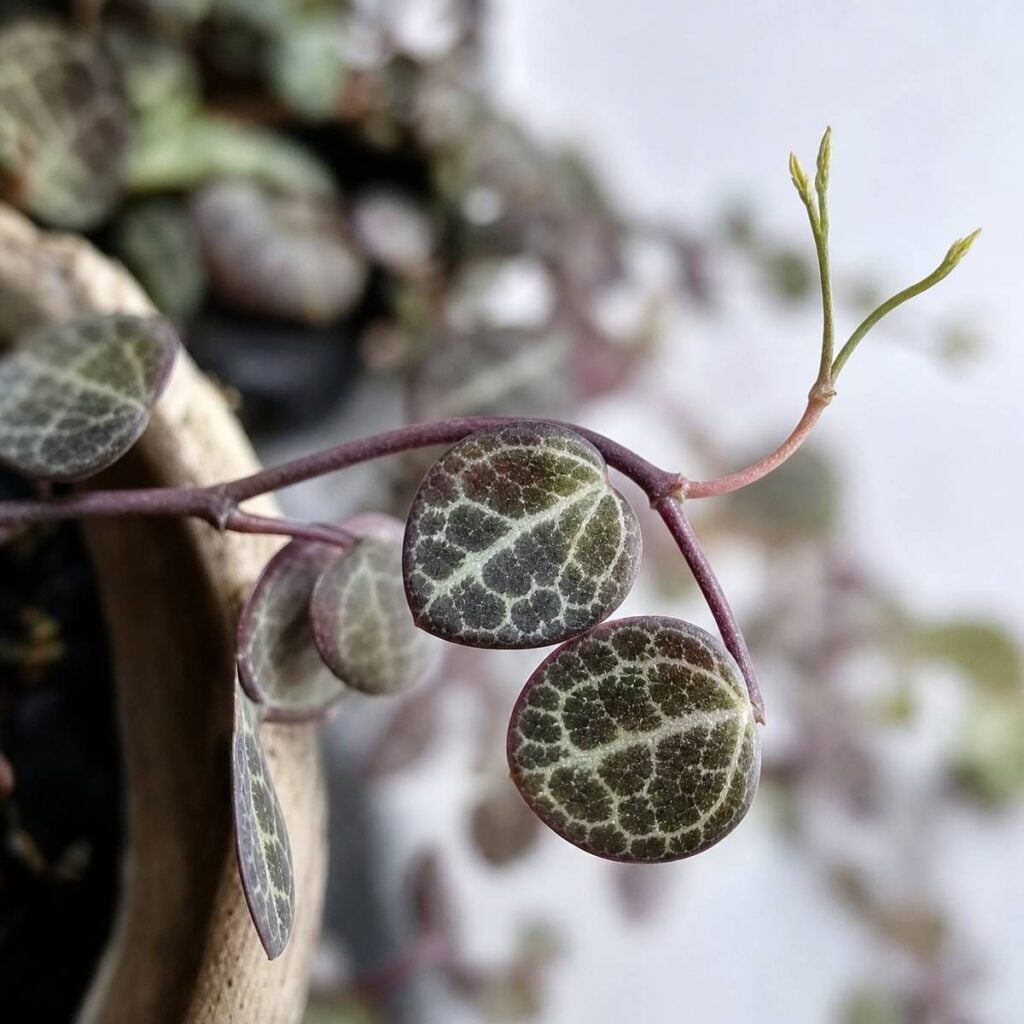
The leaves are the whole show. They are green, marbled with darker green or sometimes white or silver, and look like tiny turtle shells strung together. Young leaves carry multi-colored patterns; as a leaf matures, it usually settles into dark and light green.
Don’t expect much in the way of flowers. The bloom is a tiny, upright, brown spike that looks like a tail, and indoor plants rarely flower. Peperomia flower spikes appear in spring and summer, are considered unattractive (they’re said to resemble a rat’s tail), and removing them lets the plant focus on leaves. More in our post on the peperomia flower spike.
String of Turtles Light Requirements and Temperature
Bright, indirect light is the sweet spot. String of turtles thrives in bright, indirect light and can tolerate low light, but the leaf color will not be as vibrant. Indirect light from an east- or south-facing window suits peperomia; they can tolerate somewhat low light near a large north-facing window, but direct sun may scorch the leaves.
Short on window light? Small trailers like this one can also be grown under lights; see our guide to growing plants indoors under artificial light.
For temperature, keep it steady. Avoid cold drafts; a consistent 68 to 75°F is preferable. For peperomias in general, the RHS peperomia page gives 18 to 30°C (65 to 86°F) and says to keep them out of cold draughts and always above 10°C (50°F). Keep it away from cold windows in winter and away from heating and air-conditioning vents.
Want to give it a summer outdoors? Peperomia can go outside once night temperatures stay at 60°F or higher, starting in deep shade to adjust, then kept in a bright but shady spot out of direct sun.
Humidity
String of turtles prefers average to higher humidity; a humidifier or a tray of wet pebbles under the pot raises it. Peperomia especially benefit from a humidifier in winter.
Watering and Feeding
Here is where most string of turtles plants get into trouble. Clemson Extension says this species is sensitive to being overwatered, and that root rot, caused by overwatering, is the most common peperomia disease.
Peperomia prefer to dry out between waterings, and an overwatered plant will drop its leaves. Advice for this species differs a little: it prefers evenly moist soil but can suffer from overwatering. Both point the same way in practice. Water when the soil has dried, never keep it soggy, and water less in winter when growth slows.
After watering, let the pot drain before setting it back in its saucer. A pot with drainage holes makes that easy. Yellowing or curling leaves on peperomia are a sign of overwatering.
Go light on fertilizer. Fertilize peperomia only while they are actively growing in spring and summer, using a low-strength liquid fertilizer occasionally, or a slow-release granular fertilizer once a year. Skip feeding in fall and winter.
String of Turtles Soil and Transplanting
Drainage comes first. Use a well-drained houseplant or cactus potting mix; loam and sand with good drainage also suit this species.
Don’t rush to repot. String of turtles does well pot-bound, and peperomia don’t need repotting every year and can stay in the same pot for several years. When you do repot, choose a pot only slightly larger than the one it came in. A pot that’s too big holds extra wet soil around a small root system, and that’s the overwatering problem all over again.
Grooming and Maintenance
There isn’t much to do. Trim off old leaves when needed, and prune a stem just above a leaf node to make the plant branch and look fuller. Snip off any damaged or dead stems while you’re at it.
How to Propagate a String of Turtles
String of turtles is easy to share. Leaf cuttings are the recommended way to propagate it, and both stem and leaf cuttings work for peperomia:
- Stem cuttings: cut a 3- to 5-inch piece of stem, remove the leaves on the lower third, dip the end in rooting hormone, and insert it into potting soil or a rooting medium. Cover with clear plastic and keep it out of direct sun.
- Leaf cuttings: remove a leaf with at least an inch of leaf stem (petiole), insert it into a rooting medium, and new plants will form at the base of the leaf stem.
- Keep the rooting mix lightly moist, not wet, while the cuttings take hold.
More on String of Turtles Propagation
Peperomia Prostrata Pest or Disease Problems
String of turtles is usually resistant to insects and diseases, but watch for mealybugs, spider mites, aphids, scale, whiteflies and fungus gnats.
Mealybugs are small, soft, wax-covered insects that are common problems on houseplants. For a small infestation on a houseplant, UC IPM says a solution of 70% (or less) isopropyl alcohol and water can be dabbed on with a cotton swab; test it on a small part of the plant first and watch for leaf burn. Not every extension service is comfortable with that: UF/IFAS Gardening Solutions lists alcohol as phytotoxic, meaning it can cause leaf burn, and says it should not be applied to plant tissues. On a plant with leaves this small, test first and stop at the first sign of damage. Insecticidal soaps, horticultural oils and neem oil applied directly to young mealybugs can also reduce their numbers.
Spider mites hide where you might not look. They live in colonies mostly on the underside of leaves, and sprays of water, insecticidal oils or insecticidal soaps can be used for management; test a product on one or two plants first and get good coverage on the leaf undersides. For neem, follow your product’s label; our guide to applying neem oil has more on neem.
Related: Learn more about controlling succulent pests here.
Root rot and dropping leaves. This is a watering problem, not a pest problem. Root rot is caused by overwatering, and an overwatered peperomia drops its leaves. Drain the pot after every watering and let the soil dry out before you water again.
Leaf spots. Fungal leaf spots can be prevented by keeping the leaves dry when you water and by giving the plant good air circulation. Water the soil, not the foliage.
Scorched or faded leaves. Direct sunlight can scorch peperomia leaves. Move the plant back from a sunny window into bright, indirect light.
Is String of Turtles Toxic to Pets?
Good news here. The ASPCA’s plant lists include “Trailing Peperomia” among plants non-toxic to cats and dogs; its entry spells the scientific name “Peperomia prostata,” a misspelling of Peperomia prostrata. Peperomia prostrata is non-toxic for cats and dogs, and most peperomia are considered safe for pets. Even so, it’s best to keep any houseplant where pets and small children can’t chew on it. More in our post on whether peperomia are toxic to cats.
Best Uses For Turtle Leaf Plant
Its small size and patterned leaves make string of turtles a natural for small spaces. It suits terrariums, outdoor containers, hanging baskets and interiorscapes. It also works well in:
- Hanging baskets
- Terrariums
- Dish gardens
- Office desks and shelves
- Container gardens
Is The String of Turtles Plant Invasive?
No. String of turtles spreads and cascades over the edge of its pot, but it trails and spreads without being aggressive. It’s a tidy, well-behaved little plant.
Do you have a string of turtles trailing off a shelf at your place? Tell us where yours grows best!
Frequently Asked Questions
Is string of turtles easy to care for?
Yes, as long as you don’t overwater it. It is easy to grow and low maintenance, but it is sensitive to being overwatered, so let the soil dry out between waterings, drain the pot after watering, and give it bright, indirect light. Keep it at a steady 68 to 75°F away from cold drafts.
Is string of turtles a succulent?
Yes. Its small, round leaves are succulent and it is often listed as a succulent; many peperomia have thick, fleshy leaves similar to succulents. It is not a cactus, though: it belongs to the pepper family, Piperaceae, and grows well in a well-drained houseplant or cactus potting mix.
Is string of turtles toxic to cats and dogs?
No. Trailing peperomia (under the misspelling “Peperomia prostata”) appears on cat and dog plant lists among non-toxic plants, and most peperomia are considered safe for pets. It is still wise to keep houseplants out of reach of pets that like to chew leaves.
How often should I water string of turtles?
Water when the soil has dried rather than on a fixed schedule. Peperomia prefer to dry out between waterings and string of turtles is sensitive to overwatering, though it likes evenly moist soil. Let the pot drain before returning it to its saucer, and water less in winter.
How much light does string of turtles need?
Bright, indirect light suits it best. It tolerates low light, but the leaf color will not be as vibrant. An east- or south-facing window with indirect light works well, and direct sun may scorch peperomia leaves, so keep it out of direct sun.