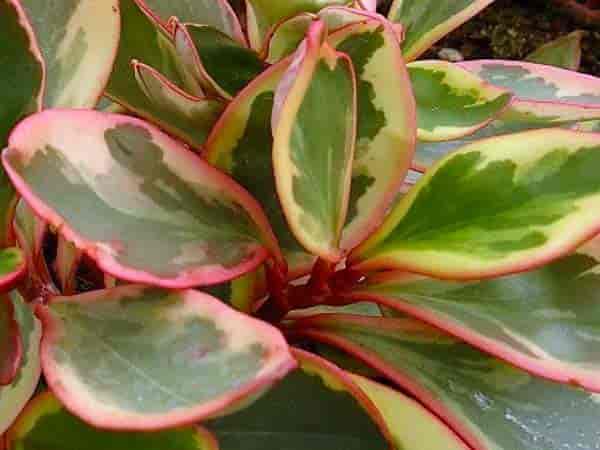
Want a little plant with a lot of color? Peperomia ‘Ginny’ packs green, cream and pink into a compact, slow-growing pot that is happy on a desk, a shelf or a bright windowsill out of direct sun.
‘Ginny’ is a variegated cultivar of Peperomia clusiifolia [pep-er-ROH-mee-uh kloo-si-FOH-lee-uh], the red edge peperomia. It is a tricolor variegated cultivar with green and cream leaves and a pink edge, and it is slow-growing. It is one of many Peperomia varieties sold as houseplants, and the red edge peperomia is the perfect houseplant for the beginner.
Peperomia Ginny Quick Care Tips
- Botanical name: Peperomia clusiifolia ‘Ginny’
- Older name: Peperomia obtusifolia var. clusiifolia
- Common names: Ginny peperomia, tricolor peperomia; the species is called red edge peperomia, red edged peperomia or jelly plant
- Family and origin: Piperaceae (the black pepper family); the species is native to Jamaica
- Growability: Easy, low maintenance, slow-growing
- Hardiness zones: USDA 10a to 12b
- Size: 6 inches to 1 foot tall and wide
- Flowering: Narrow greenish-white flower spikes; rarely blooms as a houseplant
- Light: Bright, indirect light; tolerates low light; no direct sun
- Humidity: Average home humidity; a humidifier helps in winter
- Temperature: Keep it above 50°F and away from cold drafts; 65 to 86°F suits peperomias
- Soil: Well-drained houseplant or cactus potting mix
- Water: Let the soil dry out between waterings; water sparingly
- Fertilizer: Low-strength liquid fertilizer, occasionally, in spring and summer only
- Pests and problems: Mealybugs, spider mites, aphids, scale, fungus gnats, whiteflies; root rot from overwatering
- Propagation: Stem cuttings; stem cuttings are needed for variegated cultivars
- Pet safety: Non-toxic to dogs, cats and horses
What Is Peperomia Ginny?
‘Ginny’ is a cultivar of the red edge peperomia, Peperomia clusiifolia. NC State Extension describes the species as an erect, mounding, evergreen, succulent perennial native to Jamaica, with stiff, glossy, deep green leaves edged in dark red or maroon. It lists Peperomia obtusifolia var. clusiifolia as a previous name, which is why you may still see the two plants mixed up on tags.
‘Ginny’ itself is described as having succulent-like, fleshy, green leaves with yellow and pink edges, and it is listed next to other cultivars such as ‘Jelly’, ‘Red Margin’ and ‘Variegata’. Other descriptions give the colors as green and cream with a pink edge. Either way, it is the leaves you grow this plant for.
Peperomias belong to the Piperaceae, the black pepper family. The genus has over 1,000 species. The University of Missouri points out that, despite the family connection, the peperomias grown as houseplants are not edible.
Peperomia Ginny Care Guide
Size and Growth
This is a small plant. The species reaches a height and width of 6 inches to 1 foot, and jelly or red-edged peperomia grows up to 12 inches tall. ‘Ginny’ is slow-growing, so it stays tidy on a tabletop for a long time.
Flowering
Do not expect much in the way of flowers. The species produces long, narrow, greenish-white flower spikes but rarely flowers as a houseplant. Peperomia flower spikes are small and inconspicuous, resembling mouse tails.
Light
Bright, indirect light is the sweet spot. Clemson Extension suggests placing peperomia where it gets indirect light from an east- or south-facing window, and warns that direct sun may scorch the leaves. The species prefers bright, indirect sunlight and will tolerate low-light conditions.
Low light is tolerated, not ideal, for a variegated plant like ‘Ginny’. Variegated cultivars stay more colorful in higher light, though peperomias in general should not sit in a sunny location. If the cream and pink start to fade, move the plant a little closer to the window, but keep it out of direct sun.
Temperature and Humidity
The common name radiator plant refers to the genus’s preference for warm conditions. Keep peperomias warm, above 50°F, and protect them from cold drafts. The RHS peperomia page gives 18 to 30°C (65 to 86°F) for the genus and says to keep peperomias out of cold draughts and always above 10°C (50°F).
Want to give it a summer vacation outdoors? Plants can go outside for the summer once nights are consistently 60°F or higher, typically in May. Outdoors year-round, it is hardy in USDA zones 10a to 12b.
Humidity is rarely a problem. Peperomias can thrive in the humidity levels of most homes, but if the home is very dry, consider a humidifier. The plant will benefit from a humidifier in winter.
Watering Peperomia Ginny
Go easy with the watering can. Peperomia prefers to dry out between waterings, and an overwatered plant drops its leaves. Red edged peperomia is very intolerant of overwatering because of its succulent nature, so water sparingly. For the truly succulent peperomias, wait until the potting mix is almost completely dry before watering again.
Use a pot with a drainage hole and pour off any water left in the saucer. Root rot, caused by overwatering, is the most common disease of peperomia. Water the soil, not the leaves: fungal leaf spots can be prevented by keeping the leaves dry when you water.
Watch the leaves for early warnings. Yellowing leaves on a peperomia often indicate the plant is being kept too wet, and yellowing or curling leaves indicate overwatering. A plant with yellowing leaves can be saved by letting it dry out, if the yellowing is noticed soon enough.
Fertilizing
Go easy on the food. Fertilize only while the plant is actively growing in spring and summer, using a low-strength liquid fertilizer occasionally during the growing season. Follow the label for the amount, and skip feeding in fall and winter.
Soil, Pots and Repotting
Drainage comes first. Use a well-drained houseplant or cactus potting mix, or add perlite, orchid bark or both to a commercial potting mix so water drains quickly but enough moisture stays for the plant. Clay pots work better than plastic for peperomias because water escapes through the porous sides. Skip garden soil and heavy clay soil, which stay wet too long.
There is no rush to repot. The species is slow-growing and will not need repotting very often, a peperomia can stay in the same pot for several years, and red edged peperomia should not be repotted too frequently. When roots start growing out of the drainage hole, move it to a pot one size larger.
Grooming
Grooming is simple. If the plant gets leggy or untidy, trim it back with clean, sharp scissors, and use the tips you remove as cuttings.
Question: Is Peperomia Poisonous to Cats?
Peperomia Clusiifolia Ginny Propagation
Leaf cuttings and stem cuttings are the recommended ways to propagate this species. Spring and summer, while the plant is actively growing, is a good time to take them.
Stem cuttings. Cut a three- to five-inch piece of stem from the parent plant, dip it in rooting hormone, then insert it into potting soil or a rooting medium.
Leaf cuttings. Remove a leaf with at least an inch of the petiole (leaf stem) attached. New plants form at the base of the petiole. For a variegated cultivar like ‘Ginny’, though, stick with stem cuttings: UF/IFAS says stem cuttings with one or more buds are necessary to propagate variegated cultivars.
Keep the rooting mix lightly moist, not soggy.
Tricolor Peperomia Pests and Diseases
Insects can occasionally be found on peperomias. Watch for mealybugs, spider mites, scale, fungus gnats, whiteflies and aphids. Check the undersides of the leaves and the stems when you water.
Most trouble comes from the watering can. Root rot from overwatering is the most common peperomia disease, and fungal leaf spots can be prevented by keeping the leaves dry. Good air circulation helps prevent leaf spots, and direct sunlight can scorch the leaves.
Is Peperomia Ginny Safe for Pets?
Yes. The ASPCA lists red edge peperomia (Peperomia clusiifolia) as non-toxic to dogs, cats and horses, and most peperomias are considered safe for pets. That makes ‘Ginny’ a good pick for a home with curious animals.
Peperomia Clusiifolia ‘Ginny’ Uses
‘Ginny’ adds a pop of color to small spaces. Peperomias are perfect plants for a desk or tabletop, and some species work in terrariums or hanging baskets. Their small size makes peperomias good for small pots and dish gardens, where you can enjoy them up close.
In frost-free gardens, peperomias also go outside. Peperomia is used as a groundcover in South Florida. Elsewhere, enjoy ‘Ginny’ as a houseplant, with an optional summer outdoors out of direct sun.
Do you have a ‘Ginny’ brightening up a shelf? Tell us where yours lives and how pink it gets!
Frequently Asked Questions
Is Peperomia Ginny the same as Peperomia clusiifolia?
‘Ginny’ is a cultivar of Peperomia clusiifolia, the red edge peperomia. It is listed among the species’ cultivars with fleshy green leaves edged in yellow and pink, and also described as a tricolor variegated cultivar with green and cream leaves and a pink edge. The plain species has deep green leaves with dark red margins. Peperomia obtusifolia var. clusiifolia is a previous name.
How often should I water Peperomia Ginny?
Water only after the soil has dried out. Peperomia prefers to dry out between waterings and drops its leaves when overwatered. Red edged peperomia is very intolerant of overwatering because of its succulent nature, so water sparingly. Keeping the leaves dry when you water helps prevent fungal leaf spots.
How much light does a tricolor peperomia need?
Bright, indirect light suits it best. Indirect light from an east- or south-facing window works well, and direct sun may scorch the leaves. The species tolerates low light, but variegated cultivars stay more colorful in higher light, so give ‘Ginny’ the brightest spot you have that stays out of direct sun.
Is Peperomia Ginny toxic to cats and dogs?
No. Red edge peperomia (Peperomia clusiifolia) is non-toxic to dogs, cats and horses, and most peperomias are considered safe for pets. Our guide to whether peperomia is poisonous to cats has more.
Why are my Peperomia Ginny’s leaves turning yellow or dropping?
Overwatering is the likely cause. Yellowing leaves often mean the plant is being kept too wet, yellowing or curling leaves indicate overwatering, and an overwatered peperomia drops its leaves. A plant can be saved by letting it dry out if the yellow leaves are noticed soon enough.