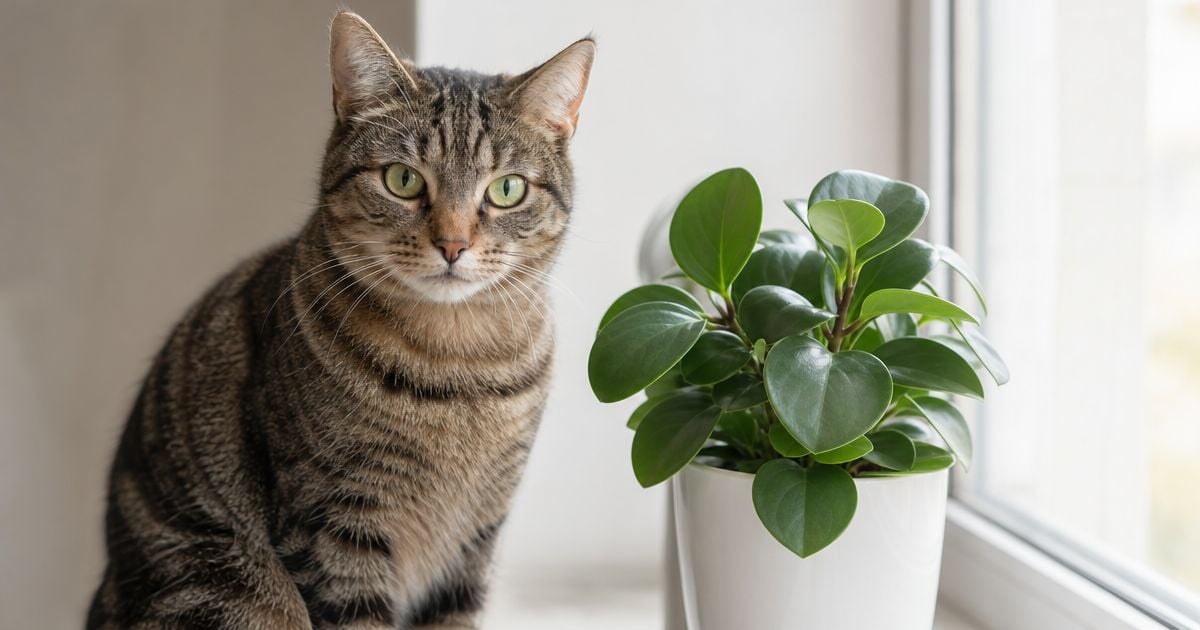
Got a cat that treats every houseplant like a salad bar? If you grow peperomias, you can breathe a little easier.
Short answer: the commonly listed peperomias are non-toxic to cats and dogs. Put simply, most peperomias are considered safe for pets. Non-toxic doesn’t mean your cat can graze without consequences, though, so here’s what the sources actually say, which peperomias are on the list, and what to do if your pet takes a bite.
Peperomia (peh-per-ROH-mee-ah) is a big genus, with over 1,000 species in the black pepper family (Piperaceae), native to tropical and subtropical Central and South America, Africa, Southeast Asia and parts of Australia.
Are Peperomias Toxic to Cats?
For the peperomias you’re most likely to own, no. Clemson Extension says most peperomias are considered safe for pets. A long run of peperomias appears on the list of plants non-toxic to cats, and the same names appear on the list of plants non-toxic to dogs.
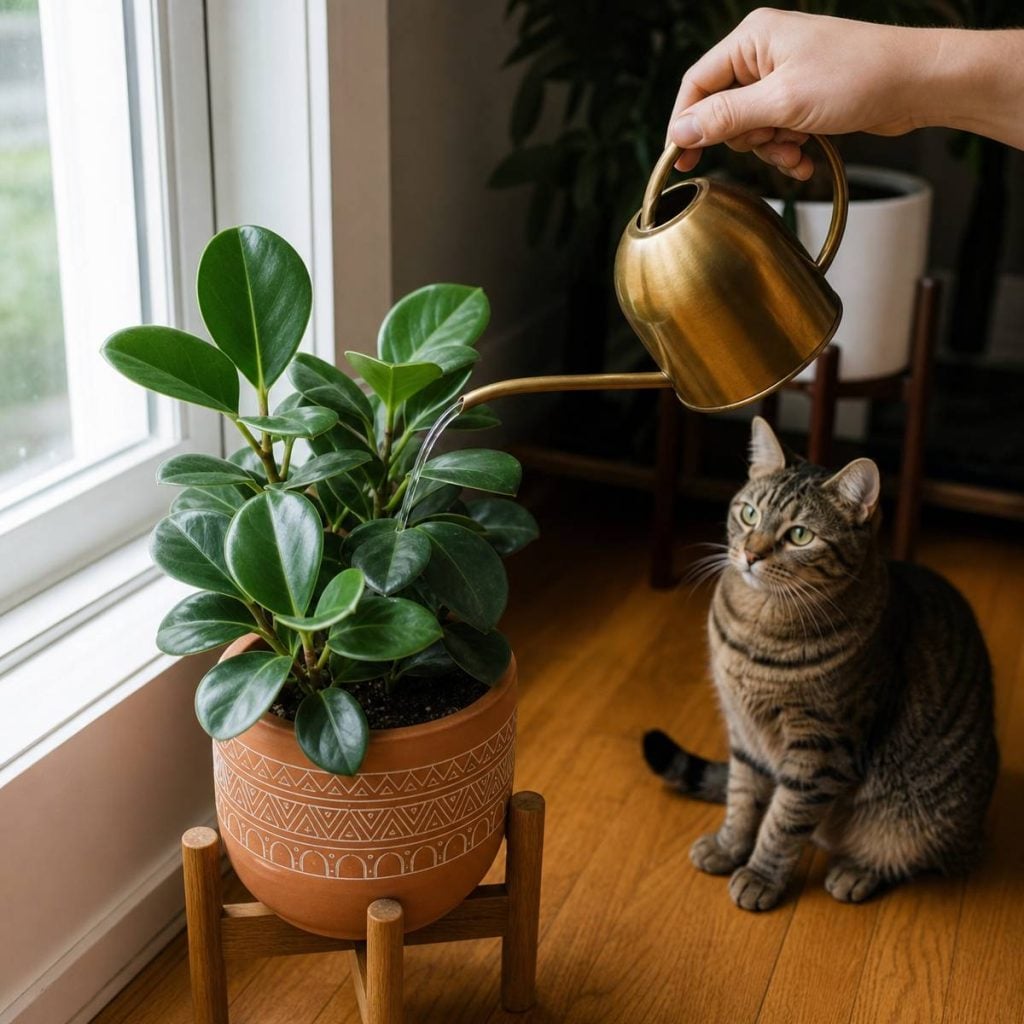
Two words of caution. The plant list is not all-inclusive, just a compilation of the most frequently encountered plants, so check the name of the plant to determine its toxicity. With more than 1,000 species out there, a peperomia that isn’t on the list simply hasn’t been rated, which is not the same as being rated safe.
Which Peperomias Does the ASPCA List as Non-Toxic?
These are the peperomias on the cat and dog lists, with the common names the lists use:
- Baby rubber plant (Peperomia obtusifolia), also called blunt leaf peperomia, pepper face and American rubber plant: non-toxic to dogs and cats.
- Emerald ripple peperomia (Peperomia caperata), also called green ripple and little fantasy peperomia: non-toxic to dogs, cats and horses. The lists also file “Silver Heart” and “Metallic Peperomia” under Peperomia caperata.
- Watermelon peperomia (Peperomia argyreia), also called watermelon begonia: non-toxic to dogs and cats.
- Red edge peperomia (Peperomia clusiifolia): non-toxic to dogs, cats and horses.
- Ivy peperomia (Peperomia griseoargentea), also called platinum, silver leaf and ivy leaf peperomia, and listed as Peperomia hederifolia too: non-toxic to dogs, cats and horses.
- Yorba Linda (Peperomia rotundifolia): non-toxic to dogs, cats and horses.
- Trailing peperomia (Peperomia prostrata, spelled “Peperomia prostata” on the lists): on both the cat and dog non-toxic lists.
- Vining peperomia (Peperomia serpens ‘Variegata’): on both lists.
- Leather peperomia (Peperomia crassifolia), Peperomia peltifolia and Peperomia sandersii: on both lists.
Popular named hybrids are a different story. Peperomia ‘Hope’, for example, has no entry on either list, and neither do prayer peperomia (Peperomia dolabriformis) or Peperomia ‘San Marino’. For plants like these, the general rule that most peperomia are considered safe is the best guidance available.
Not sure what you have? The RHS warns that peperomias are sold under a confusing array of common names (radiator plant, string of turtles and happy bean plant among them) and suggests checking the small print on the plant label for the botanical name. Match that name against the list.
Can a Non-Toxic Peperomia Still Make My Cat Sick?
Yes, a little. The consumption of any plant material may cause vomiting and gastrointestinal upset for dogs and cats. Still, plants on the non-toxic plant lists are not expected to cause life-threatening symptoms.
So if your cat chews a peperomia and throws up on the rug, that’s a nuisance, not usually an emergency. A cat that keeps vomiting or seems unwell still deserves a call to the vet.
Why do cats chew plants at all? Cats that chew houseplants are usually indoor cats with little access to grass or other greens, and they may chew plants as part of normal investigation and play or because they are craving vegetable matter.
What To Do If Your Pet Eats a Peperomia
First, figure out what was eaten. If it’s one of the listed peperomias above, it is not expected to be life-threatening, though vomiting or stomach upset is possible.
If you aren’t sure what the plant is, or your pet seems ill, don’t wait. If you believe your pet is ill or may have eaten a poisonous substance, contact your local veterinarian or the ASPCA Animal Poison Control Center at (888) 426-4435. The line is open 24 hours a day, 365 days a year, and a consultation fee may apply.
One important don’t: the Cornell Feline Health Center says not to try to make your pet vomit unless you are specifically told to do so.
Are Peperomias Safe for Dogs and Horses?
Dogs: yes, for the listed species. Every peperomia above appears on the list of plants non-toxic to dogs, and the same stomach-upset caution applies.
Horses: the list of plants non-toxic to horses includes emerald ripple, red edge, ivy, leather and vining peperomias, Yorba Linda (Peperomia rotundifolia), Peperomia peltifolia and Peperomia sandersii. It also lists the baby rubber plant under the name American rubber plant and watermelon peperomia under the name watermelon begonia, although the individual baby rubber plant and watermelon peperomia pages mention only dogs and cats. Trailing peperomia is not on the horse list. NC State Extension also tags P. caperata and P. obtusifolia as non-toxic for cats, dogs and horses.
Keeping Peperomias and Pets in the Same Home
Pet-safe plants are still worth protecting, both for your plant’s sake and your cat’s stomach. The only way to guarantee protection for both your houseplants and your cat is to block access to the plants. Peperomias make that easy: they can be grown in containers, terrariums or hanging baskets, so a high shelf or a hanging pot works well.
Give your cat something better to chew. Offer oat grass, catnip or catmint, add a little lettuce or parsley to the food bowl, or switch to a higher-fiber cat food, though some cats may still snack on houseplants.
Looking for more pet-friendly plants? See our list of houseplants safe for cats.
If you ever treat a peperomia for pests, follow every direction on the product label, including anything it says about pets.
Peperomia Care in a Pet-Friendly Home
Healthy plants are easier to keep out of reach and less likely to need treating. A few basics:
- Water: Peperomia prefers to dry out between waterings, and an overwatered plant will drop its leaves. Root rot from overwatering is the most common peperomia disease, so let the pot drain before it goes back in its saucer.
- Light: Give it indirect light from an east or south window; the leaves may scorch in direct sun.
- Soil: Use a well-drained houseplant or cactus potting mix.
- Temperature: for the genus, aim for about 65 to 86°F (18 to 30°C), keep peperomias out of cold drafts and always above 50°F (10°C).
Which peperomia shares your home with a cat or dog? Tell us in the comments!
Frequently Asked Questions
Are peperomias toxic to cats?
No, not the common ones. Most peperomias are considered safe for pets, and the baby rubber plant, emerald ripple, watermelon, red edge, ivy, trailing and vining peperomias, plus Peperomia rotundifolia, are listed as non-toxic to cats. Eating any plant material may cause vomiting and stomach upset, though, so a cat that chews one may still throw up.
Are peperomias toxic to dogs?
The listed ones are not. Every peperomia on the list of plants non-toxic to cats also appears on the list of plants non-toxic to dogs, including the baby rubber plant, emerald ripple and watermelon peperomia. As with cats, eating any plant material may cause vomiting and gastrointestinal upset in dogs, so a dog that chews one up may have a mild upset stomach.
Is watermelon peperomia toxic to cats?
No. Watermelon peperomia (Peperomia argyreia), also called watermelon begonia, is listed as non-toxic to dogs and cats. It is still best kept out of reach, because eating any plant material may cause vomiting and stomach upset, and a chewed-up watermelon peperomia loses its good looks fast.
Are all peperomias safe for cats?
Most are, but not every one has been rated. Most peperomias are considered safe for pets, and more than 10 peperomias are listed as non-toxic, but the list is not all-inclusive, and popular hybrids such as Peperomia ‘Hope’ have no entry. Check the botanical name on your plant’s label and compare it with the list.
What should I do if my cat ate a peperomia?
If it is one of the listed peperomias, it is not expected to be life-threatening, though any plant material may cause vomiting and stomach upset. If you can’t identify the plant, or your cat seems ill, call your vet or the ASPCA Animal Poison Control Center at (888) 426-4435, which is open 24 hours a day; a fee may apply. Don’t try to make your cat vomit unless you are told to.