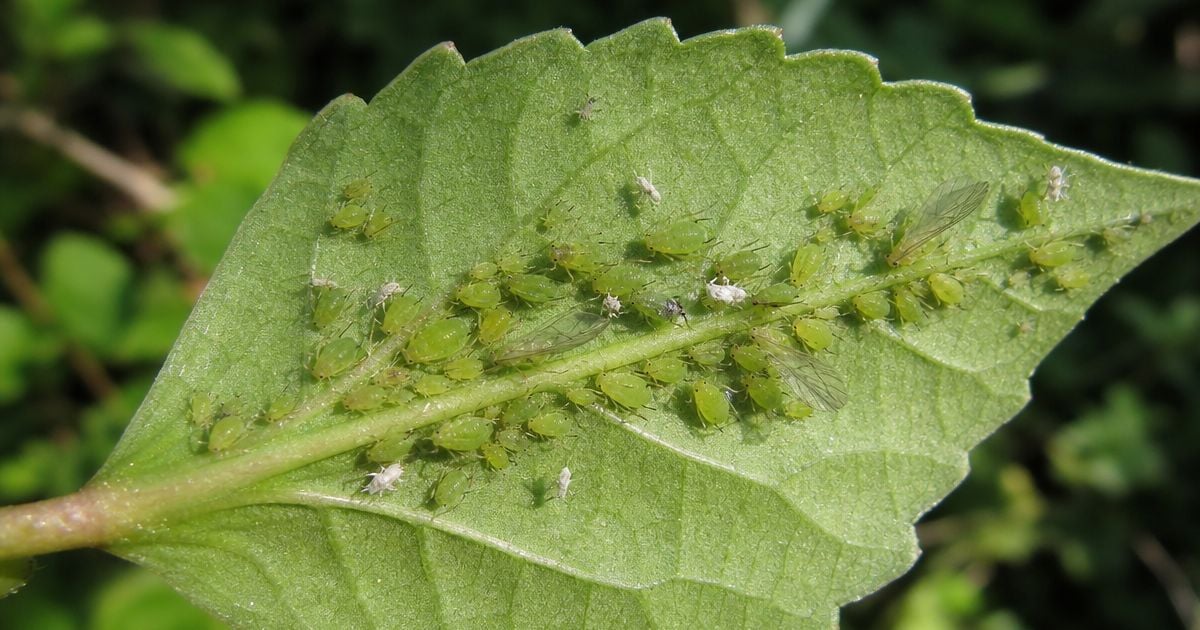
Sticky leaves, curled new growth, and a crowd of tiny bugs on the flower buds? Aphids have found your hibiscus.
Don’t panic. Aphids are manageable when you catch them early. Aphids, whiteflies and mealybugs on hibiscus are usually found in clusters on leaves and flower buds, and if caught early they are easily controlled with insecticidal soaps or horticultural oils.
Here’s how to spot them, what damage to expect, and how to get rid of them in order, starting with the gentlest fixes.
What Aphids on Hibiscus Look Like
Aphids are small, soft-bodied, pear-shaped insects with long legs and antennae. They may be green, yellow, brown, red or black depending on the species and the plant they feed on. Most have a pair of tubelike structures, called cornicles, sticking out of the back end. Those cornicles set aphids apart from every other insect.
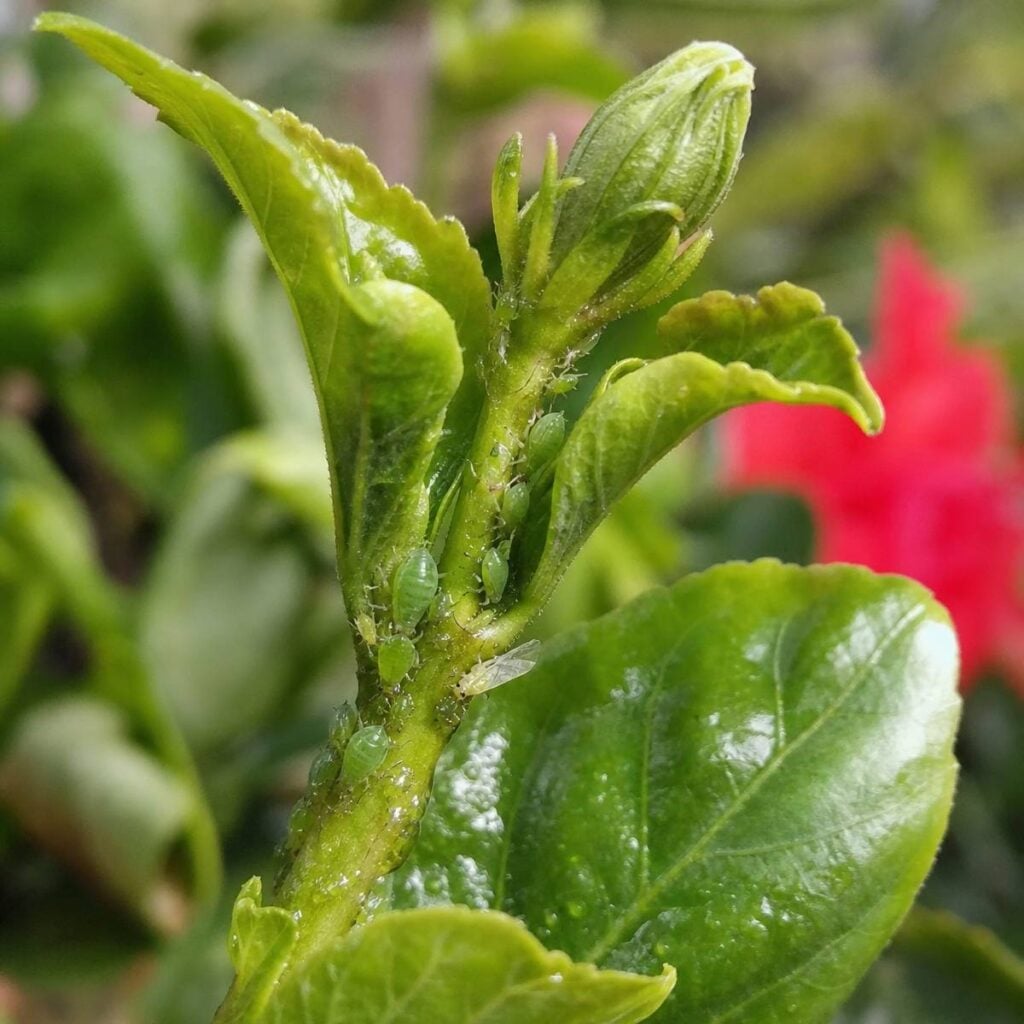
The melon aphid, also called the cotton aphid (Aphis gossypii), is one species to know. Hibiscus is among the crops it injures regularly. Wingless adults are only 1 to 2 mm long (about 1/32 to 1/16 inch). Their color varies a lot: light green mottled with dark green is most common, but whitish, yellow, pale green and dark green forms occur too. Winged adults have a black head and thorax. So a cluster of “black aphids” on your hibiscus may or may not be melon aphids.
Look for them on soft new growth and flower buds. Aphids feed on soft, new plant growth, and many species prefer the undersides of leaves, so flip leaves over when you check.
Hardy and tropical hibiscus can both get them. Aphids are among the insect pests of both hardy hibiscus (such as Hibiscus moscheutos) and tropical Chinese hibiscus (Hibiscus rosa-sinensis). Rose of Sharon (Hibiscus syriacus) plays its own role: catalpa and rose of Sharon were the overwintering hosts for melon aphid eggs in northern locations, while in the south overwintering eggs are not commonly produced.
What Damage Do Aphids Cause on Hibiscus?
Aphids use long, slender mouthparts to pierce tender plant parts and suck out the fluids. The results:
- Low to moderate numbers of leaf-feeding aphids aren’t usually damaging.
- Large populations can turn leaves yellow and stunt shoots.
- Some species inject a toxin that makes leaves curl and further distorts growth.
- Aphids produce a sticky waste called honeydew, which often turns black as a sooty mold fungus grows on it.
The reassuring part: aphids seldom kill a mature plant, and most established plants can tolerate aphid feeding and outgrow the damage. The damage and the sticky mess are still good reasons to act.
Aphids can also spread plant viruses. They may transmit viruses from plant to plant on certain vegetable and ornamental plants, and this is hard to prevent by controlling aphids because it takes only a few minutes for an aphid to transmit a virus.
Seeing ants marching up your hibiscus? Check for aphids. Ants tend aphids for their honeydew and protect them from natural enemies, and they are commonly found with melon aphids. You can also scout by noticing sooty mold growing on the honeydew.
How To Get Rid of Aphids on Hibiscus
Work from the gentlest step up. Use nonchemical methods first, and choose products that are less toxic to natural enemies, such as insecticidal soaps and oils, if a spray seems necessary.
Check Your Plants Often
Check plants at least twice a week when they are growing rapidly, so you catch aphids early enough to hose them off or prune them out. Turn the leaves over. While you’re looking, watch for lady beetles, lacewings, syrphid fly larvae and the swollen, crusty “mummies” of parasitized aphids. Plenty of these good guys can mean the aphids will drop fast without any treatment.
Hose Them Off
On a sturdy hibiscus, a strong spray of water from the garden hose knocks aphids off the plant. Most dislodged aphids won’t be able to return, and the spray washes off honeydew too. Do it early in the day: morning water sprays let plants dry off rapidly in the sun and be less susceptible to fungal diseases. Repeat whenever you see new clusters.
Prune Out Curled Tips
If the aphids are concentrated on a few curled leaves or new shoots, the best control may be to prune those areas out and dispose of them. Aphids hidden inside curled leaves are protected from contact sprays anyway.
Let the Natural Enemies Work
Aphids have plenty of predators and parasites. Lady beetles (ladybugs), lacewings, syrphid fly larvae, soldier beetles and tiny parasitic wasps are common natural enemies, and the aphid midge has larvae that feed on aphids too. Natural enemies usually don’t show up in big numbers until aphids are numerous, and broad-spectrum pesticides kill them along with the pests. Give them a chance before you reach for a strong spray.
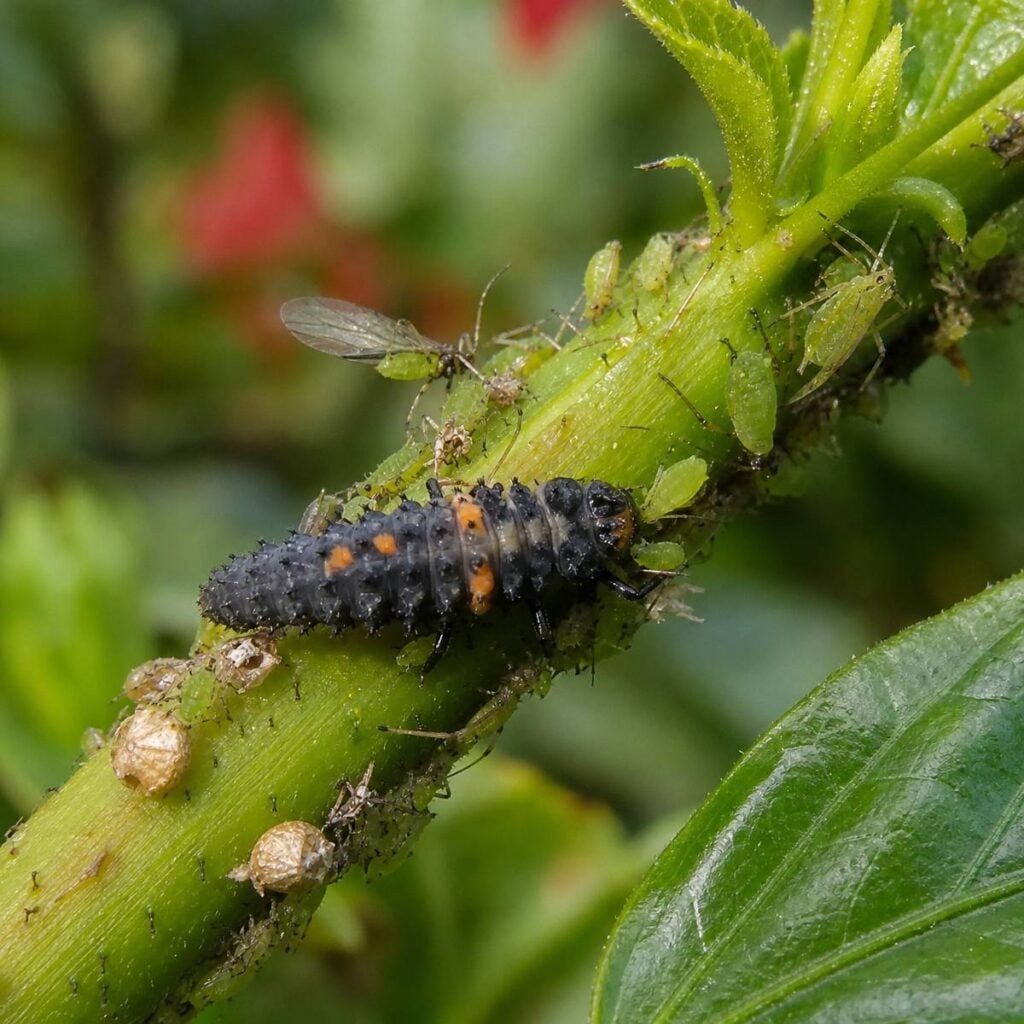
Buying ladybugs? Released lady beetles may give some temporary control, but most will disperse from your yard within a few days.
Keep Ants Off the Plant
Because ants guard aphids from their natural enemies, managing ants is a key part of aphid control. On a hibiscus tree or other woody plant, wrap the trunk with fabric tree wrap or duct tape and put a band of sticky material on the wrap, not directly on young or thin bark. Ant stakes or containerized baits on the ground are another option. Prune branches that touch buildings, the ground or other plants, since ants use them as bridges.
Go Easy on Nitrogen
High levels of nitrogen fertilizer favor aphid reproduction. Use no more nitrogen than your hibiscus needs, and choose a slow-release fertilizer applied in small portions rather than one big dose.
Insecticidal Soap or Horticultural Oil
When hosing and patience aren’t enough, these are the go-to insect sprays for hibiscus. Insecticidal soaps or horticultural oils work well on hibiscus aphids caught early, and soaps and oils are the best choices for most situations. Neem oil counts as a plant-derived oil here; neem discourages aphid feeding, so aphids aren’t killed quickly but stop feeding and slowly die.
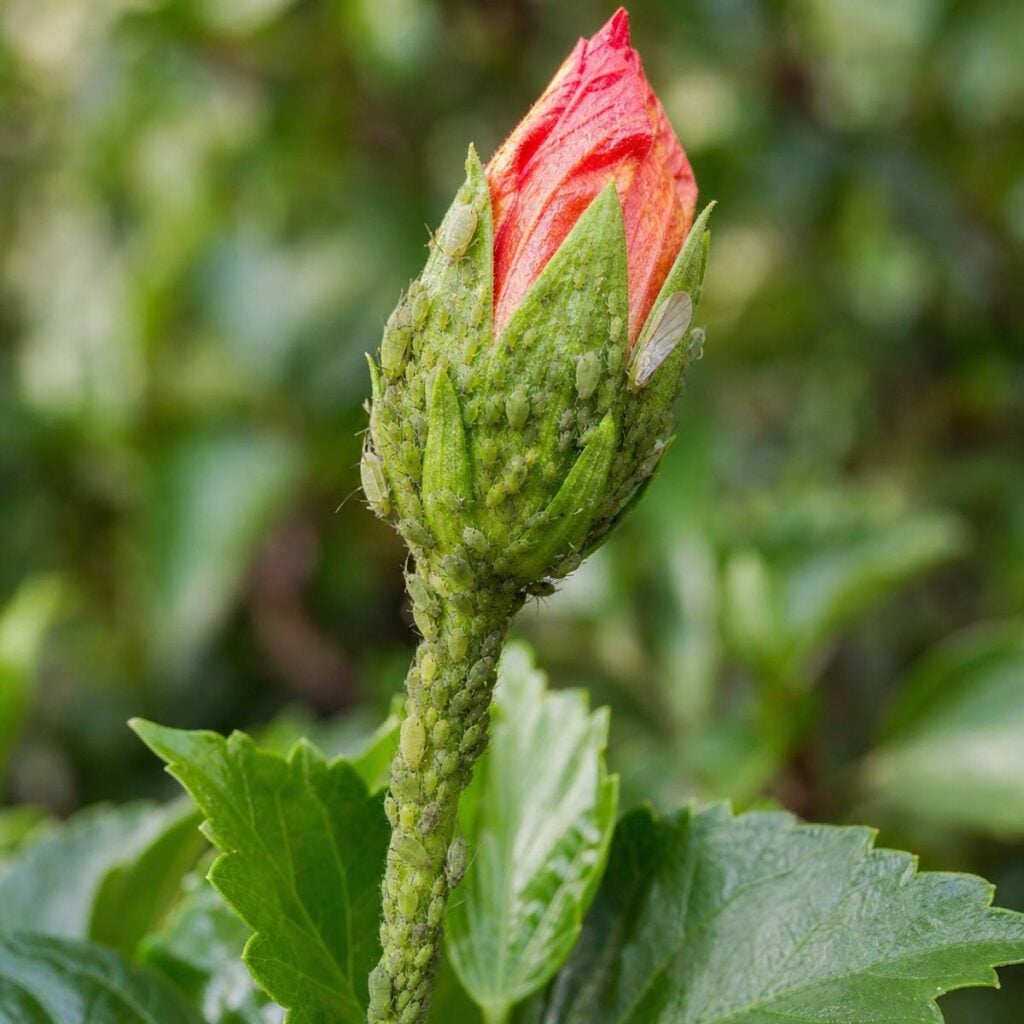
Coverage is everything. These products kill mainly by smothering, so you need to wet the undersides of the leaves as well as the tops. They kill only the aphids present on the day you spray, so repeat applications may be needed. On the plus side, they leave no toxic residue, so they don’t kill natural enemies that move in after the spray.
Protect the plant while you protect it from bugs. Don’t use soaps or oils on water-stressed plants or when the temperature is above 90°F. Clemson adds: don’t spray in direct sunlight, and apply early in the morning or late in the evening. Its insecticidal soap factsheet suggests testing for plant sensitivity by spraying a small area and waiting 24 hours to see if any damage shows up. A more cautious approach: check labels and test the product on a portion of the foliage several days before a full treatment.
Related: Spraying For Aphids: What Is The Best Time?
Buy a commercial product and follow its label. Homemade soap recipes are not recommended because they are more likely to injure plants. Kitchen mixes (dish soap, garlic, cooking oils and the like) generally haven’t been studied in replicated research trials, and their effects on natural enemies, pollinators and people haven’t been proven safe; see this statement on homemade pesticides.
Pyrethrins: Stronger, With Trade-Offs
Pyrethrins are botanical insecticides from the flowers of a type of daisy. They are contact insecticides that rapidly paralyze insects but may not kill them, which is why they are often combined with another insecticide. Pyrethrins are also highly toxic to many beneficial insects, although the activity usually lasts only a few hours. The National Pesticide Information Center (NPIC) says pyrethrins are highly toxic to honey bees and highly to very highly toxic to fish.
Soap-plus-pyrethrin products may give slightly more knockdown than soap alone, with fewer harmful effects on natural enemies than malathion, permethrin and acephate, because pyrethrins break down very quickly. Don’t confuse pyrethrins with pyrethroids: pyrethroids are synthetic, generally stronger and longer-lasting on plants. Use only a labeled product, exactly as the label directs.
Diatomaceous Earth: A Minor Option
Soft-bodied insects like aphids are among the pests diatomaceous earth (DE) controls. DE works by drying insects out and stays effective only as long as it is kept dry and undisturbed, so rain, dew or the hose undoes it. Use natural-grade DE, not the type sold for pool filters. It may irritate lungs if inhaled during application, and it can also harm honeybees, so avoid applying it to plants in flower. More on how it works: diatomaceous earth for potted plants.
Never Use Malathion on Hibiscus
UF/IFAS is blunt about this one: read labels carefully, because you should never use the pesticide malathion on hibiscus. More broadly, longer-lasting sprays such as malathion, permethrin and acephate also kill the natural enemies that provide long-term aphid control and are associated with bee kills. These residual products can also make aphid problems worse, and you should not spray trees or shrubs that are blooming.
Systemic Insecticides (Imidacloprid): Last Resort, Never in Bloom
Systemic insecticides such as imidacloprid are taken up by the plant and kill aphids as they feed. They are very effective but can harm predators, parasitoids and pollinators, so avoid them where soaps and oils give adequate control. To protect pollinators, don’t apply imidacloprid or other systemic insecticides to plants in bloom or prior to bloom. The University of Minnesota Extension says imidacloprid and dinotefuran are very toxic to pollinators and can take two to four weeks to work.
Keep hibiscus bloom habits in mind. Hibiscus are highly attractive to butterflies and hummingbirds, and tropical hibiscus blooms over a long season, nearly year-round in South Florida. The University of California Statewide IPM Program‘s quick tips also note that, as of January 2025, systemic products for aphids are available only to licensed pest control professionals in California; check the rules where you live. Whatever you use, the label is the final word on whether it can go on hibiscus.
How To Keep Aphids From Coming Back
- Check new growth and buds at least twice a week while your hibiscus is growing fast.
- Inspect new plants and remove any aphids before planting; always check transplants.
- Feed lightly with slow-release fertilizer instead of heavy doses of nitrogen.
- Protect the good bugs by skipping broad-spectrum sprays.
- Keep ants off woody hibiscus with a sticky band on a trunk wrap, or use ant baits.
Weather helps too. Many aphid species do the most damage in late spring, when temperatures are warm but not hot (65 to 80°F), and some aphids are heat-intolerant and gone by mid-summer. That’s written for California, so watch your own plants: if aphids return each spring, start your twice-a-week checks early.
Fighting aphids on other plants too? See our guide to aphids on roses.
Got aphids on your hibiscus right now? Grab the hose first, then tell us how it went in the comments.
Frequently Asked Questions
Why are aphids on my hibiscus buds?
Aphids go for the softest, juiciest growth. Aphids feed on soft, new plant growth, and hibiscus pests like aphids are usually found in clusters on leaves and flower buds. Check buds and the undersides of new leaves at least twice a week while the plant is growing fast, and hose off or prune out clusters as soon as you see them.
What is a natural treatment for aphids on hibiscus?
Start with water and natural enemies. A strong spray of water knocks aphids off sturdy plants, and most won’t be able to return. Prune out curled, infested tips, keep ants off the plant, and let lady beetles, lacewings, syrphid fly larvae and parasitic wasps do their work. If you need a spray, commercial insecticidal soaps and oils, including neem oil, are the best choices for most situations.
What is the best spray for aphids on hibiscus?
A commercial insecticidal soap or horticultural oil. Hibiscus aphids caught early are easily controlled with either one. Cover leaf undersides thoroughly and repeat as needed, because they kill only the aphids present when you spray. Skip spraying above 90°F, in direct sun or on water-stressed plants, and follow the label. And never use malathion on hibiscus.
Will aphids kill my hibiscus?
Probably not. Aphids seldom kill a mature plant, and most established plants can tolerate aphid feeding and outgrow the damage. Large populations can still turn leaves yellow, stunt shoots and curl new growth, and their sticky honeydew often turns black with sooty mold. Acting early with water sprays or insecticidal soap keeps your hibiscus looking good.
Why are there ants on my hibiscus?
Ants are often a clue that aphids are present. They frequently signal an aphid infestation, tend aphids to feed on their sweet honeydew and protect them from predators and parasites, so managing ants is a key part of aphid control. On a woody hibiscus, put a sticky band on a trunk wrap rather than directly on thin bark, or use ant stakes or containerized baits on the ground.