
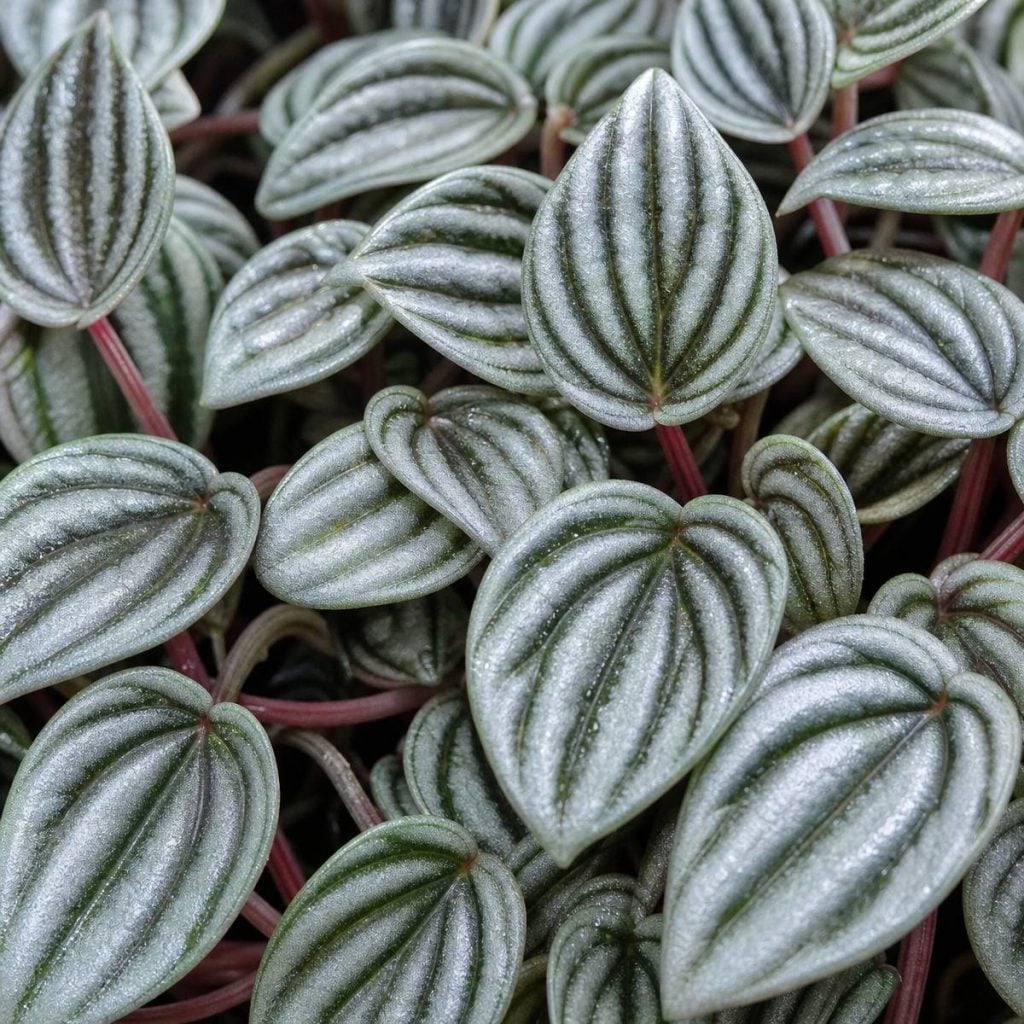
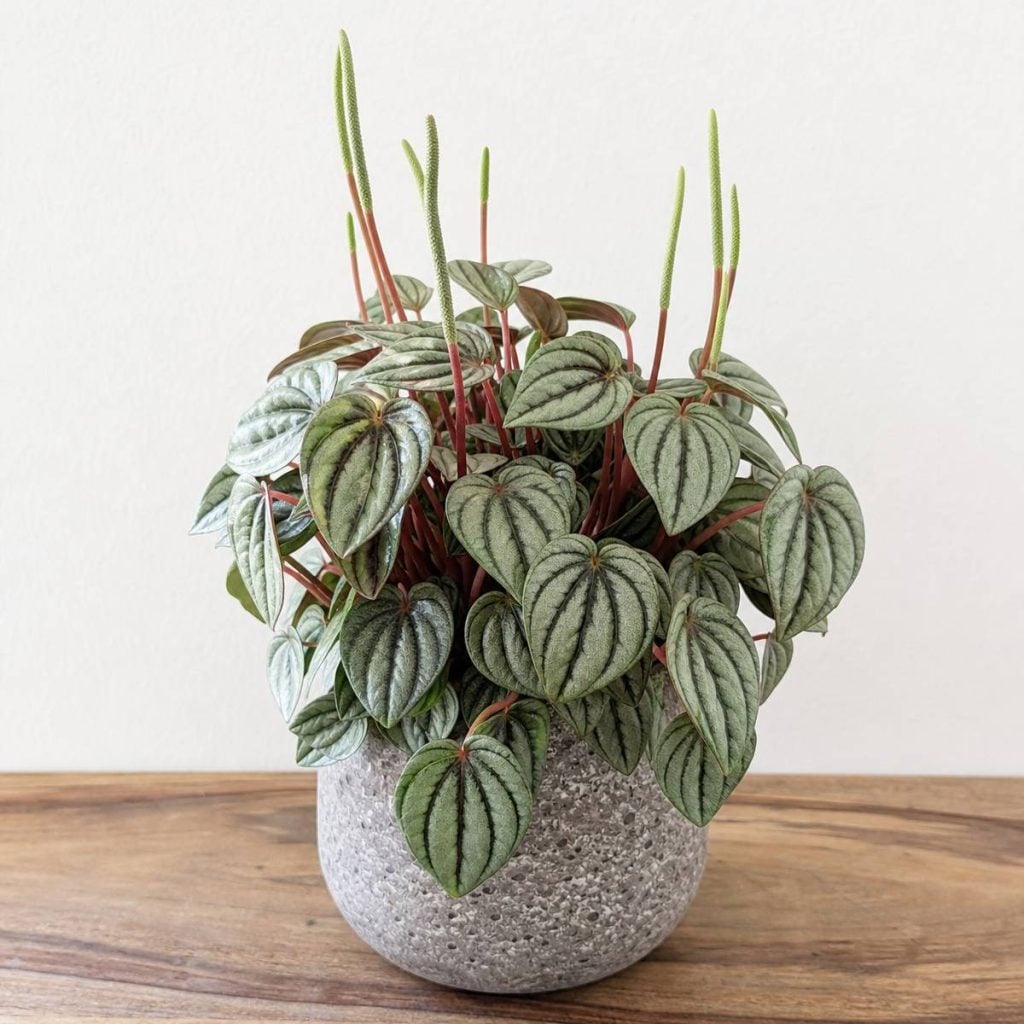
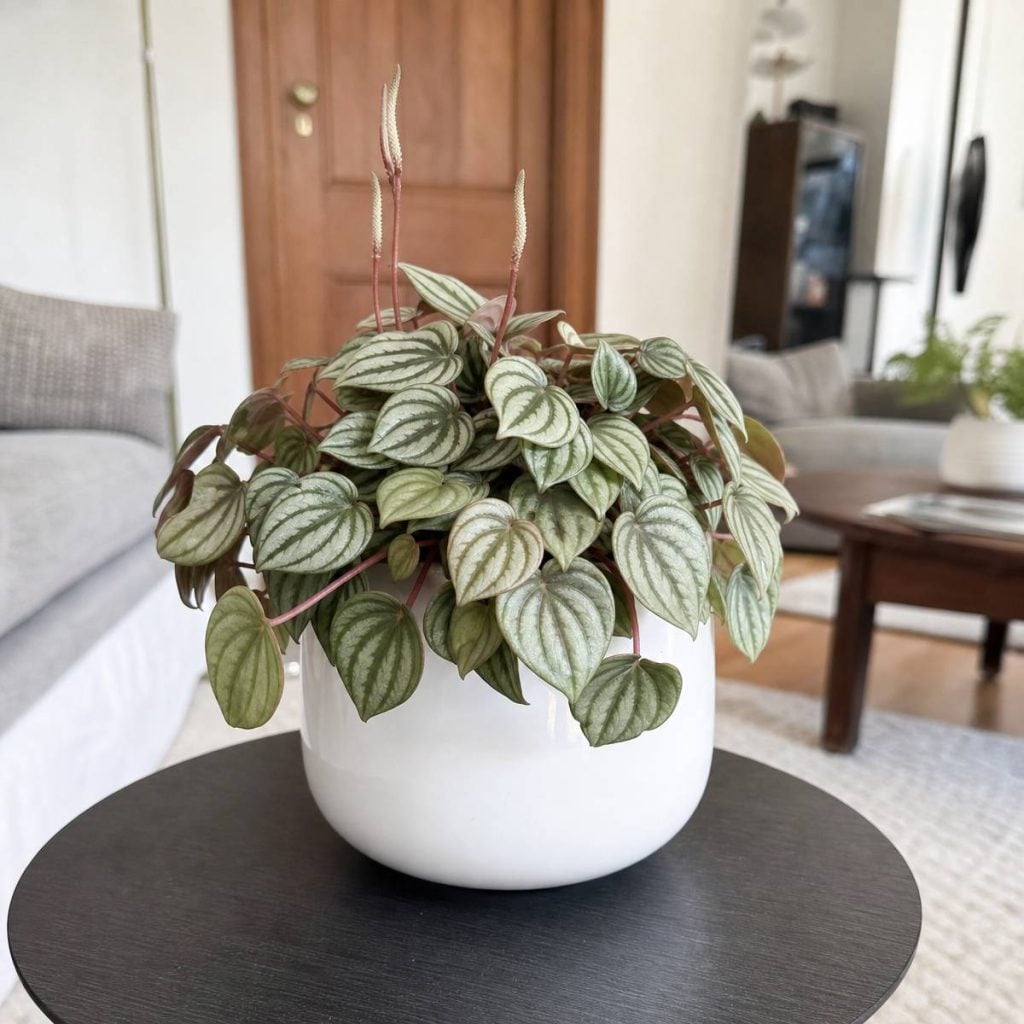
Silvery leaves lined with dark veins, fleshy red stems and a neat, compact shape: that is Peperomia albovittata. It is most often sold as the cultivar ‘Piccolo Banda’.
It is a small, slow-growing houseplant that fits a desk, a shelf or a windowsill. It asks for very little.
Peperomias, like the watermelon peperomia, belong to the black pepper family, Piperaceae. The genus has over 1,000 species.
They are native to the tropical and subtropical areas of Central and South America, Africa, Southeast Asia and parts of Australia. Peperomia albovittata’s own native range is Ecuador.
Peperomia Albovittata Quick Care Tips
- Botanical name: Peperomia albovittata; the cultivar sold most often is ‘Piccolo Banda’
- Common names: Piccolo Banda peperomia; radiator plant (used for the whole genus)
- Family and origin: Piperaceae; native to Ecuador
- Growability: Easy, low maintenance
- Hardiness zones: USDA 10a to 12b for peperomias in general
- Size: Small; the patent application’s 33-week-old ‘Piccolo Banda’ measured about 4 inches tall and 10 inches wide
- Flowering: Rarely blooms as a houseplant; flowers are small spikes, not showy
- Light: Bright, indirect light; no direct sun
- Temperature: Warm rooms away from cold drafts; for the genus, 65 to 86°F and always above 50°F; outdoors only after nights stay at 60°F or higher
- Humidity: Average home humidity; a humidifier helps in dry winter air
- Soil: Well-drained houseplant or cactus potting mix
- Water: Let the soil dry out between waterings; never leave it standing in water
- Fertilizer: Spring and summer only; low-strength liquid occasionally, or slow-release granules once a year
- Pests and problems: Mealybugs, spider mites, fungus gnats, scale and whiteflies; root rot from overwatering; leaf spot from wet leaves
- Propagation: Leaf cuttings or stem cuttings
- Pets: Most peperomias are considered safe for pets; this one isn’t listed by name, though several other peperomias are listed as non-toxic to dogs and cats
What’s in a Name? Species vs. ‘Piccolo Banda’
Here is a mix-up worth clearing up. Peperomia albovittata is a true species, and ‘Piccolo Banda’ is a cultivar of it, not a separate plant.
Its species record on GBIF (the Global Biodiversity Information Facility) dates its description to 1898. The Kew World Checklist of Vascular Plants data in that record gives its native range as Ecuador.
The U.S. plant patent application for ‘Piccolo Banda’ was filed in 2016 for the Dutch company Eden Collection B.V. It says the plant came from crossing two unnamed Peperomia albovittata cultivars in 2013 in Sappemeer, the Netherlands.
The breeder picked it out in 2014 as a single plant among the resulting seedlings. It was first multiplied from leaf cuttings that same year.
NC State Extension also lists a second cultivar, ‘Rana Verde’. It has thick, deep green, round, heart-shaped leaves.
You may also see this plant labeled ivy leaf peperomia. That name belongs to a different species: ivy-leaf peperomia is the name used for Peperomia griseoargentea.
What about radiator plant? That common name is used for the whole genus and refers to peperomias’ liking for warm conditions.
The genus name comes from the Greek peperi (pepper) and homoios (resembling), a nod to their cousin, black pepper. One you may already know is the baby rubber plant, Peperomia obtusifolia.
Peperomia Albovittata ‘Piccolo Banda’ Care
Size and Growth
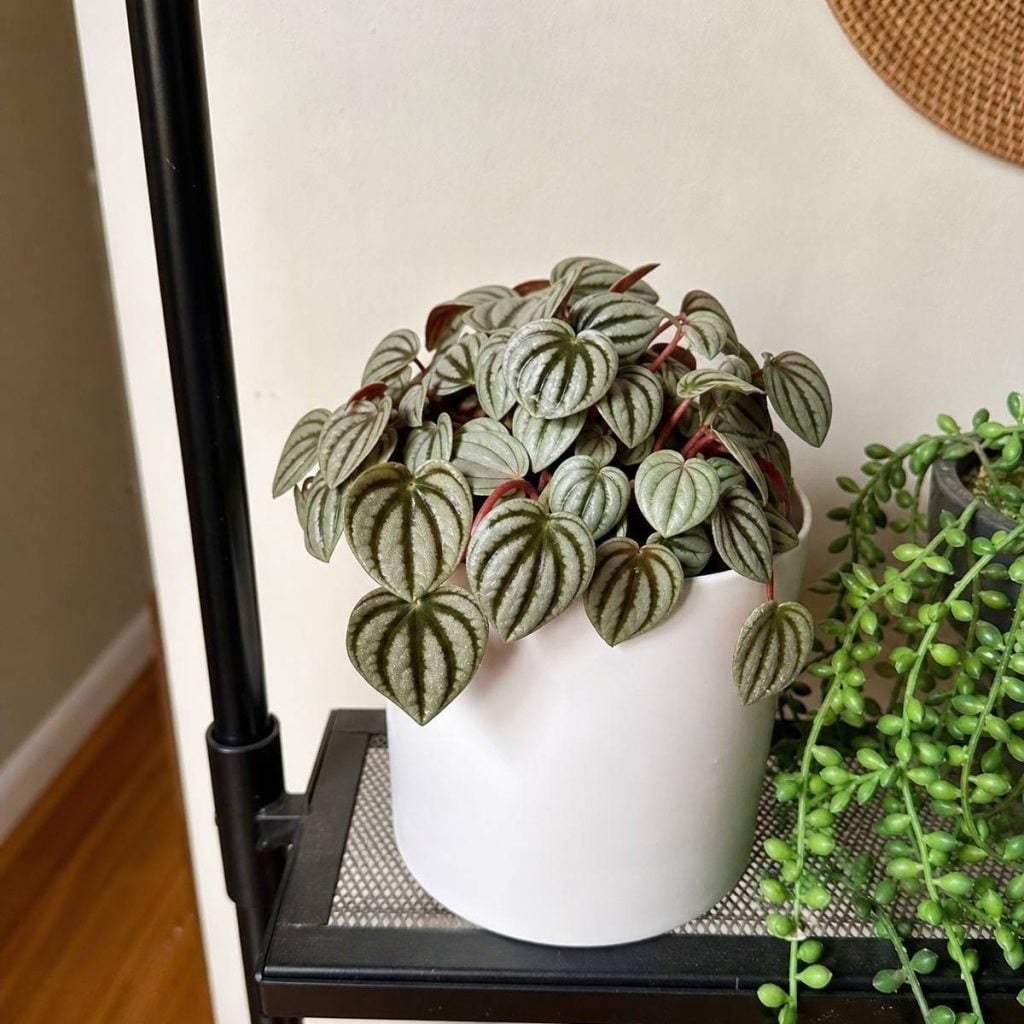
‘Piccolo Banda’ is compact and semi-succulent, with silvery green leaves, dark veins and fleshy red stems. The patent application describes small, heart-shaped, light green leaves with brown veins on the upper surface. They grow in rosettes on short, thick stems.
Its measured 33-week-old plant was 10.8 cm tall and 24.5 cm wide (about 4 by 10 inches). Its leaves were about 4.4 cm long and 3.7 cm wide.
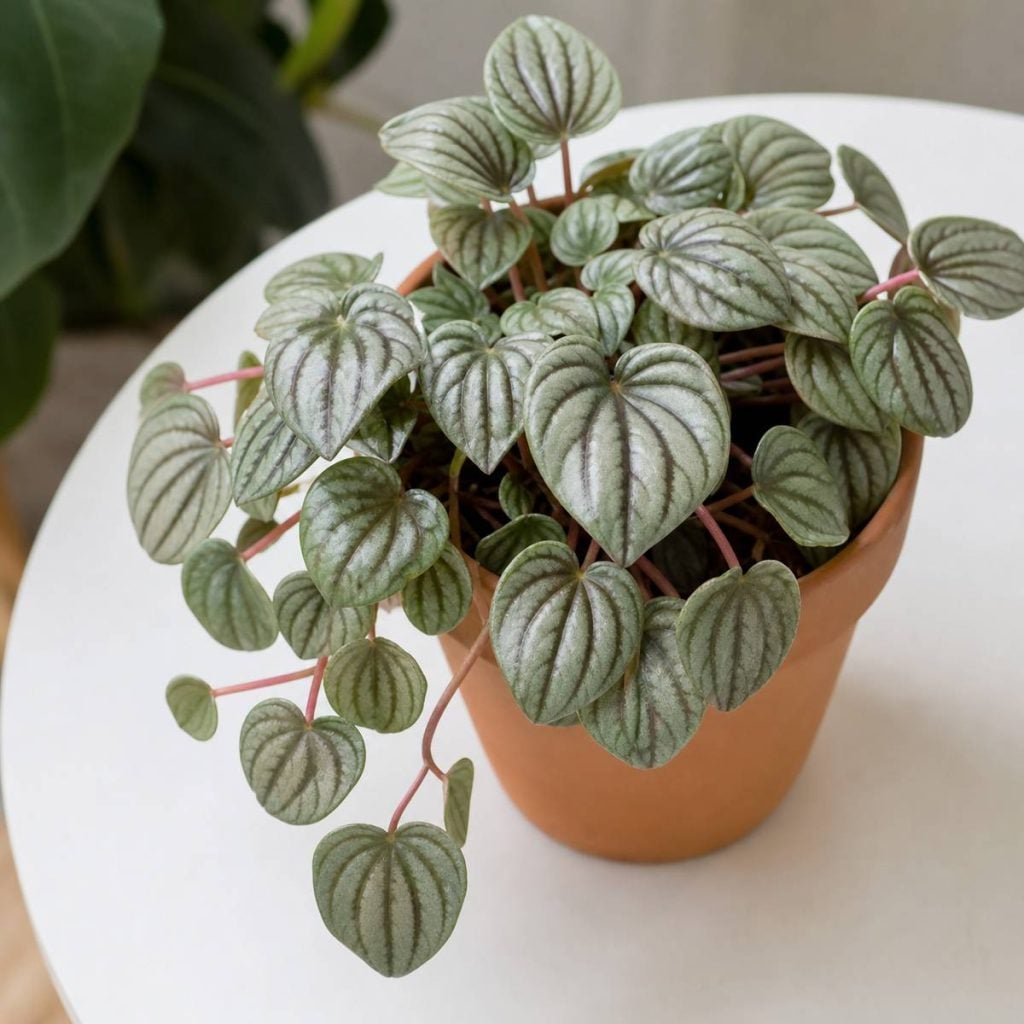
Peperomias in general stay small. They are slow-growing, at 6 to 12 inches high and wide for the genus.
Clemson Extension says peperomia typically grows 8 to 15 inches tall and wide. It also says most species grow at a moderate rate.
If the look seems familiar, there is a reason. The patent application names ‘Eden Rosso’ and ‘Napoli Nights’ as the closest cultivars for comparison.
‘Rosso’ and ‘Frost’ are listed among the cultivars of Peperomia caperata. However, the U.S. plant patent for ‘Eden Rosso’ (PP24,379) describes it as a seedling from a cross of P. marmorata and P. metallica.
See our guides to red ripple peperomia, Peperomia Rosso and Peperomia Frost.
Flowering
Don’t expect much of a show. Peperomias rarely bloom as houseplants, and their blooms are small, non-showy, brown and greenish-white spikes. The patent application says ‘Piccolo Banda’ had not produced flowers at the time it was described.
If yours does send up spikes, they appear in spring and summer while the plant is actively growing. They are said to resemble a rat’s tail, and removing them lets the plant put its energy into leaves.
Light
Bright, indirect light is the sweet spot. Indirect light from an east- or south-facing window works well. Peperomia can even tolerate somewhat low light near a large north-facing window.
Direct sun is the thing to avoid, because direct sunlight can scorch the leaves. If a south or west window gets hot afternoon sun, set the plant a few feet back or behind a sheer curtain.
Related: What are the secrets to successfully growing a San Marino plant?
Temperature
Think warm and steady. Protect peperomias from cold drafts, and keep yours away from air-conditioning vents, drafty doors and cold glass in winter. Outdoors, the genus is listed for USDA zones 10a to 12b.
Want to give it a summer outside? Peperomia can go outdoors once night temperatures are consistently 60°F or higher. Start it in deep shade to acclimate, then keep it in a bright, shady spot all summer, out of direct sun.
For reference, the plants measured for the patent application grew in a glass greenhouse at 18 to 25°C (about 64 to 77°F) by day. Nights were 15 to 18°C (about 59 to 64°F).
For the genus as a whole, the Royal Horticultural Society (RHS) gives 18 to 30°C (65 to 86°F). It says to keep peperomias out of cold draughts and always above 10°C (50°F).
Humidity
No humidity tray required. Peperomias can thrive in the humidity levels of most homes. A humidifier helps if your home is very dry, and the plant benefits from one in winter.
Keep the leaves dry, too. Avoid wetting them when you water, and give the plant good air circulation to prevent fungal leaf spots. That makes a humidifier a better choice than misting.
Watering
Here is where most peperomias get into trouble. Many peperomias are succulent-like, with fleshy leaves that can store water. Peperomia prefers to dry out between waterings, and an overwatered plant will drop its leaves.
So water when the soil has dried out, then let the pot drain completely before you set it back in the saucer. That way, the roots never sit in water.
Use a pot with drainage holes. Root rot and yellowing or curling leaves point to overwatering.
Fertilizing
Go light. Fertilize peperomia only when it is actively growing in spring and summer. You can use a low-strength liquid fertilizer occasionally during the growing season, or a slow-release granular fertilizer once a year.
Follow the product label for the amount, and skip feeding in fall and winter.
Soil and Repotting
Drainage matters more than any special recipe. Plant peperomia in a well-drained houseplant or cactus potting mix, and add perlite if you tend to overwater. A moist, well-drained mix of loam and sand also works.
Repotting is rarely needed. Peperomias are slow growers and can stay in the same pot for several years. When you do repot, use a pot slightly larger than the grower’s pot it came in.
Grooming
Not much to do here. Trim off old leaves when needed, and pinch off any dead or damaged leaves as they show up. To make a plant look fuller, prune a stem just above a leaf node so it branches.
How To Propagate Peperomia Albovittata
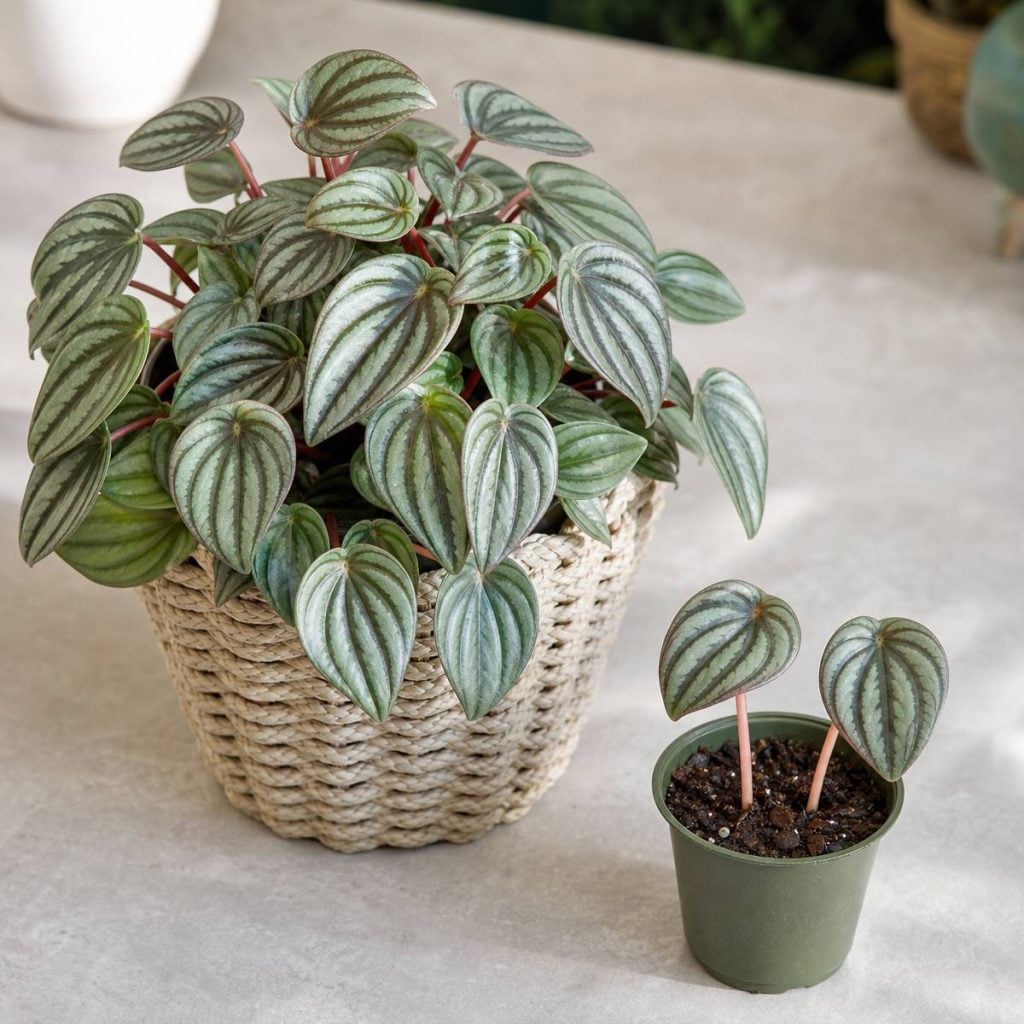
Peperomias are propagated by leaf cuttings, stem cuttings or division, depending on the species. For ‘Piccolo Banda’, the patent application lists leaf cuttings, which is how the breeder first multiplied it.
Leaf cuttings. Remove a leaf with at least an inch of the petiole (leaf stem) and insert it into a rooting medium. New plants form at the base of the petiole, and they can be removed and potted once they grow.
Stem cuttings. Cut a 3- to 5-inch piece of stem and remove the leaves on the lower third. Dip the end in rooting hormone and insert it into potting soil or a rooting medium. Cover it with clear plastic and keep it out of direct sunlight.
Be patient. In the breeder’s tests at 18 to 20°C (about 64 to 68°F), roots started in about 10 days in summer and 14 days in winter. But producing a rooted cutting took about 80 days in summer and 100 days in winter.
Related: Check out this article on How To Propagate Peperomia
Peperomia Albovittata Pests and Problems
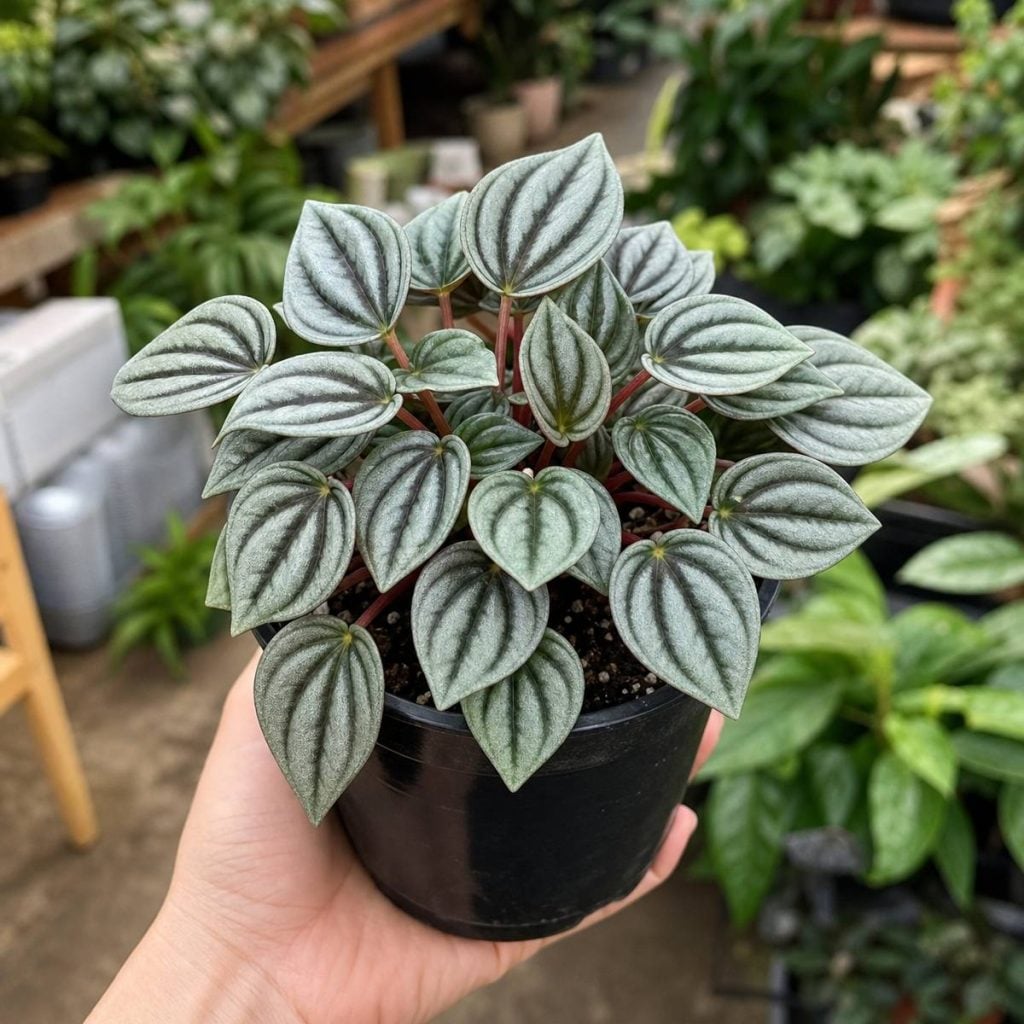
Pests are occasional, not constant. Mealybugs, spider mites, fungus gnats, scale and whiteflies are the pests most often found on peperomias, along with aphids.
The bigger risk is the watering can. Root rot, caused by overwatering, is the most common disease of peperomia. Keeping the leaves dry when you water can prevent fungal leaf spots.
For serious mealybug problems on houseplants, UC IPM says you can dab them with a solution of 70% (or less) isopropyl alcohol and water. Test a small part of the plant first and watch for leaf burn.
Insecticidal soaps, horticultural oils and neem oil applied directly to young mealybugs can also reduce their numbers.
Not every source agrees on alcohol. UF/IFAS Extension says alcohol is phytotoxic (harmful to plants) and should not be applied to plant tissues. It also warns that dish detergents can damage leaves. If you try alcohol, test first.
Is Peperomia Albovittata Toxic to Pets?
Most peperomia are considered safe for pets, but the ASPCA does not list Peperomia albovittata by name. It does list several of its relatives as non-toxic to dogs and cats.
These include the baby rubber plant (Peperomia obtusifolia) and watermelon peperomia (P. argyreia). Emerald ripple peperomia (P. caperata) and ivy peperomia (P. griseoargentea) are on the list too.
That said, it is an ornamental, not food. Keep it where curious kids and pets won’t chew on it. Call your veterinarian or the ASPCA Animal Poison Control Center if a pet eats a lot of any plant.
Suggested Peperomia Albovittata ‘Piccolo Banda’ Uses
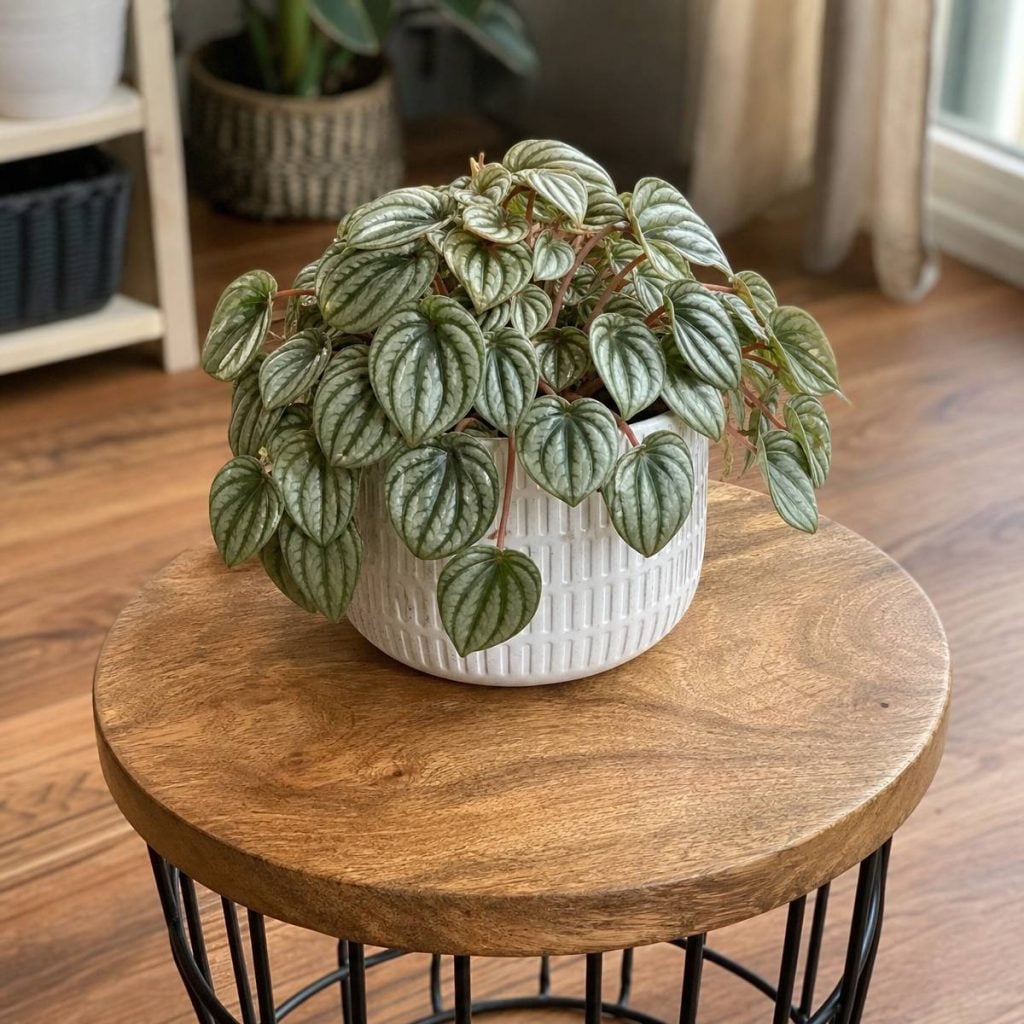
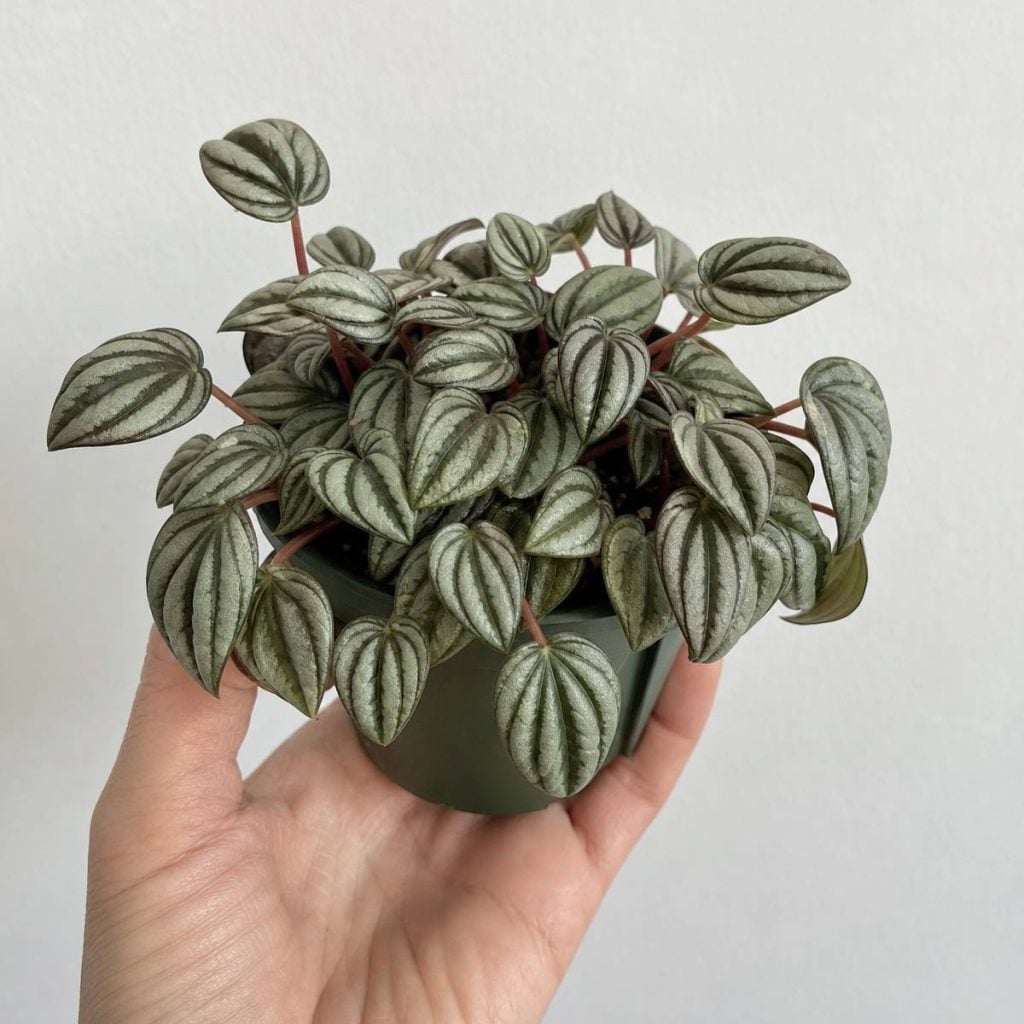
With its compact rosette and silvery, striped leaves, ‘Piccolo Banda’ breaks up a shelf full of plain green houseplants. Peperomias are perfect plants for a desk or tabletop in the home or office.
Some species suit hanging baskets, and others suit terrariums. Since ‘Piccolo Banda’ grows as a rosette rather than a trailer, a tabletop, a desk or a dish garden suits it best.
It also makes an easy gift plant for a beginner. Peperomias are low-maintenance plants, and this one needs little more than bright, indirect light and a careful hand with the watering can.
The Bottom Line
Peperomia albovittata ‘Piccolo Banda’ is a small, forgiving houseplant. Give it bright, indirect light, and let the soil dry out between waterings.
Keep its leaves dry, feed it lightly in spring and summer, and keep it out of cold drafts. Do that, and those silvery striped leaves will brighten a desk for years.
Do you grow a Piccolo Banda? Tell us where yours lives and how it’s doing!
Frequently Asked Questions
Is Peperomia albovittata the same as ‘Piccolo Banda’?
Not quite. Peperomia albovittata is the species, native to Ecuador, and ‘Piccolo Banda’ is a cultivar of it. Its U.S. plant patent application says it came from a 2013 cross of two unnamed albovittata cultivars in Sappemeer, the Netherlands.
It was selected there in 2014, and ‘Rana Verde’ is another cultivar of the species.
How often should I water Peperomia albovittata?
Water when the soil has dried out, not on a fixed schedule. Peperomia prefers to dry out between waterings and drops its leaves if it is overwatered. Let the water drain before the pot goes back in its saucer. Root rot and yellowing or curling leaves point to overwatering.
How much light does Piccolo Banda peperomia need?
Bright, indirect light suits it best, such as indirect light from an east- or south-facing window. It can tolerate somewhat low light near a large north-facing window. Keep it out of the path of direct sun, because direct sunlight can scorch the leaves.
Is Peperomia albovittata safe for cats and dogs?
Most peperomia are considered safe for pets, though this one isn’t listed by name. The baby rubber plant, watermelon peperomia, emerald ripple peperomia and ivy peperomia are listed as non-toxic to dogs and cats.
It is still an ornamental, not a treat, so call your veterinarian if a pet chews on it and seems unwell.
How do you propagate Peperomia albovittata?
Use leaf cuttings, the method its breeder first used for ‘Piccolo Banda’. Take a leaf with at least an inch of leaf stem and insert it in a rooting medium. New plants form at the base of the stem.
In the breeder’s tests at 18 to 20°C, a rooted cutting took about 80 days in summer and 100 in winter.