Confession time: I loved zinnias so much as a child that my first apartment balcony became a zinnia-only zone. No regrets.
These bright, cheerful flowers splash your garden with color from summer until frost. And the best part?
They’re really easy to grow, even if you’ve struggled with other plants. Here’s how to get the most blooms from your zinnias.
Why Your Garden Needs Zinnias
Forget what you’ve heard about flowers requiring expert skills. Zinnias give you great results with minimal effort, a rare combination in gardening.
A single zinnia plant can produce up to 20 blooms at once when properly cared for.
These colorful flowers aren’t just pretty. They attract butterflies and bees, turning your garden into a pollinator haven. Plus, they keep blooming from early summer until the first frost.
9 Ways to Get More Zinnia Blooms
1. Choose Varieties That’ll Thrive (Not Just Survive)
Picking the right zinnia variety for your space matters more than you might think. For cutting gardens with room to spare, ‘Benary’s Giant’ gives you sturdy stems and large flowers.

Working with a tiny balcony? ‘Profusion’ series packs lots of flowers into small spaces.
2. Sun, Sun, and More Sun
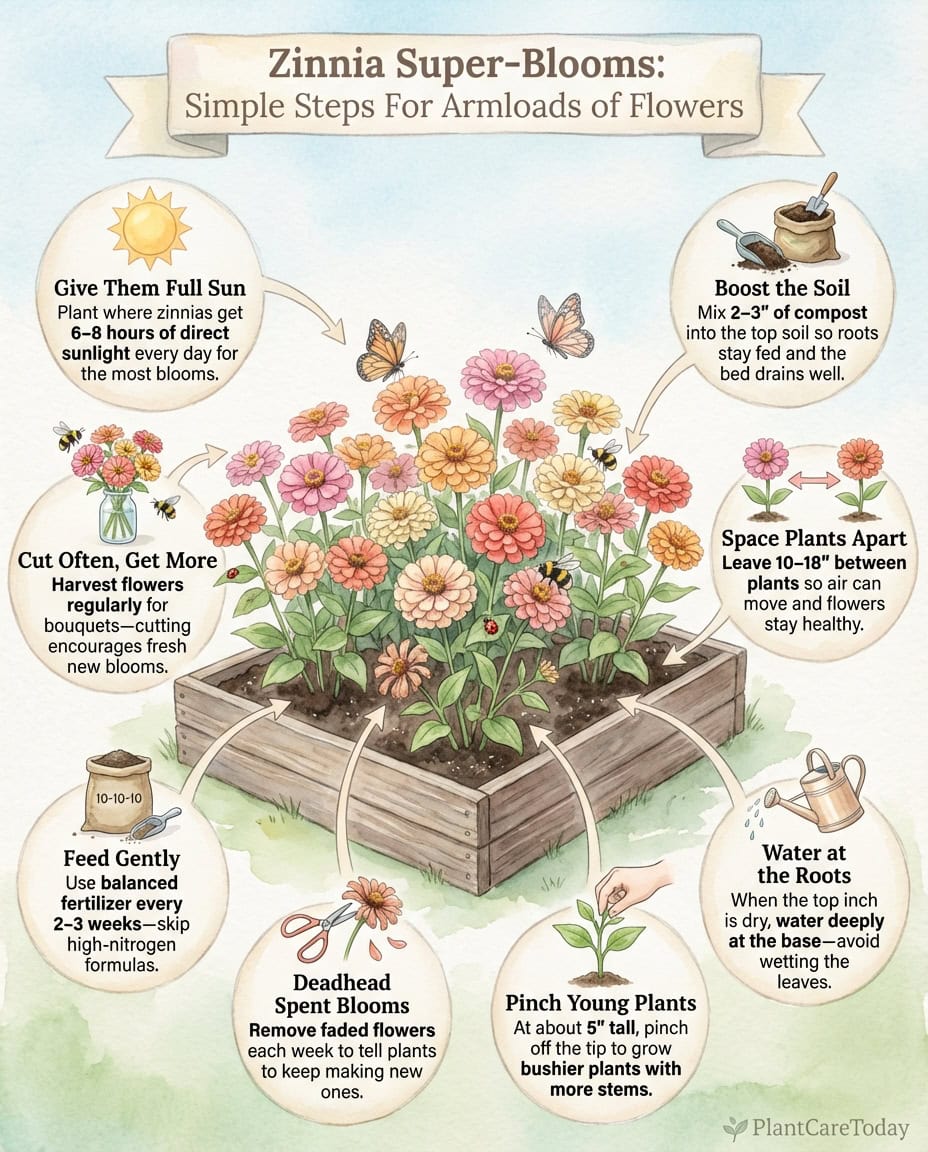
Zinnias need 6-8 hours of direct sunshine daily. They’re not shade-tolerant plants. Anything less and they’ll produce fewer, smaller blooms.
Position them so they receive unfiltered afternoon light for the best flower display.
3. Soil That Makes Them Sing
Zinnias aren’t picky, but they do best in rich, well-draining soil that doesn’t stay soggy. Before planting, mix in:
• Nutrient-rich compost (about 2-3 inches mixed into the top 6 inches of soil)
• A handful of organic matter to improve drainage
Your zinnias will reward you with plenty of blooms.
4. Give Them Breathing Room
Crowded zinnias don’t bloom as well. What really matters for your flower patch is proper spacing. Plants need 10-18 inches between them (depending on variety) to develop their full bloom potential.

This airflow also helps prevent powdery mildew, which can quickly damage your plants. Think of it like this: zinnias are like party guests. They need enough elbow room to really shine.
5. Water Like a Pro, Not a Rookie
Deep, consistent watering makes the difference between new and experienced gardeners. When the top inch of soil feels dry, water deeply at the base. Never overhead.
Overhead watering increases disease risk significantly. Use soaker hoses to keep plants healthy and blooming well.
6. The Pinching Trick
This might feel odd, but when your zinnia seedlings reach about 5 inches tall, pinch off the top growth.
This simple step triggers the plant to branch out rather than grow straight up, creating a bushier plant with 2-3 times as many blooming stems.
7. Deadhead Like Your Garden Depends On It (Because It Does)
Your withering zinnia blooms pull energy that could be making new flowers. Regularly snip or snap off spent blooms to redirect that energy.

Think of deadheading as telling your plant to make more flowers instead of seeds. A weekly deadheading session can extend your blooming season by up to a month.
8. Feed Strategically, Not Constantly
Use a balanced 10-10-10 formula every 2-3 weeks during the growing season. The key mistake? High-nitrogen fertilizers produce lots of leaves but fewer flowers. Your zinnias want balance.
9. Cut Often For More Blooms (Yes, Really!)
Here’s something that surprises people: the more you harvest, the more flowers you’ll get. Zinnias interpret harvesting as a signal to produce even more blooms.
For nice indoor arrangements and a fuller garden, cut stems when the flowers are just starting to open, making your cuts just above a leaf node.
Rescue Your Struggling Zinnias
Is your zinnia patch looking sad? These solutions will help:
• Powdery mildew invasion: Improve air circulation by thinning plants and watering only at the soil level. A mild solution of 1 tablespoon of baking soda in 1 gallon of water can help prevent the spread.

• Few blooms despite healthy leaves: Your soil might be nitrogen-heavy. Switch to a bloom-boosting fertilizer with a higher phosphorus (P) content (the middle number in NPK).
• Heat-stressed plants: Apply 2 inches of mulch around plants (keeping it away from stems) and water deeply at the roots during cooler morning hours.
Zinnias are cheerful, easy flowers that brighten up summer gardens. Their velvety petals and rainbow of colors make them stand out. With these nine techniques, you’ll have a zinnia patch that keeps blooming all season long.