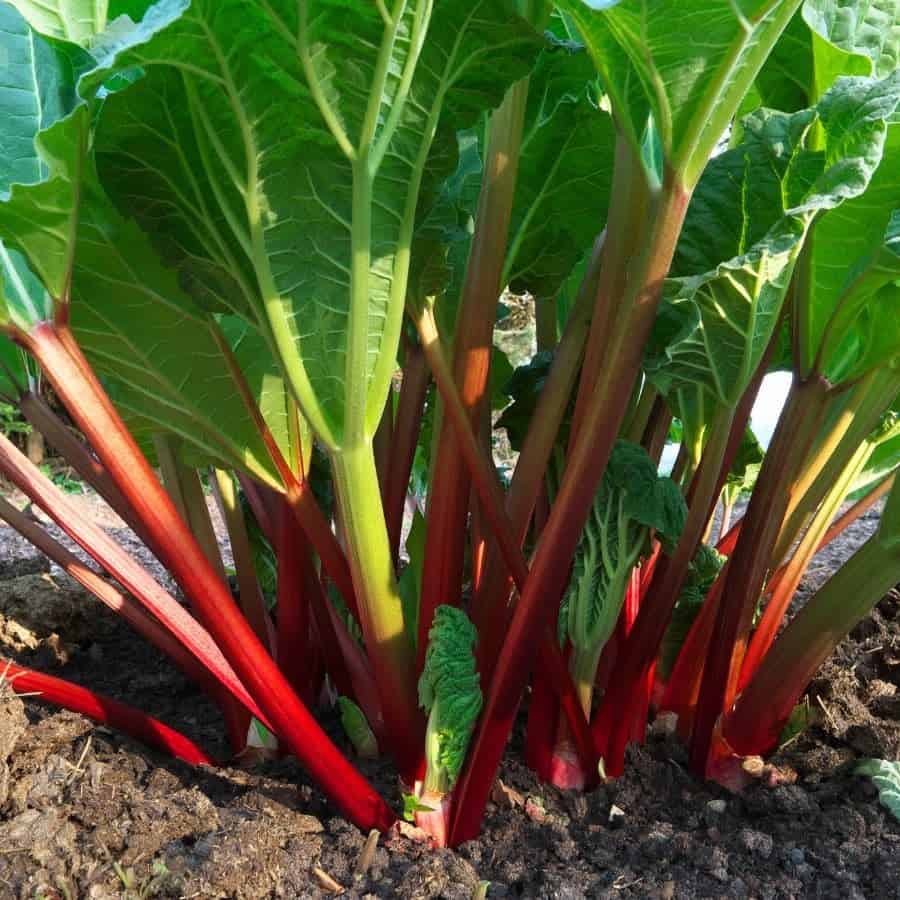
Spring has arrived, and those crimson stalks are bursting through the soil like nature’s own exclamation points!
But here’s the shocker. If you’re only eating rhubarb stalks, you’re literally throwing away 75% of this plant’s potential.
The game-changer for your rhubarb isn’t what you think – it’s learning how every single part from stalk to leaf can transform your kitchen, garden, and home!
Stalks: The Tangy Superfood You’re Probably Underusing
Those ruby-red stalks aren’t just pie filling, they’re nutritional powerhouses!
Packed with vitamin K, antioxidants, and fiber while remaining surprisingly low in calories, rhubarb stalks are the unsung heroes of spring vegetables.
I was shocked to discover that rhubarb contains more calcium than milk, ounce for ounce!
Think beyond the pie, people! Your rhubarb is trying to tell you something important – it wants to be in EVERYTHING. Here are some ways to let those stalks shine:
- Roasted rhubarb: Toss with honey and roast until tender. It’s like nature’s candy with a tangy twist!
- Rhubarb chutney: Paired with onions and spices, it transforms ordinary grilled chicken
- Fermented rhubarb tonic: Your gut will thank you for this probiotic-rich beverage
- Rhubarb vinegar: Infuse apple cider vinegar for a rosy-pink salad dressing that’ll make store-bought look boring
Can’t use it all? Freeze those chopped stalks on a tray, then bag them for year-round access to spring’s tangiest treasure. It’s like a time capsule of flavor waiting in your freezer!
Leaves: From “Toxic” to Terrific Garden Helper
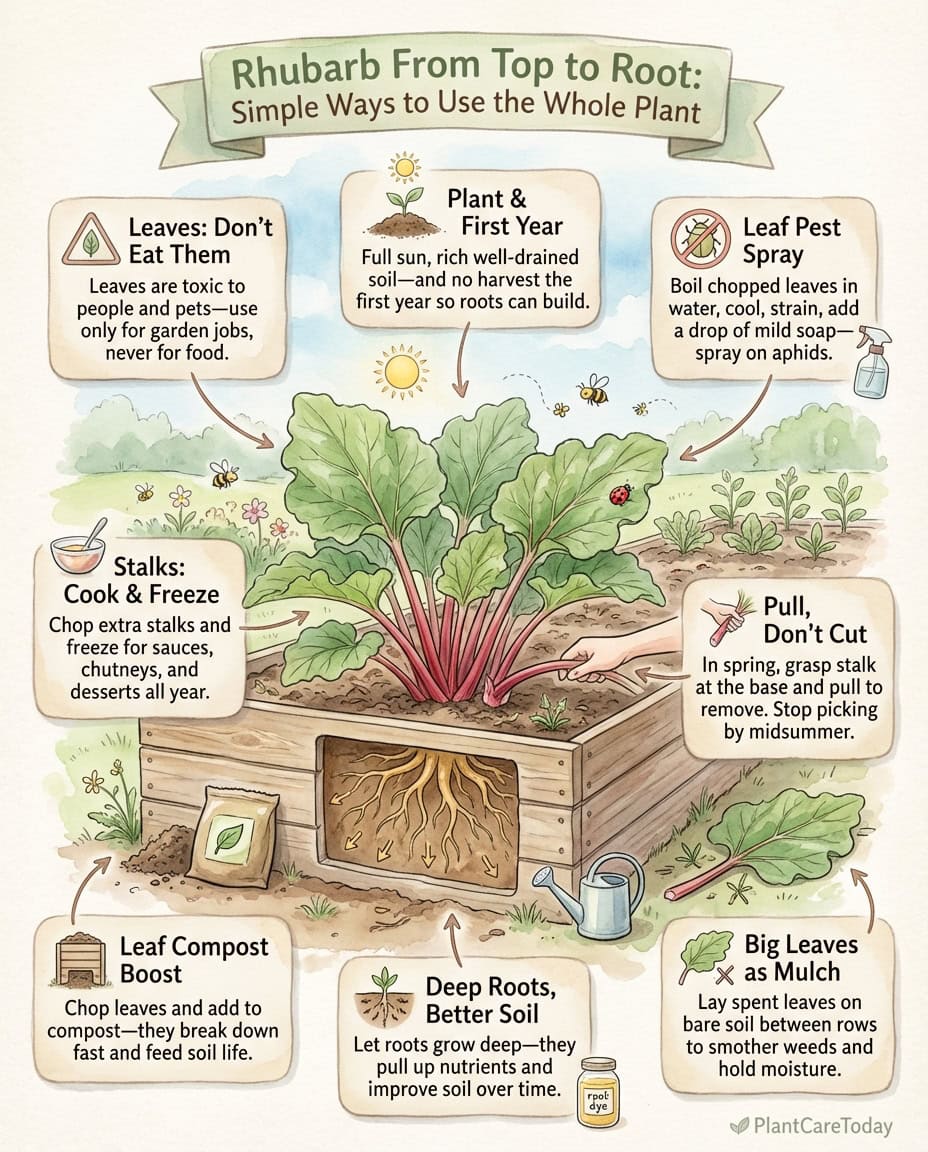
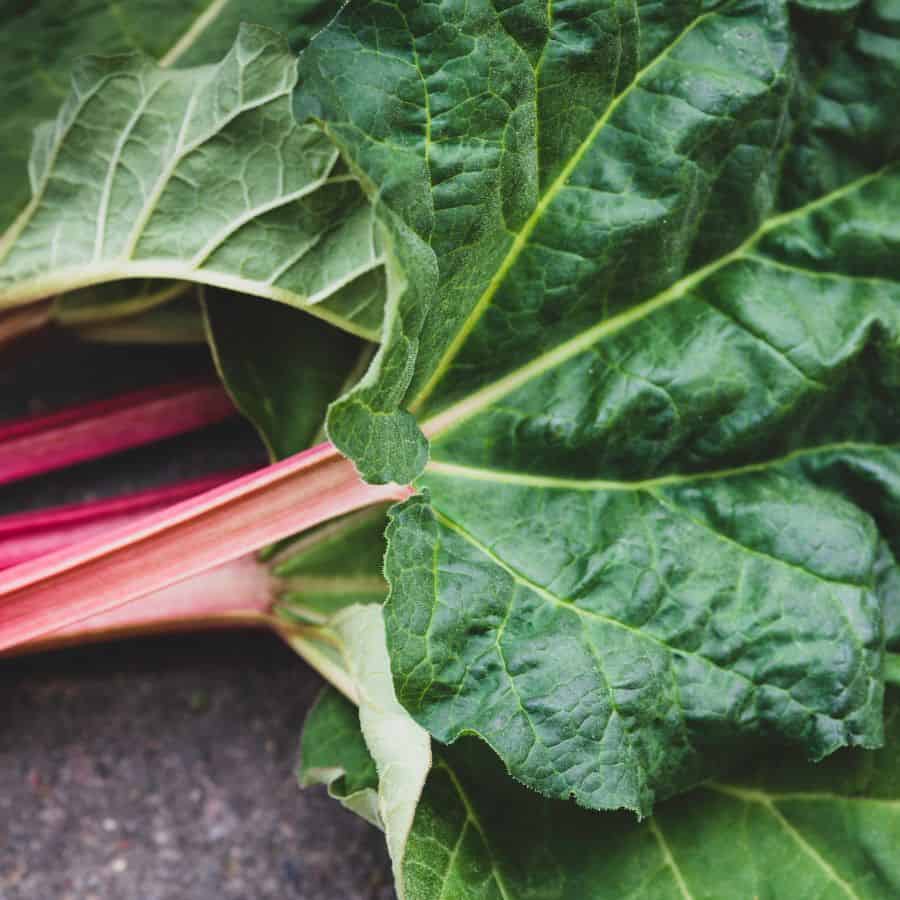
Forget what you’ve heard about rhubarb leaves being “just toxic waste.” Those giant green umbrellas are garden gold!
Yes, they contain oxalic acid, which makes them unsafe to eat, but that same compound makes them ideal for organic gardening.
The secret most plant experts won’t tell you is that those “poisonous” leaves might be your most powerful organic pest control weapon!
- Natural Pest Spray: Boil chopped leaves in water for 20 minutes, cool, strain, and add a drop of biodegradable soap. Spray this potion on plants to send aphids running for the hills!
- Compost Supercharger: Chop and add to your compost. They break down rapidly and kick microbial activity into overdrive
- Weed Suffocator: Lay those massive leaves flat between garden rows and watch them smother weeds
- Metal Cleaner: Rub the leaf on rusty garden tools. The oxalic acid acts like a natural rust remover
Who knew “toxic” could be so useful? Mother Nature doesn’t waste anything, and neither should you!
Roots: The Forgotten Ancient Medicine
The difference between amateur and pro plant parents is simply knowing the whole story, and rhubarb’s story begins underground.

For over 2,000 years, Traditional Chinese Medicine prized rhubarb root far more than its stalks!
These powerful roots contain compounds that support liver function and digestion, and have been used as a natural cleansing agent for centuries.
While I’m not suggesting you dig up your whole patch for medicine (please consult professionals for medicinal use!), there are still ways to harness their power:
- When dividing plants, use extra roots to create golden-yellow natural dyes
- Make a diluted root infusion to accelerate compost decomposition
- Combine with vinegar for a biodegradable household cleaner
Those gnarly underground parts aren’t just anchors. They’re powerhouses of potential most gardeners completely overlook!
Beyond The Harvest: Rhubarb As A Garden Ally
Rhubarb isn’t just a crop. It’s a garden multitasker that keeps on giving.
Its massive leaves shade soil like living mulch, while its deep roots mine nutrients from subsoil layers that other plants can’t reach.
Most people make this mistake with their rhubarb: they see it as just one more vegetable rather than a hardworking garden teammate.
Those spectacular umbrella leaves block weeds, retain moisture, and eventually break down to feed your soil. It’s like having a living mulch factory!
Rhubarb’s Surprising Home Care Powers
Your rhubarb can transform more than meals. It can revolutionize your cleaning routine, too! The natural acids in rhubarb make it surprisingly effective for household tasks:
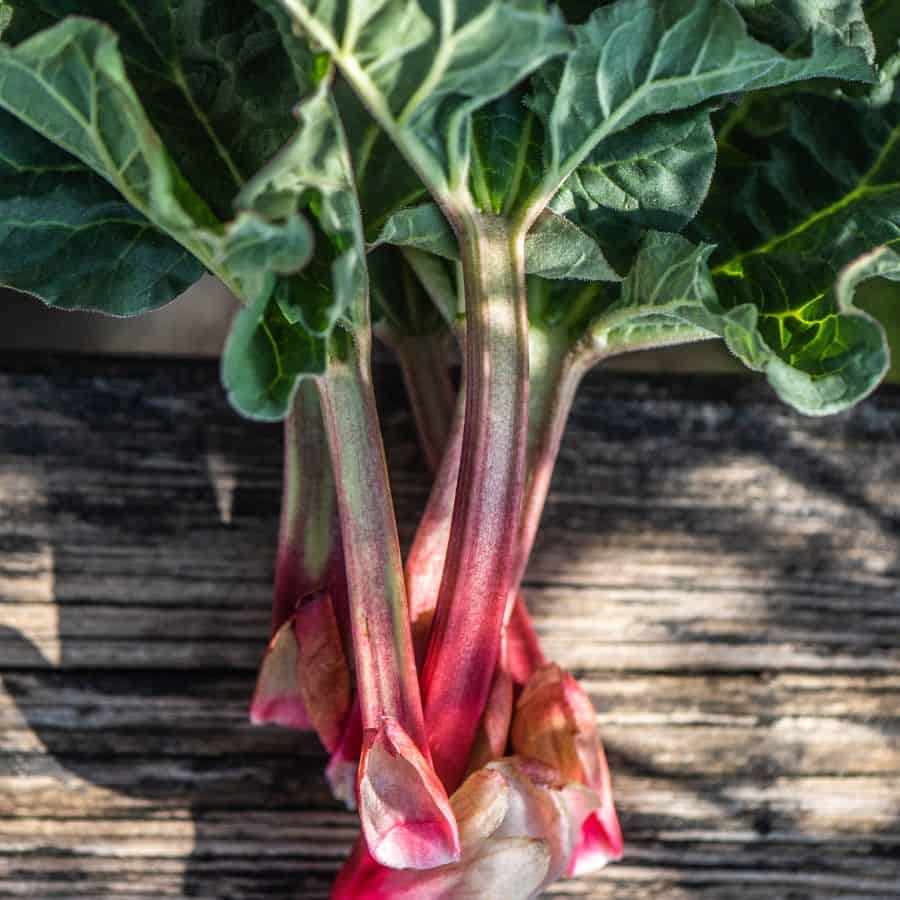
- Simmer stalks with vinegar for a natural cleaning solution that cuts through grime like a dream
- Boil stalks and peels with cinnamon to neutralize kitchen odors
- Extract that vibrant color for natural craft dyes and inks that won’t harm the environment
It’s like having a cleaning supply store growing in your backyard!
Rhubarb Growing Tips For Maximum Harvest
Ready to grow this miracle plant? Here’s how to ensure your rhubarb thrives like it’s on plant steroids:
- Location is everything: Give it sun and rich, well-drained soil with plenty of compost
- Patience pays off: No harvesting in year one (I know, it’s torture!) to establish strong roots
- Pull, don’t cut: Gently pull stalks from the base instead of cutting for healthier plants
- Summer vacation: Stop harvesting by midsummer so the plant can recharge its batteries
Treat your rhubarb right, and it’ll reward you with decades of vibrant stalks, beneficial leaves, and powerful roots. This isn’t just a plant. It’s a legacy in your garden!
Zero-Waste Rhubarb: The Ultimate Sustainability Model
When you use every part of your rhubarb, you’re practicing what our grandparents knew instinctively: nature provides everything we need if we pay attention.
From stalks that nourish us to leaves that protect our gardens and roots that improve soil, rhubarb exemplifies sustainable, circular gardening.
This isn’t just about saving money (though that’s a nice bonus!). It’s about reconnecting with the cyclical wisdom of the garden.
Rhubarb isn’t merely surviving in your garden. It’s teaching us how to thrive by using everything we have.
So the next time you harvest those ruby stalks, remember. You’re holding just one part of rhubarb’s spectacular potential. The rest is waiting for you to discover!