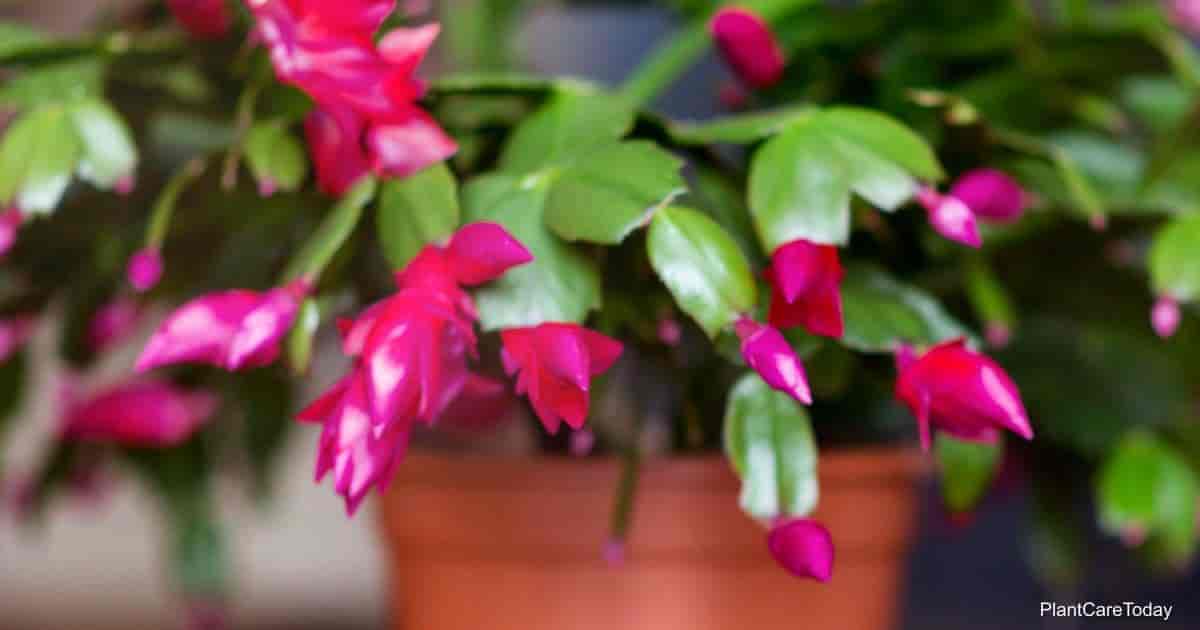
Schlumbergera (shlum-BER-ger-uh) cacti are known as holiday cacti because they tend to flower around the holidays. UMN Extension notes that the names Thanksgiving, Christmas and Easter cactus are only general references to when these plants may bloom.
The true Christmas cactus is Schlumbergera × buckleyi, a hybrid. Schlumbergera bridgesii is one of its former names, according to Iowa State Extension.
The same source says most plants sold as “Christmas cactus” are actually Thanksgiving cactus or hybrids, so it’s worth a quick look at the stems.
Clemson Extension says Thanksgiving cactus has 2 to 4 saw-toothed projections along the edges of its stem segments, while Christmas cactus edges are more rounded.
Good news either way: Iowa State and Clemson Extension both say holiday cacti are easy to propagate. Want a few more of these blooming plants around the house without buying them? Cuttings are how you get there.
How To Propagate Christmas Cactus, Step by Step
The steps are pretty simple. Here’s the whole process in the order you’ll do it.
When To Take Cuttings
Take cuttings in late spring or early summer. Clemson Extension says holiday cacti are easy to propagate from cuttings taken in May or June, and UMN Extension says to prune after flowering.
UF/IFAS says you can use the trimmings to propagate new plants, and that you shouldn’t prune beyond mid-summer. The bonus: the trimmings you’d remove anyway can become new plants.
Choosing and Taking the Cuttings
Start with healthy stems, and check for any signs of disease or pests. A cutting is a piece of stem with a few of the flattened segments (called phylloclades).
The sources vary a little: Clemson and Penn State Extension say three to five segments, Iowa State Extension says two to five, and UF/IFAS says two or three jointed sections. Three falls inside every one of those ranges.
Then pinch or twist the piece off at a joint. Cutting works too: Iowa State Extension says to cut or pinch each section off at a joint, and UMN Extension suggests a small, sharp pruner or knife where two branch sections join.
Let the Cut Ends Callus
Before planting, let each cut end dry and form a callus. Iowa State Extension says to let the ends callus overnight and plant the next day. Clemson Extension says to callus them outdoors in the shade for a day or two. That’s the range the extension guides give.
Preparing the Rooting Medium and Potting Mix
While the cuttings heal, prepare the medium. Extension guides use a few options for rooting: coarse sand or perlite (Iowa State Extension), builder’s sand or a well-drained potting media (UMN Extension), or a well-drained potting soil in a new or disinfected container (Clemson Extension).
UF/IFAS says to use a well-drained, sterile media. The common thread is drainage, and it matters: UMN Extension calls root rot, caused by overly wet soil, one of the most common causes of death in holiday cacti.
For the permanent pot, Christmas cactus soil should drain quickly. Clemson Extension suggests 60 to 80 percent potting soil with 40 to 20 percent perlite. The Missouri Botanical Garden suggests one part potting soil, two parts peat moss and one part sharp sand or perlite.
Iowa State Extension says an all-purpose potting soil is fine if it drains well. If you’re buying a bagged mix, our guide to mixing your potting soil covers what to look for.
Can You Propagate in Water?
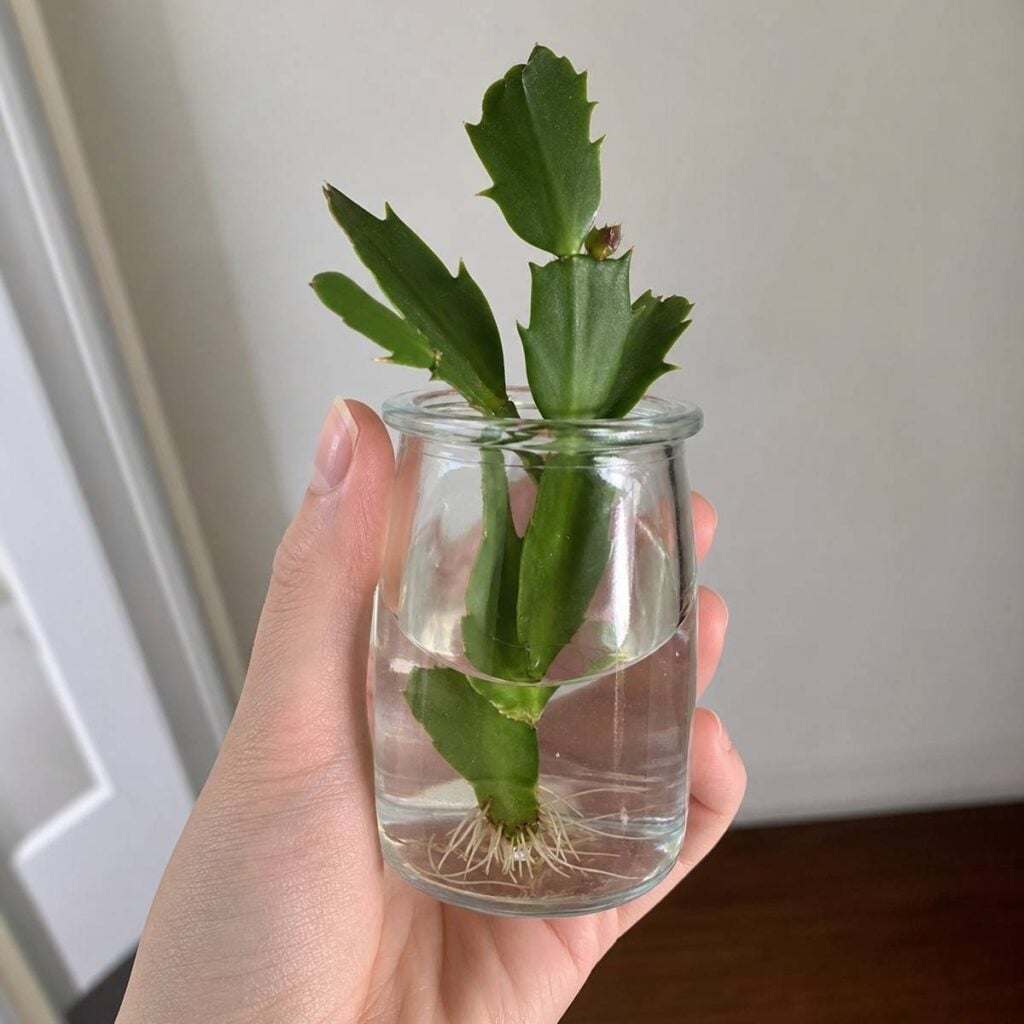
Yes. Penn State Extension lists water as another technique: set the cutting in water until it develops a good root system, then transplant it into a well-draining potting medium.
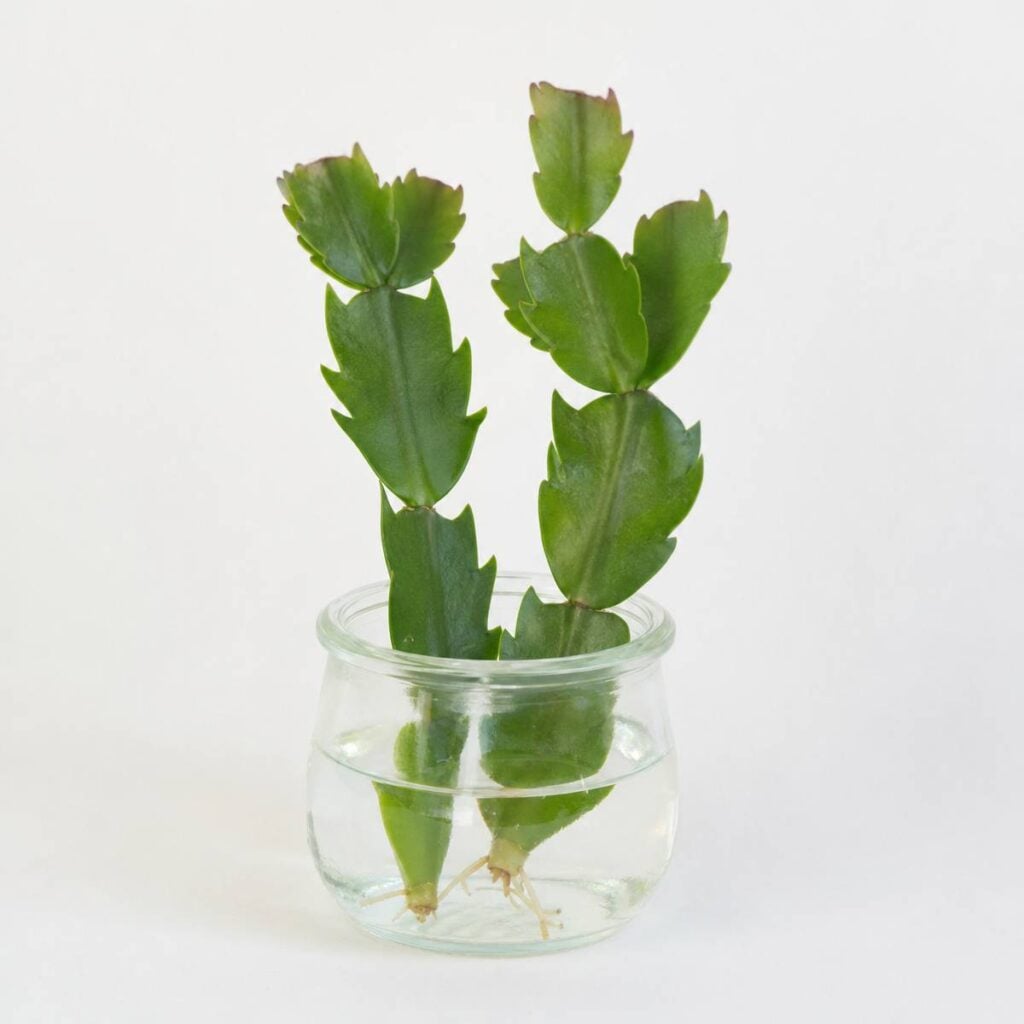
Iowa State, Clemson and UMN Extension root cuttings in sand, perlite or potting mix instead. If you do use water, keep just the cut end in it and top it up so the roots never dry out.
Planting the Cuttings
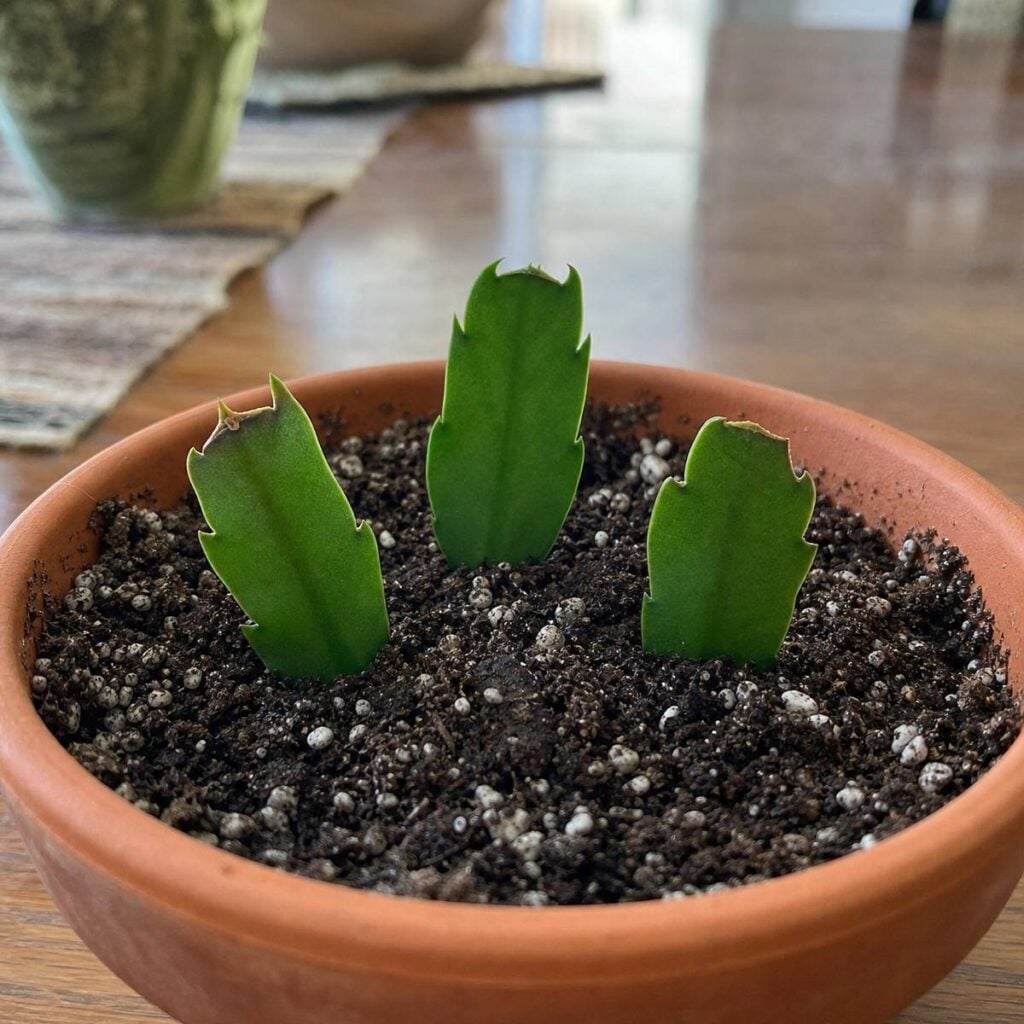
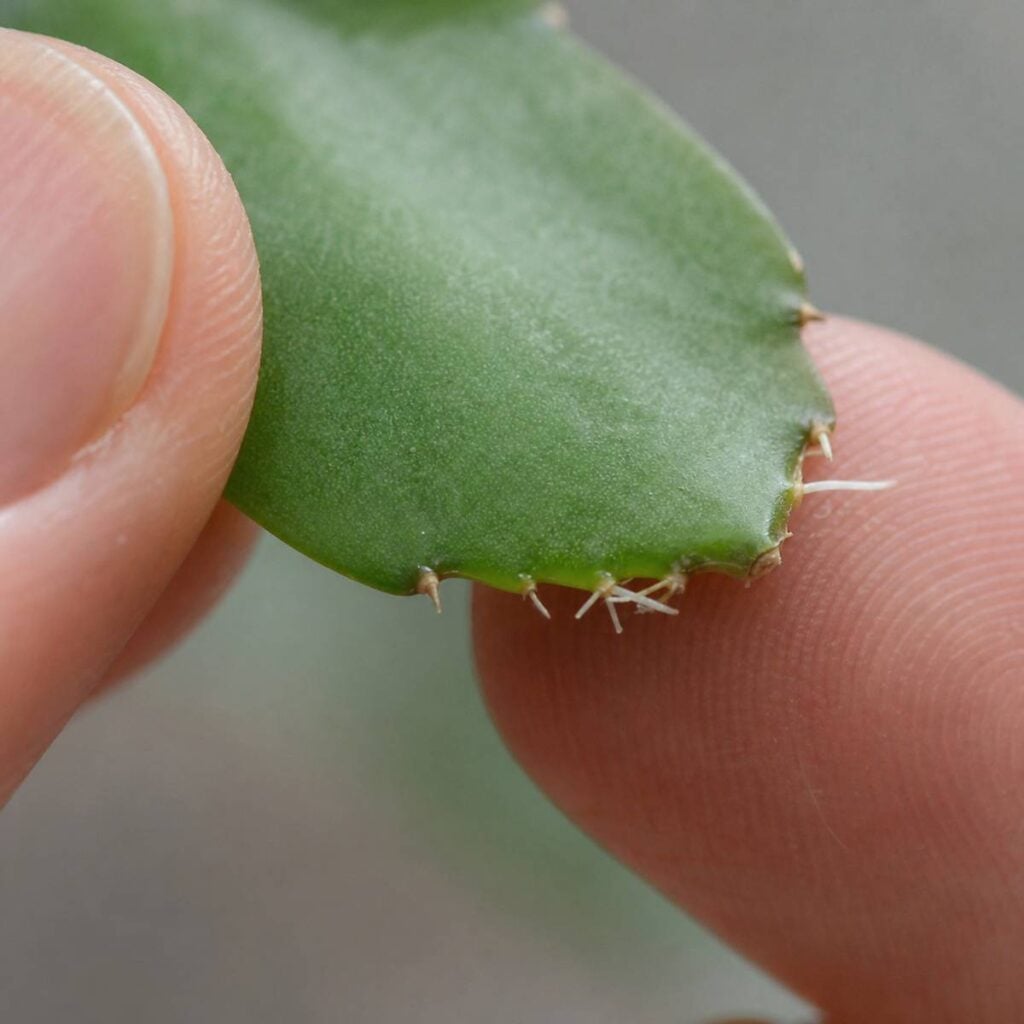
Moisten the medium first, then push each cutting in about an inch deep with the cut end down.
Iowa State Extension warns that cuttings placed upside down will not root, and says to firm the medium so they stand upright. Clemson Extension puts three cuttings in a 4-inch pot or five in a 6-inch pot.
Penn State Extension says to use rooting hormone powder to encourage rooting, and UMN Extension says to dip the base in water, then the hormone. Our guide to rooting hormone can help you pick one.
Water well. Clemson and Penn State Extension then cover the pot with a clear plastic bag, a mini greenhouse that holds humidity around the cuttings.
Set the pot in bright, indirect light, and keep the medium moist but not wet (UMN Extension). UMN Extension and Clemson Extension both recommend 70 to 80°F for good growth.
What To Expect After Planting
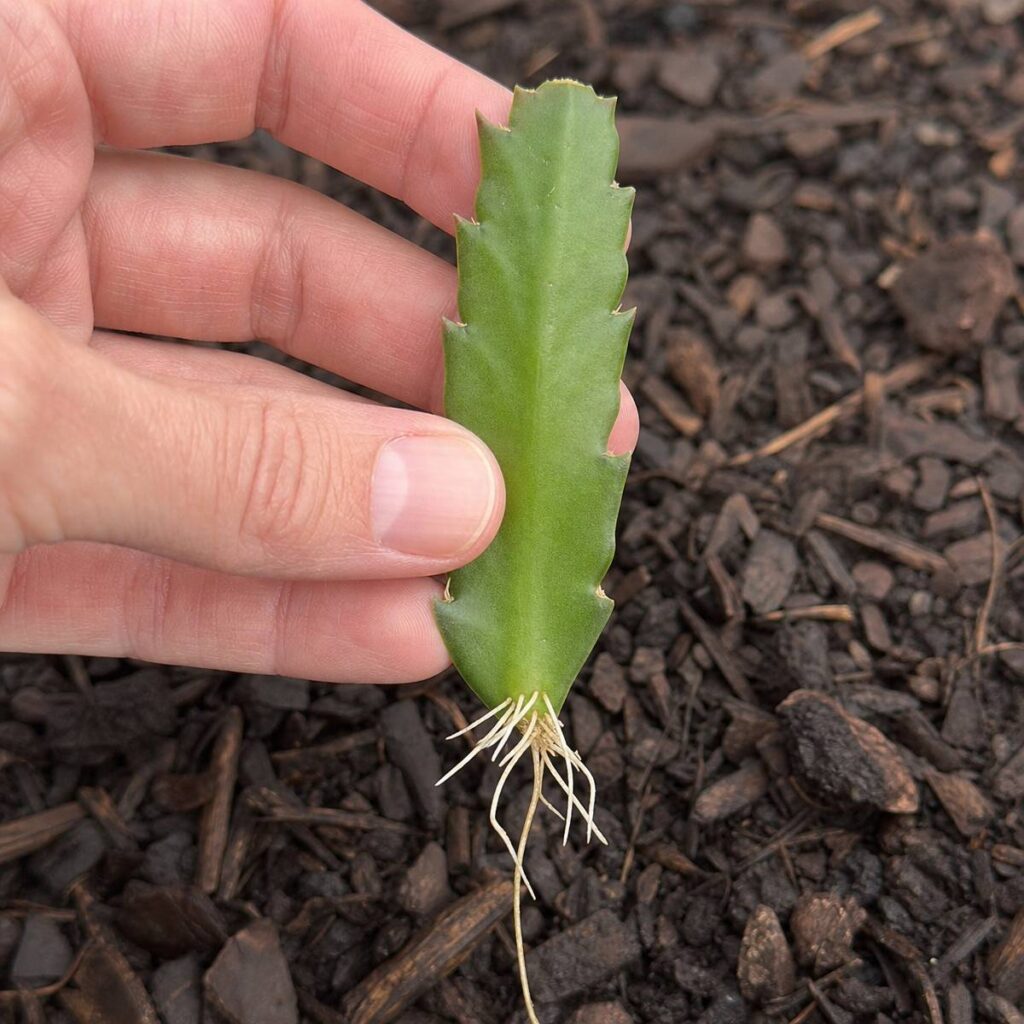
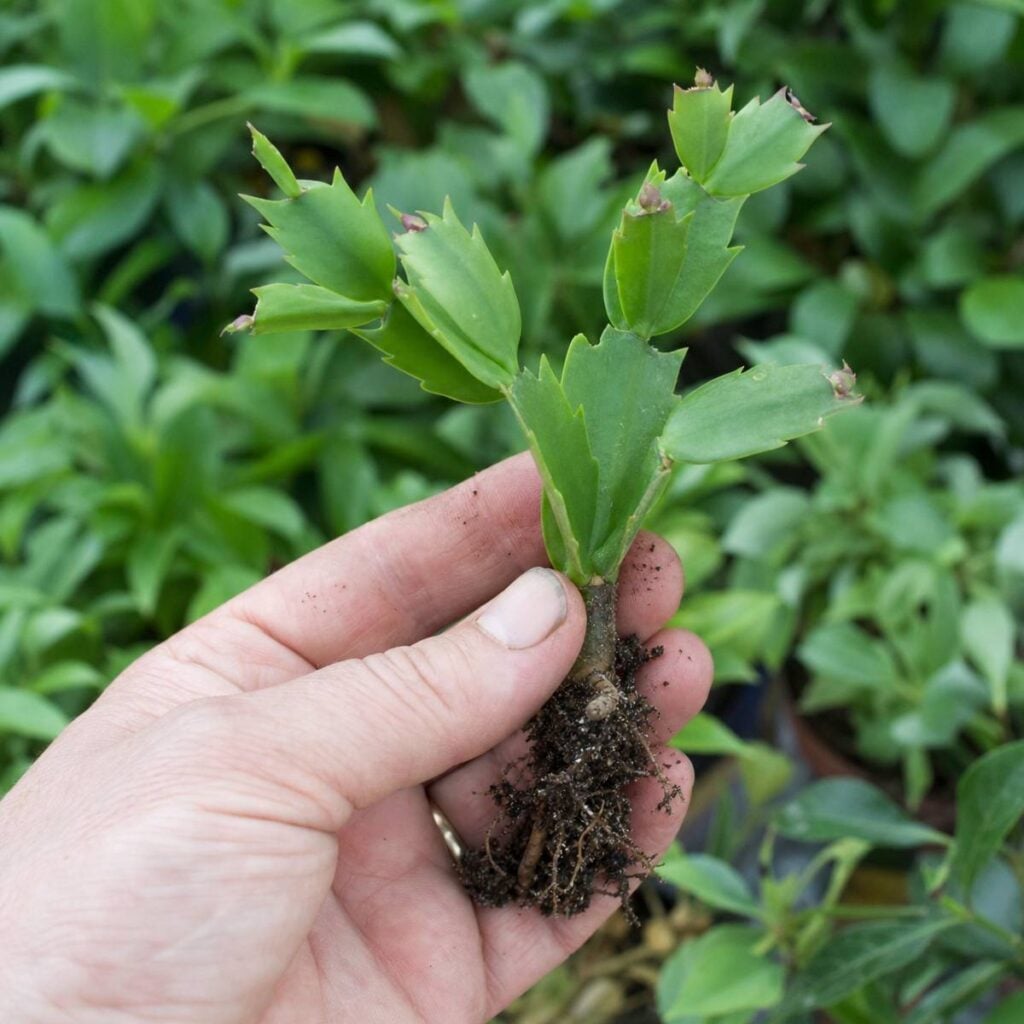
Clemson and Penn State Extension say roots usually form in three to eight weeks, and Iowa State Extension says six to eight weeks for cuttings in perlite or sand.
UMN Extension suggests gently lifting a cutting with a small spatula or popsicle stick after two weeks to check for new roots.
Once roots form, take the bag off, water and fertilize (Penn State Extension). Clemson
Extension specifies a dilute fertilizer solution at watering, and Iowa State Extension says to transplant cuttings rooted in perlite or sand into a well-drained potting mix when the roots are an inch or longer. Our tips on watering Christmas cactus will help from there.
Getting a Fuller Plant
A single rooted cutting starts out thin, and pruning can help fill it in. UF/IFAS says pruning encourages branching and flowering. UMN Extension says a cut made where two segments join produces 1 to 2 new segments there and increases branching.
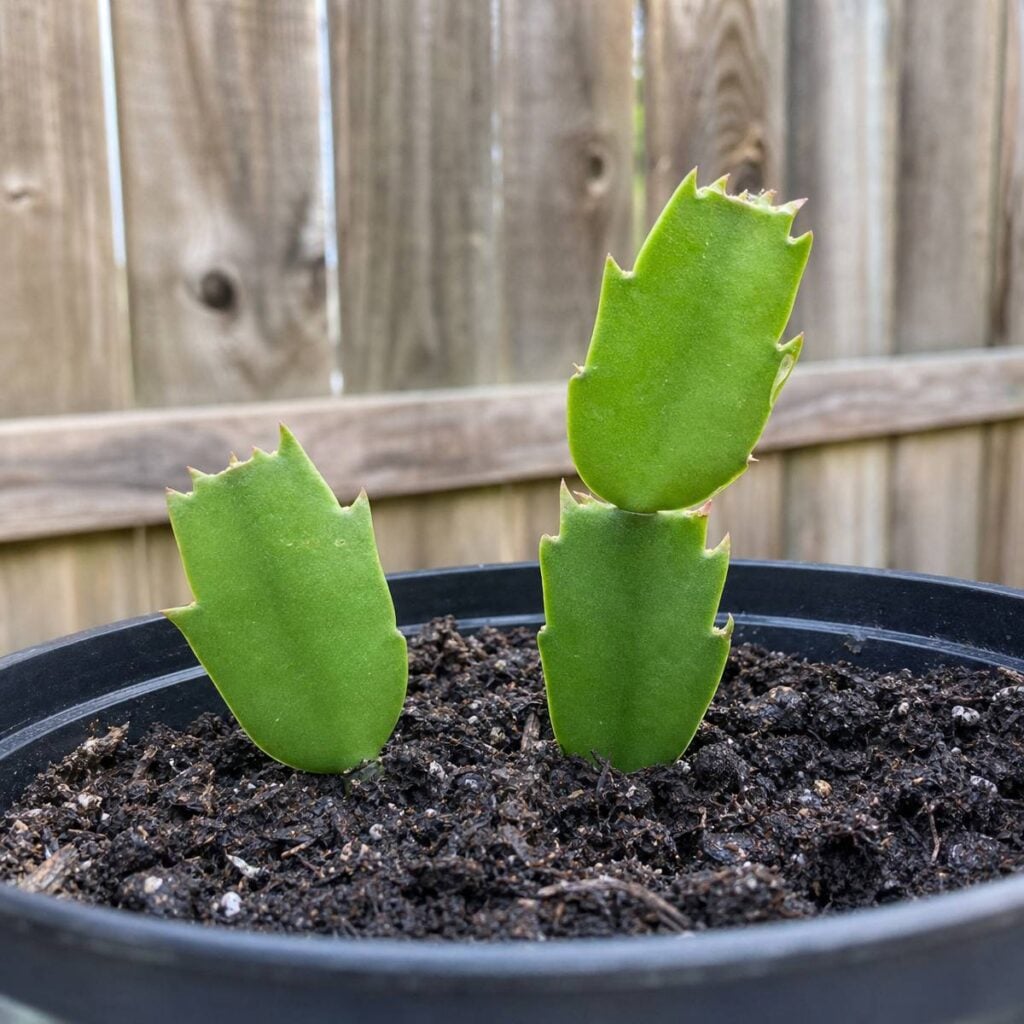
Clemson Extension suggests pinching the stems back in early June to promote branching. Timing matters: UMN Extension says to prune after flowering, and UF/IFAS says not to prune beyond mid-summer.
Then be patient about the flowers. Clemson Extension notes that short, immature stem segments will not initiate flower buds until they mature. UF/IFAS adds that Christmas cactus prefers to be a bit root-bound, so don’t rush it into a big pot.
Got a cutting that rooted faster than you expected? Tell us about it in the comments.
Recommended Reading
Frequently Asked Questions
When is the best time to propagate Christmas cactus?
Late spring or early summer. Clemson Extension says holiday cacti are easy to propagate from cuttings taken in May or June, and UMN Extension says to prune after flowering. UF/IFAS adds that trimmings can be used to start new plants, and that you shouldn’t prune beyond mid-summer.
How long do Christmas cactus cuttings take to root?
Usually three to eight weeks in bright but indirect light, according to Clemson and Penn State Extension. Iowa State Extension gives six to eight weeks for cuttings rooted in perlite or coarse sand, and says to move them into a well-drained potting mix once the roots are an inch or longer. UMN Extension suggests gently checking for roots after two weeks.
How many segments should a Christmas cactus cutting have?
Two to five, depending on the source. Clemson and Penn State Extension say three to five, Iowa State Extension says two to five, and UF/IFAS says two or three jointed sections, so three falls inside every range. Pinch or twist the piece off at a joint, or cut at a joint with a small, sharp pruner or knife.
How long should Christmas cactus cuttings dry before planting?
Overnight to a day or two. Iowa State Extension says to let the cut ends callus overnight and plant the next day, while Clemson Extension says to callus them outdoors in the shade for a day or two. Both then plant the cuttings about an inch deep.
Can you root a Christmas cactus cutting in water?
Yes. Penn State Extension lists it as another propagation technique: set the cutting in water until a good root system has developed, then transplant it into a well-draining potting medium. Iowa State, Clemson and UMN Extension root cuttings in sand, perlite or potting mix instead.