Spider plants have been one of the most popular houseplants for decades. Known for their attractive appearance and ability to withstand a lot of neglect.
However, as with all indoor houseplants, spider plants Chlorophytum comosum (kloh-roh-FY-tum kom-OH-sum), have basic requirements.
These need to be met for the plant to remain healthy. Read our article on Chlorophytum Comosum care.
When needs are not met:
- Spider plants may be yellow
- Develop brown spots or stripes
- You may start seeing brown tips
Of these, the most permanent damage is brown tips. The damage cannot be reversed, so diagnosing the cause is important.
What Causes Brown Tips On Spider Plants?
When you notice brown tips on spider plant leaves, it’s a sign that one of several things is potentially wrong with your plant.
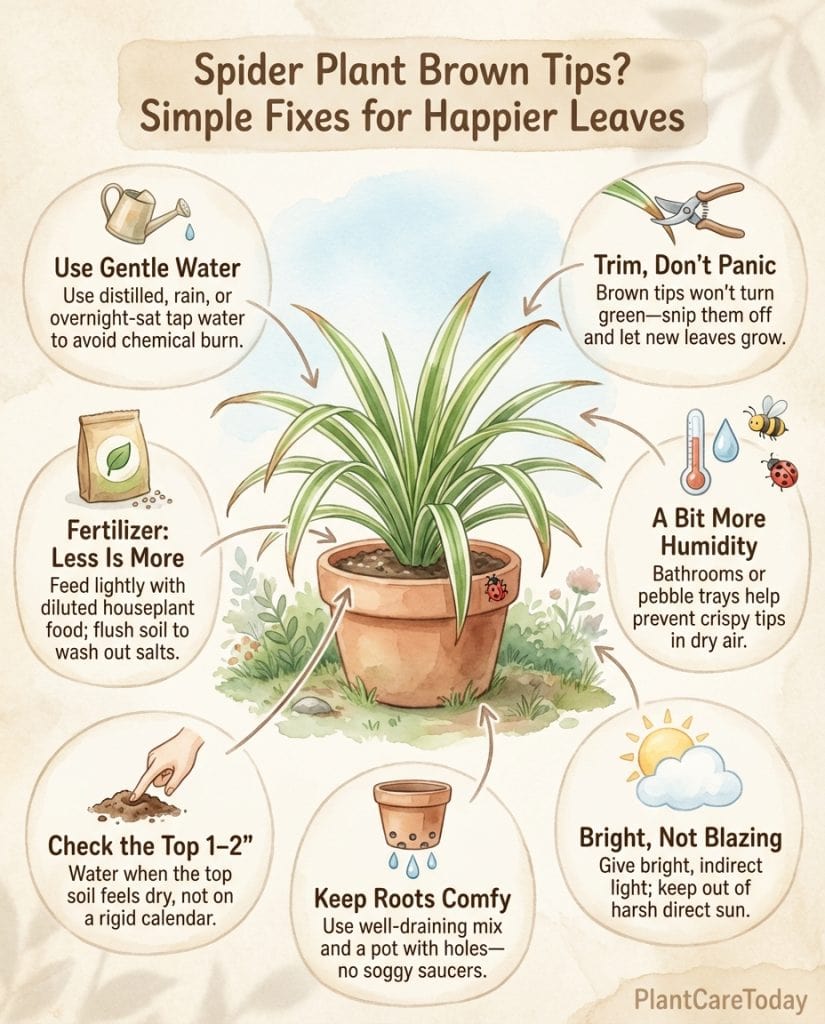
The most common causes are chemicals, dehydration, and excessive heat or light.
Chemical Burns
Two primary causes of chemical burns in spider plants are water and fertilizer.
It’s best to avoid chlorinated water, such as tap water, as spider plants are very sensitive to this chemical.

Tap water also contains excess fluoride, which can cause serious harm to the plant.
Try using distilled water for plants instead, along with the occasional hydrogen peroxide treatment.
If you must use tap water, pour it into an open container overnight to allow some of the chemicals to evaporate, or use a Zero filter.
Fertilizer is another major cause of chemical burns.
Your spider plant only needs a small amount of houseplant fertilizer, if any. It’s easy to go overboard or forget to dilute it enough.
Excess fertilizer can kill a plantlet and seriously damage the mother plant.
Details on Fertilizing Spider Plants are here.
This is often seen in spider plant leaves, with brown spots along the margins and tips.
Finally, using a diluted water-soluble liquid plant fertilizer works best for most homeowners.
Spider plants find many types of pesticides (including neem oil) very sensitive to certain natural chemicals in these products.
Take care to avoid over-fertilizing. Flush the soil periodically to prevent salt buildup if you don’t replace it annually.
Dehydration
Watering spider plants can be a bit of a balancing act. They prefer moist, well-drained soil and need a pot or container with adequate drainage holes.
An airplane plant can easily suffer water stress if given too much, which leads to yellow leaves and the risk of root rot.
Meanwhile, too little can result in dried, brown leaves that start at the tips.
To prevent overwatering your indoor spider plants, use well-drained potting soil in a container with proper drainage.
Water when the first 1″ to 2″ inches of soil are dry. This is usually every 2 to 3 weeks if you wish to keep a consistent watering schedule.
Your spider plant can withstand occasional missed waterings, although too much water will cause browning tips.
Try never to miss two waterings in a row, and keep the soil moist when going on a trip so the root ball doesn’t dry out.
Related: Yellow Leaves On A Spider Plant – What Does It Mean?
Excess Heat or Light
Spider plants originate from the temperate woodlands of South Africa, where they thrive in high humidity and are shaded by taller plants.
Recreating the humid conditions of its homeland is unnecessary, but you may wish to place a humidity tray nearby if the air feels too dry.

Bathrooms and kitchens are great locations for the common spider plant, as they have higher humidity, whereas bedrooms and living rooms often lack it.
You can also take your plant outdoors during light rain, as the rainwater is quite healthy for indoor plants.
Meanwhile, direct sunlight can cause leaf tip burn because the plants are adapted to moderate light.
You can keep a spider plant in anything from low light to bright, indirect sunlight.
Bright light accentuates variegation and allows the plant to produce tiny white flowers when other conditions are right.
However, always avoid direct sunlight, as the leaves easily burn, and any moisture on the leaves from misting or humidity can make the burns even more severe.
Can You Salvage Leaves with Brown Leaf Tips?
Sadly, once the tips of a leaf turn brown, there’s no way to restore them.
Can you leave the spider plant leaves turning brown on the plant?
You can leave the damaged leaves on the plant without them causing harm, but it will detract from the visual appeal.
Most spider plant owners carefully prune away any leaves with brown tips. Make sure not to remove too many leaves at a time. Give the plant a chance to replace them.