
While running some errands recently, I noticed a Chlorophytum — “spider plant” — in a hanging basket.
From a distance, it looked great. Lots of foliage and “pups” hanging down. Looking closer, I noticed a lot of spider plant brown tips on the leaves.
Why Do Plant Leaves Turn Brown?

Growers don’t seem to have the same problem with brown leaf tips while they’re growing the plants. So alarm bells go off when you spot brown tips after bringing one home.
What’s different between the growing end and your living room?
Moving indoors is stressful for a plant. Reduced light is part of it (a grow light can help), and so is the general acclimating that comes with any move. But one answer isn’t quite so obvious.
What Is It? Water
Water is water — right? Not so fast. Let’s look at the real difference between the water a grower uses and the water most of us use at home.
Growers’ Water
Most commercial growers producing indoor houseplants pull water from wells, using electric or diesel pumps that draw straight from the ground. Unlike city water, it hasn’t gone through a municipal treatment plant.
Some growers go a step further and treat that water before it ever touches a plant, commonly through reverse osmosis. Water gets pushed through a membrane fine enough to let water molecules through but block dissolved solids like fertilizer salts and other chemicals. That cleaner water is a real reason commercial growers see fewer leaf problems. Their foliage stays cleaner than what shows up once a plant’s been sitting on someone’s windowsill for a year.
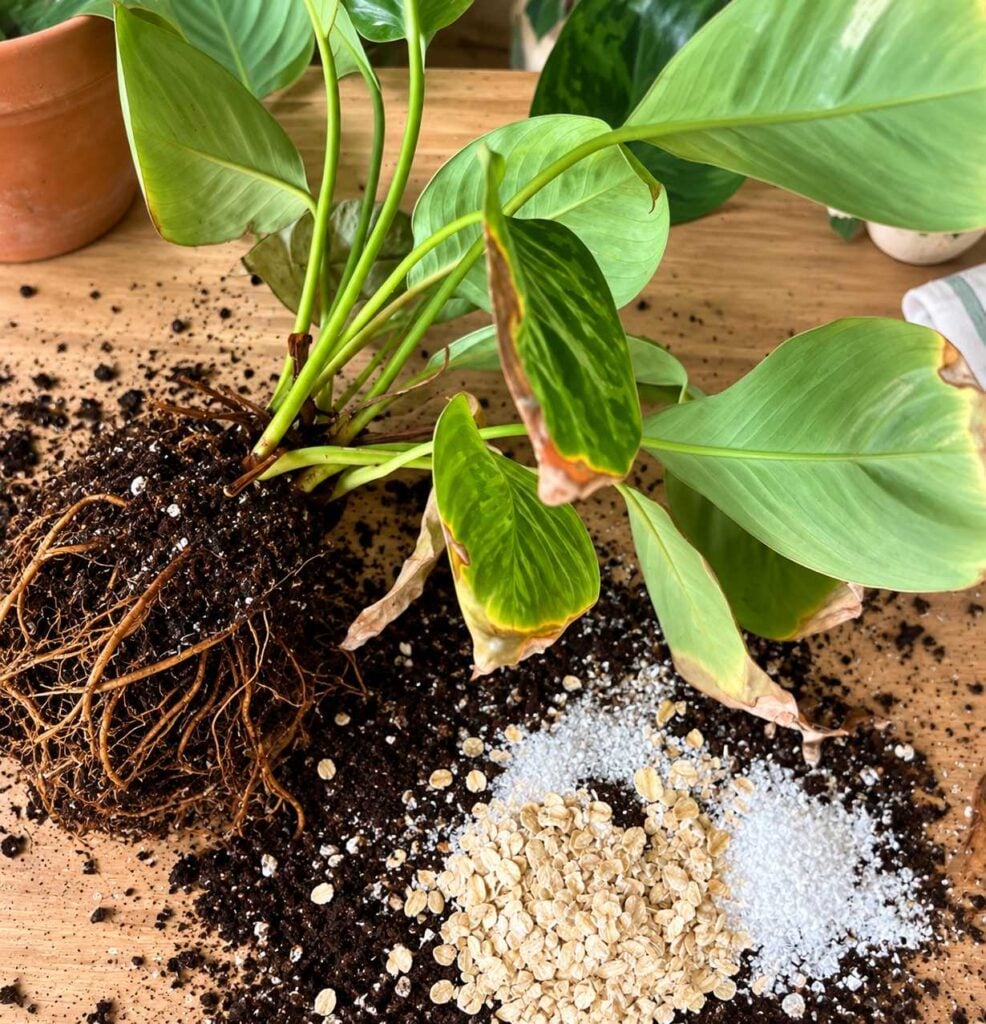
Homeowner or City Water
Your kitchen tap is a different story. City water has almost always been treated. That treatment is exactly why it can cause problems for certain plants.
Cities add chlorine for public health reasons. Most U.S. water systems also add fluoride, for dental health. Chlorine and fluoride are perfectly fine for people. Several fluoride-sensitive houseplants aren’t as lucky.
Lynn Griffith is a Florida agronomist. He ran A&L Southern Agricultural Laboratories for nearly three decades and wrote the trade reference Tropical Foliage Plants: A Grower’s Guide. He points out that fluoridated city water usually contains about 1 ppm (parts per million) fluoride. That level is fine for us, but he puts it at four times the amount considered safe for sensitive plants.
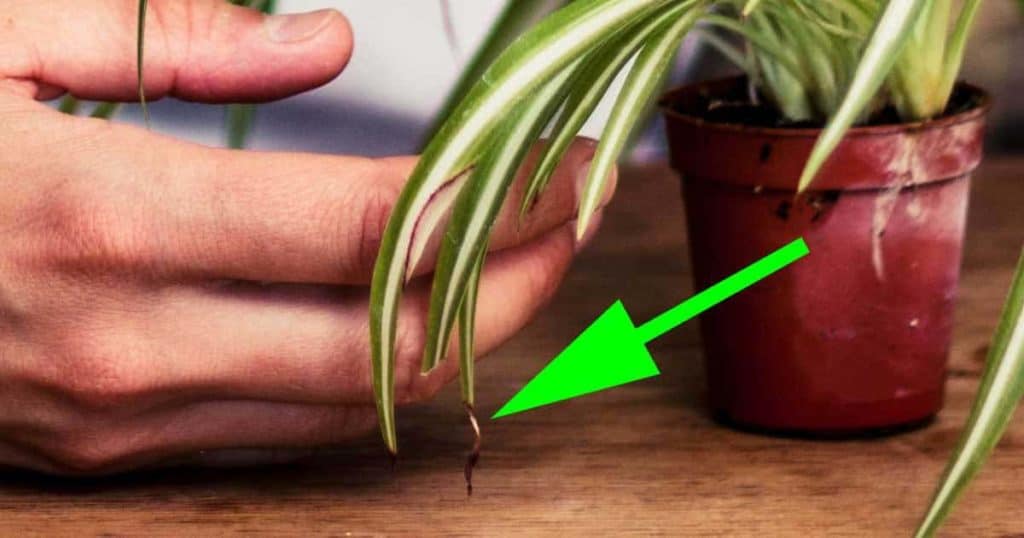
Spider plants and Dracaenas are two of the most commonly cited sensitive species in horticultural trade literature. That lines up with guidance from Iowa State University Extension and NC State Extension, which name these same plants.
To be clear: watering your plants from the kitchen tap won’t kill them outright. This is a slow, cumulative issue, not an emergency. Over time, though, chlorine, fluoride, and boron can build up in leaf tissue in fluoride-sensitive species. That buildup is a documented cause of tip burn on Dracaenas and spider plants. It can also show up as distorted or yellowed leaves on Peace Lilies (Spathiphyllum) when boron is involved. Both Iowa State University Extension and NC State Extension confirm chlorine/fluoride sensitivity in these exact plants.
Using good water is a genuinely useful first move. It’s also not the only cause worth ruling out.

Photo Credit: @PlantCareToday.com
There Are Other Reasons for Brown Tips on Indoor Plants
- Plant pests, such as spider mites and other sap-feeders
- Too much fertilizer — salt buildup in the soil is a well-documented cause of tip and margin browning
- Too much water, leading to root rot
- Not enough water, or letting the soil dry out for too long between waterings
- Chemical burn, from overapplied fertilizer or pesticide
- Fungal or bacterial disease, such as powdery mildew — worth ruling out, but University of Missouri’s IPM program says it is genuinely uncommon on established houseplants. Most homes lack the sustained humidity or splashing water these diseases need to take hold indoors
- Too much direct sunlight, or heat scorch
- Poor air circulation
- A nutrient problem — but not the same one for every symptom. Per University of Arizona Cooperative Extension, phosphorus deficiency is the one that actually shows up as burnt-looking leaf tips. Calcium, magnesium, and iron shortages cause different symptoms instead: distorted new growth, yellow leaf margins, or yellowing between the veins. Knowing which is which helps you diagnose the actual shortage, rather than assuming every deficiency looks the same
Good water is a great place to start. It isn’t the only place to look.
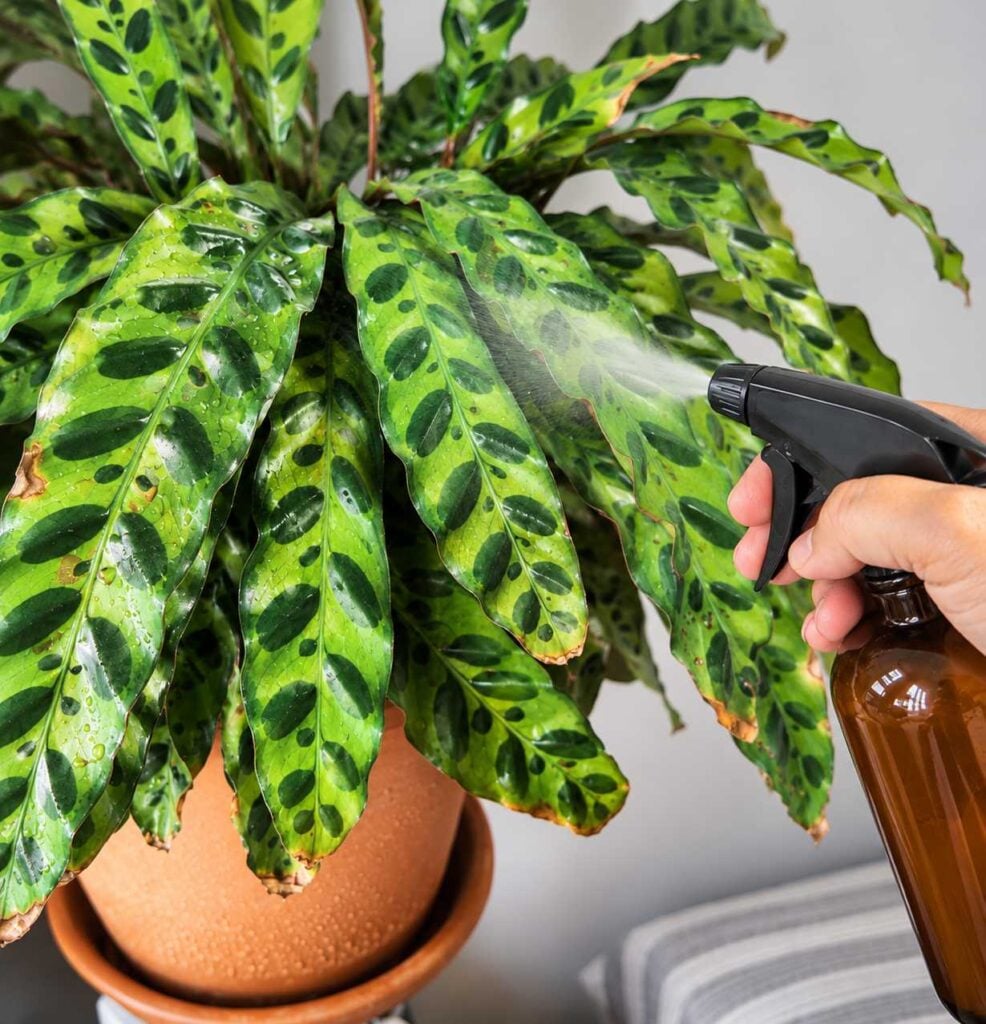
How Can You Get Good Water?
The simplest fix: fill a container from the sink and let it sit out overnight, uncovered. Chlorine is a gas dissolved in the water. It will mostly dissipate within about 12 to 24 hours.
That trick doesn’t do much for fluoride. Fluoride is a dissolved mineral, not a gas. It doesn’t evaporate out of standing water no matter how long you wait. If you’re dealing with a fluoride-sensitive plant (spider plant and Dracaena are the classic cases), distilled water, collected rainwater, or water run through a reverse-osmosis or activated-alumina filter are the options that actually remove it.
Professional plantscapers deal with moving water around constantly. Some have no water-quality issues at all; for others, it’s a real, ongoing battle.
If you’re seeing brown tips and suspect water quality, start simple. Let a container of water stand overnight for the chlorine. Switch to distilled or filtered water if the plant is one of the fluoride-sensitive types. It’s one more way to keep your houseplants — and your patience — looking good.
Frequently Asked Questions
Why are the tips of my houseplant’s leaves turning brown?
Usually it’s one of a handful of causes: low humidity, inconsistent watering, too much fertilizer, or chlorine and fluoride in tap water. Dry soil can make things worse, because it concentrates the salts already in the soil. Start with the water, then work through the list above.
Does letting tap water sit overnight remove fluoride?
No. Standing water clears chlorine, which is a gas and mostly dissipates in about 12 to 24 hours. Fluoride is a dissolved mineral, so it stays in the water no matter how long it sits. To actually remove it, use distilled water, collected rainwater, or water run through a reverse-osmosis or activated-alumina filter.
Which houseplants are most sensitive to fluoride in tap water?
Spider plants, dracaenas, ti plants (Cordyline), prayer plants, and calatheas are the ones extension sources and growers name most often. Lynn Griffith counts cordylines among the most fluoride-sensitive foliage plants. If you grow a dracaena, our guide to dracaena fluoride toxicity covers the symptoms in more detail.
Why does my spider plant (airplane plant) have brown tips?
Spider plants, sometimes called airplane plants, are among the most fluoride-sensitive houseplants. NC State Extension advises avoiding tap water for them, because chlorine and fluoride can cause leaf tip burn. Their long, tapered leaves carry dissolved minerals out to the tip, so fluoride, boron, and sodium can all show up there as browning. Try rainwater or distilled water, and go easy on fertilizer. Our full guide to spider plant brown tips covers the rest.
What is the best water for fluoride-sensitive houseplants?
Collected rainwater is a top choice. Griffith calls it probably the best source for fluoride-sensitive cordylines. Distilled water and water run through a reverse-osmosis or activated-alumina filter also remove fluoride. Fluoridated tap water is the one to avoid for sensitive plants.
