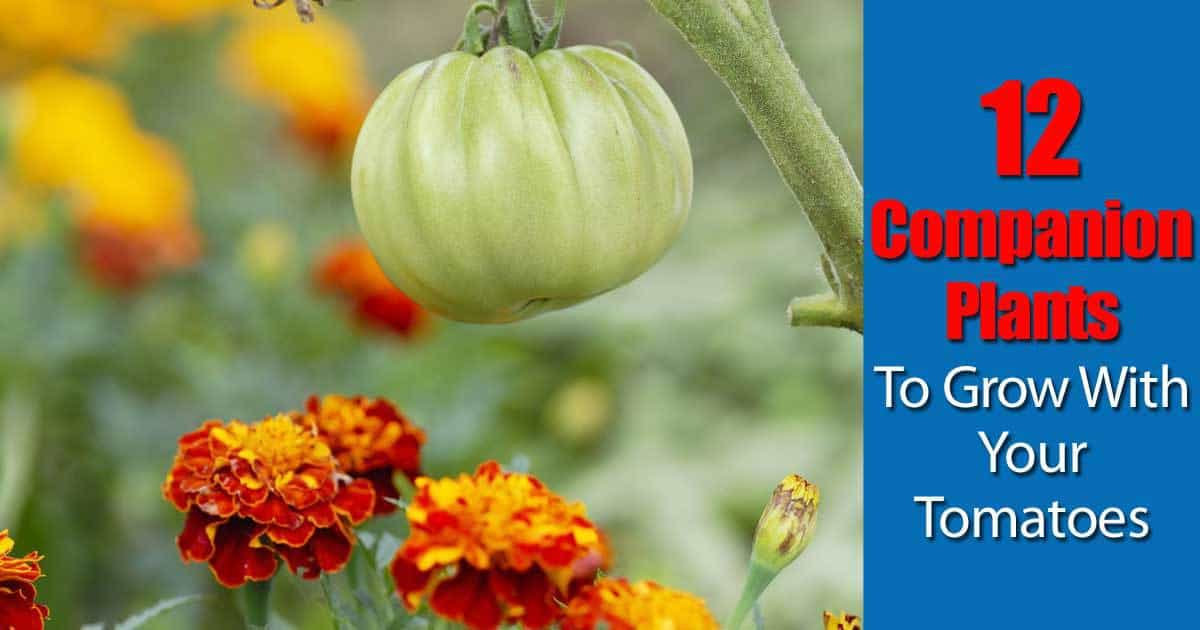
Some gardeners swear by tomato companion plants. Others call the whole idea an old wives’ tale. The truth sits in the middle, and it’s worth knowing which side of the line each plant falls on before you fill a bed.
Here’s the honest starting point. The long lists of insect-repelling plants in online gardening charts are not always accurate or backed by research. A few pairings do have studies behind them, and a few are good ideas for plain practical reasons: saving space, feeding the soil, or bringing in helpful insects. Others are folklore. This guide sorts them out.
How Companion Planting Can Help Tomatoes
Companion plants can help with insects in three main ways. Some give off smells that repel pests, pull them away (trap crops), or mask the scent of your crops. Some feed and shelter predator and parasitic insects that eat pests. And a mix of heights, colors and leaf shapes can make it harder for pests to find their target plants.
Companion planting is also a smart way to use space. Short, quick crops can share a bed with tomatoes before the tomato canopy fills in, and legumes add nitrogen to the soil. None of this replaces good basic care. For that, see our rules for success with growing tomatoes.
12 Companion Plants For Tomatoes (And What Each One Really Does)
1. Basil
Basil has the strongest case of any tomato companion. University of Minnesota Extension says a few studies show basil and marigolds can reduce thrips populations on tomatoes, in both field and greenhouse conditions, and that intercropping with basil may even help promote tomato growth. It also tastes great with tomatoes, which never hurts.
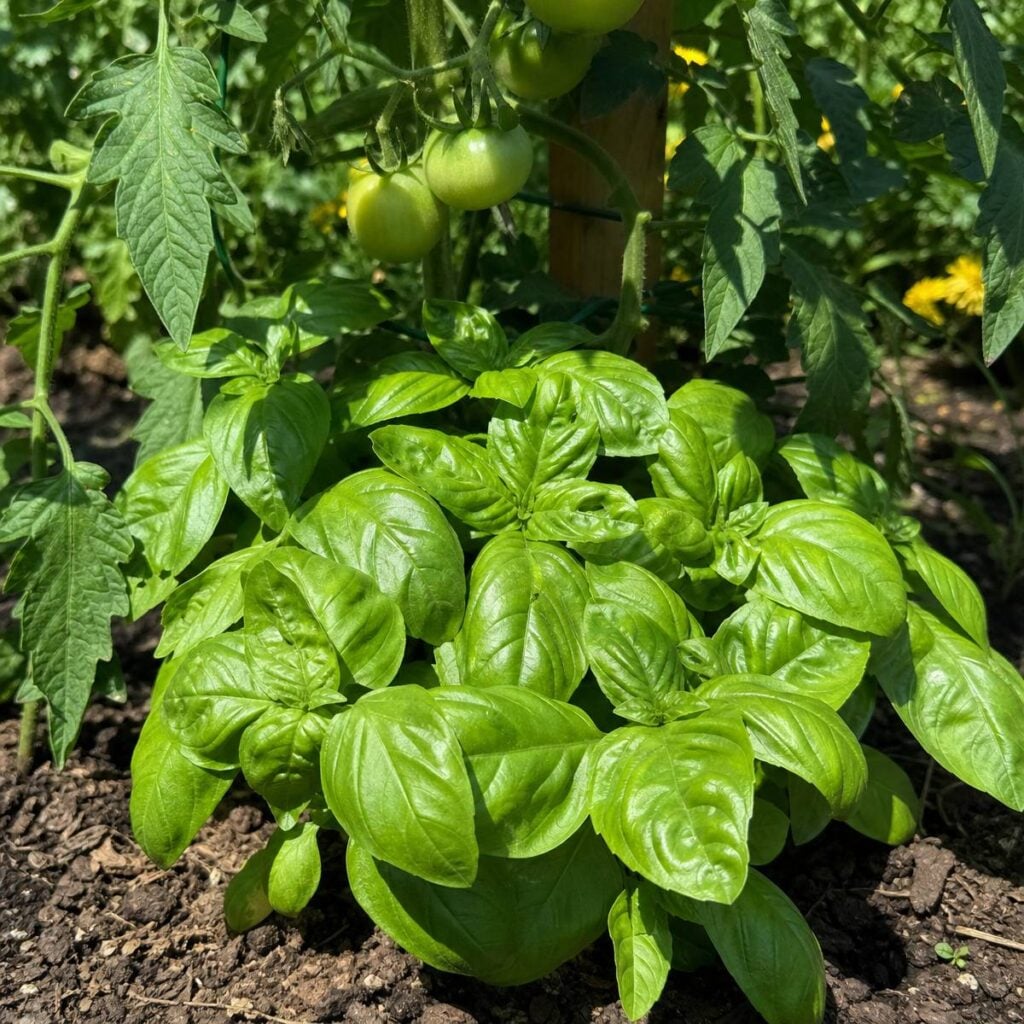
The old claim that basil repels tomato hornworms, flies and mosquitoes is a different story. It isn’t among the research-backed pairings, so don’t count on basil to keep hornworms away. Hand-picking is an effective hornworm control.
2. French Marigolds
Marigolds are the classic tomato companion, and part of the reputation is earned. Besides the thrips studies above, a 2019 glasshouse study in PLOS ONE found that growing French marigolds next to tomatoes throughout the season slowed the growth of whitefly populations.
The researchers linked the effect to limonene, a compound the marigolds give off. Bringing marigolds in after whiteflies had already built up gave only small reductions.
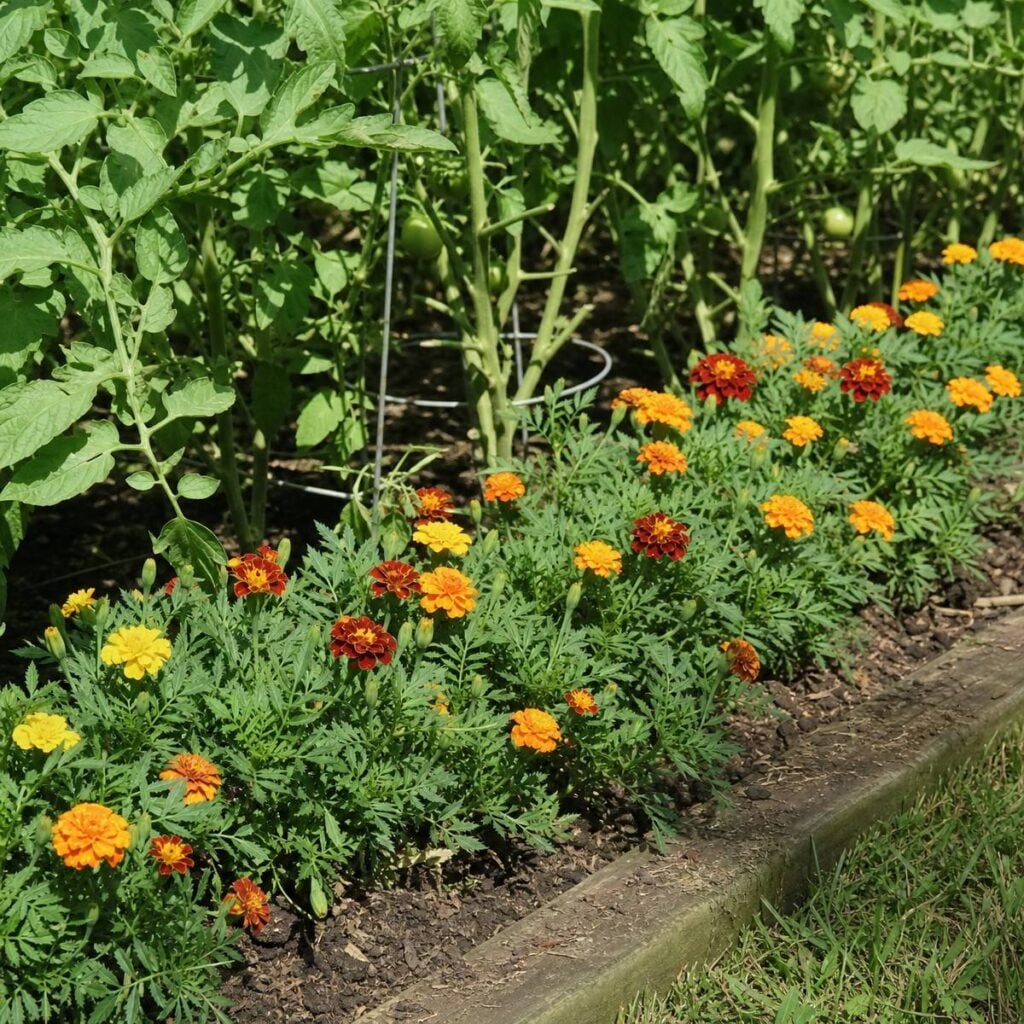
The nematode story needs a correction. UF/IFAS Extension says marigold roots release alpha-terthienyl, which can help reduce root-knot nematodes. But it also says intercropping marigolds with other crops “does not appear to be effective” against nematodes, and that interplanting marigolds with susceptible crops is very risky.
To use marigolds against nematodes, grow them as a dense cover crop on the exact spot where the vegetables will go, at least two months before planting. Variety matters too: some marigolds are resistant to a given nematode and some are susceptible, and susceptible varieties can increase nematode numbers and make the problem worse.
French marigolds appear to be effective against the widest range. In parts of Florida, marigolds can be grown year-round.
More on growing them: French marigold care, marigold flowers and marigold companion plants.
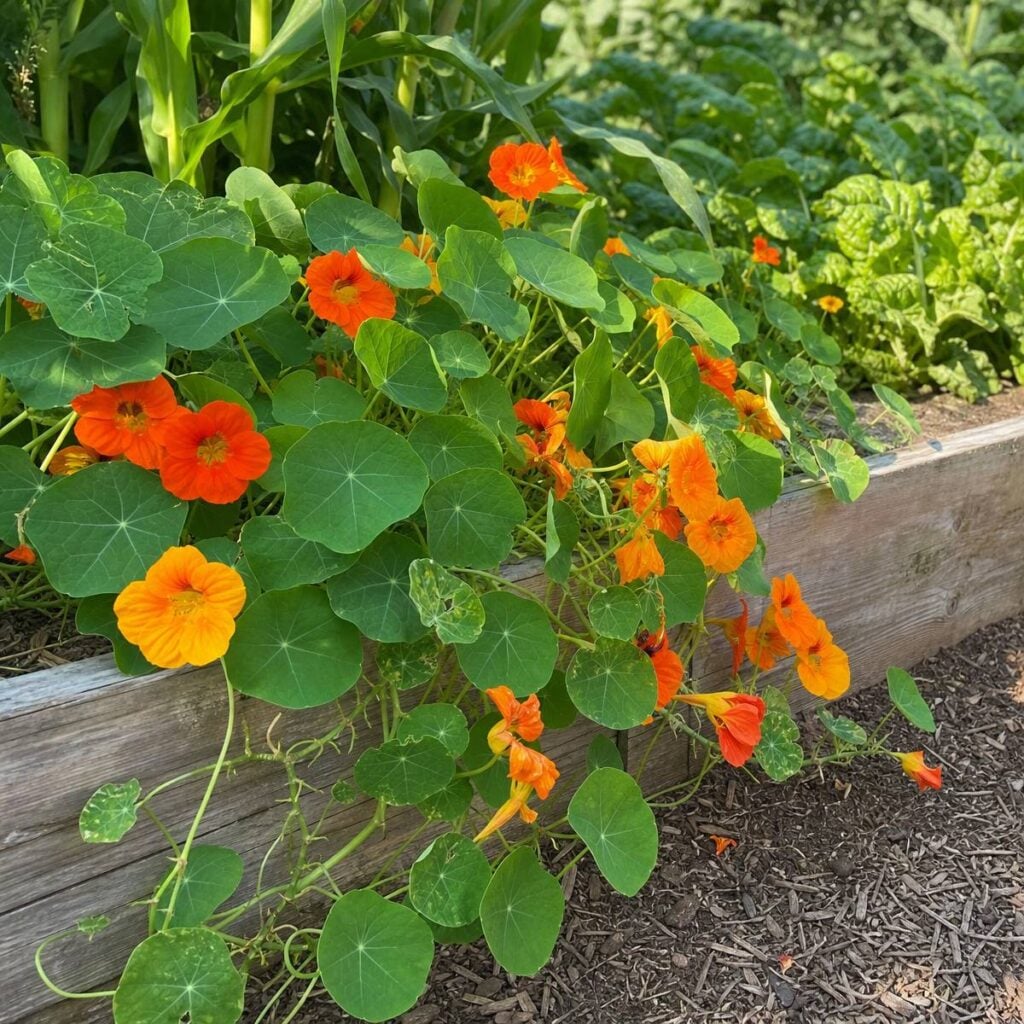
3. Nasturtium
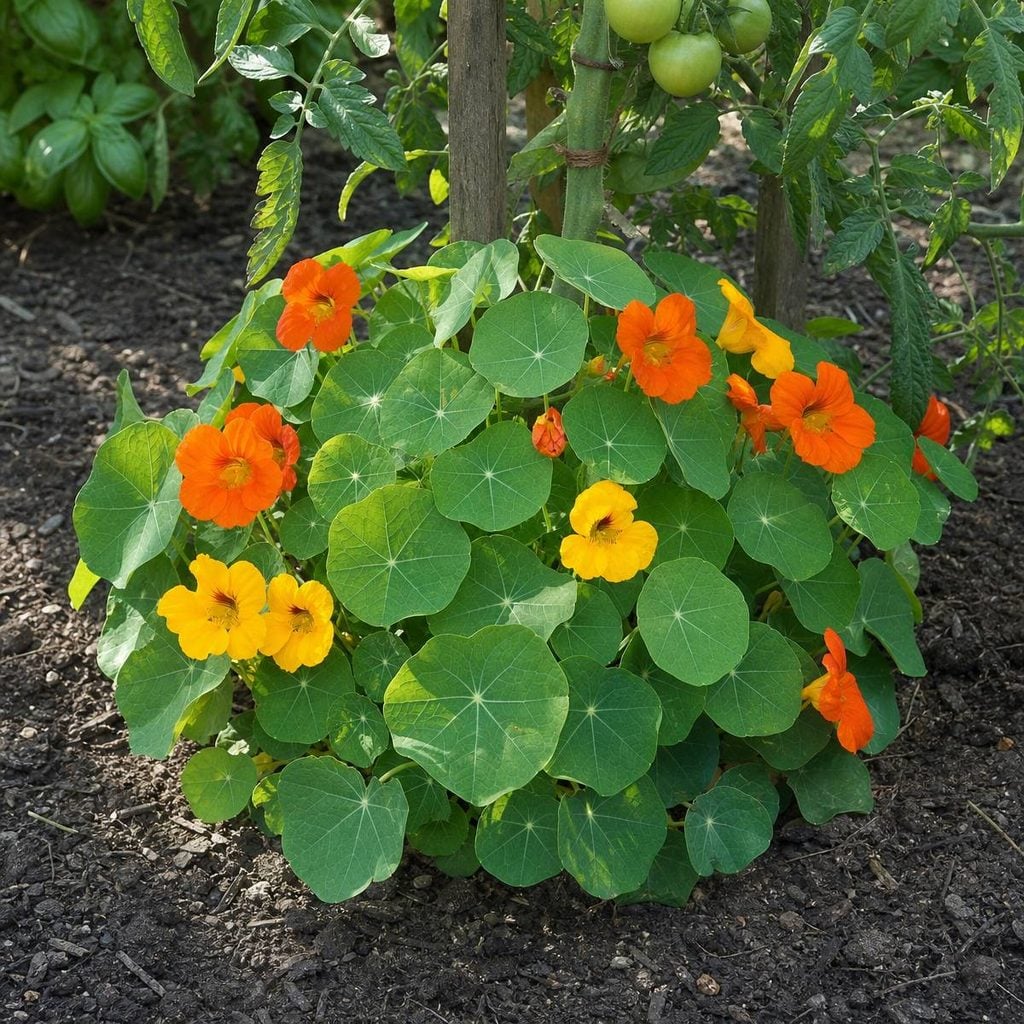
Nasturtiums earn a spot, with a caveat. In the same 2019 whitefly study, swapping some of the marigolds for other plants whiteflies don’t feed on (basil, nasturtium and Chinese cabbage) also reduced whiteflies on the tomatoes. Most of the other nasturtium research on companion planting is about squash bugs, cucumber beetles and cabbage worms, not tomato pests.
4. Lettuce and Spinach
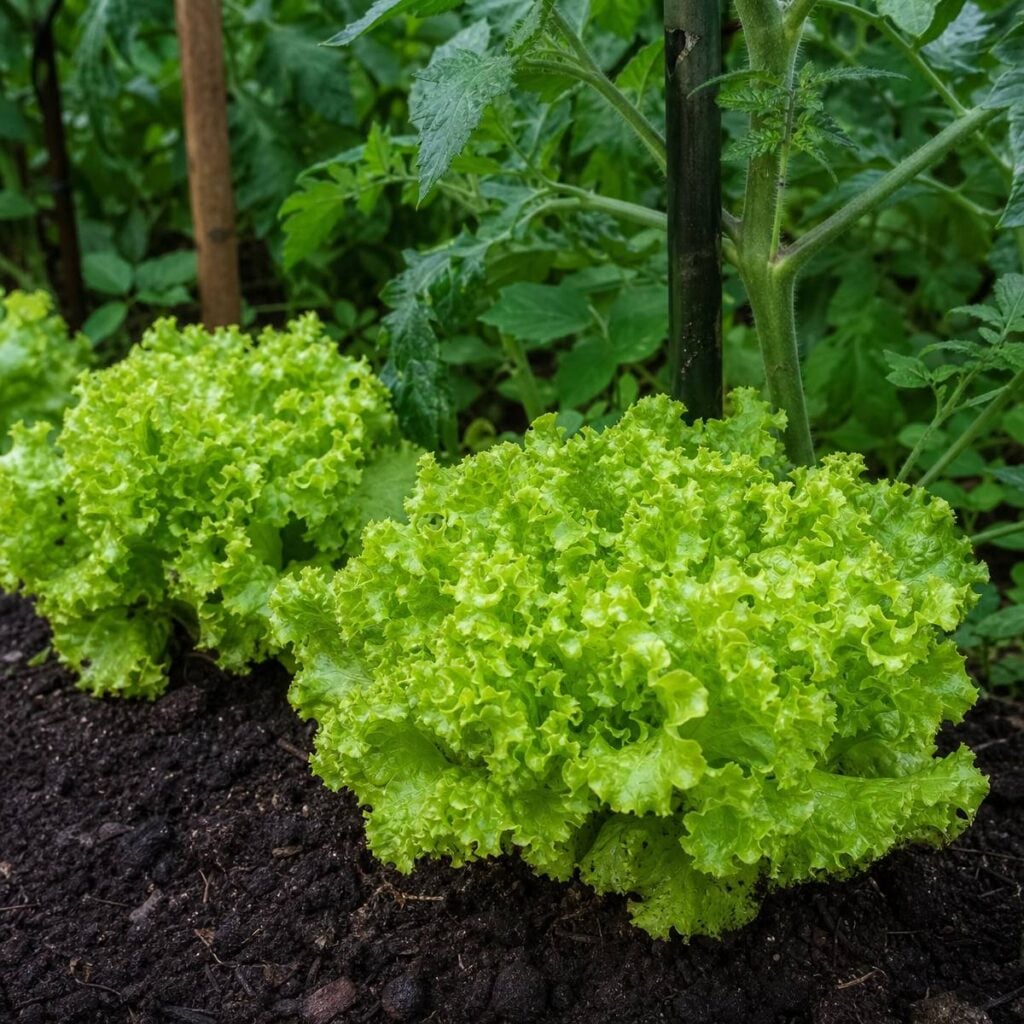
Lettuce is a space-saver. Plant lettuce, spinach or basil early in the season, then transplant tomatoes or peppers into the same bed as the early crop matures. By the time you harvest the greens, the tomato canopy is filling in. Keeping living roots in the soil and a canopy above it can also help with weeds and soil health.
5. Carrots
Carrots don’t protect tomatoes from anything, but they make good use of the space. Crops with taproots, like carrots, can help break up compacted soil, while deep-rooted crops like tomatoes pull water and nutrients from deeper in the soil. Plant them early and harvest them before the tomato plants spread.
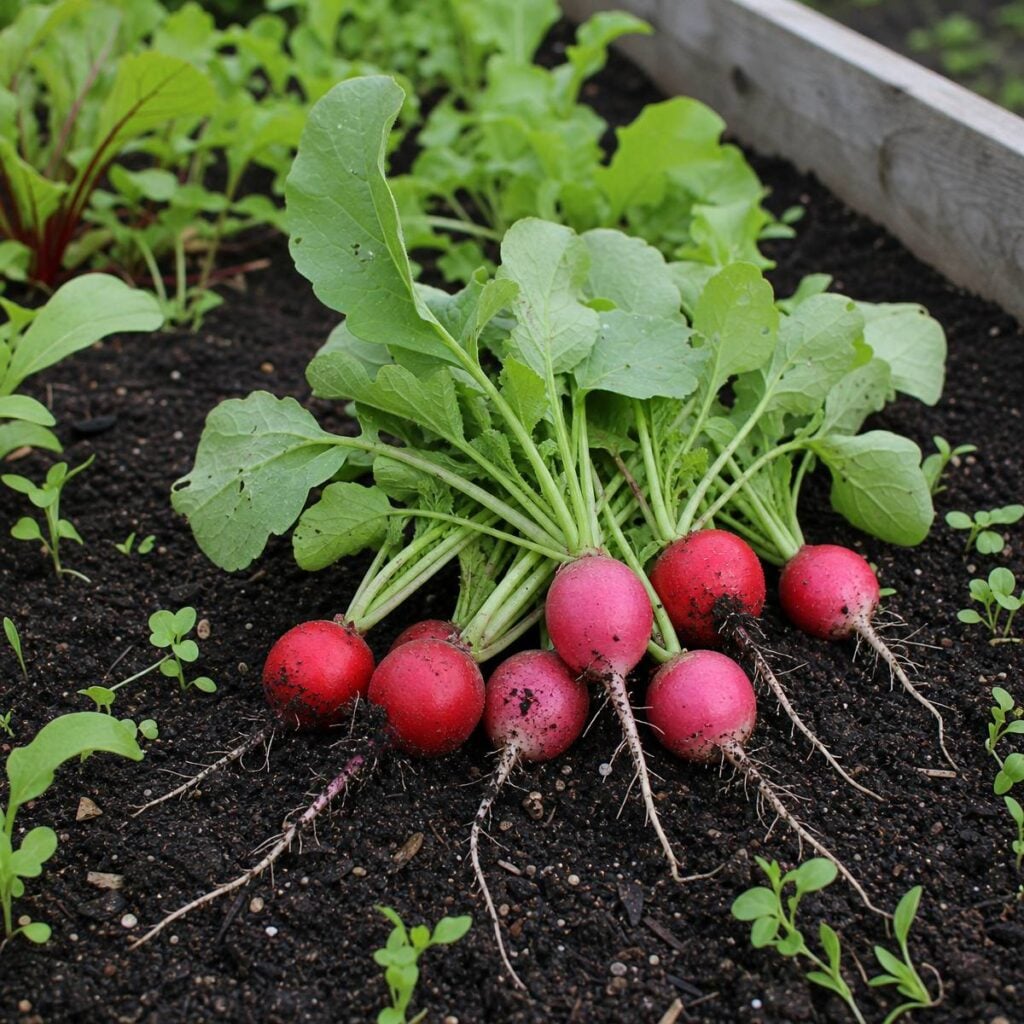
6. Radishes
Radishes are the quickest space-saver of all. Radishes and carrots side by side are a classic example of saving space. Sow a row along the edge of the tomato bed and you’ll be picking them long before the tomatoes need the room. The old claim that radishes repel cucumber beetles and flea beetles from tomatoes isn’t among the research-backed pairings, so treat radishes as a crop, not a bodyguard.
7. Beans and Peas
Legumes are good soil partners. Legumes like peas, beans and clover fix nitrogen from the atmosphere and reduce your total fertilizer needs. Give pole beans their own trellis so they don’t smother the tomatoes, and keep that extra nitrogen in mind when you feed. Our guide to natural tomato fertilizers covers feeding in more detail.
8. Onions, Chives and Garlic
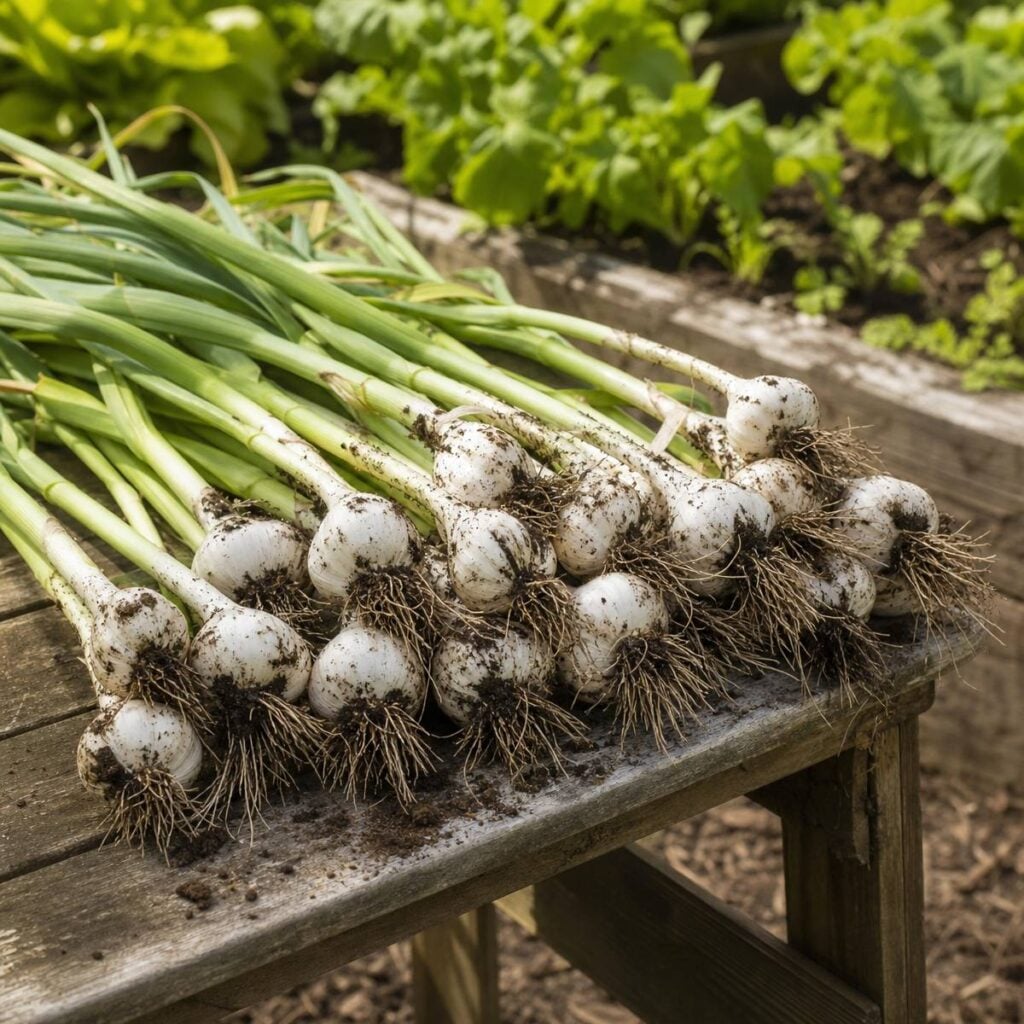
Onions and their relatives are fine to grow near tomatoes, and they’re handy in the kitchen. But the long list of pests they supposedly repel on tomatoes isn’t backed by tomato research. The onion studies that exist involve cabbage worms on broccoli and cabbage. For flea beetles, there is little research behind marigolds and green onions as repellents, and some of it contradicts the claim. Grow them for the harvest. More on companion plants for alliums.
9. Parsley
Parsley earns its place in a mixed bed, though not for the reasons usually given. Parsley, dill and fennel feed the caterpillars of the black swallowtail butterfly, which eat only plants in the carrot family. If you see brightly colored caterpillars on your parsley, plant enough to share. It’s a nice addition to a butterfly garden.
10. Dill
Dill usually shows up on “bad companion” lists, with claims that mature dill stunts tomatoes. That claim isn’t among the research-backed pairings either. What is true is that the flowers of dill and fennel attract many beneficial insects and pollinators to the garden. Dill flowers in warm weather, so let a few plants bloom.
11. Sweet Alyssum and Other Flowers
A bed with plenty of flowers is a bed with more pest-eaters. Syrphid fly larvae eat large numbers of aphids, and the adults are drawn to a wide variety of flowers, so planting plenty of flowers brings them in to lay eggs nearby. In a Florida study, African marigolds and sweet alyssum planted with squash increased the natural enemies of aphids. For tomatoes specifically, including flowering plants in the landscape provides whitefly enemies with food and habitat. See also aphids on tomato plants.
12. Peppers
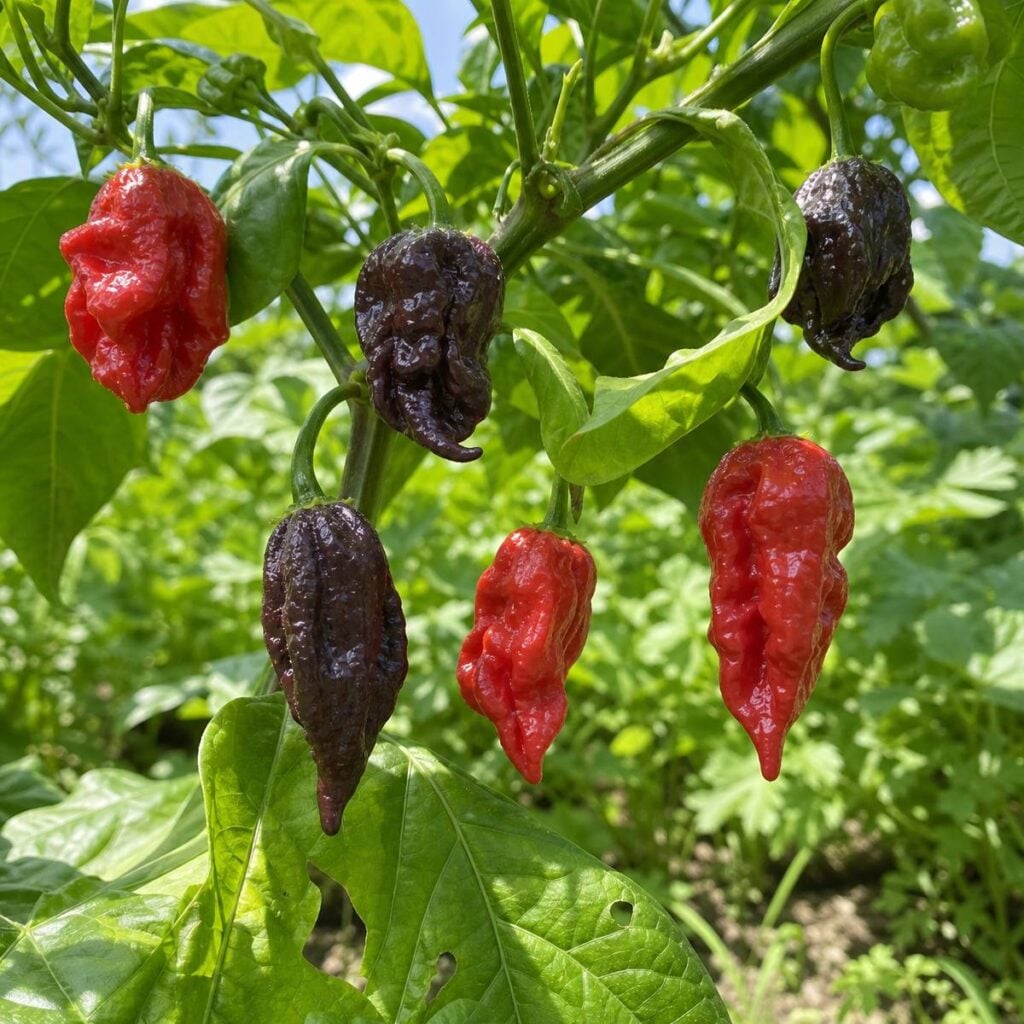
Sweet and hot peppers grow happily beside tomatoes, since they like the same sun, water and warmth. They’re close relatives, though, and that cuts both ways. The early blight pathogens infect tomatoes, potatoes and peppers, so treat tomatoes and peppers as one group when you rotate beds (see the rotation advice below).
Plants To Keep Away From Tomatoes
Black Walnut and Its Relatives
This is the one “bad neighbor” with solid science behind it. University of Wisconsin Extension says black walnut trees produce juglone, a toxic substance found in all parts of the tree, especially the buds, nut hulls and roots. A mature tree’s toxic effects can extend 50 to 80 feet from the trunk, strongest within the dripline. Tomato, potato, eggplant and pepper are vegetables that are particularly sensitive. Affected plants may be stunted, have yellow or brown, twisted leaves, wilt, and die over time.
Butternut and shagbark hickory also produce juglone, in lower amounts. Penn State Extension adds that juglone is in leaves and nut husks that drop to the ground, so rake them away from planting areas and don’t use black walnut leaves or fruit as mulch. Its advice is to move sensitive plants past the root zone (50 to 60 feet away for a mature black walnut), or use raised beds lined with weed barrier fabric and filled with fresh topsoil. Even after a walnut is removed, leftover root pieces may keep releasing juglone for several years.
Potatoes and Eggplant
Potatoes and eggplant are tomato relatives, and they share diseases. Early blight is one of the most common tomato and potato diseases, and late blight is a potentially devastating disease of both, infecting leaves, stems, tomato fruit and potato tubers. For early blight, rotate out of tomatoes and related crops for at least two years. Clemson Extension goes further for soil-borne diseases and nematodes: choose a site where tomatoes, peppers, eggplant or potatoes have not been grown for at least three years.
Corn: A Shared Pest, Not the Hornworm
The old warning about corn mixed up two caterpillars. The corn earworm is not the tomato hornworm. It is the tomato fruitworm, says NC State Extension, which lists it as the same insect (Helicoverpa zea) and names corn as its most important host. The larvae chew holes in tomato fruits and buds. The two crops share this pest, so if you grow both, keep an eye on your tomatoes for chewed fruit.
Cabbage and Fennel: Not Proven Troublemakers
Cabbage-family crops often turn up on lists of bad tomato companions, yet Chinese cabbage was one of the non-host plants in the 2019 study mix that helped reduce whiteflies on tomatoes. Fennel gets the same bad press, while fennel flowers attract beneficial insects. If space is tight, give big plants like fennel and cabbage their own room so they don’t shade or crowd the tomatoes.
Make the Most of Your Tomato Bed
Treat companion planting as one helpful layer, not a pest-control system. Pair tomatoes with basil and French marigolds, tuck quick greens and root crops into the early-season gaps, keep flowers blooming for the good bugs, and rotate the tomato family to a fresh spot each year. Keep the bed well clear of black walnut roots.
Related reading: growing tomatoes questions and answers, why tomatoes crack, and what Epsom salt actually does for tomatoes.
What do you grow next to your tomatoes? Tell us which pairing works best in your garden.
Frequently Asked Questions
Are tomatoes and onions good companion plants?
Onions are fine to grow near tomatoes, but don’t count on them for pest control. Online lists of insect-repelling plants are not always accurate or backed by research. The onion studies that exist involve cabbage worms on broccoli and cabbage, not tomato pests. Grow onions, chives and garlic beside tomatoes for the harvest, not as protection.
Are lettuce and tomatoes companion plants?
Yes, mainly as a space-saver. Plant lettuce, spinach or basil early in the season, then transplant tomatoes into the same bed as the early crop matures. By the time the greens are harvested, the tomato canopy is filling in, and the living roots and canopy can help with weeds and soil health.
Are tomatoes and eggplant companion plants?
They’re close relatives, so treat them as one group when you rotate beds. Choose a site where tomatoes, peppers, eggplant or potatoes have not been grown for at least three years, to help avoid soil-borne diseases and nematodes. Tomato and eggplant are also both particularly sensitive to black walnut juglone.
Do marigolds really help tomatoes?
Some of the time. Studies show basil and marigolds reduced thrips on tomatoes, and a 2019 glasshouse study found French marigolds grown beside tomatoes all season slowed whiteflies. For root-knot nematodes, interplanting marigolds does not appear to work; grow a dense marigold cover crop on the same spot at least two months before planting.
What should you not plant near tomatoes?
Keep tomatoes away from black walnut trees. Tomatoes are particularly sensitive to juglone, and a mature tree’s effect can reach 50 to 80 feet from the trunk. Also rotate tomatoes away from potatoes, peppers and eggplant: early and late blight both attack tomatoes and potatoes, and for early blight, rotate out of tomatoes and related crops for at least two years.