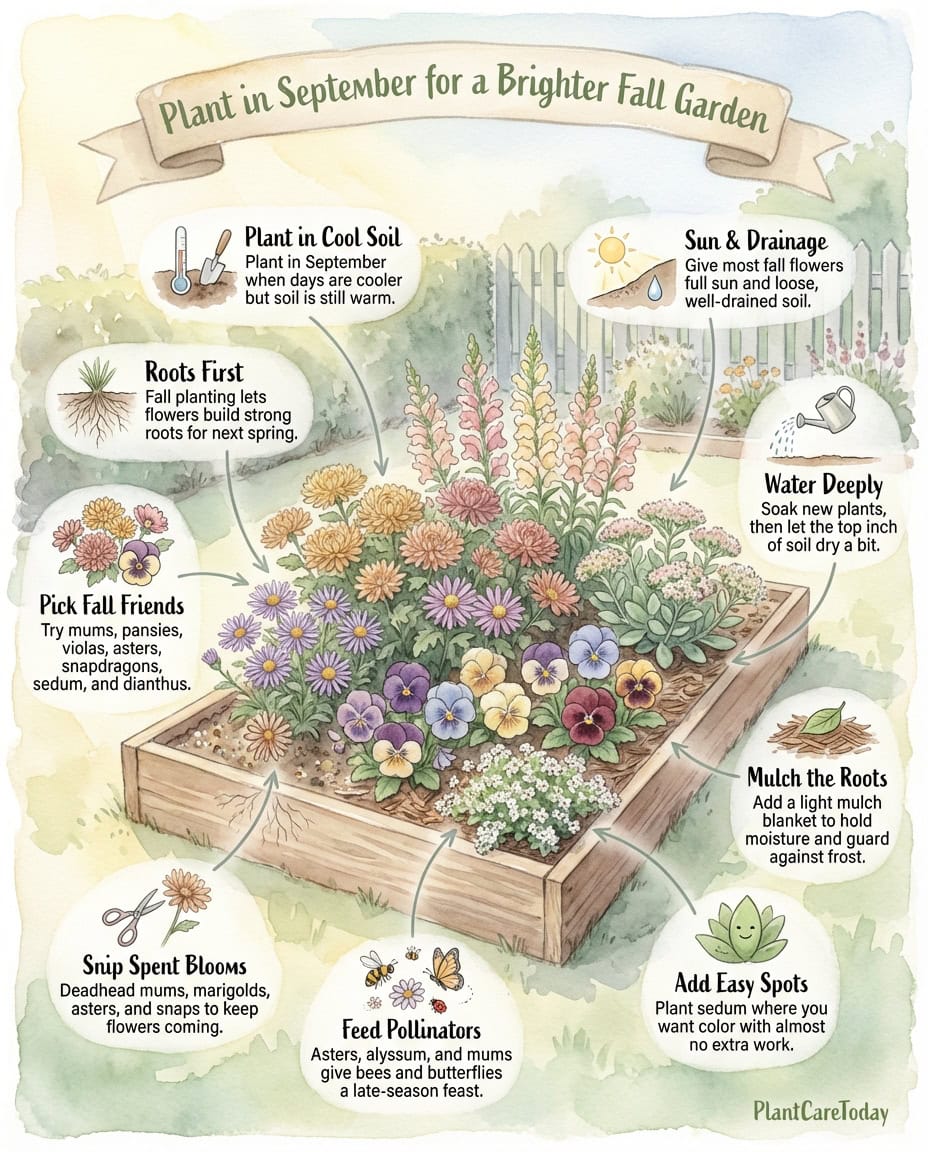
Think September means your garden is done for the year? Not quite. While other yards start to fade, yours can still have plenty of color through the cooler months.
The truth is that September is actually a great time to plant certain flowers, when temperatures cool down, and soil conditions are just right between summer heat and winter cold.
Why September Is a Good Time to Plant
Spring isn’t the only planting season worth paying attention to. September offers good conditions for many flowers to build strong root systems before winter.
Plants established in the fall often do better the following year than spring-planted ones, sometimes by up to 30%.
That’s because they can focus their energy on roots rather than blooms during this period.
Plus, cooler temperatures mean less watering stress for both you and your new plants. It’s like giving your garden a fresh start just when everyone else is wrapping things up.

15 Flowers to Plant in September
1. Chrysanthemums: The Fall Favorites
Mums are a fall staple for good reason. These hardy plants come in nearly every color and create an immediate impact.
• Why plant now: Mums do well in cooler temps and establish quickly
• Care tip: Plant in well-drained soil with full sun exposure
2. Pansies: The Cold-Hardy Bloomers
These cheerful flowers are tougher than they look. While delicate in appearance, pansies can survive temperatures as low as 20°F.
• Why plant now: They’ll bloom through fall and often return in spring
• Care tip: Mulch to retain moisture and protect roots
3. Asters: The Pollinator Favorites
A single aster plant can support over 100 species of butterflies and other pollinators. Their star-shaped blooms in purples, blues, pinks, and whites look great in fall gardens.
• Why plant now: Perfect timing for their natural bloom cycle
• Care tip: Deadhead for continuous blooming through fall
4. Marigolds: The Natural Pest Deterrents
These bright blooms aren’t just pretty – they also help protect your garden. Their roots release compounds that repel harmful nematodes and other pests.
• Why plant now: They’ll bloom until the first hard frost
• Care tip: Deadhead regularly to encourage more flowers
5. Sweet Alyssum: The Ground Cover
This low-growing plant creates a carpet of tiny, honey-scented blooms that smell as good as they look.
• Why plant now: Does well in cooler temperatures
• Care tip: Keep soil evenly moist for continuous blooms

6. Violas: The Compact Bloomers
Think of violas as pansies’ smaller cousins. These little flowers handle cold really well.
• Why plant now: Can survive light frosts and keep blooming
• Care tip: Plant in clusters for better visual impact
7. Dianthus: The Fragrant Ones
Also known as “pinks,” these flowers offer a clove-like fragrance that smells wonderful on breezy days.
• Why plant now: Establishes well in cooler temperatures
• Care tip: Prefers slightly dry conditions once established
8. Snapdragons: The Tall Ones
When everything else in the garden is getting shorter, snapdragons stand tall. These plants add nice height to fall plantings.
• Why plant now: They prefer cooler temperatures to summer heat
• Care tip: Pinch young plants to encourage bushiness
9. Sedum: The Low-Maintenance Succulents
If you’re tired of watering by September, sedums are your answer. These succulent perennials store water and require little care.
• Why plant now: Very hardy and easy to establish
• Care tip: They actually do better with less attention
10. Japanese Anemones: The Late Bloomers
Their delicate flowers sway in the autumn breeze. Many people plant these in spring, but fall is actually when they prefer to be planted.
• Why plant now: They naturally bloom in the fall
• Care tip: Partial shade and consistent moisture

11. Ornamental Kale & Cabbage: The Cold-Loving Plants
These decorative plants create pretty rosettes that actually get more colorful as temperatures drop.
• Why plant now: Colors get deeper with cold weather
• Care tip: Plant where you can see their detailed patterns up close
12. Heuchera (Coral Bells): The Foliage Plants
Heuchera’s foliage comes in many colors, from lime green to deep burgundy, adding interest even without flowers.
• Why plant now: Establishes well in fall for stronger spring growth
• Care tip: Works well for brightening shady spots
13. Calendula: The Useful Blooms
These bright orange and yellow flowers are more than decorative. Calendula has been used for centuries for healing purposes.
• Why plant now: Prefers cooler temperatures
• Care tip: Harvest spent blooms to make your own healing salves
14. Cyclamen: The Interesting Shapes
With upward-pointing flowers and marbled leaves, cyclamen brings something different to fall gardens.
• Why plant now: Many varieties naturally bloom in fall
• Care tip: Plant so the crown sits slightly above the soil level
15. Liriope (Lilyturf): The Tough One
Got a difficult spot where nothing grows? Liriope handles tough conditions where other plants struggle.
• Why plant now: Establishes before winter for stronger spring growth
• Care tip: Once established, it needs very little care

Tips for September Planting Success
The difference between new and experienced gardeners often comes down to knowing when to plant what. While others are wrapping up for the season, you can set your garden up for continued color.
Here are the basics for September planting:
• Water thoroughly after planting to help establish roots
• Apply 2-3 inches of mulch to regulate soil temperature and retain moisture
• Monitor weather forecasts and protect tender plants if unexpected frost threatens
• Plant at least 6 weeks before your area’s average first frost date for best results
Your September garden can still look good well into fall. With the right plants, you can keep color going when summer’s over.