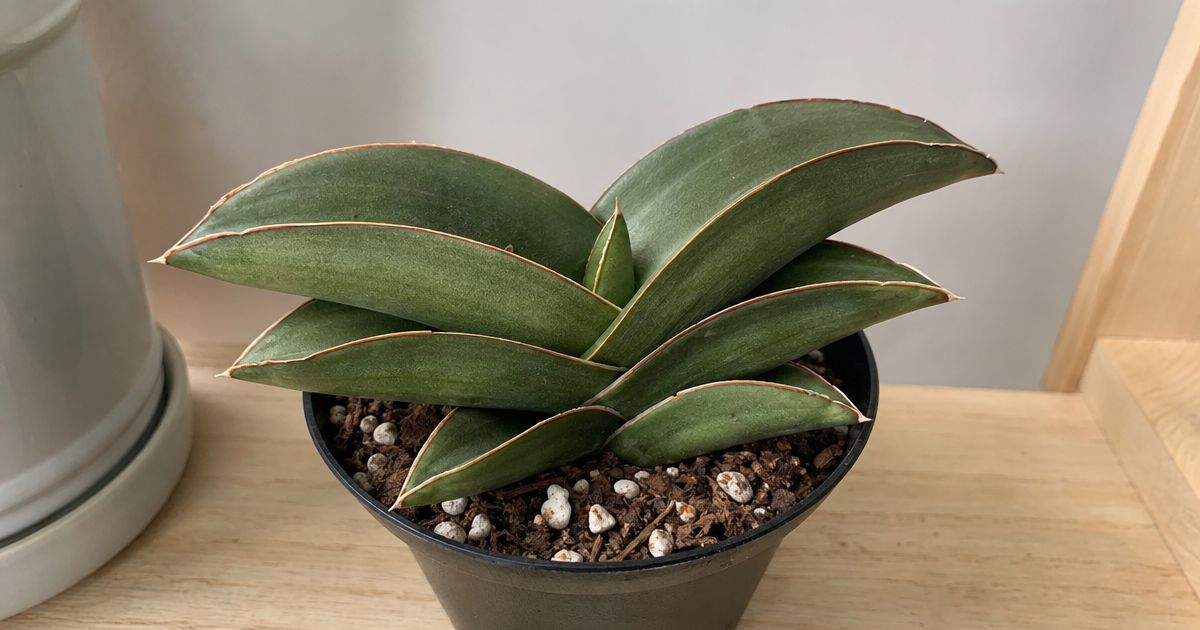
Want a snake plant small enough for a windowsill, a desk or a bookshelf? Meet the Samurai Dwarf, often just called Sansevieria Samurai.
It was formerly listed as Sansevieria ehrenbergii ‘Samurai Dwarf’. It packs the toughness of a regular snake plant into a plant about 6 inches tall.
Here’s the catch with the name: the wild species behind it is a big plant. Blue sansevieria (Sansevieria ehrenbergii) is a succulent perennial with sword-like, blue-green leaves up to 5 feet long.
That species comes from parts of eastern tropical Africa and the Arabian Peninsula. ‘Samurai Dwarf’ is a dwarf cultivar of it that only reaches about 6 inches tall and wide.
You’ll also see a newer name on plant tags: Dracaena hanningtonii ‘Samurai Dwarf’. Same little plant, two names.
A 2018 study found that Sansevieria sits inside the Dracaena family tree. Based on molecular studies, sansevieria is now included in the genus Dracaena. More on popular Dracaena types.
There are more than 70 species of snake plant. If you like small ones, the bird’s nest snake plant is another dwarf. The classic Sansevieria trifasciata, the cylindrical snake plant and Sansevieria zeylanica round out a collection nicely.
Sansevieria Samurai Quick Care Tips
- Botanical name: Dracaena hanningtonii ‘Samurai Dwarf’ (formerly Sansevieria ehrenbergii ‘Samurai Dwarf’)
- Common names: Samurai Dwarf, Sansevieria Samurai; the species is called blue sansevieria
- Family and origin: Asparagaceae; the species is native to parts of eastern tropical Africa and the Arabian Peninsula
- Growability: Low maintenance
- Hardiness zones: USDA zones 10 to 11
- Size: About 6 inches tall and wide
- Flowering: Rarely flowers indoors
- Light: Bright, indirect light; tolerates some shade; protect from hot afternoon sun
- Temperature: Average home temperatures; snake plants prefer 70 to 90°F; avoid cold drafts
- Soil: Well-drained cactus mix, or potting soil amended with perlite
- Water: Only after the soil has completely dried out; much less from fall to late winter
- Fertilizer: All-purpose fertilizer at half or quarter strength in spring, or at half strength monthly in the growing season
- Pests and diseases: Root rot from overwatering; mealybugs and spider mites
- Propagation: Division of pups; leaf cuttings also work for snake plants
- Safety: Toxic to cats and dogs if eaten
Samurai Dwarf Snake Plant Care
Size and Growth
Samurai Dwarf stays small. It slowly grows to 6 inches, and the Missouri Botanical Garden puts it at up to 6 inches tall with an equal spread.
The leaves are what make it special. They are thick, short, curved and V-shaped, with deep grooves and red edges.
Look closely and you’ll see creamy white, red-tinged margins. The leaves grow from the stem in an alternating pattern, which gives the plant a circular look from above.
Over time it slowly forms a small colony of pups, the name UF/IFAS Extension gives these new shoots. The rhizome is the underground part of the stem that produces roots and spreads the plant.
Flowering
Don’t count on flowers: this plant rarely flowers indoors, as is usual for sansevieria grown as a houseplant. The full-size wild species has creamy white, tubular flowers about 2.5 inches long on tall, upright stalks. For more on blooms, see our guide to snake plant flowers.
Light and Temperature
Bright, indirect light is the sweet spot, and it’s what sansevieria prefers. It tolerates low light very well, though low light can mute the leaf color and patterns.
That matters on a plant prized for its red-edged leaves. More on snake plant light requirements.
Go easy on direct sun. Protect this plant from hot afternoon sun, and keep snake plants out of direct sun, as it can burn them.
Indoors, average home temperatures are fine, though sansevieria prefers it a little warmer (70 to 90°F is ideal). Avoid cold drafts, especially in winter.
Outdoors, it is hardy in zones 10 to 11. In cooler areas, keep it as a houseplant. Indoor plants may be placed in shady outdoor spots in summer.
Watering and Feeding
This is where most snake plants get into trouble. Iowa State Extension says to water only after the soil has completely dried out.
The quickest way to kill a sansevieria is to overwater it. Water regularly during the growing season and much less from fall to late winter.
One more tip: don’t pour water into the center of the rosette. Water the soil around the plant instead, and use a pot with drainage holes to prevent soggy soil. More on watering snake plants.
Feeding is light work, since frequent fertilizing is not necessary. An all-purpose fertilizer at half or quarter strength in spring is enough.
For a more robust plant, use an all-purpose fertilizer at half strength, monthly during the growing season. Either way, less is more.
Soil and Repotting
Use a well-drained mix: cactus mix or potting soil amended with perlite. See our tips on the best soil for snake plants.
No need to rush repotting. Sansevieria doesn’t mind being a bit crowded in its container, and division helps manage pots that are badly pot-bound.
A snake plant can break a clay pot if it gets too rootbound. Keep an eye on clay containers as the colony fills in.
Grooming and Maintenance
Little is needed. Dust the leaves occasionally, and if a leaf is damaged, cut it off at soil level.
How To Propagate Samurai Dwarf
Division is the easy route: snake plants are most easily propagated by division, and Samurai Dwarf slowly forms a small colony of pups. Leaf cuttings also work for snake plants.
Separate clumps by cutting the thick underground rhizome. Make sure each section has both roots and shoots, then repot the divisions with new soil.
Samurai Snake Plant Pests and Diseases
Overwatering is the big one, and it often causes root rot. If plants stay wet, root rot develops and leaves turn yellow and collapse.
If you suspect trouble, read our guide to snake plant root rot. For insects, watch for mealybugs and spider mites.
Is Sansevieria Samurai Poisonous to Pets?
Yes. Penn State Extension says all species of snake plant are toxic because they contain saponins. The ASPCA lists the common snake plant as toxic to dogs and cats.
Signs include nausea, vomiting and diarrhea. No sansevieria should be eaten, so keep them all out of reach of children, dogs and cats.
If you think your pet has chewed on one, call your veterinarian or the ASPCA Animal Poison Control Center at (888) 426-4435.
Where To Use Samurai Dwarf
It’s a good low-maintenance indoor plant. Its size makes it a natural fit for a desk, a shelf or a bright windowsill.
Just place it where pets and small children can’t reach it. Do you grow a Samurai Dwarf? Tell us where yours lives and how it’s doing.
Frequently Asked Questions
What is a Samurai Dwarf snake plant?
It is a dwarf cultivar of Sansevieria ehrenbergii, now listed as Dracaena hanningtonii ‘Samurai Dwarf’. It reaches only about 6 inches tall with an equal spread, while the wild species has leaves up to 5 feet long.
Its thick, short, V-shaped leaves have red edges and are arranged so the plant looks circular from above.
How big does Sansevieria Samurai get?
About 6 inches tall, with an equal spread. It grows slowly to that size and, over time, slowly forms a small colony of pups. Its size makes it a natural fit for a desk, a shelf or a bright windowsill.
How often should I water a Samurai Dwarf?
Water only after the soil has completely dried out, not on a calendar. Overwatering is the quickest way to kill a sansevieria. Water regularly during the growing season and much less from fall to late winter. Don’t pour water into the center of the rosette.
Is Sansevieria Samurai toxic to cats and dogs?
Yes. All species of snake plant are toxic because they contain saponins. The common snake plant is toxic to dogs and cats, with nausea, vomiting and diarrhea as signs. Keep all sansevierias out of reach of children, dogs and cats.
Can Samurai Dwarf grow in low light?
It can, but it looks its best in bright, indirect light. Sansevieria tolerates low light very well, though low light can mute the leaf color and patterns. The plant tolerates some shade but should be protected from hot afternoon sun.