
Sticky leaves, curled shoot tips and a crowd of tiny bugs on your Rose of Sharon bush? Aphids have moved in.
Rose of Sharon (Hibiscus syriacus) is a deciduous shrub in the mallow family (Malvaceae), native to south China and Taiwan. It grows 8 to 12 feet tall and 6 to 10 feet wide, and suits USDA zones 5 to 9. Its 2 to 4 inch flowers come in red, white, violet, purple and two-toned forms, single or double, and each one lasts a day.
It’s a hardy, cold-tolerant shrub, not the tropical hibiscus (Hibiscus rosa-sinensis) sold for patios, so its pest calendar runs a little differently. The good news: aphids are one of the easier problems to fix. Here’s how to spot them, what they actually do, and how to clear them out, gentlest steps first. We’ll also meet the other little bug you’ll find on the seed pods.
Which Aphids Feed On Rose Of Sharon?
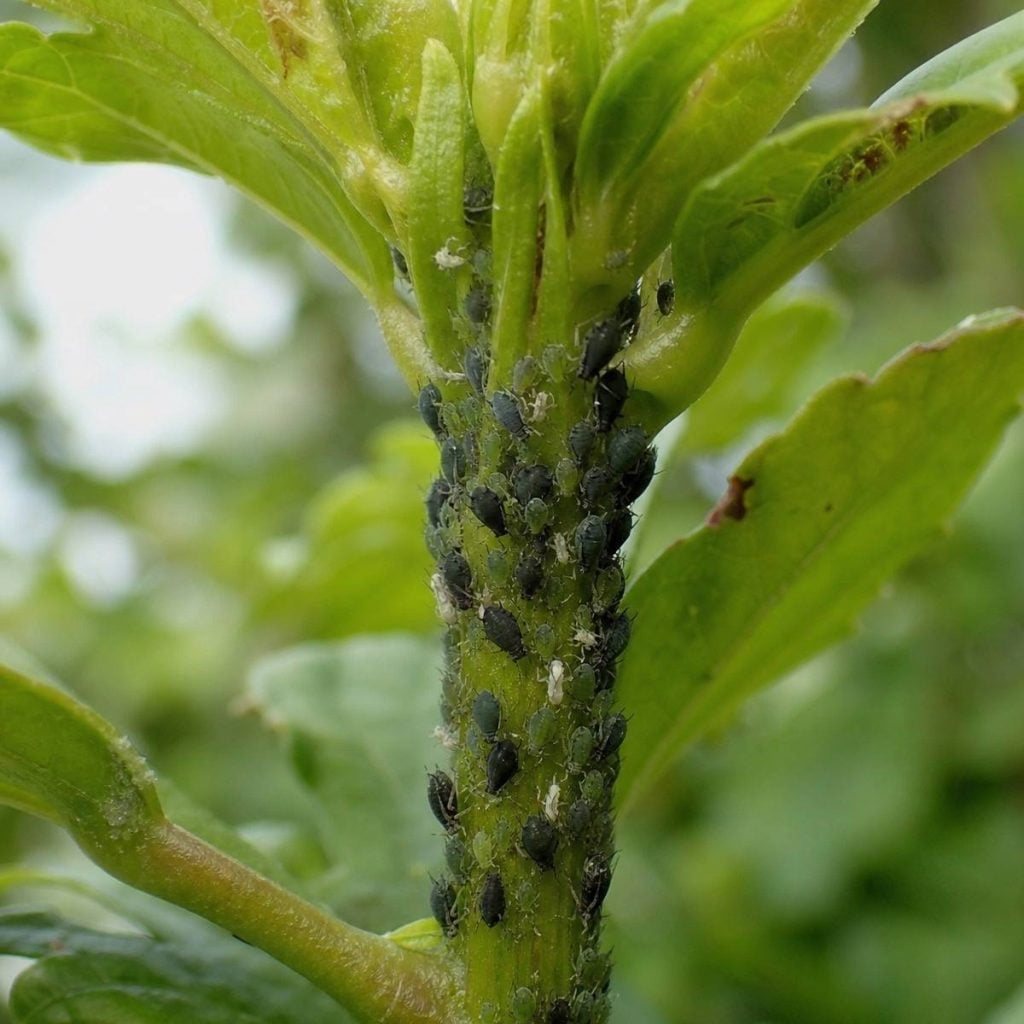
Aphids are small, soft-bodied insects with pear-shaped bodies and long legs and antennae. The University of California Statewide IPM Program says they may be green, yellow, brown, red or black, depending on the species and the plant they feed on. Most have a pair of tubelike cornicles poking out of the back end, which sets them apart from every other insect. Adults are generally wingless, but winged forms show up when populations are high or in spring and fall, and fly off to new plants.
The aphid most tied to rose of Sharon is the melon aphid, also called the cotton aphid (Aphis gossypii). Catalpa and rose of Sharon were its overwintering hosts in northern locations. Its eggs are laid there, yellow at first and soon shiny black. In the south, overwintering eggs are not commonly produced. The wingless adults are only 1 to 2 mm long, and their color varies: light green mottled with dark green is most common, but whitish, yellow, pale green and dark green forms occur too. Hibiscus is among the crops this aphid injures regularly.
Other aphids with wide appetites may turn up as well. The green peach aphid (Myzus persicae), for example, feeds on hundreds of host plants in more than 40 plant families, including numerous flower crops and ornamentals. Want to know who’s who? See our guides to the types of aphid species and the black bean aphid.
What Damage Do Aphids Cause Rose Of Sharon?
Aphids don’t chew. They pierce tender leaves and stems and suck out the fluids. Here’s what that feeding does:
- Large populations can turn leaves yellow and stunt shoots.
- Some species inject a toxin that makes leaves curl.
- Aphids leave sticky honeydew, which often turns black as a sooty mold fungus grows on it.
- Aphids may carry viruses from plant to plant on certain vegetable and ornamental plants.
Now the reassuring part: aphids seldom kill a mature plant, and most established plants tolerate aphid feeding and outgrow the damage. A big, healthy rose of Sharon can usually shrug off a light infestation. The curled tips and sticky mess are still good reasons to act.
Check your rose of Sharon for:
- Clusters of tiny bugs on new shoots and the undersides of leaves
- Yellowing, curled or stunted new growth
- Sticky leaves, or a black sooty coating on them
- Ants climbing the stems
Those ants are a real clue. Ants are often a sign of an aphid infestation, especially on trees and shrubs, and they protect aphids from their predators and parasites to guard their honeydew supply.
How To Get Rid Of Aphids On Rose Of Sharon
Work from the gentlest step up. Use nonchemical methods first, and if a spray seems necessary, choose products that are less toxic to natural enemies, such as insecticidal soaps and oils.
Check Often And Early
Check plants at least twice a week when they are growing rapidly, so you can knock, hose or prune aphids off before they build up. Many species do the most damage in late spring, when temperatures are warm but not hot (65° to 80°F). Turn the leaves over: many aphids prefer the undersides.
Hose Them Off
A strong spray of water from the garden hose knocks aphids off a sturdy shrub like rose of Sharon. Most dislodged aphids won’t be able to return to the plant, and the spray rinses off honeydew too. Do it early in the day, so the leaves dry quickly in the sun and are less prone to fungal disease. Repeat whenever you see new clusters.
Prune Out Heavy Clusters
If the aphids are packed onto a few shoot tips, snip those tips off and throw them away. Pruning out infested leaves and stems is a way to catch infestations early.
Let The Natural Enemies Work
Lady beetle adults and larvae, lacewing larvae, soldier beetles, syrphid fly larvae and tiny parasitic wasps are key aphid enemies. Parasitized aphids turn into crusty, golden-brown “mummies.” Once you see mummies, the aphid population is likely to drop substantially within a week or two. Read more about natural predators like lady bugs and green lacewings.
Thinking of buying ladybugs? Purchased lady beetles may give some temporary control, but most will leave your yard within a few days. If you try it, release them at dusk, keep them refrigerated until then and mist them and the plant with water first. Lady beetles released in broad daylight fly away immediately.
Keep Ants Off The Shrub
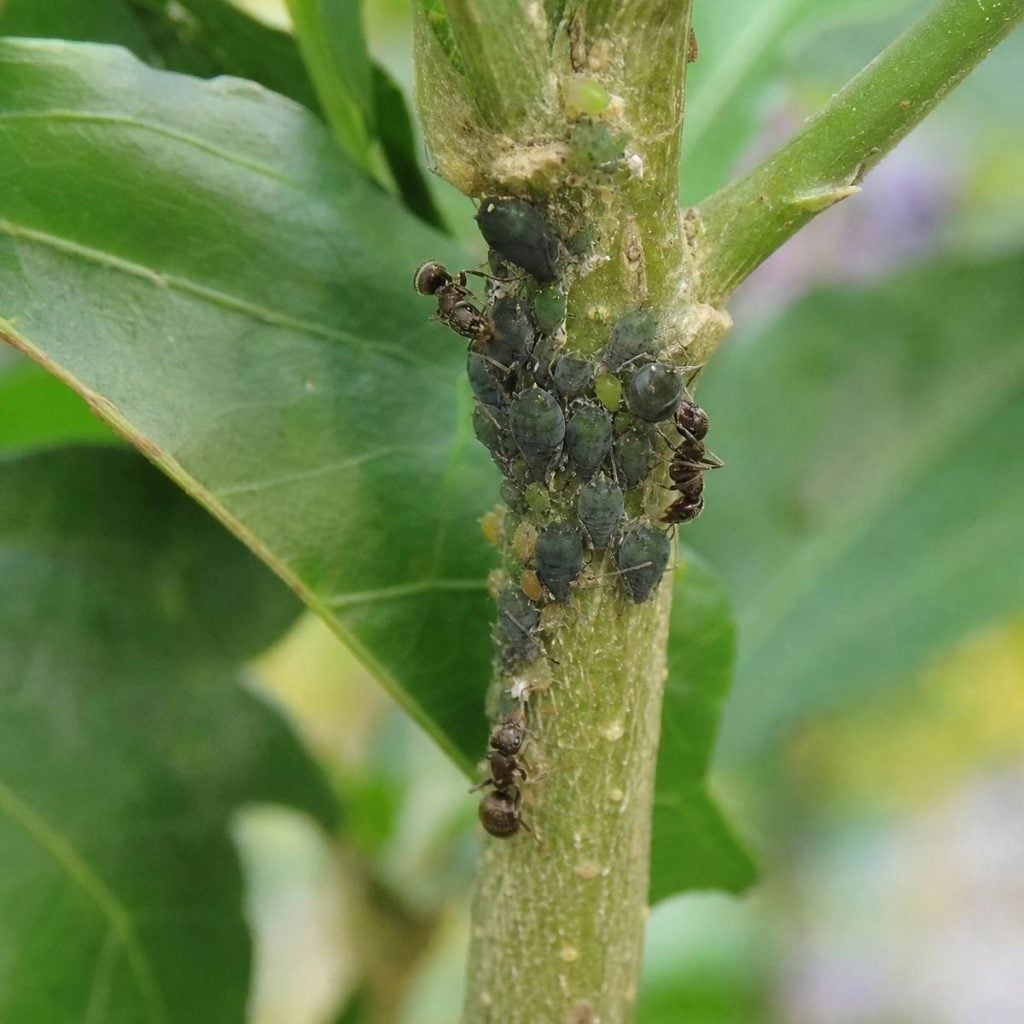
Because ants guard aphids, managing ants is a key part of aphid control. On a tree-form or single-trunk rose of Sharon, wrap the trunk with fabric tree wrap or duct tape and put a band of sticky material on the wrap, not directly on young or thin bark. Ant stakes or containerized baits on the ground are another option. Also prune out other ant routes, such as branches touching buildings, the ground or other trees.
Go Easy On Nitrogen
High levels of nitrogen fertilizer favor aphid reproduction, and slow-release fertilizers are best. Don’t push lots of soft new growth with a heavy feeding.
Insecticidal Soap Or Horticultural Oil
If you need to spray, insecticidal soaps and oils are the best choices for most situations. Oils include petroleum-based horticultural oils and plant-derived oils such as neem. They kill mainly by smothering, so cover the infested foliage thoroughly, undersides too. They kill only the aphids present on the day you spray, but leave no toxic residue, so natural enemies that move in later aren’t harmed. Expect to repeat.
Timing matters, especially in summer, when rose of Sharon flowers. Don’t use soaps or oils on water-stressed plants or when the temperature tops 90°F. Clemson Cooperative Extension adds that they can damage plants sprayed in direct sunlight, and advises spraying early in the morning or late in the evening. Do a sensitivity test first: spray a small area, then wait 24 hours to see if any damage occurs. Check labels and test the product on a portion of the foliage several days before a full treatment.
Buy a commercial insecticidal soap rather than mixing dish soap. Homemade soap recipes are not recommended because they are more likely to injure plants, while commercial soaps are tested on plants. For neem, the University of Minnesota Extension says it discourages aphid feeding rather than killing fast: the aphids stop feeding and slowly die. NPIC says neem oil is practically non-toxic to bees, but the EPA says neem labels direct users not to apply it when honeybees are actively visiting flowers in the area, so spray when bees aren’t working the blooms. Our guide to applying neem oil covers the details.
Diatomaceous Earth: Use With Care
Diatomaceous earth (DE) is not as harmless as it sounds. It works on soft-bodied insects like aphids; use the “natural-grade” product, not the swimming-pool-filter type. It may irritate your lungs if inhaled while you apply it. And because it can also harm honeybees, avoid applying it to crops in flower. Rose of Sharon flowers during the hottest months, so that rules out much of the season. DE remains effective only as long as it is kept dry and undisturbed. More in our guide to diatomaceous earth for potted plants.
Stronger Insecticides: Skip Malathion
Here’s the big one. UF/IFAS Extension puts it plainly in its hibiscus guide: read labels carefully, because you should never use the pesticide malathion on hibiscus.
Other broad-spectrum sprays come with real costs too. Foliar sprays of malathion, permethrin and acephate may kill more aphids than soaps and oils, but they also kill the natural enemies that give long-term control, and they are associated with bee kills and environmental problems. These residual sprays can also make aphid problems worse, and you shouldn’t spray trees or shrubs that are blooming.
Systemic products such as imidacloprid are absorbed and carried through the plant. Imidacloprid can harm predators, parasitoids and pollinators, so avoid it where soaps and oils will do the job, and don’t apply it or other systemics to plants in bloom or prior to bloom. That matters on rose of Sharon: NC State Extension says its flowers attract butterflies, specialized bees, hummingbirds and other pollinators. (In California, these systemic materials have been available only to licensed pest control professionals since January 2025.)
Whatever you buy, check that the label lists your plant. The label is the final authority on how you may legally use any pesticide.
The Other Bug On Rose Of Sharon Seed Pods
Spot clusters of colorful little bugs on the seed pods in late summer? Those are not aphids. They’re likely the hibiscus plant bug, a scentless plant bug (Niesthrea louisianica). Mississippi State University Extension says they are most often seen in late summer and fall, gathering on the seed pods of hibiscus, althea (rose of Sharon), hollyhock and other mallows.
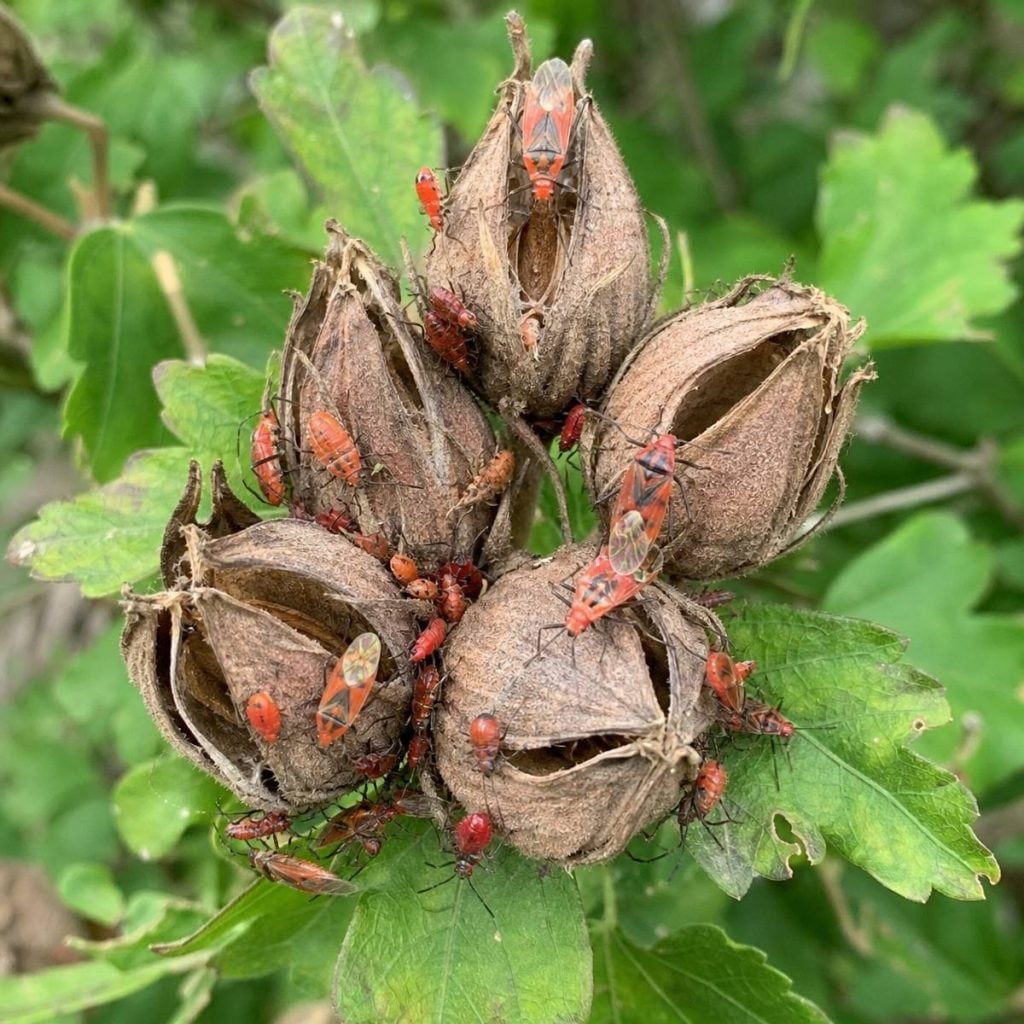
They much prefer seed pods and the seeds inside, though they will feed on flower buds. Those dry, brown pods aren’t their damage, either. Blooms last only a day or two, then the pods naturally dry, brown and open. Because these bugs don’t usually do serious damage to buds or blooms, control is not normally required.
Have aphids found your rose of Sharon this year? Tell us in the comments what worked for you.
Related Reading
- Confederate Rose Care: Growing Hibiscus Mutabilis
- How To Kill Aphids on Roses
- Why Is My Hibiscus Not Blooming?
- Rose Of Sharon VS Hibiscus – What Is The Difference?
Frequently Asked Questions
How do I get rid of aphids on rose of Sharon?
Start with a strong spray of water from the hose, which knocks aphids off sturdy plants, and most can’t climb back. Prune out heavily infested tips, keep ants off the shrub and give lady beetles and lacewings time to work. If you still need to spray, insecticidal soaps and oils are the best choices for most situations. Cover the leaves thoroughly, including the undersides.
Why are there ants on my rose of Sharon?
Ants are often a clue that aphids or another honeydew-making insect is feeding higher up. Ants tend aphids for their sweet honeydew and protect them from predators and parasites, so managing ants is a key part of aphid control. On a single trunk, wrap it with tree wrap or duct tape and put a sticky band on the wrap, or use ant stakes or containerized baits on the ground.
Can I use malathion on rose of Sharon?
Skip it. You should never use the pesticide malathion on hibiscus, and rose of Sharon is a hibiscus. Malathion, permethrin and acephate also kill the natural enemies that give long-term aphid control and are associated with bee kills. Insecticidal soap or horticultural oil is the safer first choice when water sprays aren’t enough.
Will aphids kill my rose of Sharon?
Probably not. Aphids seldom kill a mature plant, and most established plants tolerate aphid feeding and outgrow the damage. Large populations can still turn leaves yellow, stunt shoots and coat leaves in sticky honeydew that turns black with sooty mold. That’s worth fixing, but it’s rarely an emergency for a healthy, established shrub.
What are the bugs on my rose of Sharon seed pods?
Those are most likely hibiscus plant bugs (Niesthrea louisianica), a kind of scentless plant bug, not aphids. They gather on the seed pods of hibiscus, rose of Sharon and other mallows in late summer and fall, and prefer the pods and seeds to the flower buds. Because they rarely do serious damage to buds or blooms, control is not normally required.