
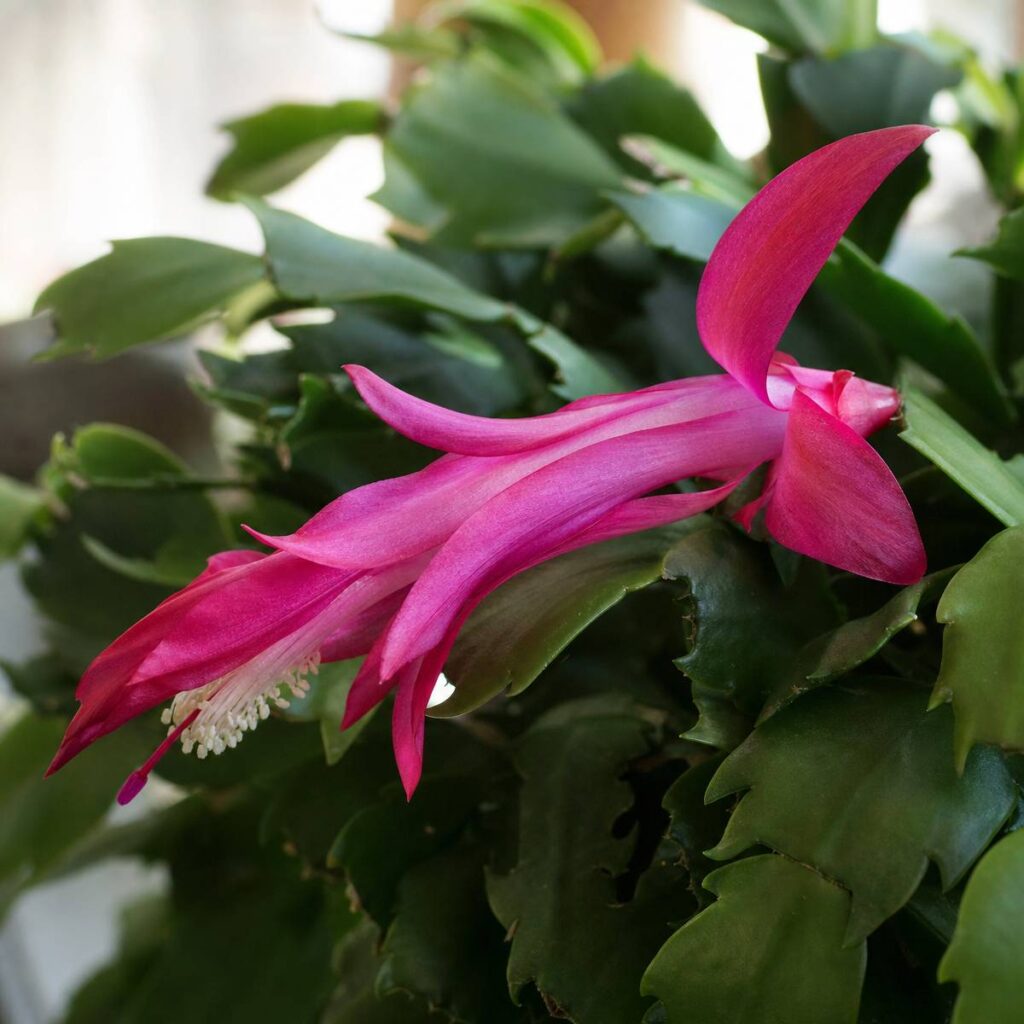
Although it’s called a cactus, the Christmas cactus isn’t a desert plant. Penn State Extension says holiday cacti came from the mountainous rainforests of southeast coastal Brazil, where these epiphytic cacti evolved above ground in trees, in pockets where branches meet and leaves and moss collect. That one fact explains almost everything about how to repot one.
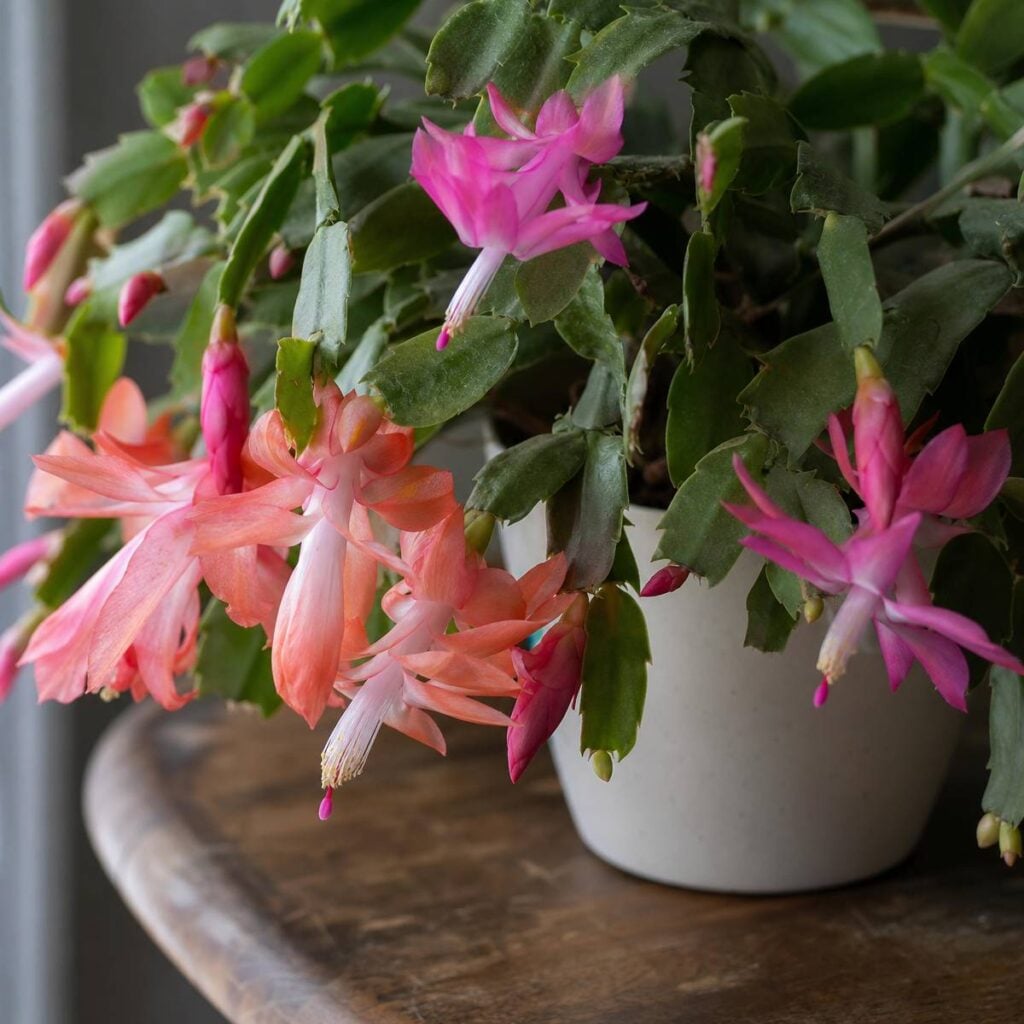
It blooms in the fall and winter, and Clemson Cooperative Extension lists flower colors including red, rose, purple, lavender, peach, orange, cream and white.
Here’s the good news for anyone standing over a pot with a trowel: this plant doesn’t ask for much repotting. Below is when to do it, how to do it, and how to tell the plant is ready.
Related: Why Doesn’t My Christmas Cactus Flower?
Does Christmas Cactus Need Repotting Every Year?
No, and skipping it is usually the smarter move. Clemson and Illinois Extension both say holiday cacti flower best when kept somewhat pot-bound, and UF/IFAS says Christmas cactus prefers to be a bit root-bound.
Iowa State Extension says holiday cacti can go many years without repotting, so repot only when the plant has completely outgrown its container.
Pot-bound just means the roots fill the pot snugly. For this plant, that’s what you want.
One note on wording: extension guides usually cover Christmas, Thanksgiving and Easter cactus together as “holiday cacti,” so you’ll see that term in some of the advice below.
How Often Should I Repot Christmas Cactus?
Plan on about once every three years. That’s the figure from Clemson, Colorado State Extension and University of Minnesota Extension, and Penn State says every three to four years.
Let the plant make the call, not the calendar. Penn State says it’s time when the plant looks “tired” or roots begin to grow through the drainage holes, and UConn Extension says to check the drainage holes for excessive root growth.
Potting mix wears out too. Illinois Extension notes that peat loses its properties over time, so you’ll likely need to repot every 3 to 5 years to keep the drainage working. Either way, roots pushing out of the drainage holes are your best signal.
When Should You Repot Christmas Cactus?
After the flowers finish, not before. Penn State says to wait until the blooming period has ended and the flowers have wilted, and never to repot while the plant is actively blooming. Late winter or early spring is best.
Other extension sources land in the same neighborhood. Clemson and Illinois Extension say spring, and Iowa State says spring or early summer, when the plant isn’t in bloom. Spring comes up most, so think of the stretch after flowering wraps up as your window.
How Do You Repot Christmas Cactus?
Handle the plant gently. The flat stem segments (what most of us call leaves) are a bit delicate, so lift and move it with care.
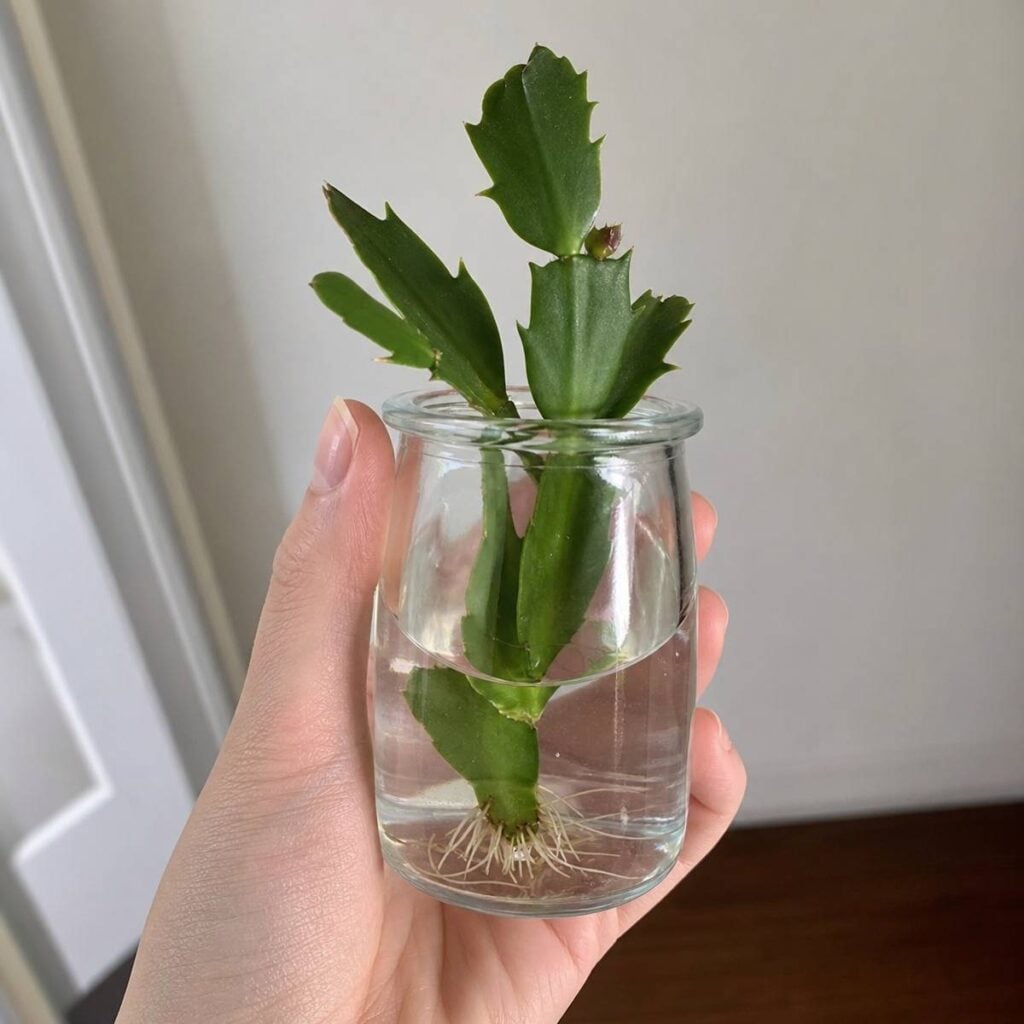
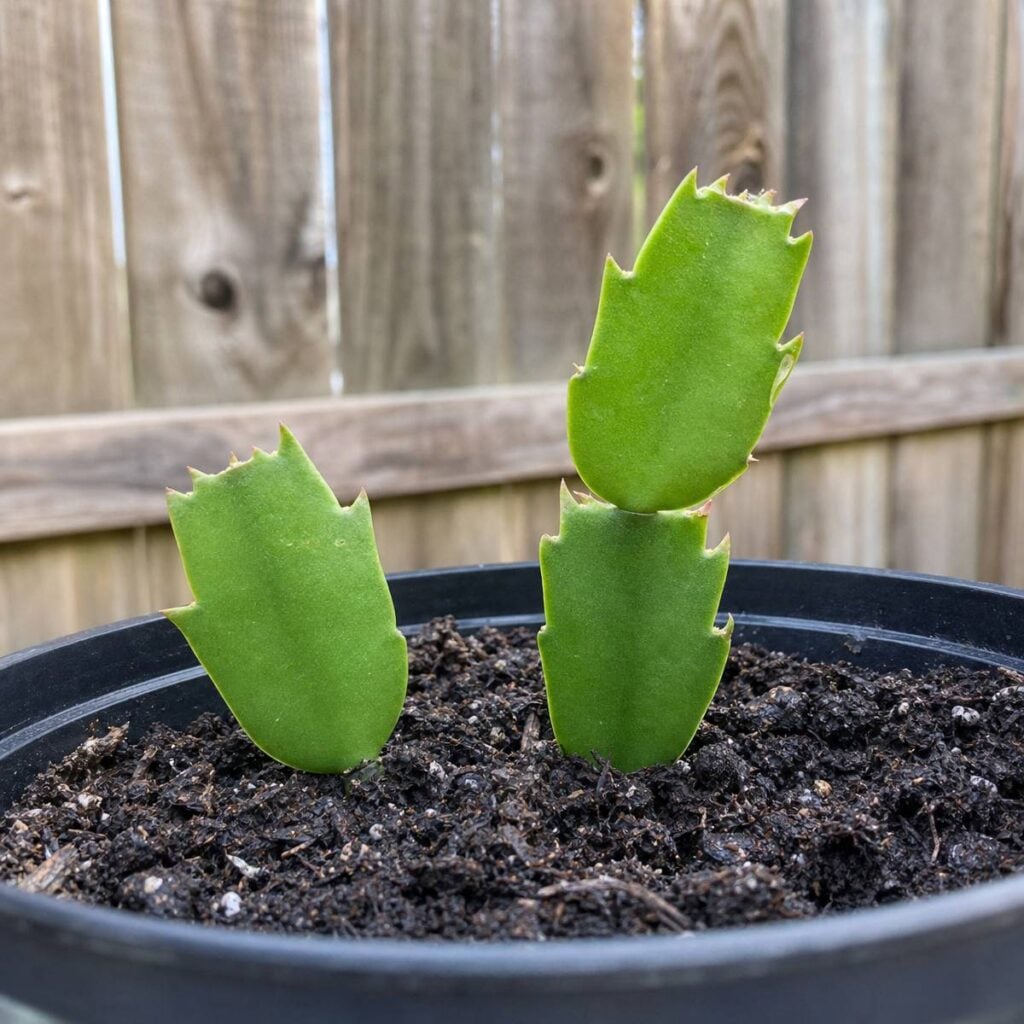
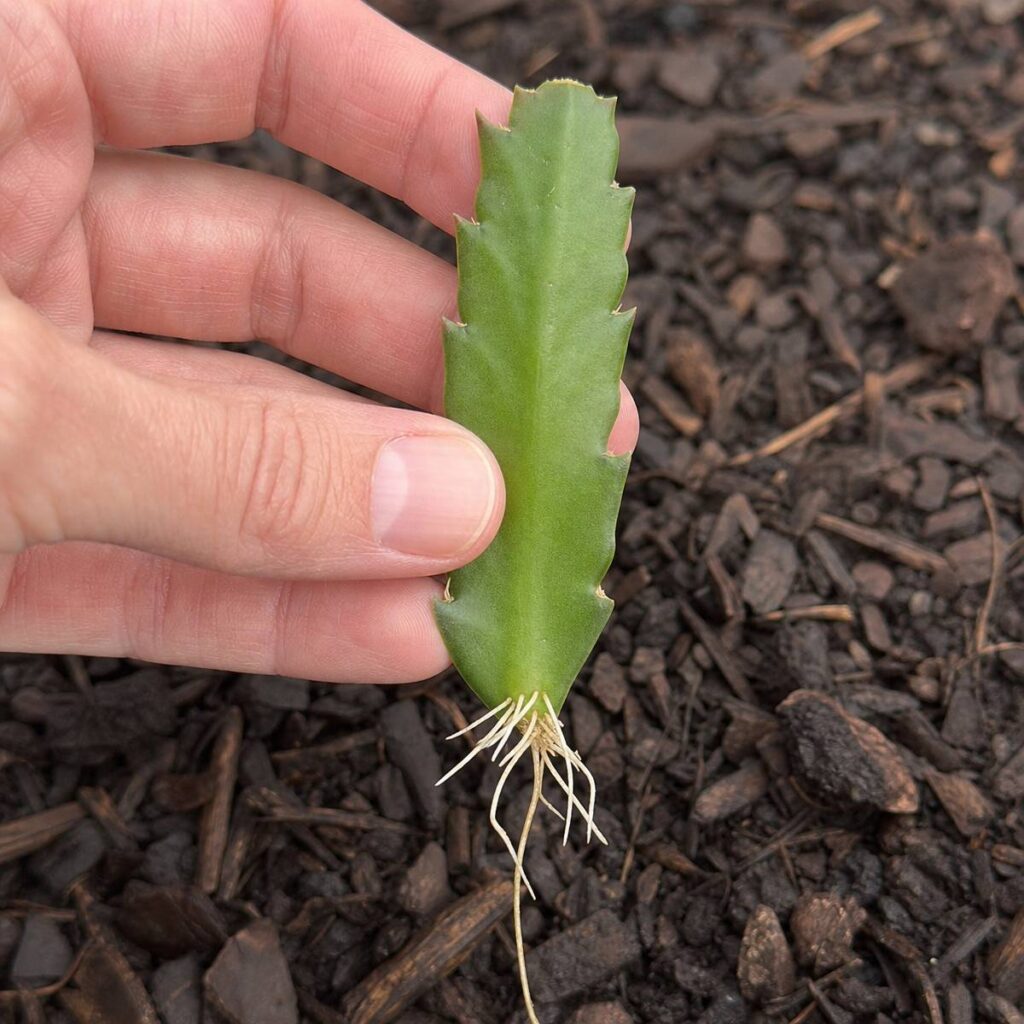
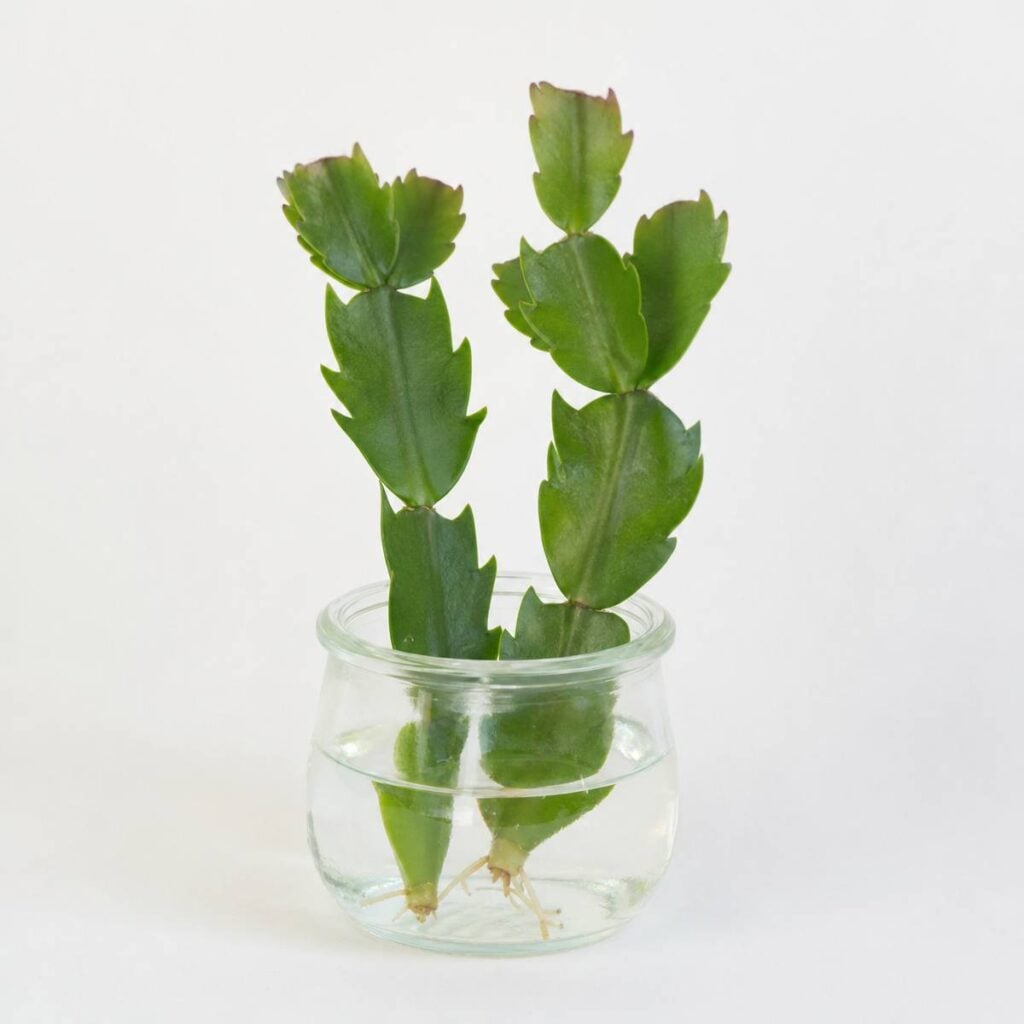
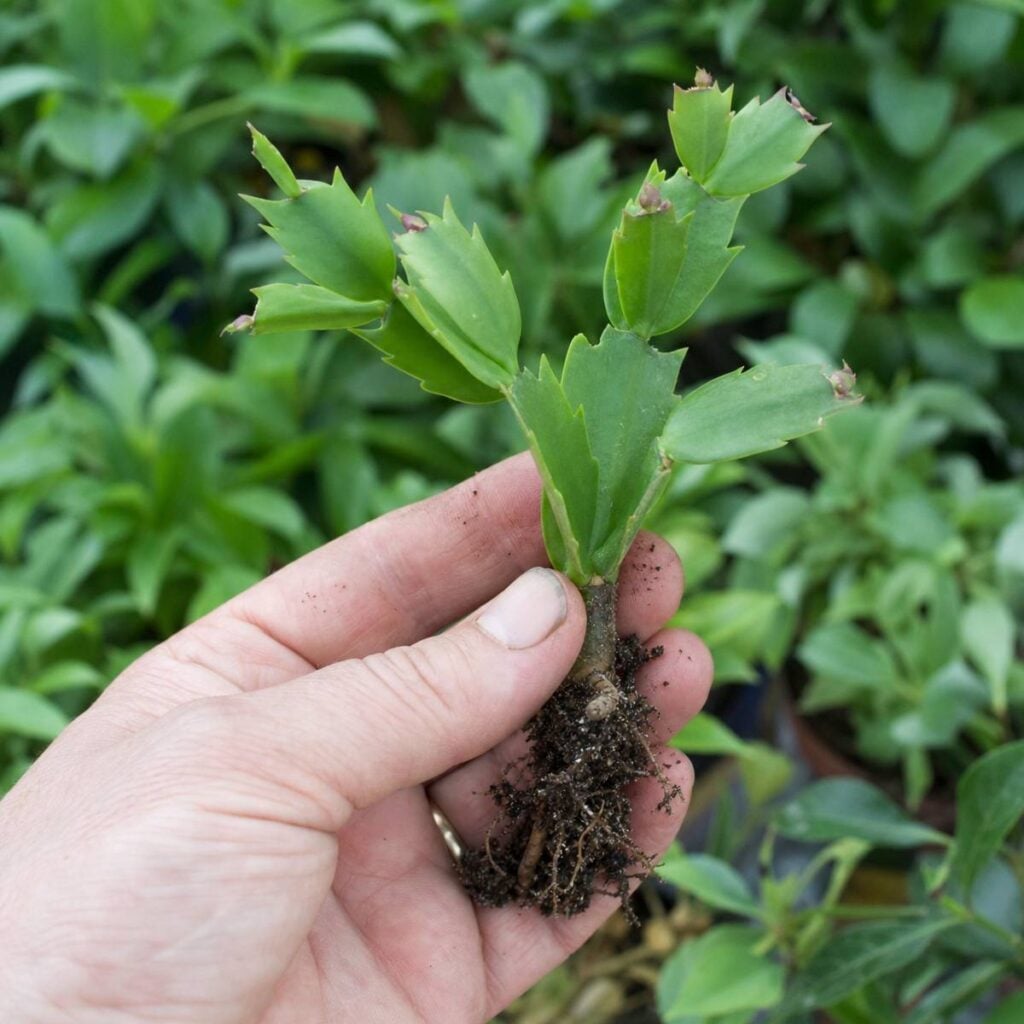
If yours is big and heavy, you can twist off a few stems first to make it easier to handle. Penn State says a length of stem with three to five segments can be rooted as a cutting, so you may come away with new plants too.
Get everything ready before you start, so the plant is out of its pot for as short a time as possible. You’ll need two things: a fresh, well-draining potting mix and a pot that’s only slightly bigger than the current one, with drainage holes.
Christmas Cactus Soil Mixes
Think airy and fast-draining. Clemson says holiday cacti are epiphytes that don’t grow well in heavy, wet potting mixes, and Illinois Extension makes the same point.
You don’t have to hunt down anything fancy. Iowa State says a special cactus mix isn’t required and that all-purpose potting soil works if it drains well.
A succulent potting soil fits the bill too: Colorado State suggests a succulent mix, which is a bit coarser and lets more air move through the soil, and University of Missouri Extension suggests commercial mixes made for epiphytes.
If you’d rather mix your own, the recipes vary a little. The Missouri Botanical Garden gives one part potting soil, two parts peat moss and one part sharp sand or perlite for Christmas cactus in containers.
Clemson says a good mix may contain 60 to 80 percent potting soil with 20 to 40 percent perlite.
Skip soil dug from the garden bed. It’s heavy, and the University of Minnesota’s recipe specifically calls for sterile potting soil.
Container
Go up only slightly. Penn State says to use a slightly larger pot, and UF/IFAS says not to choose a pot too large for the plant, since Christmas cactus prefers to be a bit root-bound. Make sure the container drains freely. Drainage holes aren’t optional here.
Drainage matters because wet soil is this plant’s main enemy. University of Minnesota Extension calls root rot, the loss of roots from overly wet soil, one of the most common causes of death in these plants.
UF/IFAS says to water only when the upper inch of soil feels dry, and Minnesota adds that you should let the pot drain in a sink after watering and remove excess water from saucers.
Step-by-Step: How to Repot
1. Set up the new pot. Add fresh potting mix to the bottom, enough that the top of the root ball will sit about an inch below the pot’s rim once the plant is in. Penn State gives that one-inch mark.
2. Ease the plant out of its old pot. Don’t pull it out by the stems. Work it out gently and try to keep the root ball in one piece.
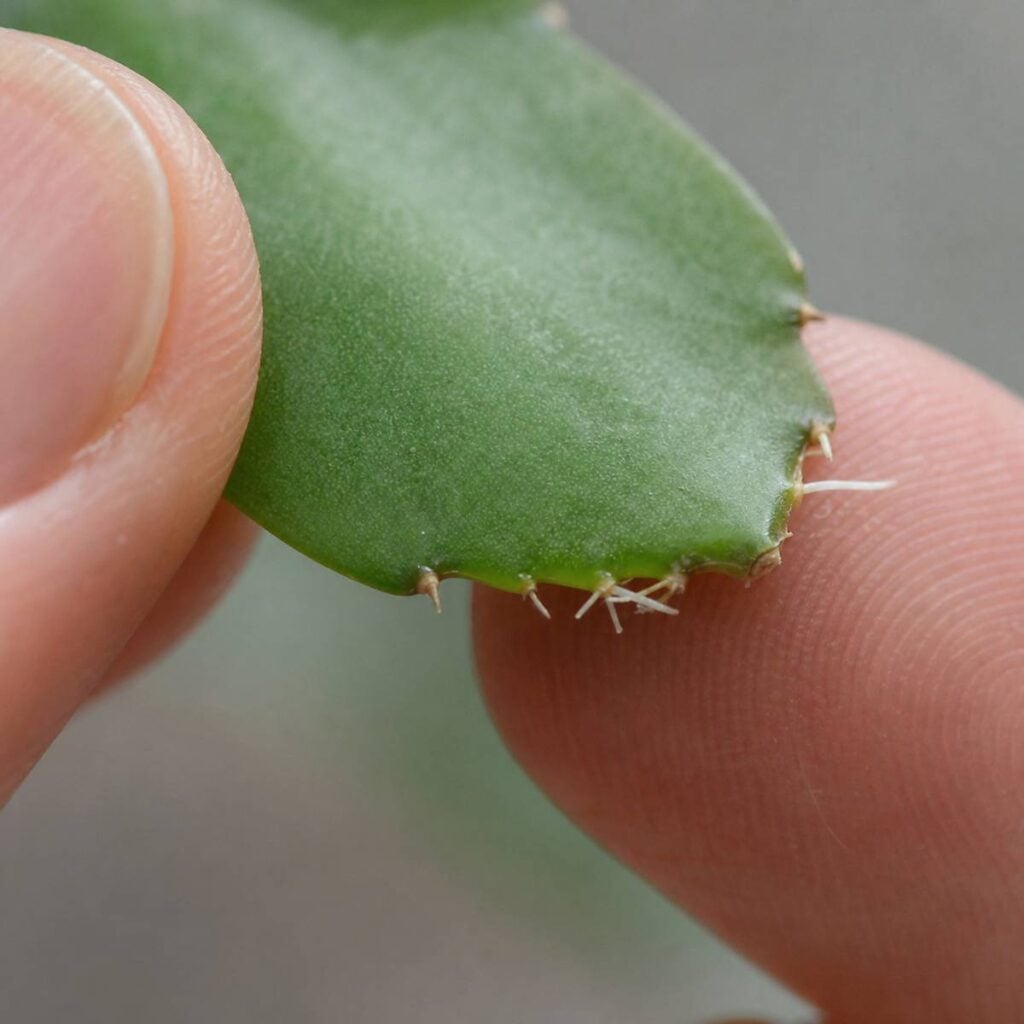
3. Loosen the roots with your fingers, as Penn State advises, and let the old mix fall away.
4. Set the plant in the new pot with the root ball about an inch below the rim, then fill in around it with fresh mix. Pat the soil lightly to remove any air pockets.
5. Water moderately and put the plant in a shaded spot for two to three days. Then go back to your regular care routine.
Note: Give it bright, indirect light, which UF/IFAS says Christmas cactus grows best in, and keep it out of full sun. Penn State says holiday cacti are damaged by full sun.
Do Your Best to Replicate Christmas Cactus’ Natural Environment
In the wild, this plant lives up in the trees, in pockets where debris collects, not in the ground.
Illinois Extension says holiday cacti are epiphytic, growing in the crotches of trees where debris and organic matter build up, and that their mountainous rainforest homes give them frequent watering and extremely good drainage.
So the goal at repotting time is simple: a light mix that holds a little moisture and lets the extra water run straight out, in a pot that isn’t much bigger than the plant. The closer you can come to that, the better off your Christmas cactus will be.
Has your Christmas cactus been in the same pot for years? Tell us how it’s blooming in the comments.
Frequently Asked Questions
How often should I repot a Christmas cactus?
About every three years is the usual extension answer, and Penn State says every three to four. Go by the plant: repot when it looks tired or roots grow through the drainage holes. Christmas cactus flowers best a little pot-bound, so there’s no rush.
When is the best time to repot a Christmas cactus?
After the flowers have finished and wilted. Penn State says late winter or early spring is best, and Clemson and Illinois Extension say spring. Iowa State says spring or early summer, when the plant isn’t in bloom. Whatever the month, don’t repot while it’s flowering.
What soil should I use when repotting a Christmas cactus?
A well-drained, airy mix. Clemson suggests 60 to 80 percent potting soil with 20 to 40 percent perlite, while the Missouri Botanical Garden gives one part potting soil, two parts peat moss and one part sharp sand or perlite. Iowa State says an all-purpose potting soil works if it drains well.
What size pot does a Christmas cactus need?
Only slightly larger. Penn State says a slightly larger pot, and UF/IFAS says not to choose a pot too large for the plant. Whatever you pick, make sure it drains freely, and set the root ball about an inch below the pot’s rim.
How do I water a Christmas cactus after repotting?
Water moderately right after repotting, keep it in shade for two to three days, then go back to your regular routine, per Penn State. After that, UF/IFAS says to water only when the upper inch of soil feels dry, because overly wet soil causes root rot.