
A Christmas cactus that grows healthy green stems all year and never sets a single bud is frustrating, especially with the holidays coming.
The good news is that the usual culprits are things you can change, and most of them come down to giving the plant the right autumn signals.
The Christmas cactus is a rainforest plant, not a desert one. The University of California Agriculture and Natural Resources program says the Schlumbergera group is native to the coastal mountains of southeastern Brazil, growing mostly in high-altitude, moist forests that are relatively cool, shaded and humid, on moss-covered tree branches or in rock crevices. That home explains most of its care and blooming rules.
Here are the most common reasons a Christmas cactus refuses to bloom, and what to do about each one.
Why Is My Christmas Cactus Not Blooming?
Most of the reasons come back to one idea: your plant is waiting to be told that autumn has arrived. Work through these one at a time.
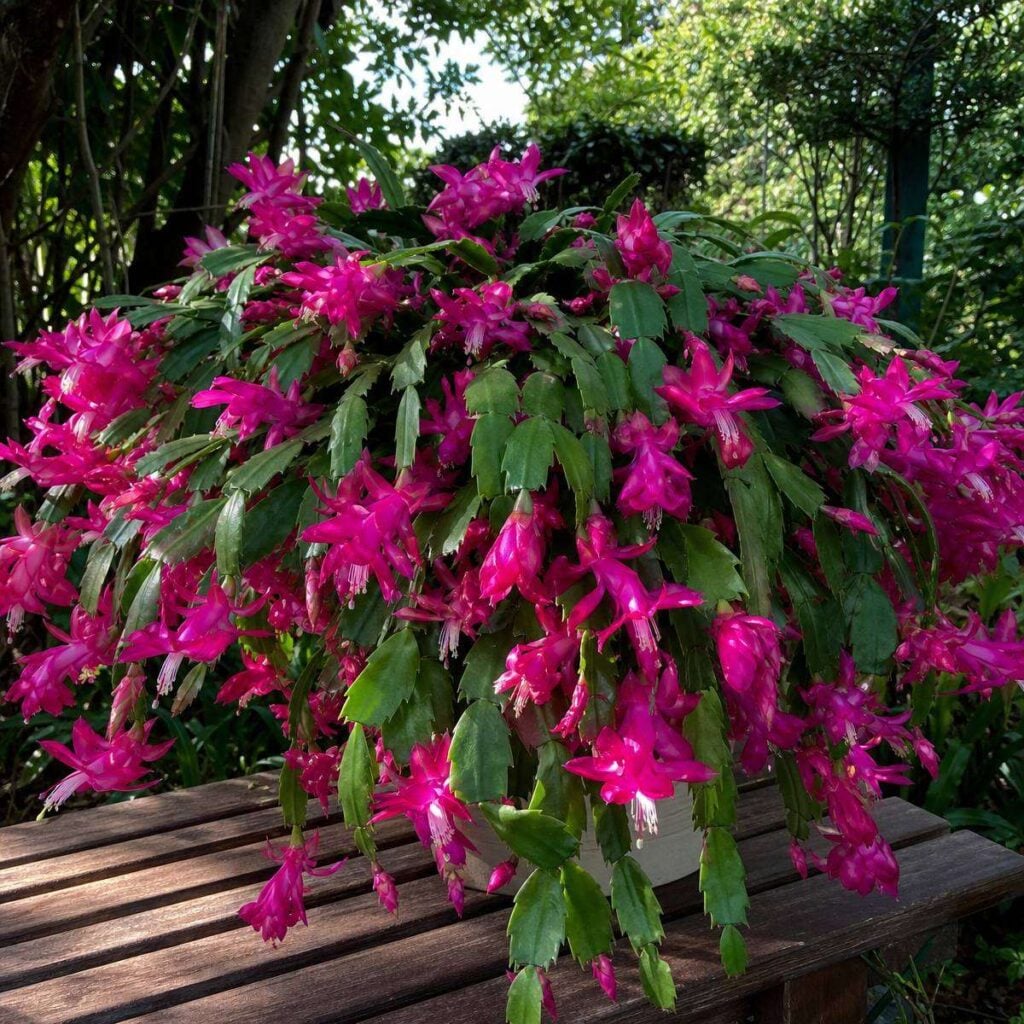
Species: Is It Really a Christmas Cactus?
Sometimes a plant isn’t failing to bloom, it’s just on a different schedule. Iowa State University Extension says most plants sold as “Christmas cactus” are actually Thanksgiving cactus or hybrids.
University of Illinois Extension says Thanksgiving cacti typically bloom from late November to late December, Christmas cacti from late December to March, and Easter cacti from March to May. If yours flowered in November, that may be why.
To tell them apart, look at the edges of the flat stem segments. Clemson Cooperative Extension says Thanksgiving cactus segments have 2 to 4 saw-toothed points along the margins, while Christmas cactus margins are more rounded.
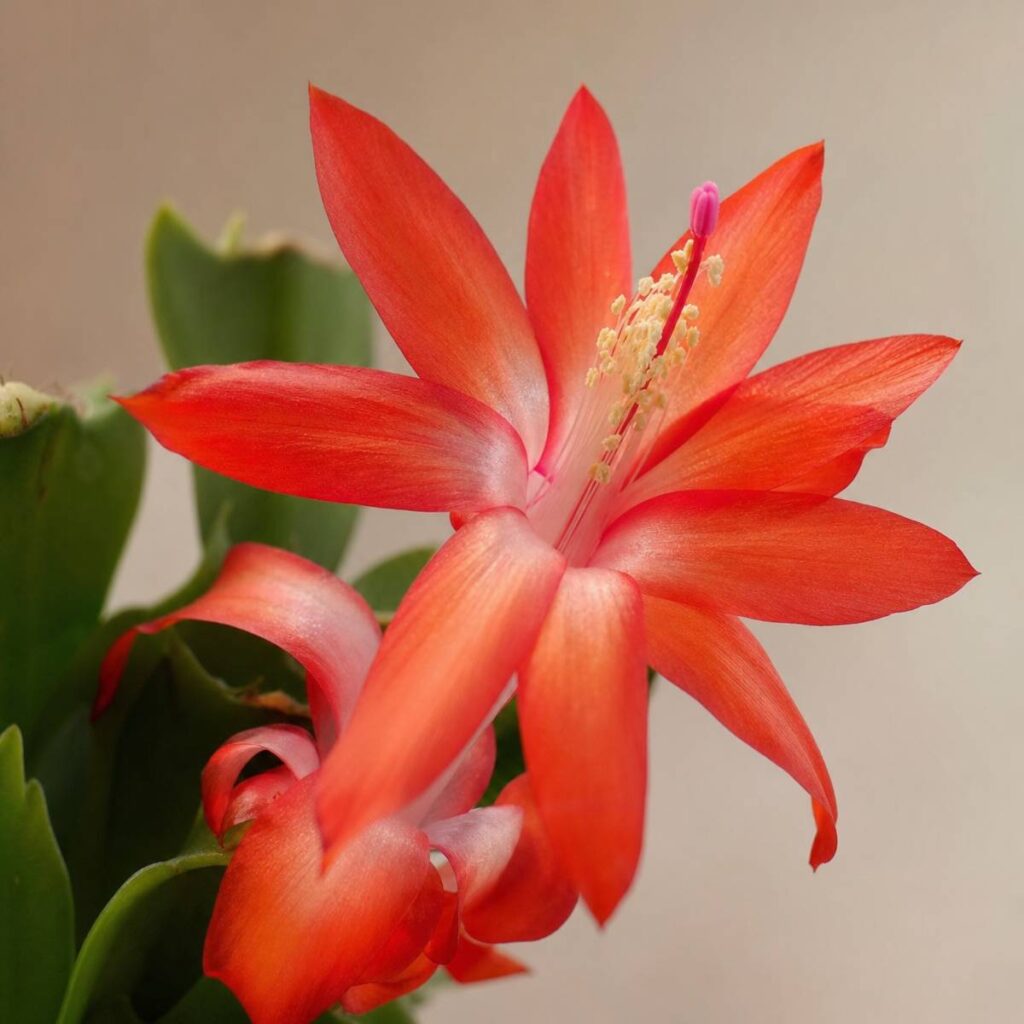
Clemson adds that the anthers, the pollen-bearing tips inside the flower, are yellow on a Thanksgiving cactus and purplish-brown on a Christmas cactus.
- Christmas cactus (Schlumbergera x buckleyi): rounded, scalloped stem edges.
- Thanksgiving cactus (Schlumbergera truncata): saw-toothed points along the edges.
- Easter cactus (Rhipsalidopsis gaertneri): rounded segments with bristles at the tips, and it blooms in spring.
UF/IFAS Extension notes that botanists have yet to agree on the Easter cactus’s classification, so you may see it listed under different names. Iowa State says it also has a more regimented light and temperature requirement than the other two. This article looks at the difference between Easter cactus and Christmas cactus.
Lighting: Long, Uninterrupted Nights
Christmas cactus is a short-day plant. It grows through the long days of summer and forms flower buds as the days shorten in fall. What matters is unbroken darkness, and that is where our homes work against the plant.
Iowa State says it will not bloom properly if exposed to artificial light at night in fall, and that lamps, kitchen lights or even streetlights can interfere. UF/IFAS says to keep it away from artificial light during the night from October through December if you want it to bloom for the holidays.
How much darkness is enough? Extension sources don’t agree on one number, so here is the range. UF/IFAS says Christmas cactus typically needs at least twelve hours of darkness.
Clemson says fourteen hours or more of continuous darkness, and Iowa State says most need 14 to 16 hours, although some cultivars may bloom with as little as 12.
Chicago Botanic Garden says 13 hours of uninterrupted darkness works if the temperature is between 55 and 70°F, and 15 hours if it is above 70°F. If your plant isn’t responding to the shorter figures, the longer ones are worth trying.
Interruptions count. Clemson says as little as 2 hours of interrupted lighting will inhibit flower bud set, and Penn State Extension says the same for two hours or more.
Chicago Botanic Garden says uninterrupted darkness means no light during the dark period, including lamp light within the home.
How long? Clemson says at least 6 continuous weeks, and Purdue Extension says 6 to 8 weeks, or until you see buds forming. Clemson also says day length no longer affects flowering once the buds are set.
UF/IFAS gives a simple example: a dark closet from 5 p.m. to 8 a.m. each day for six weeks, with bloom in about ten weeks. Starting around October 14th puts full bloom around December 23rd.
You don’t need a closet if you have a naturally dark room. Iowa State says an unused bedroom or basement works well, and the University of California suggests a black cloth or a closet to ensure total darkness.
Another easy option is to cover the plant with a cardboard box at night. If you use a box, cut a few air holes along the bottom so the plant can breathe, and lift it off in the morning so the plant gets its bright light during the day.
Daytime light matters too. UF/IFAS says Christmas cactus grows best in bright, indirect light and suggests placing it within six feet of a south-, east-, or west-facing window.
If yours sits right against a window with hot, direct sun, move it back; Penn State says too much light and sun can sunburn the plants. You’ll find more on this in our guide to the things every Christmas cactus owner needs to know.
Temperature: Cool Nights Help
Darkness is only half of the signal. Cool nights are the other half. Iowa State says night temperatures of 60 to 65°F with slightly warmer daytime temperatures are ideal for flower formation, and that flowers may fail to develop if the plant is exposed to temperatures above 70°F.
University of Minnesota Extension is stricter, saying plants are unlikely to bloom if exposed to night temperatures above 65°F. If your Christmas cactus lives in a warm room, that alone could be the problem.
Cool enough nights can even stand in for the long-night treatment. Clemson says plants grown with night temperatures between 50 and 59°F will set flower buds regardless of day length, though growth will be slower and bud drop may occur at 50°F.
Minnesota says nights around 55°F will bring blooms in approximately 5 to 6 weeks, sometimes regardless of day length. Illinois Extension warns that temperatures below 50°F may cause flower buds to drop, so don’t overshoot.
The Royal Horticultural Society adds that exact temperatures aren’t critical, but there should be a distinct drop.
Avoid sudden swings, too. UF/IFAS says Christmas cactus can be prone to bud drop, so avoid extreme environmental changes and keep it away from drafts and heat sources such as vents, fireplaces and televisions.
Watering: Moist, Not Soggy
It’s tempting to treat a Christmas cactus like a desert cactus, but University of Minnesota Extension says its need for high humidity and relatively moist soil for most of the year sets it apart from most cacti and succulents.
UF/IFAS says to water whenever the top inch of soil feels dry rather than on a fixed schedule. Water thoroughly, then empty the saucer, because Minnesota says excess water in saucers may result in dropping flower buds, wilting and root rot.
Fall is where advice gets confusing. The Royal Horticultural Society says to reduce watering from mid-September until the buds start to develop, letting the top few centimetres of compost dry out between waterings but never letting it dry out entirely, then to resume watering once you see flower buds.
Once buds show, the sources agree the plant should not be allowed to dry out. UF/IFAS says allowing the soil to dry out will cause the flowers to drop, and Clemson and Iowa State both say to keep the soil evenly moist through bud set and flowering.
After the flowers finish, Iowa State says to move the plant to a cooler location and water less frequently.
Overwatering is the bigger long-term danger. Minnesota says root rot is one of the most common causes of death in these plants, and Clemson names it the major disease, preventable by avoiding excessive watering.
UF/IFAS says stems and roots can rot if the soil holds too much water, so use a well-drained potting mix. For humidity, the University of California suggests misting or a saucer of pebbles filled with water, so the plant benefits from evaporation without sitting in water. Here is more on how often to water a Christmas cactus.
Fertilizer: Timing Matters
Feeding has a season. UF/IFAS says to fertilize every one to two months during the growing season (April to September) and suggests reducing the rate listed on the label, because excess fertilizer salts can damage the roots.
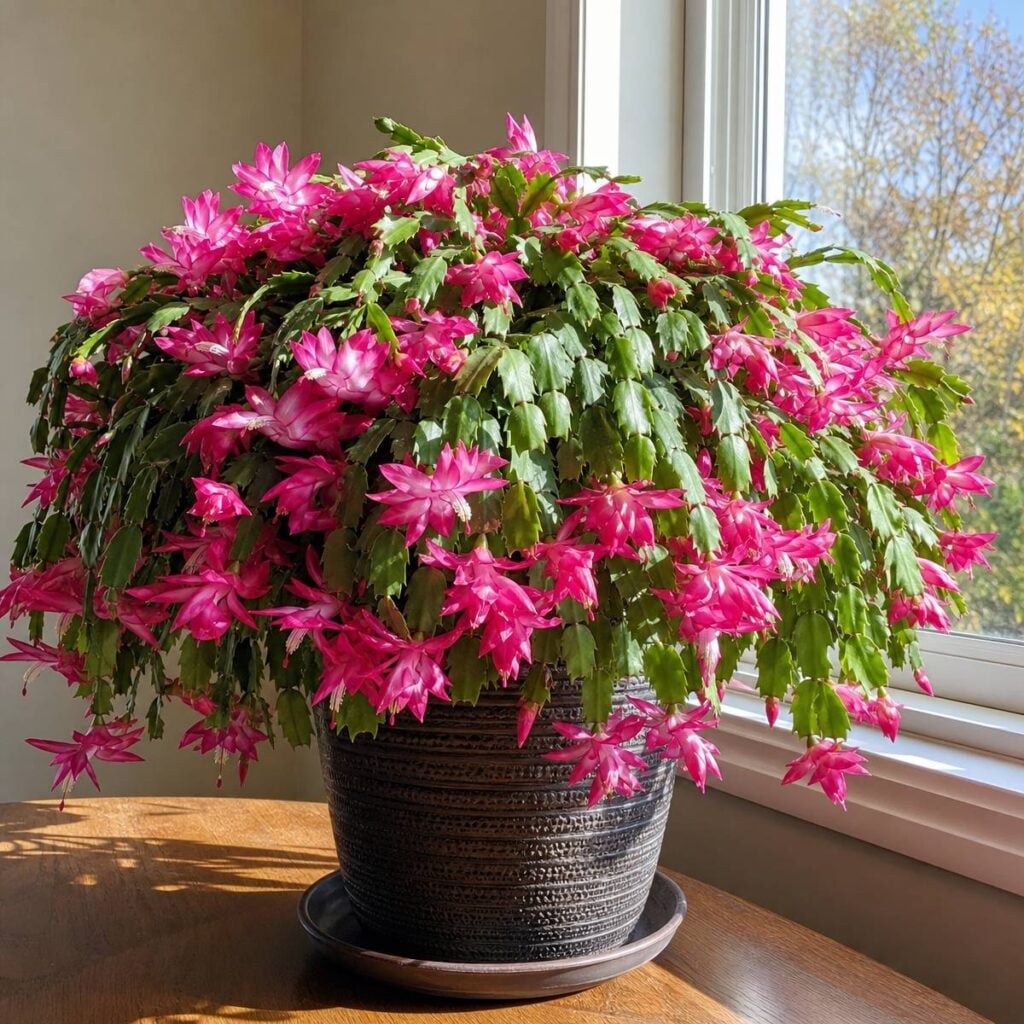
Clemson says to fertilize monthly from late winter or early spring through summer with a half-strength soluble fertilizer, then stop fertilizing in late summer for greater flower bud production in the fall.
Sources differ a little on how often. The University of California says every two to four weeks during the growing season, so monthly at half strength sits comfortably in the range.
Once the plant is blooming, the University of California says not to fertilize, and Purdue says it doesn’t particularly need fertilizer while in bloom. Our guide to fertilizing a Christmas cactus covers the details.
Space: A Snug Pot Is Fine
Some plants want room to stretch, but this one doesn’t. UF/IFAS says Christmas cactus prefers to be a bit root-bound, so don’t choose a pot too large for your plant.
Clemson says holiday cacti flower best when kept somewhat pot bound and need repotting only about once every three years, best done in spring.
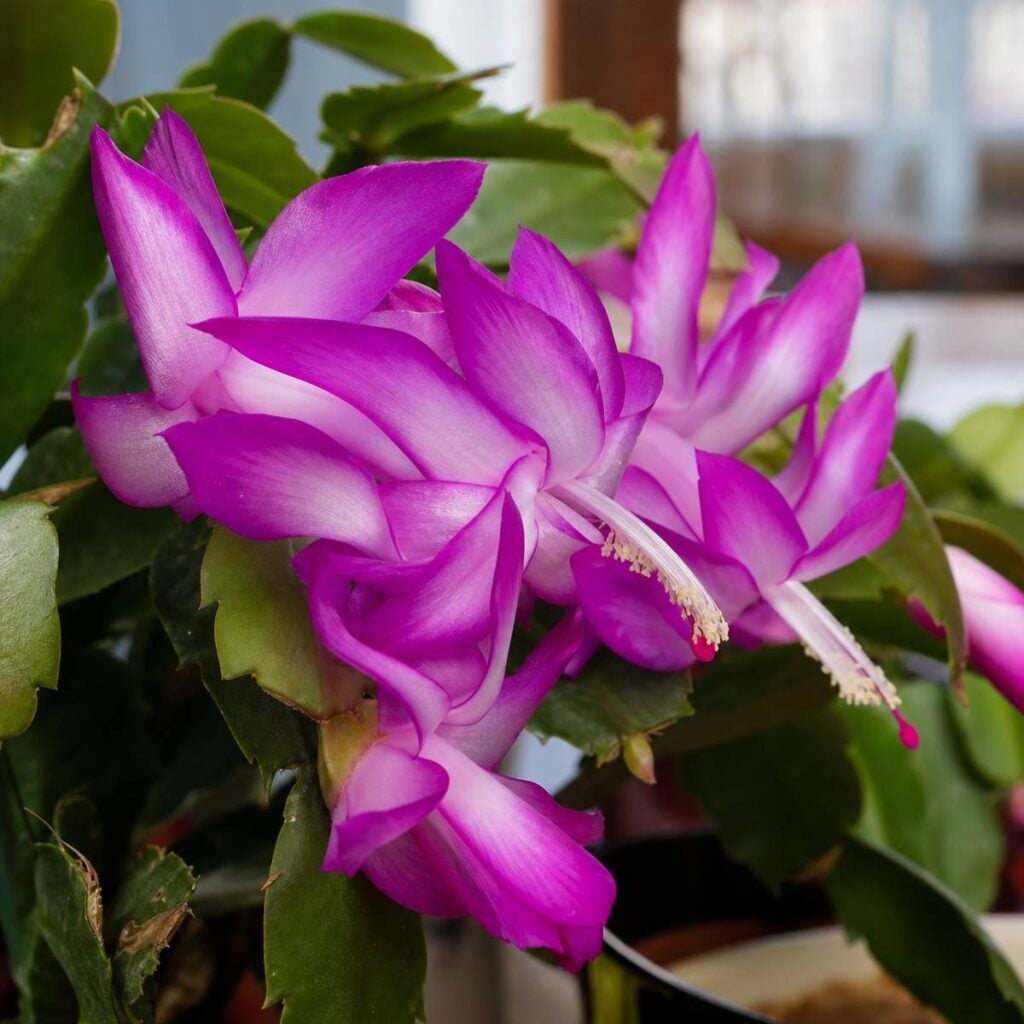
The Royal Horticultural Society adds that general poor growth can be a sign the pot is too large, and that Christmas cacti like to be snug in their pot. If you moved your plant into a bigger pot recently, that may be part of the story.
Disease or Infestation
Check the plant over for pests and rot before you adjust anything else. Clemson lists mealybugs, soft brown scale, red spider mites, aphids and fungus gnats as the insects and related pests to watch for.
Wilted, shriveled, dull-gray-green stems are a warning sign that Illinois Extension says most often comes from overwatering, which kills the roots so they can no longer take up water. If you suspect trouble, see our guide to Christmas cactus diseases.
Age: Young Plants Need Time
Plants bloom when they mature, and a new plant may simply not be ready yet. Clemson says short, immature stem segments will not initiate flower buds until they mature.
Try to remember when you propagated your Christmas cactus or brought it home. A young plant or a fresh cutting may just need more time with steady care.
Your Fall Plan at a Glance
- Spring to late summer: feed at half strength about monthly, and water when the top inch of soil feels dry.
- Late summer: stop fertilizing, and move the plant to a cool spot with bright days and no artificial light at night.
- Mid-September to mid-October: start about six weeks of long, uninterrupted nights.
- When buds appear: leave the plant where it is, keep it away from drafts and heat, and keep the soil evenly moist.
- After flowering: water less often and move it to a cooler spot.
A Christmas cactus that won’t bloom isn’t a lost cause. Give it long, dark nights, cool air, evenly moist soil once buds appear, and a tidy feeding schedule, then give it the weeks it needs. Got a Christmas cactus that finally bloomed? Tell us what worked in the comments.
Frequently Asked Questions
How many hours of darkness does a Christmas cactus need to bloom?
Plan on somewhere between 12 and 16 hours of uninterrupted darkness each night, because extension services give a range. UF/IFAS says typically at least twelve hours, Clemson says fourteen or more, and Iowa State says most need 14 to 16, though some cultivars may bloom with as little as 12. Clemson says to continue for at least 6 continuous weeks.
Why does my Christmas cactus drop its flower buds?
Sudden changes are a common cause. Clemson lists a sudden change in temperature, light or other environmental factors, such as drying out of the growing medium. UF/IFAS adds drafts and heat sources like vents, fireplaces and televisions. Iowa State says not to move the plant until the first flowers begin to open.
Can a Christmas cactus bloom without the long-night treatment?
Sometimes, if the nights are cool enough. Clemson says plants grown with night temperatures between 50 and 59°F will set flower buds regardless of day length, though bud drop may occur at 50°F. University of Minnesota Extension says nights around 55°F will bring blooms in approximately 5 to 6 weeks, sometimes regardless of day length.
Should I water less to make my Christmas cactus bloom?
Only a little, and only until buds appear. The Royal Horticultural Society says to let the top few centimetres of compost dry out between waterings from mid-September until buds develop, never letting it dry out entirely, then resume watering. UF/IFAS says allowing the soil to dry out will cause the flowers to drop.
How can I tell if I have a Christmas cactus or a Thanksgiving cactus?
Look at the stem edges. Clemson says Thanksgiving cactus segments have 2 to 4 saw-toothed points along the margins, while Christmas cactus margins are more rounded. Iowa State and Illinois Extension say most plants sold as Christmas cactus are actually Thanksgiving cactus, which typically bloom earlier.