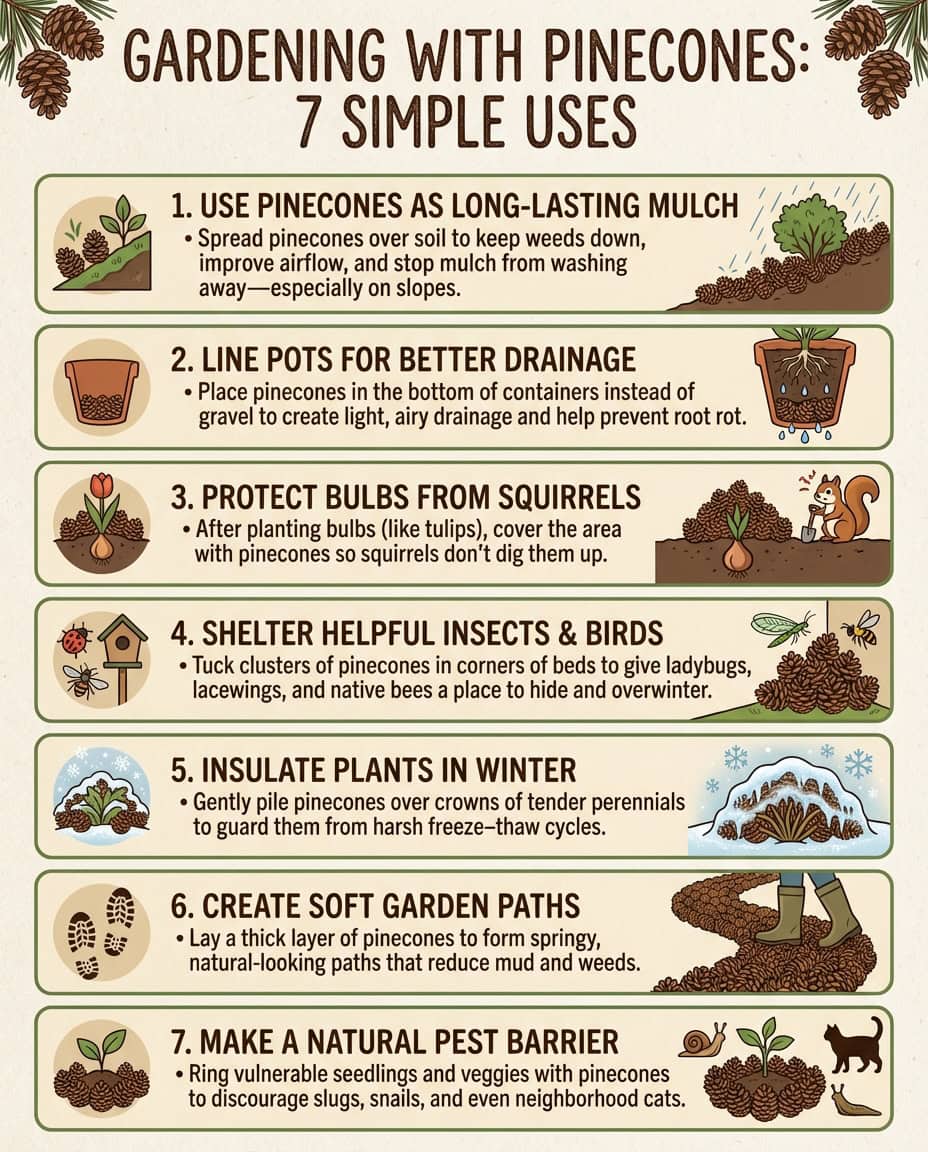
That pinecone you’re about to toss? It might be worth its weight in gardening gold.
While most folks see these woody nuggets as nothing but autumn litter, savvy gardeners are quietly collecting them by the bucketful.
These humble forest castoffs are actually nature’s multi-tool for gardens, packed with benefits that expensive store-bought products can’t match.
Why Pinecones Are Great for Your Garden
Forget what you’ve heard about pinecones being nothing but yard waste. These natural wonders are versatile, practical, and completely free.
What makes them special? Unlike most garden materials, which quickly break down, pinecones last a long time while remaining 100% biodegradable.
Their unique structure creates perfect airflow and drainage wherever you use them.
The best part? Pinecones act as natural temperature regulators, insulating soil against both winter’s chill and summer’s heat. Think of them as tiny, wooden thermostats for your garden beds.
- Durable yet eventually biodegradable
- Excellent for improving drainage and preventing soil compaction
- Natural temperature regulation
- Wildlife-friendly habitat and food source
- Completely free if you have pine trees nearby
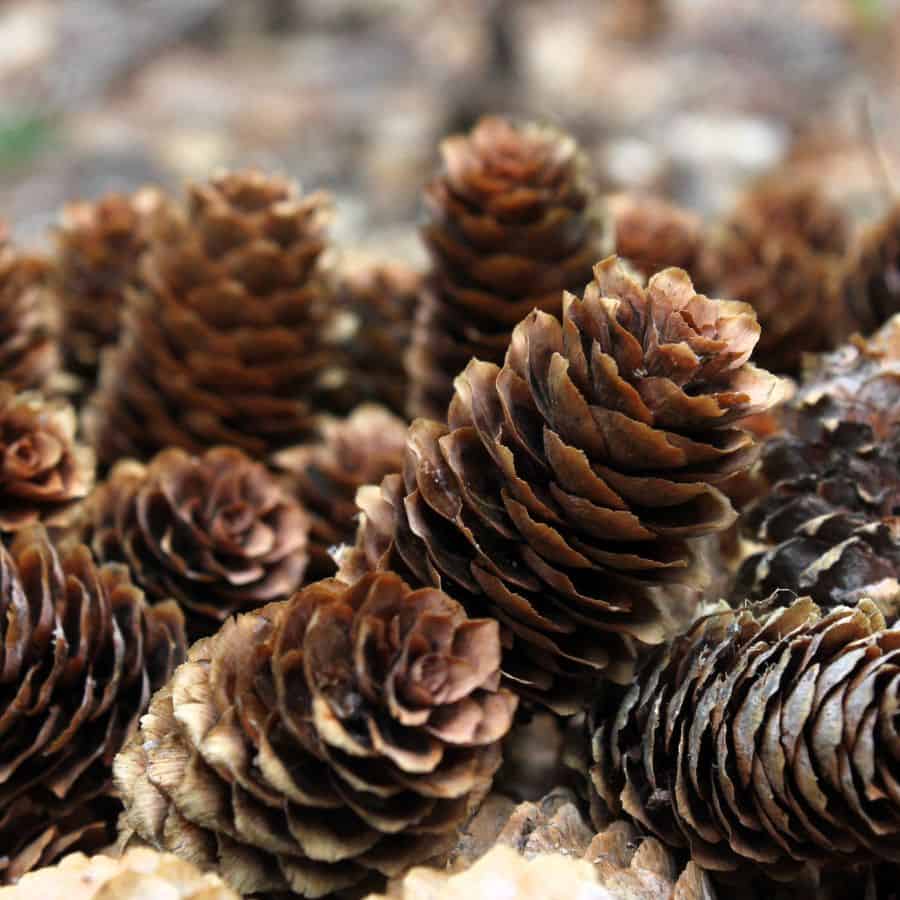
13 Ways to Use Pinecones in Your Garden
1. Better Mulch Than Most Store-Bought Options
Pinecones make excellent mulch compared to many commercial options. Unlike bark that compacts over time, pinecones create a breathable layer that allows water to trickle through while blocking weeds.
Their interlocking scales work like miniature shields for your soil, preventing erosion on slopes where traditional mulch washes away.
Pinecones can last up to three times longer than soft mulch materials, saving you time and money on replacements.
2. The Container Gardening Trick
One thing experienced gardeners know is how to handle drainage. Instead of expensive pot fillers, line the bottom of containers with pinecones.
They create natural air pockets that prevent root rot without adding the unnecessary weight of gravel or rocks.
This trick is especially valuable for moisture-sensitive plants like rosemary, lavender, and succulents. As the cones slowly decompose, they actually improve your soil structure.
3. Keep Squirrels Away From Your Bulbs
Ever planted dozens of tulip bulbs only to find them dug up by hungry squirrels? Scatter pinecones over freshly planted bulbs and watch those furry thieves move on to easier targets.
Their spiky, uneven surfaces create a natural deterrent that’s more effective (and less unsightly) than chicken wire. Just gently rake them aside when your shoots emerge in spring.

4. Create a Wildlife Habitat
Pinecones provide crucial shelter for beneficial insects like ladybugs, lacewings, and native bees; the very creatures that control pests and pollinate your flowers.
A single pinecone can house dozens of overwintering insects. That’s better protection than the most expensive insect hotels.
Birds also forage among the scales for food and nesting material, turning your backyard into a thriving ecosystem.
5. Winter Plant Protection
Many people cover their perennials with leaves that mat down and hold moisture against sensitive crowns. Pinecones, however, create air-trapping insulation that protects without smothering.
Gently pile them over delicate plants like peonies once frost arrives. They’ll shield against damaging freeze-thaw cycles that can heave roots right out of the ground.
In regions where temperatures regularly dip below freezing, this can save plants that would otherwise die.
6. Budget-Friendly Garden Pathways
Garden paths often become mud pits or weed factories. Transform them with a thick layer of pinecones for a springy, natural walkway that suppresses weeds and prevents compaction, all while looking perfectly at home in woodland or cottage gardens.
Unlike stone or gravel that you’ll pay for, these pathways improve with age as they gradually break down and enrich the soil beneath.
7. Natural Pest Control
Slugs and snails hate crawling over pinecones. Their sharp, irregular textures create a barrier around vulnerable seedlings and vegetables.

Even neighborhood cats will think twice before using your carefully tended beds as litter boxes.
This 100% natural deterrent keeps your garden healthy without exposing your family, pets, or beneficial insects to harmful chemicals.
8. Improve Your Compost Pile
Break pinecones into smaller pieces and mix them throughout your compost heap. They act as tiny air pockets, preventing the pile from becoming a soggy, stinky mess.
While they decompose more slowly than kitchen scraps, they contribute valuable carbon and improve overall decomposition by keeping things aerated. Your finished compost will be richer and ready faster.
9. Fill Raised Beds for Less
A single raised bed can require hundreds of dollars in soil. Cut that cost dramatically by filling the bottom third with pinecones and woody debris before adding soil on top. This technique not only saves money but also improves drainage and aeration.
As the pinecones gradually break down, they release nutrients and create a self-sustaining ecosystem within your bed. It’s like giving your garden a slow-release vitamin supplement that lasts for years.
10. Add Natural Style to Your Garden
Beyond functionality, pinecones add rustic charm to any garden space. Scatter them as decorative accents around planters, use them to edge paths, or incorporate them into outdoor displays. Their natural textures and earthy colors complement flowers beautifully, adding visual interest even in winter when blooms have faded.
11. DIY Bird Feeders
Transform pinecones into bird-feeding stations that work just as well as many store-bought options.
Simply coat them with peanut butter, roll them in birdseed, and hang them from branches. The cone’s textured surface holds plenty of seed, attracting a variety of birds.
This project costs pennies compared to commercial feeders and makes a perfect activity to connect kids with nature.
Birds particularly rely on these supplemental food sources during the winter months when natural foods are scarce.
12. Natural pH Adjuster for Acid-Loving Plants
Your hydrangeas, azaleas, and blueberries crave acidity. As pinecones decompose, they gently acidify the surrounding soil, perfect for these acid-loving plants.
This natural solution works gradually without the harsh effects of chemical additives. Just create a ring of pinecones around these plants and let nature do the work. Your blue hydrangeas will thank you.
13. Temperature Protection for Container Plants
Potted plants suffer from temperature swings that their in-ground counterparts never experience. Their roots are especially vulnerable without the insulating earth around them.
A layer of pinecones on the soil surface creates temperature stability, cooling in summer and insulating in winter.
This simple technique can mean the difference between plants that merely survive and those that thrive in containers. Plus, it adds a decorative touch that plastic mulch can’t match.
Beyond the Garden: Bringing Pinecones Indoors
Pinecones work great indoors, too. Create seasonal decor by filling bowls with pinecones, crafting wreaths, or making holiday ornaments.
To keep your home smelling nice, add a few drops of essential oil to dried pinecones and place them in baskets throughout your living spaces.
This natural air freshener lasts for months and costs a fraction of the price of commercial products.
The next time you’re tempted to bag up those pinecones, remember: you’re not looking at yard waste. You’re looking at nature’s perfect gardening tool, decorating accent, and wildlife habitat all rolled into one. Start collecting!