Think that gorgeous orchid is trash once the flowers drop? Think again! That “dead” plant sitting on your windowsill isn’t finished. It’s just taking a nap.
I was shocked to discover that with the right wake-up call, the same orchid can flower again and again for decades.
In fact, some orchids live up to 100 years in the wild! Ready to transform that naked stem into a blooming masterpiece?
Let’s dive into the orchid revival secrets that flower shops don’t want you to know.
The Secret Life Cycle Your Orchid Is Hiding From You
Forget what you’ve heard about orchids being one-hit wonders. These misunderstood divas follow a predictable rhythm.
If you know how to read the signs. Just like how bears hibernate before emerging refreshed in spring, your orchid isn’t dead. It’s recharging its batteries!
Your orchid cycles through three distinct phases:
- Bloom Phase (6-12 weeks): The glamorous runway show where your orchid flaunts its flowers
- Resting Phase (3-6 months): The behind-the-scenes recovery period where it rebuilds strength
- Spike Initiation Phase (4-8 weeks): The exciting comeback preparation, where flower stems emerge
The difference between amateur and pro plant parents is simply understanding that the “boring” resting phase is actually when the magic happens internally.
Your orchid might look like it’s doing nothing, but it’s secretly preparing its next spectacular performance.
Why Your Beautiful Orchid Stopped Performing
Your orchid is trying to tell you something important when it refuses to bloom again. The most common reasons these tropical divas go on a flowering strike:
- Light Starvation: That dark corner is an orchid’s nightmare. They need bright, indirect light to generate energy
- Temperature Monotony: Without temperature variation between day and night, orchids miss nature’s “bloom now” signal
- Watering Drama: Either drowning them in too much love or leaving them parched
- Nutrient Deficiency: Like athletes without protein, orchids need specific nutrients to perform
- Denied Rest Period: They need recovery time, just like you after running a marathon
Most people make this mistake with their orchids: treating them like regular houseplants with steady care routines. But orchids are drama queens that thrive on specific environmental cues!
The Game-Changing Temperature Trick No One Told You About
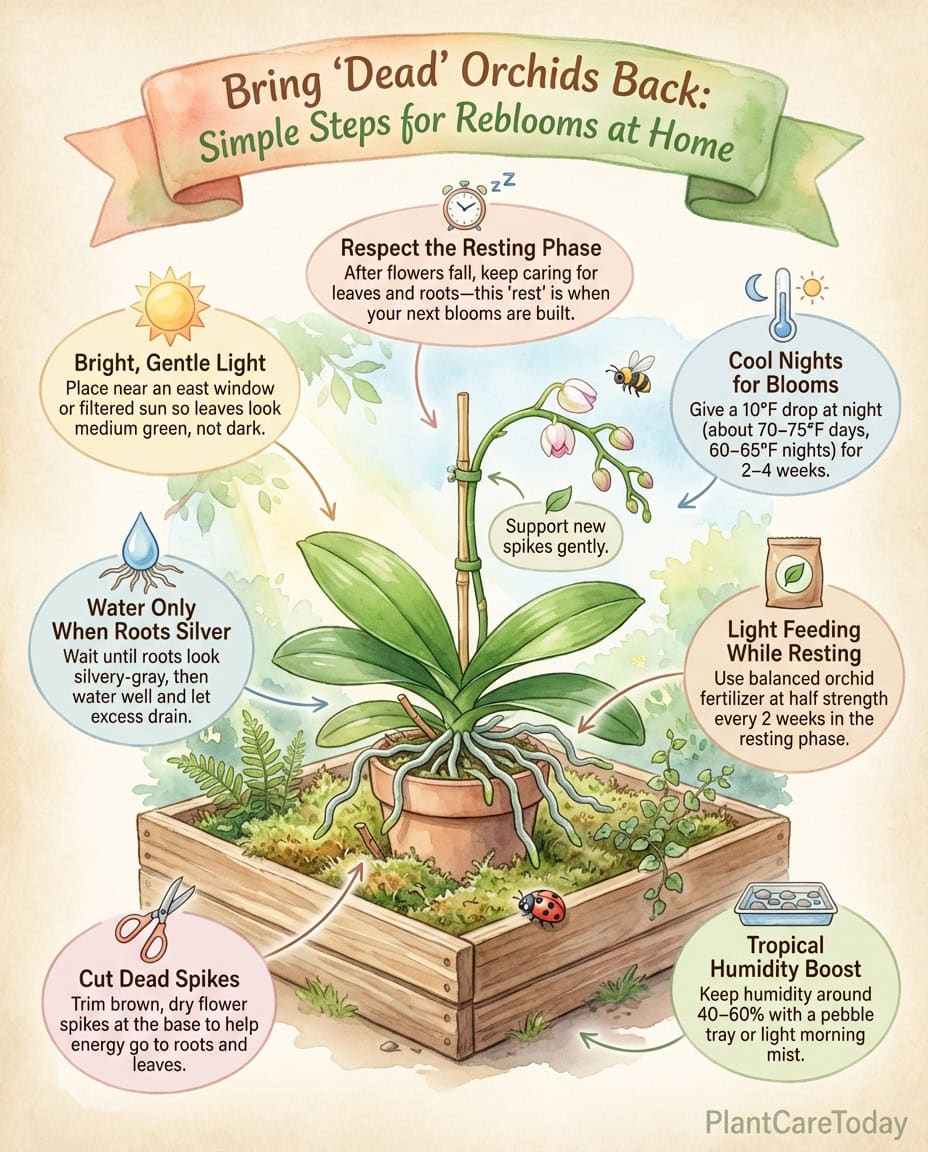
The secret most plant experts won’t tell you is absurdly simple: A 10°F temperature drop at night will trigger reblooming in most orchids.
This works like magic because it mimics their natural tropical habitat, where warm days give way to cooler nights.
Think of it as flipping the orchid’s internal “bloom switch.” Without this temperature variation, your orchid might stay perpetually green but flowerless, like an actor who never gets the cue to come onstage.
Here’s how to create this bloom-triggering temperature drop:
- Place your orchid near a window where night temperatures naturally fall (55-65°F is ideal)
- For 2-4 weeks, ensure days are warm (70-75°F) and nights are cooler
- In mild climates, set orchids outside when nights cool down (bring them in if temps drop below 50°F)
- For apartment dwellers, move your orchid to a cooler room at night, then back to its sunny spot by day

Within a month of this temperature treatment, you should spot a new green spike emerging from between the leaves: the first dramatic sign your orchid is ready for its comeback tour!
7 Steps to Transform Your Naked Orchid Into a Flowering Machine
When those final petals drop, don’t panic! This step-by-step revival plan will transform your bare orchid into a repeat bloomer:
1. Spike Decision: Cut or Keep?
Green spike = potential for more blooms. Brown spike = time to snip. Use sterilized scissors to cut off the brown spikes at the base, helping your orchid redirect energy to roots and leaves rather than maintaining a dead stem.
2. Rethink Your Watering Routine
The game-changer for your resting orchid isn’t what you think. It’s actually watering less frequently. Wait until roots turn silvery-gray (not green) before watering again. This mimics their natural dry/wet cycle and prevents deadly root rot.
3. Fertilize Strategically
During the resting phase, switch to a balanced fertilizer (20-20-20) at half-strength every 2 weeks.
This is like serving your orchid a balanced meal rather than dessert. It needs building blocks for new growth, not just nutrients for blooming.
4. Light Matters More Than You Think
Without enough light, your orchid is like a solar-powered device with a dying battery. Position it in an east-facing window for gentle morning sun, or use sheer curtains for south-facing windows.
No good windows? A small LED grow light 12 inches above the plant works wonders.

5. Trigger the Temperature Drop
This is where the magic happens! Create that 10°F night temperature drop for 2-4 weeks to signal blooming time. It’s like setting an alarm clock for your orchid’s flowering cycle.
6. Support New Growth
When that glorious new spike appears, add a slender stake and secure it gently with soft plant clips. This prevents the heartbreak of a snapped spike just as buds are forming!
7. Return to Bloom Care
Once buds form, maintain even moisture and light conditions. Avoid moving the plant. Orchids hate change during their performance prep! A stable environment prevents bud blast (when developing buds shrivel before opening).
Pro-Level Orchid Revival Secrets
Ready to take your orchid game to the next level? These advanced techniques will have your plants flourishing for years:
- Annual Repotting: Fresh medium prevents root suffocation. Most orchids need repotting every 1-2 years when the bark breaks down
- Root Health Check: During repotting, trim away mushy or hollow roots with sterilized scissors—healthy roots are firm and plump
- Humidity Management: Boost humidity to 40-60% with pebble trays or morning misting (think tropical spa treatment for your plant)
- Water Quality: Tap water minerals can build up and damage roots over time. Rainwater or filtered water prevents this silent killer

With these revival techniques, your once-sad orchid will transform into a spectacular repeat bloomer that makes friends ask, “What’s your secret?” (Don’t worry, we won’t tell them how simple it really is!)
Remember: That “dead” orchid isn’t dead at all. It’s just waiting for the right signals to put on another show. With a little orchid psychology and these simple tricks, you’ll never toss another “finished” plant again!