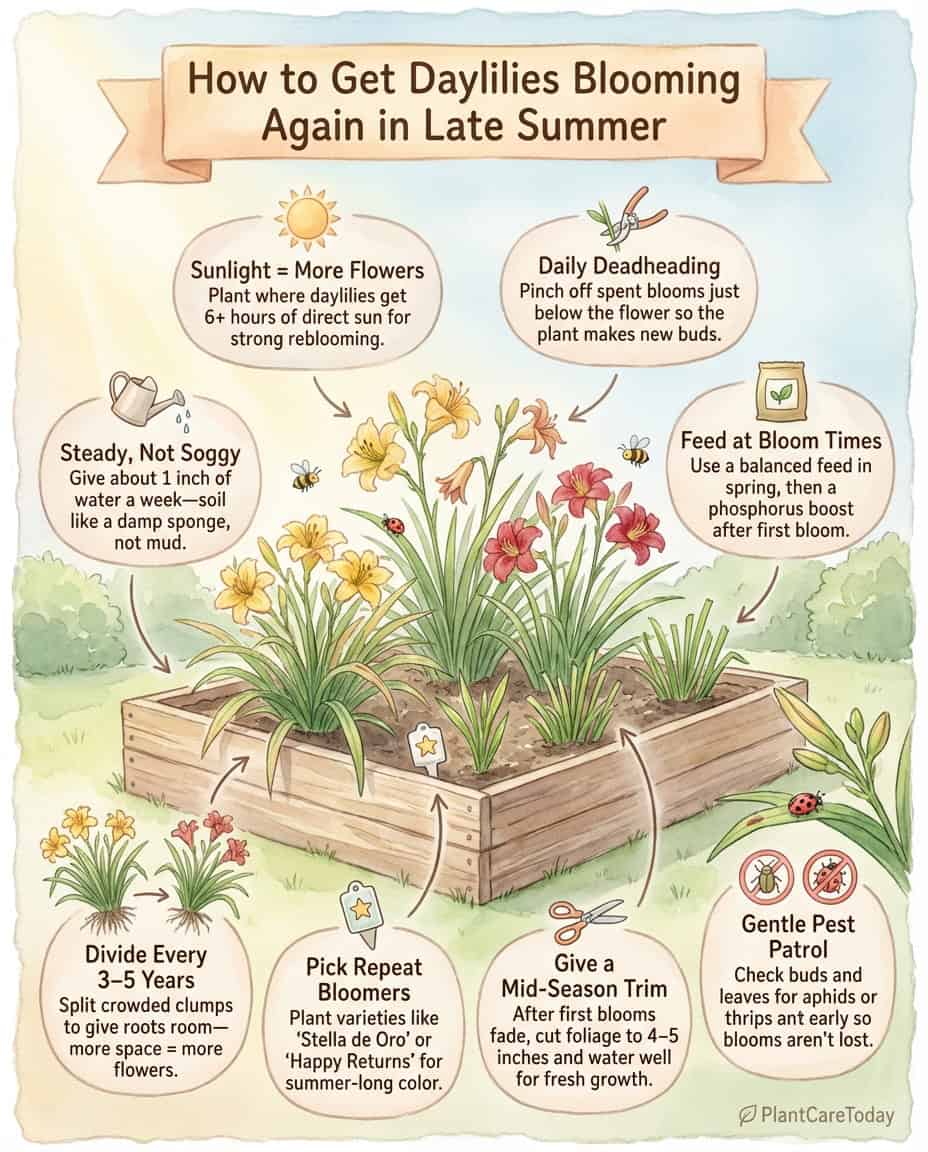
Your daylilies aren’t one-hit wonders. They’re just waiting for the right cues to bloom again. That wilted daylily patch everyone else has in August?
Yours is about to look a lot better. Forget what you’ve heard about daylilies being done after their first flush.
Most gardeners are leaving summer blooms on the table, but you don’t have to.
The Sunlight Secret Most Gardeners Miss
Let’s start with the basics: daylilies need sun, not shade. These perennials require full sunshine to produce their second round of blooms.
The best part? It’s not exotic fertilizers or complicated techniques. It’s simply giving them enough light.
Plant them where they’ll receive at least 6 hours of direct sunlight daily. Studies show that daylilies receiving less than 4 hours of sunlight produce up to 70% fewer blooms than those in full sun.
Deadheading: The 2-Minute Task for More Blooms
Most people make this mistake with their daylilies: they let spent blooms hang around.
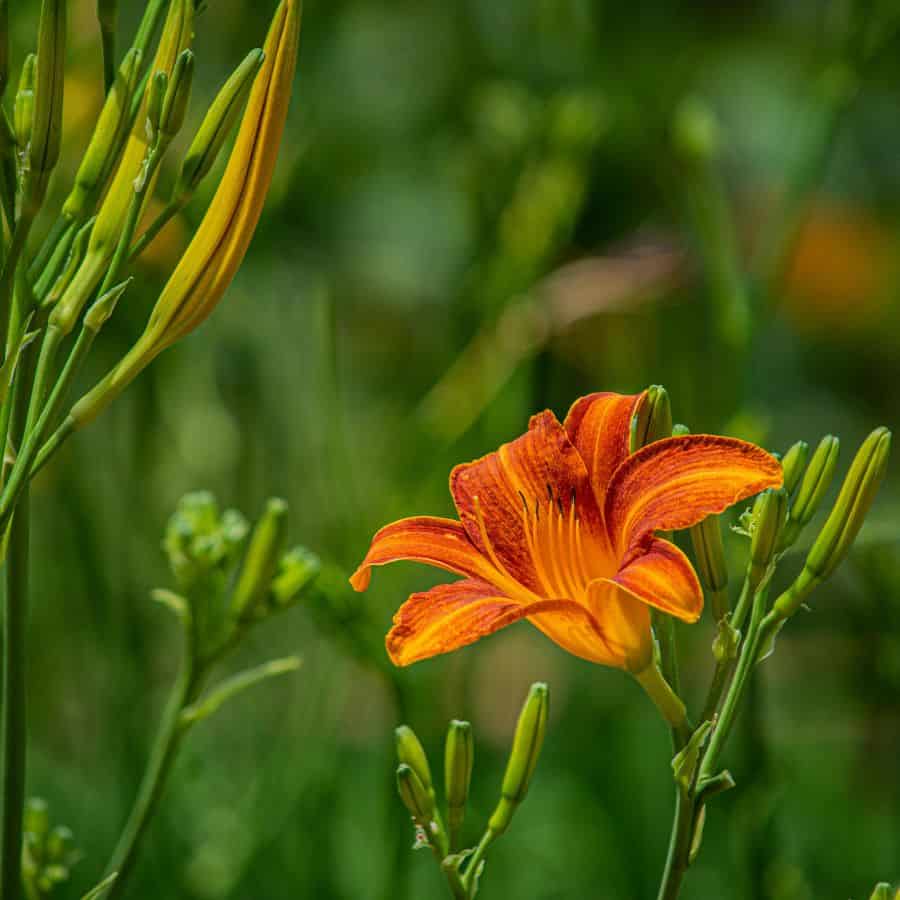
Every wilted flower you leave behind tells your plant, “Mission accomplished. No need to make more flowers.”
The real trick is to snap off those spent blooms just below the ovary. This simple step resets your plant’s bloom cycle.
Here’s how to do it:
• Gently pinch off each spent flower daily
• Avoid cutting into the leaf fans or damaging nearby buds
• Bonus: Your garden instantly looks tidier
The Hydration Sweet Spot: Not Too Much, Not Too Little
Your daylilies might refuse to rebloom if they’re either too dry or too wet. These plants need consistently moist soil to bloom again.
Inconsistent watering is the top reason daylilies skip their second bloom cycle. Aim for about 1 inch of water weekly.
Think of it like maintaining a slightly damp sponge. Never dried out, never dripping wet. Water the soil, not the foliage, to avoid fungal diseases.
Fertilizer Timing: When to Feed for More Blooms
The timing of fertilization matters more than the brand you choose. Your daylilies need a nutritional boost at two key moments:
- Early spring, when new growth emerges (balanced 10-10-10 slow-release)
- Just after the first bloom cycle ends (phosphorus-rich formula to trigger round two)

Think of fertilizer as a boost for your daylilies. A light application is all they need to bloom again in late summer.
The “Divide and Conquer” Approach for Better Blooms
Is your daylily patch more than 4 years old? Your once-pretty performers might be too crowded.
Every 3-5 years, these plants need their space. Dividing crowded clumps gives them room to breathe.
When divided properly, each new daylily section has room to grow. They often produce up to 3X more blooms than they did when crowded.
Variety Selection: Choose Your Plants Wisely
Not all daylilies bloom multiple times. Some varieties flower once, while others keep going throughout the summer.
These reblooming varieties are worth planting:
• Stella de Oro: The gold standard for continuous blooming
• Happy Returns: Bright yellow blooms that keep coming back for months
• Pardon Me: Ruby-red rebloomer that performs from June through September
• Purple de Oro: Lavender-purple repeat performer that handles heat well
The Mid-Season Haircut That Works Wonders
Ready for the most surprising trick? Give your daylilies a serious haircut after their first bloom cycle ends. This sounds odd, but it works.
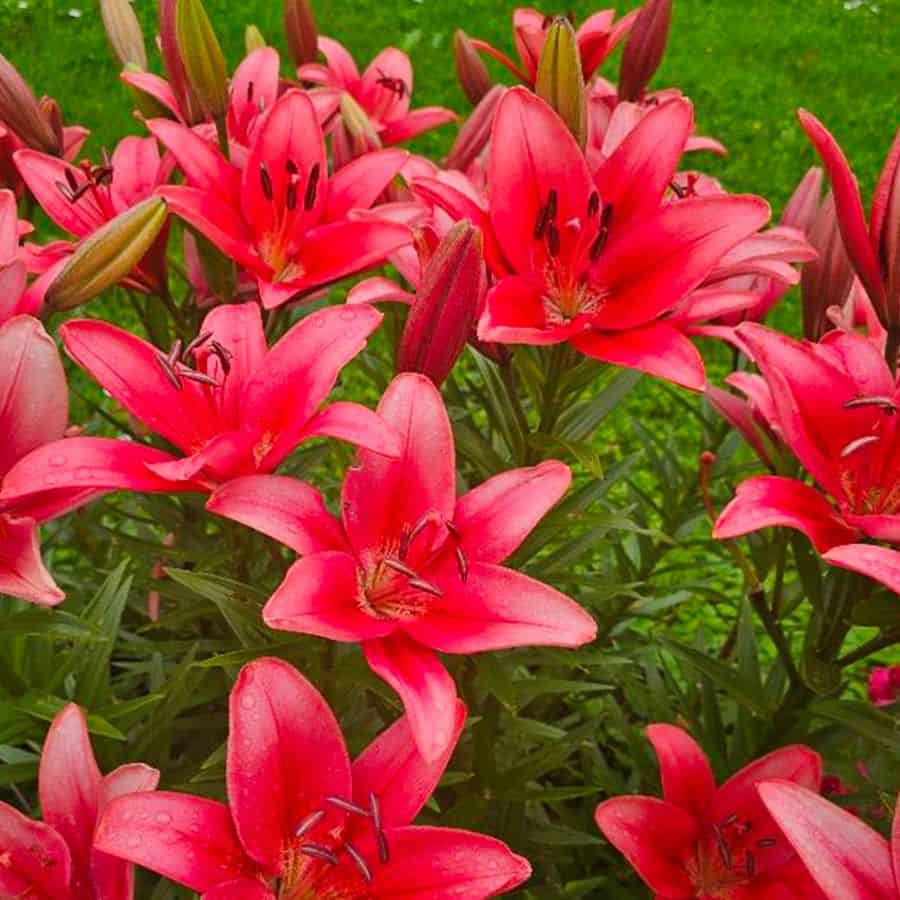
Cut the foliage back to about 4-5 inches above ground level, then water thoroughly. Your daylilies will respond with fresh growth.
This reset often results in a nice late-summer bloom display when other gardens look tired and worn out.
Pest Patrol: Protect Your Bloom Potential
Pests can ruin your second bloom cycle. Thrips, aphids, and spider mites can all damage your daylilies.
Check the undersides of leaves weekly and look for early warning signs. Healthy plants bloom better, so don’t let these pests take over.
A quick blast of water from the hose can remove many pests before they become established. For serious problems, insecticidal soap is your gentlest effective option.
Your Daylily Revival Action Plan
The difference between new and experienced gardeners is consistency. Your daylilies don’t need complicated care. They need the right care at the right time.
- Deadhead daily (it takes seconds but pays off)
- Water consistently, not excessively
- Feed twice: spring awakening and post-first-bloom
- Consider the mid-season cutback for better results
- Divide crowded clumps every 3-5 years
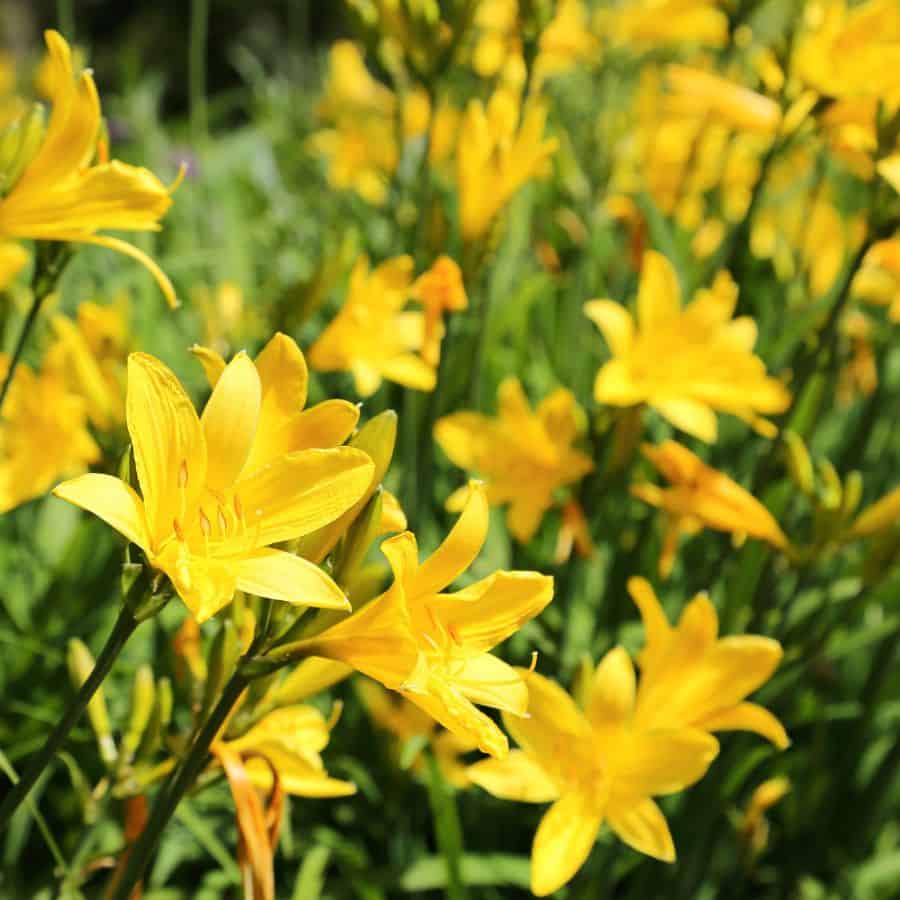
With these simple strategies, you’ll transform your one-and-done daylily patch into a continuous flowering display that keeps your garden looking good when everyone else’s has fizzled out.
Your neighbors might wonder what you’re doing differently, and that’s the point.