Forget what you’ve heard about hydrangea pruning being some gardening nightmare that requires a PhD and three years of therapy afterward.
I’m here to help turn your pruning anxiety into confidence, and your sad hydrangeas into plants that actually bloom well. Proper pruning really does make a difference.
The Real Benefit of Proper Pruning
Pruning your hydrangeas isn’t just about making them look neat. It removes dead weight, improves air circulation, and triggers new growth.
Most people make one of two mistakes with their hydrangeas: they either cut them way too hard or avoid pruning altogether out of fear.
The real trick is understanding that pruning is about rejuvenation, not restriction.
When done right, pruning:
• Removes dead and weak branches that stress your plant
• Creates better air circulation, which helps prevent fungal diseases
• Stimulates new growth that can support bigger blooms
• Renews aging plants and gives them a fresh start

Old Wood vs. New Wood: This Actually Matters
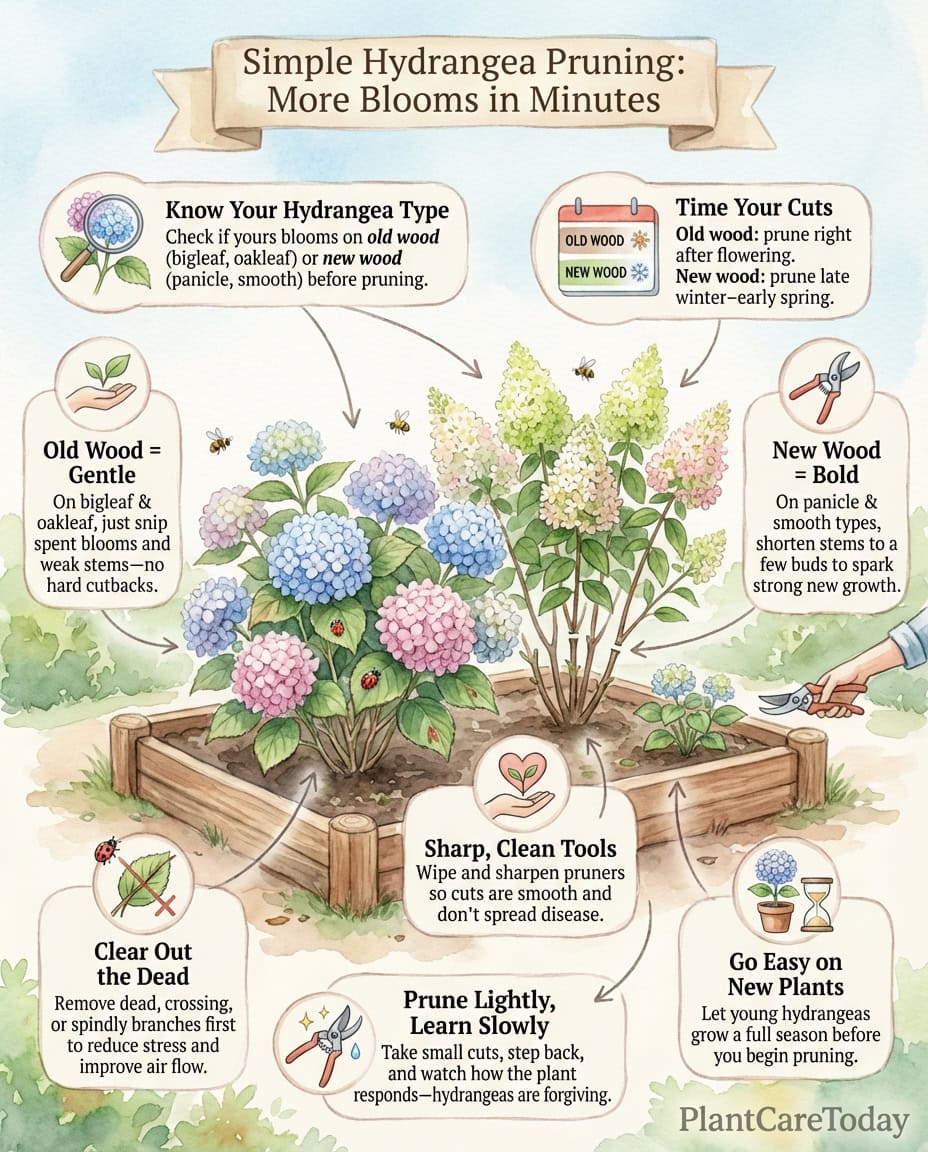
Whether your hydrangea blooms on old or new wood completely changes your pruning approach. Get this wrong, and you might accidentally cut off every potential flower before they even have a chance.
The best part? Identifying your hydrangea type is actually pretty simple.
Old Wood Bloomers (Handle With Care)
Bigleaf and Oakleaf hydrangeas flower on last year’s growth. These branches are already carrying next year’s blooms.
When to prune: Right after flowering ends (typically early summer in zones 8-9, mid-to-late summer in zones 5-7)
How to prune: Use a light touch here. Just do gentle shaping and removal of spent blooms. Cut these too hard, and you’re removing next year’s flowers.
New Wood Bloomers (Cut Them Back Hard)
Panicle and Smooth hydrangeas bloom on fresh growth. These are the resilient types of the hydrangea world.
When to prune: Late winter to early spring while still dormant (zones 3-9)
How to prune: These can handle serious cutbacks. You can cut stems back to just a few buds from the base. They’ll respond by putting out strong new growth.

4 Common Pruning Mistakes That Kill Blooms
Most hydrangea problems come from these four pruning mistakes. Here’s what to avoid:
1. Wrong Timing
Pruning at the wrong time means no flowers. With old wood hydrangeas, especially, timing matters a lot.
2. Dull or Dirty Tools
Using dull or dirty tools doesn’t just make pruning harder; it also makes it more dangerous. It spreads disease. Always clean and sharpen your tools before pruning.
3. Cutting Too Much
Hydrangeas don’t need a buzzcut. Less is more, especially with old wood varieties. When in doubt, hold back.
4. Pruning New Plants Too Soon
Newly planted hydrangeas need time to settle in before facing the scissors. Give them at least a season to establish roots.

Your Basic Pruning Toolkit
Before you head out to prune those overgrown hydrangeas, make sure you have:
• Clean, sharp pruning shears (dull blades crush stems and create entry points for disease)
• Protective gloves (those stems can be tougher than you think)
• Knowledge of your specific hydrangea type (the difference between new and experienced gardeners is simply knowing what you’re growing)
Building Your Confidence
Here’s what matters most about hydrangea pruning: it’s a skill that improves with practice. Your first pruning session might feel awkward, but it gets easier.
Start small. Pay attention to how your plants respond. And remember that hydrangeas are pretty resilient plants. Even if you make a mistake, they’ll usually bounce back by the next growing season.

The best hydrangea gardens aren’t maintained by people who never make mistakes. They’re tended by gardeners who learned from them.
So grab those pruners, identify your hydrangea type, and give your plants the refresh they need. Your reward? A nice display of blooms that makes the effort worthwhile.