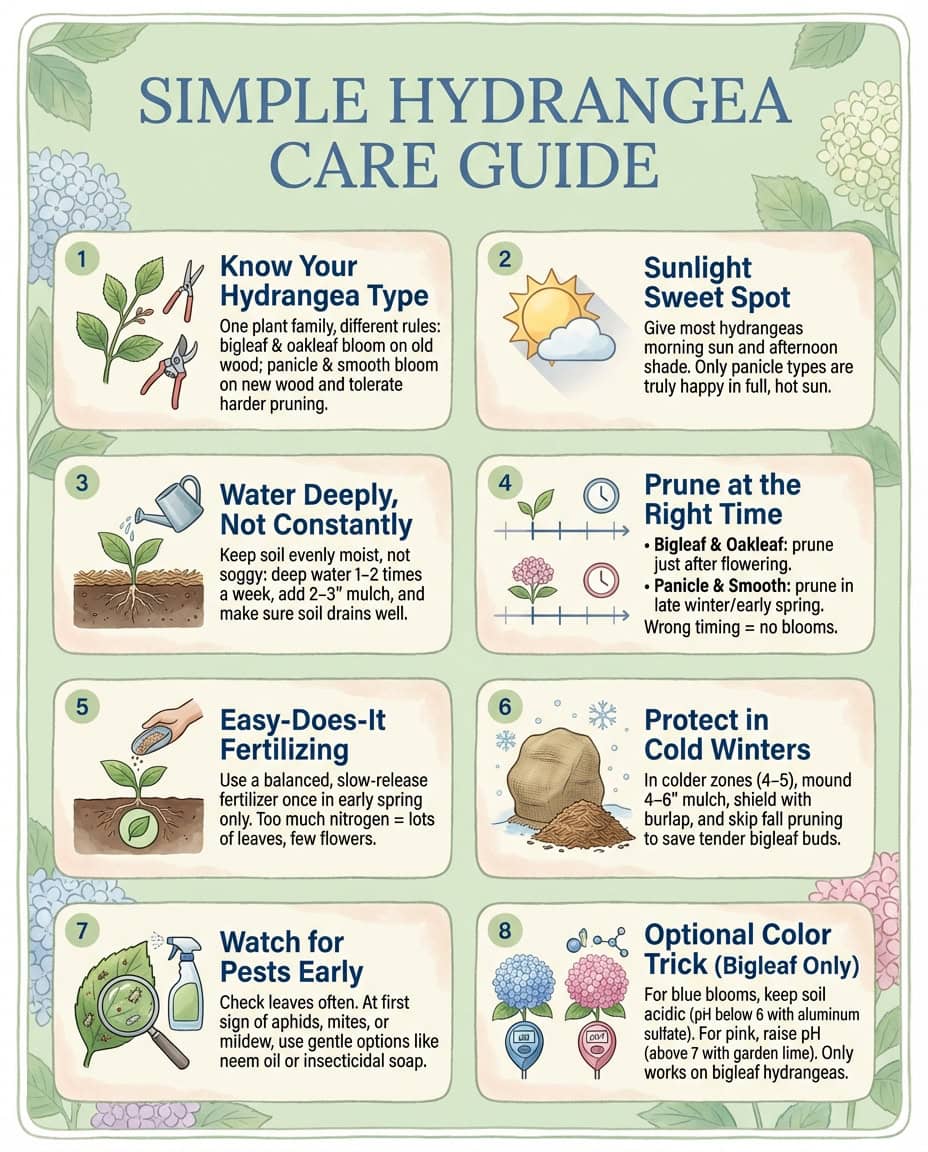
Those big, colorful blooms in your garden aren’t just pretty. They need specific care to look their best.
The thing is, most hydrangea problems come from just a few basic mistakes. Whether yours are doing great or struggling, these tips will help you get the most out of your plants.
The pH Color Magic Trick No One Told You About
Here’s something interesting about hydrangeas: bigleaf varieties actually change their bloom color based on your soil’s pH.
Want to control this? Here’s how:
• For blue flowers: Keep soil acidic (pH below 6) by adding aluminum sulfate
• For pink blooms: Create alkaline soil (pH above 7) by mixing in garden lime
This color-changing trick only works with bigleaf varieties. Panicle and oakleaf hydrangeas retain their natural colors regardless of what you do to the soil.
Meet Your Hydrangea Family: Each One Has Different Needs
Your hydrangea’s needs depend entirely on its type. Treating them all the same is a common mistake.

Here’s what you should know about each variety:
• Bigleaf (Hydrangea macrophylla): Changes colors based on soil pH and blooms on old wood
• Panicle (Hydrangea paniculata): The easy-going type that handles full sun and hard pruning just fine
• Oakleaf (Hydrangea quercifolia): Has lovely lobed leaves and pretty fall color
• Smooth (Hydrangea arborescens): Has big white blooms and grows on new wood
The Sunlight Sweet Spot: Why Location Matters
Most hydrangeas do best with morning sun and afternoon shade. Too much direct sun will scorch the leaves. Too little and you’ll get leggy stems with fewer blooms.
The real trick is knowing that panicle hydrangeas can handle full sun, while bigleaf and oakleaf varieties will wilt without afternoon shade.
Hydration Station: Getting the Moisture Right
With “hydra” in their name, it makes sense that these plants need consistent moisture. But here’s what matters most: they want steady moisture, not soggy soil.
Here’s what works:
• Deep watering 1-2 times weekly (more during hot weather)
• 2-3 inches of mulch to help retain moisture
• Well-draining soil to prevent root rot
Think of it this way: hydrangeas like to stay moist, but they don’t want their roots sitting in water.
The Pruning Timeline That Will Save Your Blooms
Here’s a common mistake: pruning at the wrong time and cutting off next year’s flower buds. This is why some gardens miss out on blooms.

Follow this guide:
• Bigleaf & Oakleaf: Prune right after flowering (usually late summer)
• Panicle & Smooth: Prune in late winter or early spring before new growth
The key is timing your pruning right to get the most flowers.
Fertilizing Without Overdoing It
Your hydrangeas need nutrients, but overfeeding them leads to lots of leaves and fewer blooms. Apply a balanced, slow-release fertilizer in early spring, then stop.
Too much nitrogen creates a lush green plant with disappointing flowers. If your hydrangea is all leaves and no blooms, you’ve likely over-fertilized.
Winter Protection: Keeping Them Safe
In zones 4-5, winter cold can kill most bigleaf hydrangea buds. Protect them by:
• Adding 4-6 inches of mulch around the base in late fall
• Creating a burlap shield for plants exposed to harsh winds
• Avoiding fall pruning that exposes sensitive buds

Panicle and oakleaf varieties handle winter better, but bigleaf types need extra protection to bloom well next summer.
Pest Defense: Stop Problems Before They Start
The best approach to pests is prevention. Regular inspection helps you catch common problems like aphids, spider mites, and powdery mildew early.
At the first sign of trouble, try neem oil or insecticidal soap rather than harsh chemicals. Healthy hydrangeas naturally resist most pests and diseases.
From Garden to Vase: Extending the Beauty
Your hydrangea blooms make great cut flowers, lasting 7-10 days in a vase with proper care. For dried arrangements that last for months, cut flowers when they feel slightly papery. Hang them upside down in a dark, dry space.

The best dried hydrangeas come from flowers cut in late summer, when their color is intense, but their moisture content is lower. This is a trick florists use all the time.
Your hydrangeas can be real standouts in your garden. With these tips, you’re ready to give them the care they need. These plants reward attention with beautiful displays that are worth the effort.