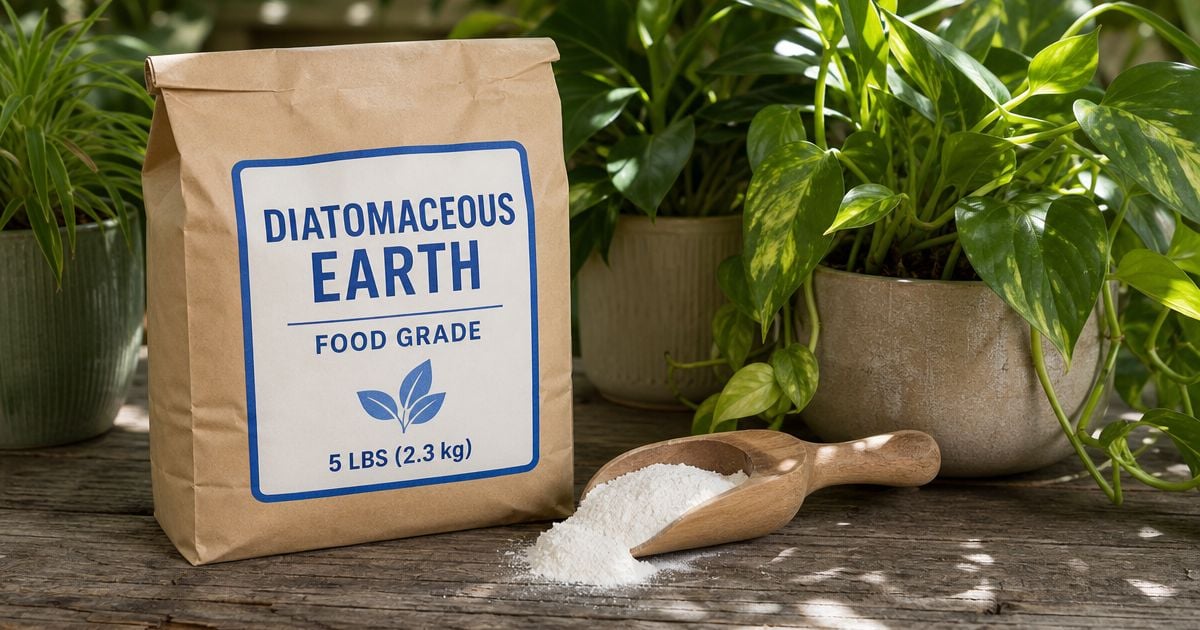
Diatomaceous earth (DE) is one of the most useful natural pest tools you can keep on a shelf. It’s a real, EPA-registered pesticide, not a folk remedy, and it kills bugs without a drop of chemical poison.
But “natural” still comes with rules worth getting right, especially in a pot sitting on your windowsill or porch where pets and kids are close by.
What Is Diatomaceous Earth, Really?
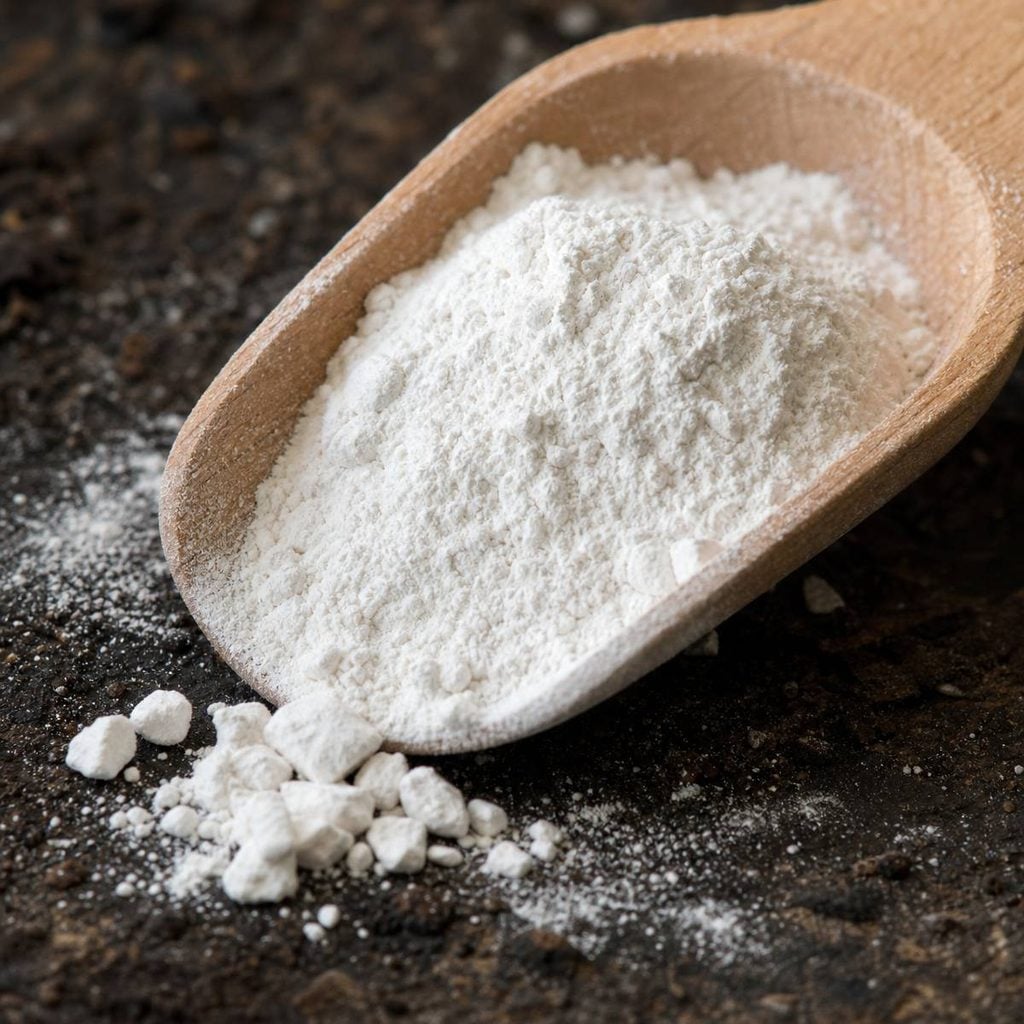
DE is made from the fossilized remains of diatoms — tiny aquatic organisms. It’s mined as a soft sedimentary rock and crushed into a fine powder. Most of what’s in a bag of garden or food-grade DE is amorphous silica.
The FDA lists it as Generally Recognized As Safe, and it’s used in everything from food additives to skin care products.

There’s a second type worth knowing about: DE that’s been heat-treated (“calcined”). That’s what you’ll find in swimming pool filters. That processing raises the crystalline silica content way above what’s in garden-grade DE.
Crystalline silica — not the amorphous kind — is the form linked to lung disease with repeated heavy exposure. Never use pool-filter DE in your garden or on houseplants.
Stick to a bag labeled “food-grade” or “garden-grade,” and read the label before you buy. DE really does come in different grades sold for different jobs.
How Does DE Actually Kill Bugs?
Not with poison — with abrasion and drying. DE’s particles are sharp enough to scratch through the waxy protective coating (the cuticle) on a soft-bodied insect’s exoskeleton.
Once that coating is compromised, the powder absorbs the oils and fats the insect needs to hold onto moisture. The insect dries out and dies. It’s a purely physical, mechanical action.
That’s why DE works on bed bugs, fungus gnats, mealybugs, fleas, spider mites, and aphids without any chemical residue. It’s also why it doesn’t distinguish between a pest and a beneficial insect crawling through the same dust.
The One Rule That Makes or Breaks DE: Keep It Dry
This is the part most DE advice skips, and it matters most in a container. DE only kills insects while it’s dry. The moment it gets wet, it stops working until it dries out again. In an in-ground bed that’s a minor inconvenience.
In a pot, which you’re watering on a regular schedule, it’s different: the DE you dusted on last week is doing nothing the moment you water, and it won’t start working again until the soil surface dries.
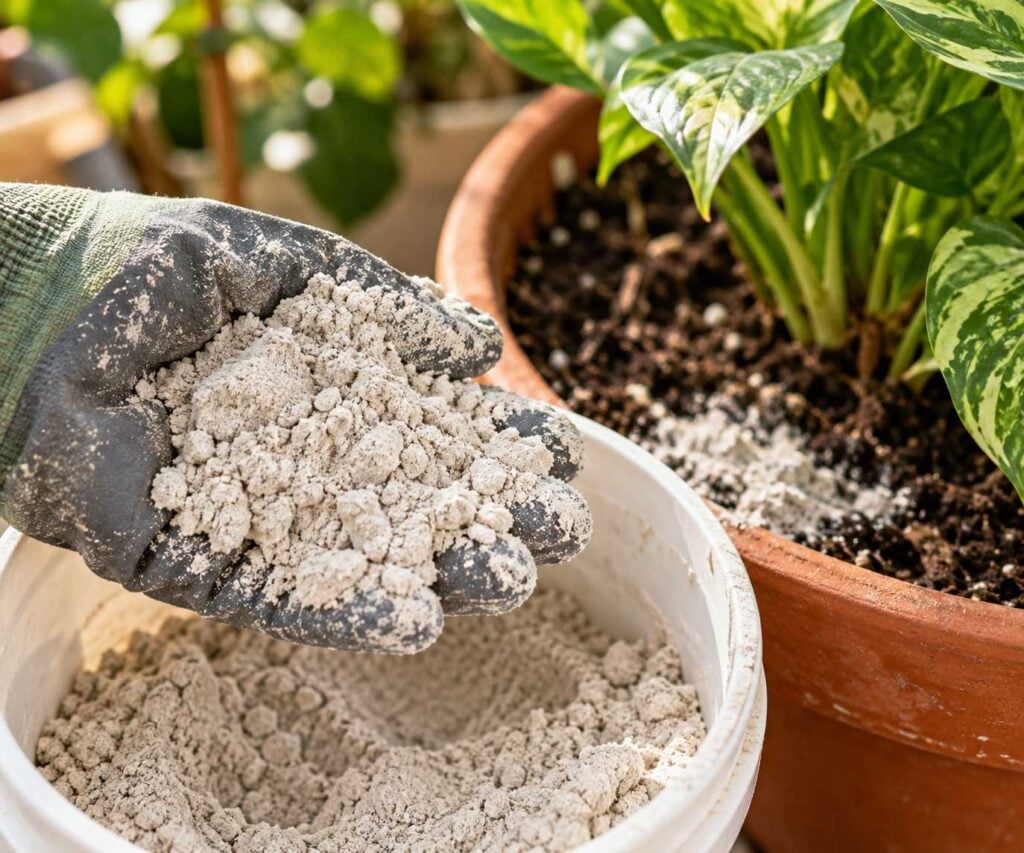
Practically, that means reapply DE after every watering, not just after rain, if you’re using it as an active pest treatment on a potted plant.
Applying it right after a light rain or morning dew (as a lot of guides suggest) helps it stick to the surface. But that’s about adhesion, not about the DE working while damp.
If you’d rather mix DE with water and spray it on for better coverage, know this: an Extension Master Gardener who fielded this exact question couldn’t find any research comparing dry dusting to a water-mixed application.
That gardener also declined to endorse a homemade ratio — the guidance was to follow your specific product’s label if it includes mixing directions, rather than a generic recipe. That’s the honest answer here too.
There’s a commonly seen homemade ratio (roughly two cups of DE per gallon of water), but I couldn’t verify that exact ratio against an extension or EPA source. Treat it as a starting point, not a confirmed number, and check your product’s own label.
Using DE As a Soil Amendment
Mixed into potting soil, DE’s absorbency helps the mix hold moisture evenly while still draining excess water. It can also help aerate the root zone.
A common ratio is 10–20% DE to 80–90% potting mix — roughly two parts DE to four parts soil, no need to be exact. Mix it in before you pot up, or work it into the top few inches of an established container.
Using DE As a Pesticide
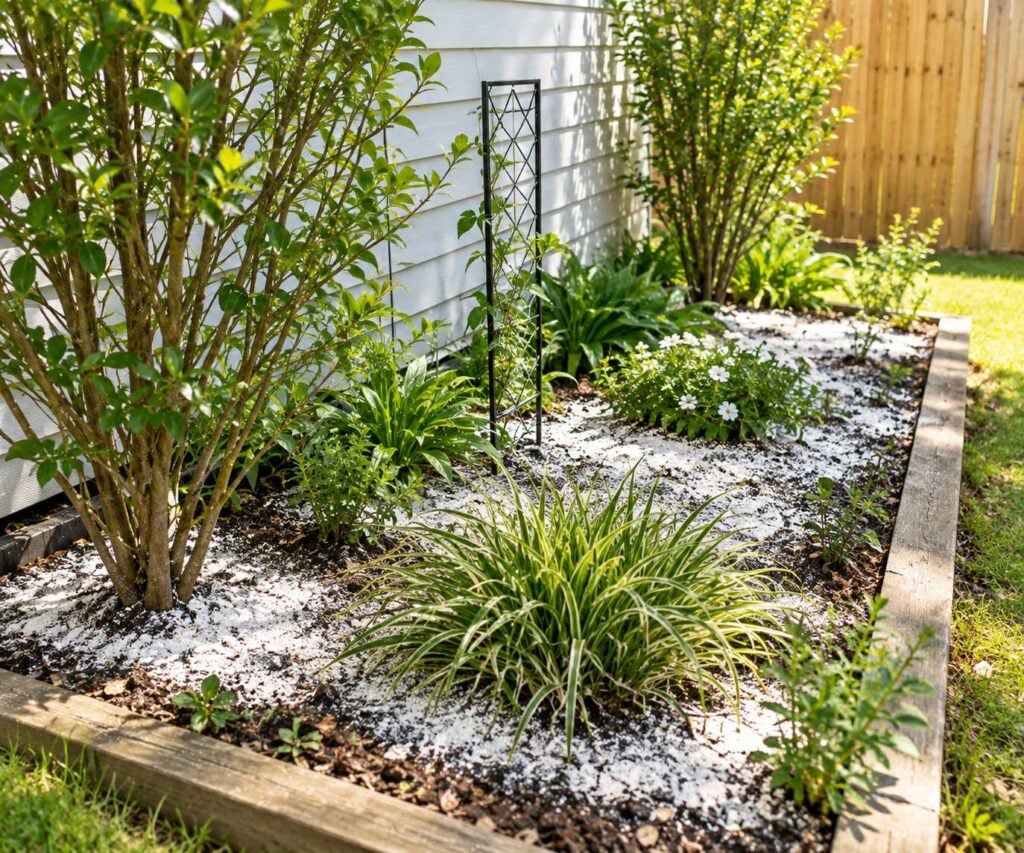
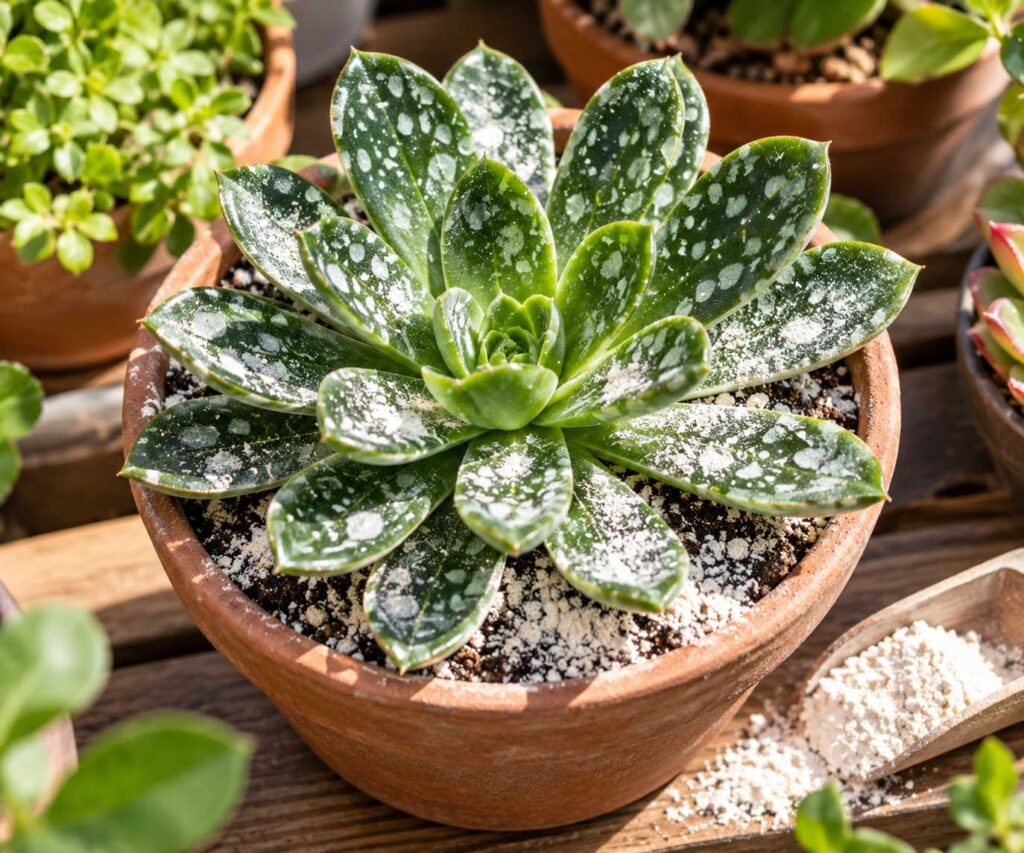
Dust it lightly over the soil surface and onto the foliage. Pests go after leaves and stems, not just roots. A duster gives you better control than shaking it straight from the bag. And remember the rule above: reapply after every watering or rainfall.
Is Food-Grade DE Actually Safe Around Kids and Pets?
Mostly, but with a real caveat worth knowing. “Food-grade” tells you the DE itself is purified enough to eat in small amounts. It doesn’t tell you the product has been tested for pest-control safety or effectiveness.
According to NPIC, food-grade products sold without a pesticide label “are not checked for pest control-related risks.” The agency’s actual recommendation is to choose a product that carries an EPA registration number and pest-control label instead of dusting a plain food-grade bag — that kind of product comes with tested application rates and required precautions.
The floor-level part matters specifically for potted plants. NPIC’s own guidance warns against applying dust to “areas that are easily accessible,” because children and pets explore low areas that adults don’t think about.
A houseplant pot at floor height, the kind a curious dog or cat loves to dig in, is exactly that kind of spot. If you have a digger in the house, keep treated pots out of reach while the dust is fresh, or skip the pots they can reach entirely.
DE dust of any grade can irritate the nose, throat, and eyes if you breathe in a lot of it. That’s true even for the “non-toxic” amorphous kind, just from being a fine abrasive powder.
Whenever you’re dusting or spraying, wear a dust mask, eye protection, and long sleeves and pants. Keep kids and pets out of the room or area until the dust has settled.
Final Thoughts
Diatomaceous earth is a solid, low-chemical option for potted plant pests, as long as you respect what actually makes it work.
Keep it dry, reapply after every watering, choose a food- or garden-grade product (never pool-filter DE), and treat “food-grade” as a note about ingestion safety, not pest-control testing. Get those right, and it’s an easy, effective tool to keep on hand.
Frequently Asked Questions
Is it safe to apply diatomaceous earth indoors around pets and kids?
Take care, because a potted plant can sit right where pets and kids explore. NPIC says to avoid applying dust to easily accessible areas, since children and pets may explore areas near the floor. When you apply it, wear a dust mask, eye protection and long clothing, and keep children, pets and other people away.
How does diatomaceous earth kill bugs?
It dries them out rather than poisoning them. NPIC says DE absorbs the oils and fats from the cuticle of an insect’s exoskeleton, and its sharp edges are abrasive, which speeds the process up. The insect dries out and dies, so it’s a physical action, not a chemical one.
Does diatomaceous earth still work after I water my plant?
Not while it’s wet. NPIC says DE remains effective as long as it is kept dry and undisturbed. In a pot you water regularly, that’s the catch, since the dust stops working once it gets wet and only starts again when it dries out. If your product’s label gives mixing directions, follow those rather than a generic recipe.
Is food-grade diatomaceous earth okay for pest control?
Not necessarily. NPIC says some DE products, including food-grade ones, are not checked for pest control-related risks, so their risks and effectiveness are untested and unknown. If you want it for pests, NPIC recommends choosing a product with a pesticide label. Food-grade tells you about eating it, not about using it on plants.
Can I use pool-filter diatomaceous earth on houseplants?
No. Pool-filter DE is heat-treated, which raises its crystalline silica content well above garden-grade DE. NPIC says most DE is amorphous silicon dioxide with very low levels of crystalline silicon dioxide, and that long-term inhalation of the crystalline form is associated with silicosis and chronic bronchitis. If you use DE at all, choose a product with a pesticide label.