Ever stood in awe of someone’s gardenia bursting with pristine white blooms while yours sits there… just existing?
I was shocked to discover that the difference between a sad, flowerless gardenia and one erupting with fragrant blooms isn’t luck or a green thumb. It’s science.
And I’m about to spill the tea on exactly how to transform your plant into the neighborhood showstopper.
Why Your Gardenia Is Holding Back Its Blooms (It’s Not Personal)
Your gardenia is trying to tell you something important. It’s not being stubborn; it’s struggling. These plants are like the divas of the garden world.
Give them exactly what they want, and they’ll perform spectacularly. Miss the mark, and they’ll give you nothing but green leaves and attitude.
Most people make this mistake with their gardenias: they treat them like any other flowering plant. Big mistake. Huge!
- When soil pH rises above 6.0, your gardenia essentially goes on a hunger strike
- Fluctuating temperatures can cause buds to drop faster than a hot potato
- The wrong fertilizer turns your plant into all leaf, no flower
- Low humidity makes your gardenia as stressed as a cat at a dog show
The Fertilizer Secret Most Garden Centers Won’t Tell You
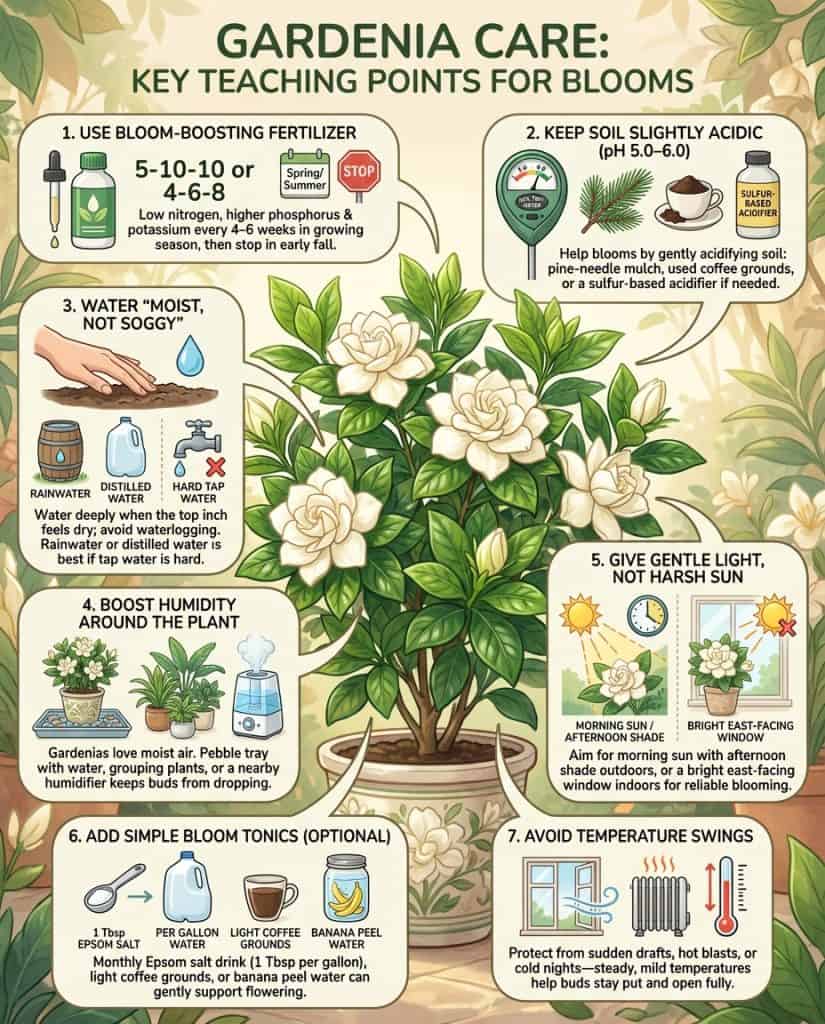
The game-changer for your gardenia isn’t what you think… It’s not about feeding more; it’s about feeding smarter.
Think of it like this: using high-nitrogen fertilizer on a gardenia is like giving espresso to someone who needs a sleeping pill.
What your gardenia actually craves is a fertilizer low in nitrogen (N) and higher in phosphorus (P) and potassium (K). These nutrients are like bloom vitamins for your plant.
Best fertilizer ratios to transform your gardenia:
- 5-10-10: The classic bloom booster
- 4-6-8: Perfectly balanced nutrition
- 6-8-10: The professional grower’s choice
Apply every 4-6 weeks during the growing season, but stop in early fall. Just like humans, gardenias need their rest period!
The pH Miracle Your Gardenia Is Desperate For
If your gardenia could talk, it would be screaming about pH. Did you know that nearly 80% of flowering issues in gardenias are caused by incorrect soil acidity? These plants are acid-loving divas that thrive between 5.0 and 6.0 pH.
When soil becomes too alkaline, iron and magnesium become locked up, and without them, you can kiss those gorgeous blooms goodbye.
Quick pH fixes that actually work:
- Water monthly with a diluted vinegar solution (1 tablespoon white vinegar per gallon)
- Mix used coffee grounds into your topsoil weekly
- Add pine needles as mulch for slow-release acidification
- Use a sulfur-based acidifier for stubborn cases
Think of acidifying your soil as unlocking a treasure chest of nutrients that were there all along. Your gardenia just couldn’t access them!
The Moisture Sweet Spot: Walking the Tightrope
Watering a gardenia is like dating; too clingy, and it’ll suffocate; too distant, and it’ll wither away. These plants have shallow root systems, making them particularly fussy about moisture.
Forget what you’ve heard about regular watering schedules. Instead, aim for consistently moist (not wet!) soil. In summer, this might mean watering deeply twice weekly; in winter, perhaps once every 10 days.
Pro tip: Hard water is gardenia kryptonite. The minerals in tap water can gradually raise soil pH, sabotaging your acidification efforts. Rainwater or distilled water will make your gardenia flourish in ways you never thought possible.
The “Invisible” Humidity Factor That Changes Everything
Here’s a mind-blowing fact: gardenias absorb moisture through their leaves as well as their roots. In their native tropical habitats, **humidity regularly exceeds 60%**—a far cry from our dry homes and gardens.
Low humidity is the silent killer of gardenia blooms. Without adequate moisture in the air, flower buds form but then drop before opening; talk about a heartbreaker!
Humidity hacks that rescue struggling plants:
- Place your pot on a pebble tray with water (the water shouldn’t touch the pot)
- Group plants together to create a mini humidity zone
- Run a humidifier nearby during the dry winter months
- Mist the air around the plant in the morning (but avoid wetting the flowers)
The Sunlight Balance: Not Too Much, Not Too Little
Gardenias are like Goldilocks. They want their light just right. Too much direct sun scorches their delicate leaves; too little, and they won’t produce flower buds at all.
The sweet spot? Morning sunshine with afternoon shade. This mimics their natural habitat under the dappled light of taller trees.
If you’re growing indoors, an east-facing window is your gardenia’s dream home. And don’t forget to rotate your plant every few weeks. This prevents lopsided growth and ensures all sides get their fair share of light for bud production.
The Secret Weapon: Bloom-Boosting Tonics You Can Make at Home
The difference between amateur and pro plant parents is simply knowing these DIY bloom boosters that cost almost nothing to make:
Banana Peel Power Potion
Banana peels are packed with potassium and phosphorus: the exact nutrients that trigger flowering.
Soak banana peels in water for 48 hours, strain, and water your gardenia with the resulting liquid gold every 2 weeks. Your plant will reward you with dramatically more buds.
Epsom Salt Solution
This $3 drugstore staple provides the magnesium that gardenias crave. Dissolve 1 tablespoon in a gallon of water and apply monthly. It’s like giving your plant a vitamin B shot for bloom production!
Coffee Ground Magic
Used coffee grounds do triple duty: they gently acidify the soil, provide slow-release nitrogen, and improve soil structure.
Sprinkle them lightly around the base of your plant once a week. (Just don’t overdo it. Too much can make the soil too acidic, even for gardenias!)
The Critical Timing Secret Most Gardeners Miss
Gardenias operate on a natural cycle, and working with this rhythm (not against it) can double your blooms. Here’s the timeline that transformed my own struggling plant:
- Early spring: Begin fertilizing as new growth appears
- Late spring to summer: This is bloom time! Maintain consistent moisture and feeding
- Late summer: Gradually reduce fertilizer to prepare for dormancy
- Fall/winter: Minimal watering, no fertilizer, no pruning
Understanding this cycle is like discovering the secret rhythm to a dance; suddenly, everything flows naturally!
Remember, your gardenia isn’t just a plant; it’s a living being with specific needs that change throughout the year.
Listen to what it’s telling you through its leaves, buds, and growth patterns, and you’ll be rewarded with waves of intoxicatingly fragrant blooms that make your neighbors green with envy.
The vibrant, lush gardenia you’ve been dreaming of is absolutely possible. It just needs you to speak its language of acid soil, balanced nutrients, consistent moisture, and perfect light.
Master these elements, and you’ll never look at a florist’s gardenia with envy again!