The Simplest Way to Have a Garden That Comes Back Every Year
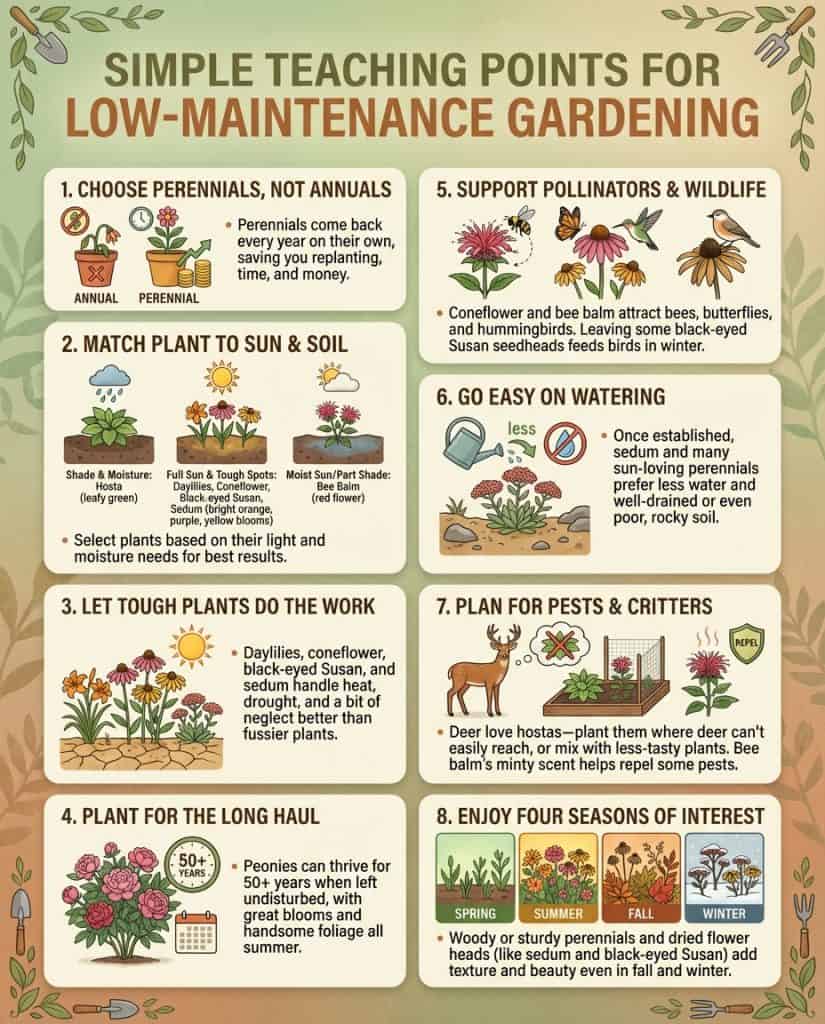
Imagine stepping into your garden year after year to find it’s already there waiting for you; no extra trips to the nursery, no replanting every spring.
This is what perennials do, and it’s why experienced gardeners rely on them so much.
These plants come back on their own, which means less work and less money spent over time.
Why Perennials Make Gardening Easier
I was surprised to learn that some perennials can outlive their gardeners. Peonies often thrive for over 100 years in the right conditions. Unlike annuals that disappear after one season, perennials keep coming back.
There are two main types:
• Herbaceous perennials disappear underground during winter, then come back up when it warms up.
• Woody perennials keep their structure year-round and provide interest in every season.
What matters most for your landscape isn’t endless replanting. It’s choosing plants that return with more growth year after year.
25 Reliable Perennials Worth Planting
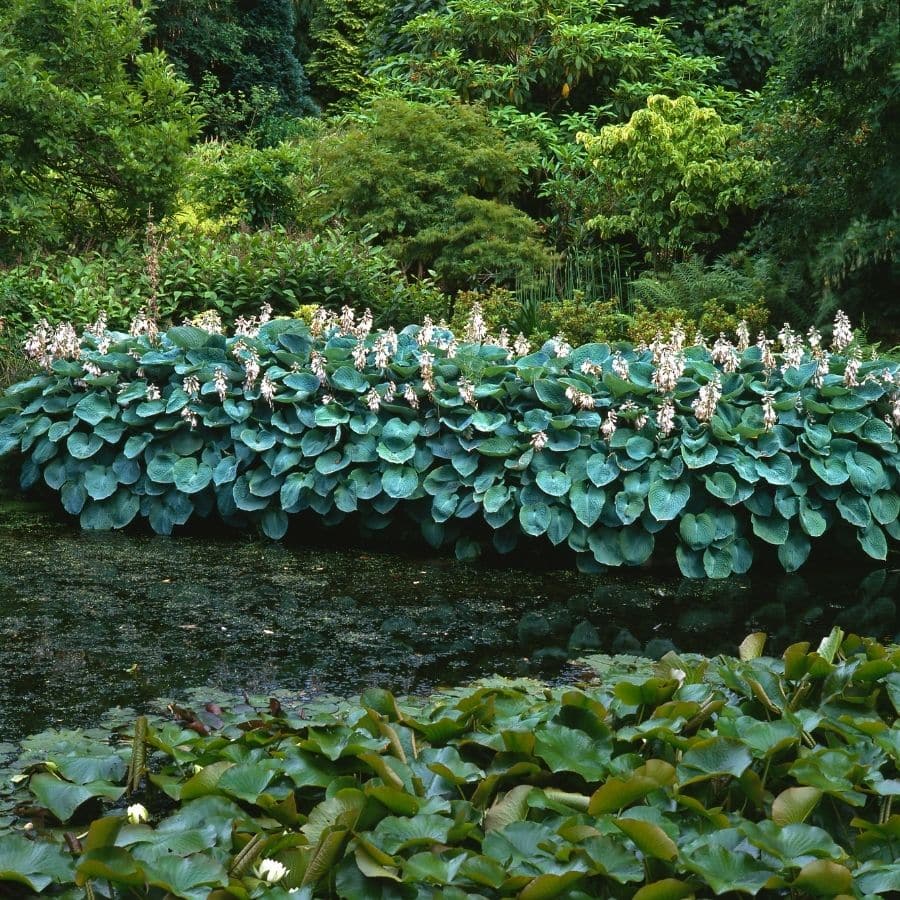
1. Hosta: Perfect for Shade
These plants bring texture with rippled leaves in shades from deep green to bright gold. Their summer spikes of lavender or white flowers are a nice bonus. One thing to know: deer love these as much as you will, so plan accordingly.
Thrives in: Partial to full shade, moist soil
Standout varieties: ‘Sum and Substance’, ‘Patriot’, ‘Blue Angel’
2. Daylilies: Tough and Colorful
These hardy plants can handle conditions that would make other perennials struggle. Each bloom lasts just one day (hence the name), but mature plants produce hundreds of flowers throughout summer.
Thrives in: Full sun, practically any soil
Standout varieties: ‘Stella de Oro’, ‘Happy Returns’, ‘Purple D’oro’
3. Peony: A Long-Term Investment
Peonies can flourish for 50+ years when left undisturbed. Their big, fluffy blooms in spring are worth the wait, and their foliage looks good all summer.
Thrives in: Full sun, fertile soil
Standout varieties: ‘Sarah Bernhardt’, ‘Bowl of Beauty’, ‘Karl Rosenfield’
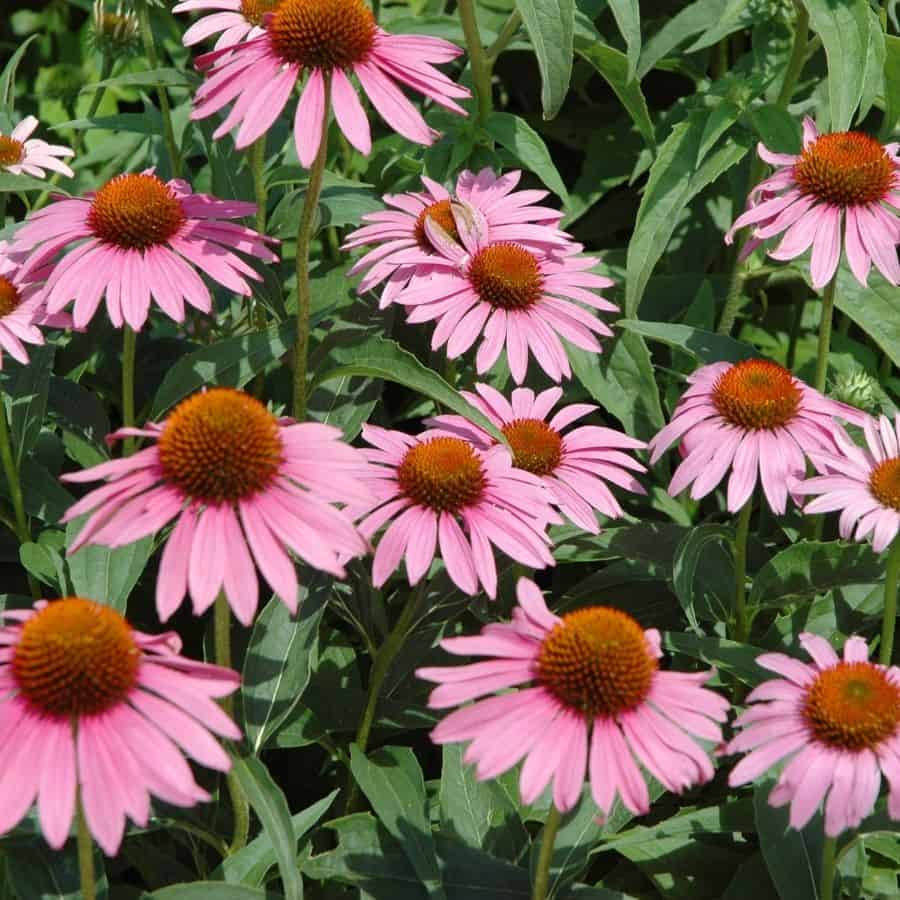
4. Coneflower: Great for Pollinators
These native wildflowers are pollinator magnets with daisy-like blooms in purple, white, orange, or pink. They handle drought, heat, and a bit of neglect better than most.
Thrives in: Full sun, well-drained soil
Standout varieties: ‘Magnus’, ‘White Swan’, ‘Green Twister’
5. Black-Eyed Susan: Bright and Easy
These golden blooms light up your garden from summer through fall. Here’s a tip: don’t deadhead too aggressively. Leave some seedheads for winter interest and to feed the birds.
Thrives in: Full sun, drought-tolerant
Standout varieties: ‘Goldsturm’, ‘Indian Summer’
6. Sedum: Incredibly Drought-Resistant
These succulent perennials barely need water once established. Their star-shaped flowers bloom in late summer and their seedheads look good through winter.
Thrives in: Full sun, poor or rocky soil
Standout varieties: ‘Autumn Joy’, ‘Dragon’s Blood’, ‘Matrona’
7. Bee Balm: Attracts Hummingbirds
With spiky flowers in bright reds, pinks, and purples, bee balm brings in hummingbirds and butterflies. Its mint-family fragrance also repels many garden pests.
Thrives in: Sun to part shade, moist soil
Standout varieties: ‘Jacob Cline’, ‘Raspberry Wine’, ‘Pardon My Purple’
8. Lupine: Tall Flower Spikes
These tall spires of pea-like flowers rise above hand-shaped foliage. The best part is that lupines actually improve soil fertility by fixing nitrogen from the air.
Thrives in: Full sun, cool climates, sandy soil
Standout varieties: ‘Russell Hybrids’, ‘Gallery Blue’
9. Russian Sage: Handles Dry Conditions
This silvery, aromatic perennial creates clouds of lavender-blue blooms that last from summer into fall. It’s like lavender’s tougher cousin, more drought-tolerant.
Thrives in: Full sun, dry conditions
Standout varieties: ‘Little Spire’, ‘Blue Steel’
10. Coreopsis: Blooms All Summer
These cheerful, daisy-like flowers keep blooming from early summer until frost. They don’t need much to keep going.
Thrives in: Full sun, well-drained soil
Standout varieties: ‘Moonbeam’, ‘Early Sunrise’, ‘Zagreb’
More Reliable Perennials (11-25)
The difference between new and experienced gardeners often comes down to knowing which plants give you the most results with the least work. These remaining perennials round out a solid collection:
• Shasta Daisy: Classic white blooms that don’t need staking. Try ‘Becky’ for the most reliable option.
• Astilbe: Feathery plumes in pink, red, or white that do well in shade. ‘Fanal’ brings deep red to darker corners.
• Japanese Anemone: Late-season bloomers that bridge summer and fall with delicate flowers. ‘Honorine Jobert’ has been growing in gardens since 1858.
• Heuchera (Coral Bells): Grown for their colorful foliage in purple, caramel, lime, and silver. ‘Caramel’ glows like amber in shade gardens.
• Bleeding Heart: Heart-shaped blooms hang from arching stems in spring. The variety ‘Gold Heart’ has pretty golden foliage.
• Yarrow: Clusters of tiny flowers above ferny foliage that handle drought well. ‘Moonshine’ offers sulfur-yellow blooms that really stand out.
• Iris: Ruffled blooms in nearly every color, ranging from small to dramatic. ‘Immortality’ reblooms in fall.
• Phlox: Fragrant summer flowers in bright colors that butterflies love. ‘David’ offers good resistance to mildew.
• Columbine: Delicate, spurred blooms hover above lacy foliage. Self-seeds gently throughout the garden.
• Lungwort: Spotted or silvered foliage and pink-to-blue flowers that bloom early in spring.
• Hellebore: Blooms in winter when everything else is dormant. Can flower while surrounded by snow.
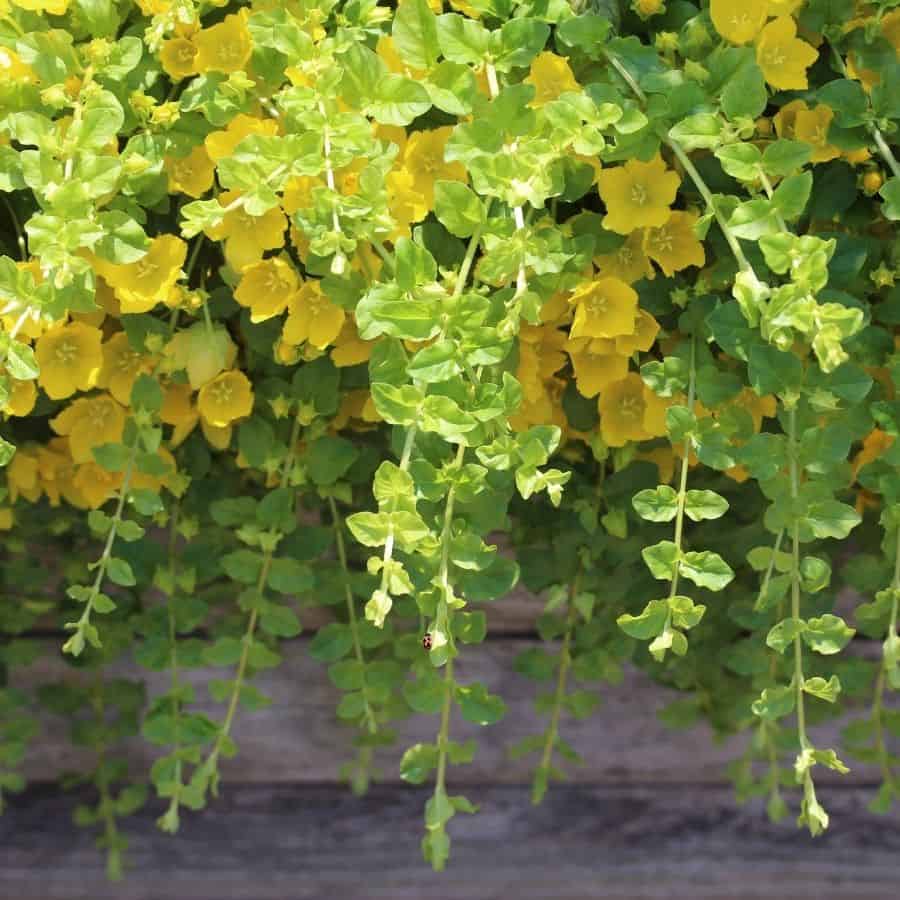
• Creeping Jenny: Golden ground cover that spills nicely over walls and containers. Creates a living mulch that keeps weeds down.
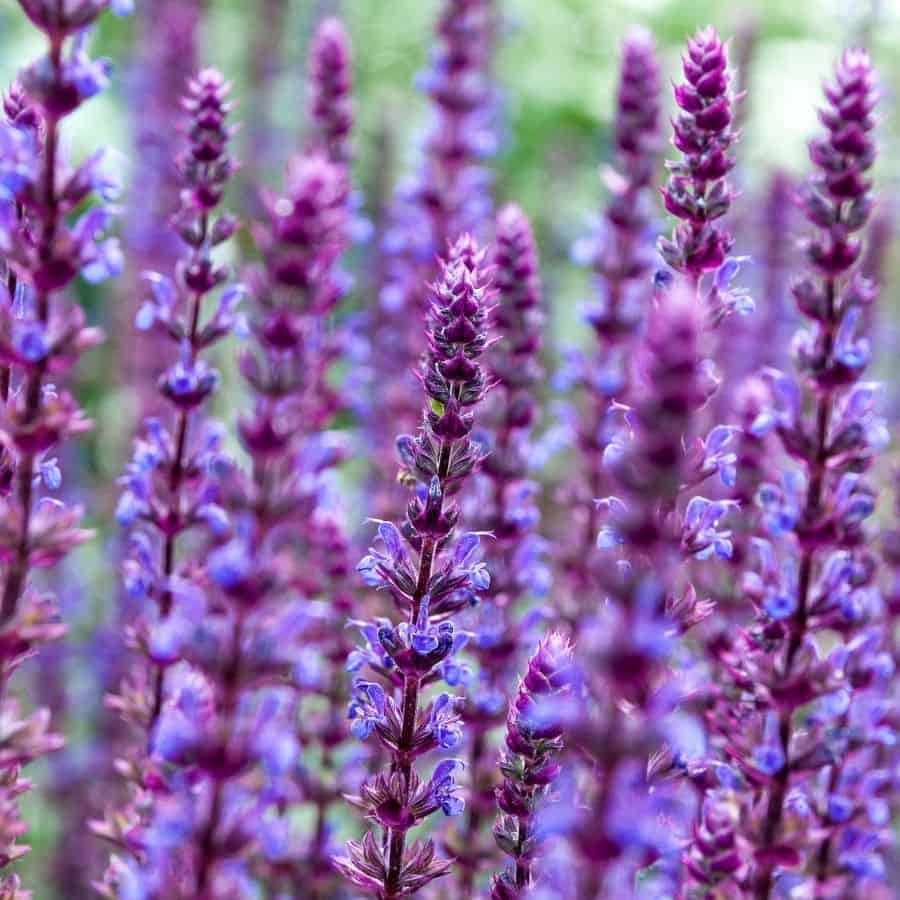
• Salvia: Spikes of purple-blue flowers that bloom for months if deadheaded. Deer and rabbits avoid its aromatic foliage.
• Goat’s Beard: Like a giant astilbe for shade, its cream-colored plumes add height to woodland gardens.
• Baptisia (False Indigo): Develops into a shrub-like plant with lupine-like flowers and interesting seed pods.
Your perennial garden is more than just pretty. It’s a practical investment. The American Horticultural Society estimates that well-chosen perennials can save gardeners up to 80% on replanting costs over a five-year period compared to using annuals.
That’s money you can spend on more plants or whatever else you need.
Getting Started
Start with just three perennials from this list that match your growing conditions. Plant them this season, then watch as they come back and fill in more with each passing year.
It really is the easiest way to have a garden that looks good without starting from scratch every spring.