
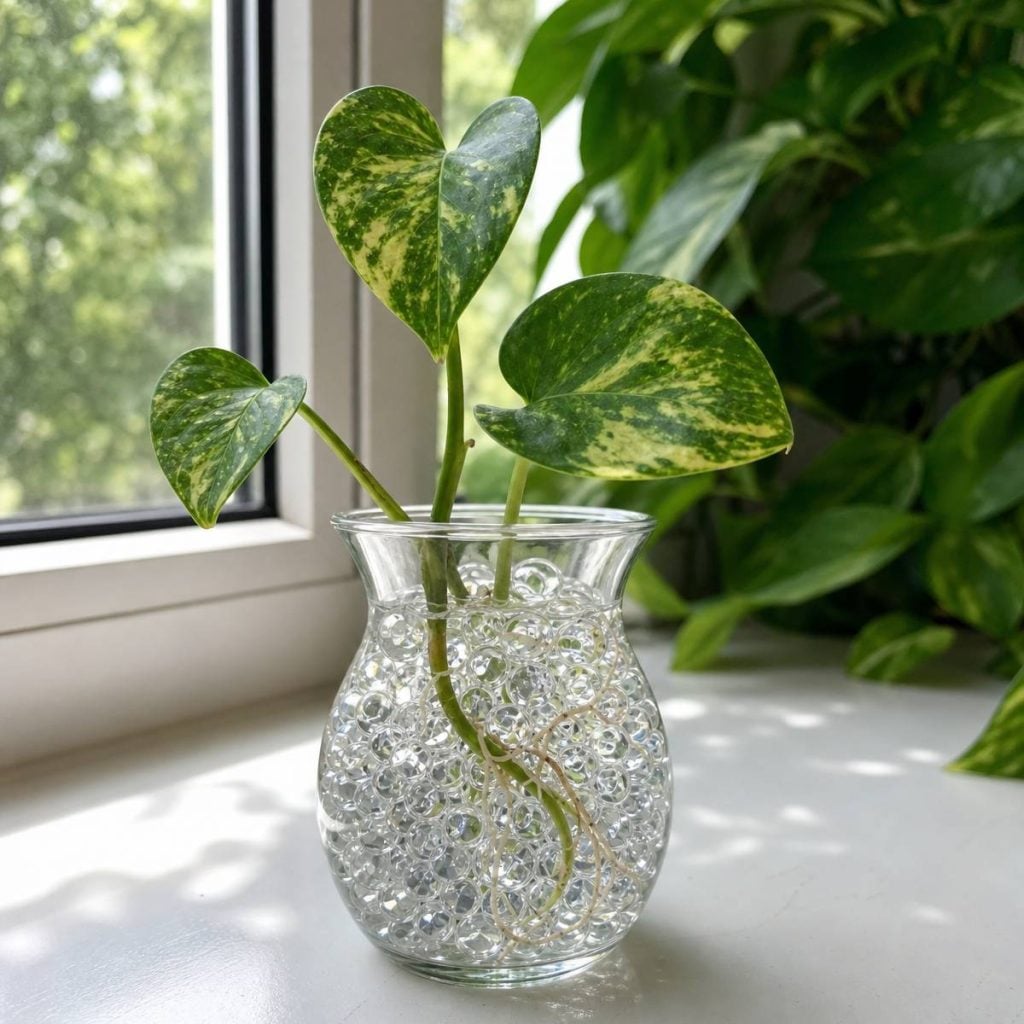
Water beads go by many names: hydrogel beads, jelly beads, water crystals, water-retention granules and toy brands like Orbeez. They’re tiny balls of superabsorbent polymer that swell as they soak up water.
They’ve become a popular way to show off plant roots in a clear vase. Before you pour a bag into a pot, there are two things you should know.
First, these beads are a real danger to babies and young children. Second, the research on whether they help plants is far less exciting than the packaging. Let’s walk through both.
Water Beads and Young Children: Read This First
Here’s the part the colorful packaging leaves out. Poison Control says water beads can expand to hundreds of times their original size after exposure to liquid. Once expanded, they can cause life-threatening intestinal blockage if swallowed.
Toy beads are often brightly colored and can resemble candy, which is exactly what makes them appealing to little kids.
The U.S. Consumer Product Safety Commission (CPSC) estimates that about 6,300 water bead ingestion injuries were treated in U.S. emergency departments from 2017 to 2022. It reports at least one death, a 10-month-old girl in 2023.
At least 3 deaths have occurred after children swallowed water beads. The agency’s advice is plain: keep water beads out of any spaces that babies and small children may enter.
In 2023 its chair urged all families, schools, camps and child-care centers to do the same. The agency still says not to let children play with water beads unsupervised.
Beads put into the ear or nose can expand there too, damage the surrounding tissue and may need surgical removal. Store water beads where children and pets can’t get to them.
What changed in 2026
A federal safety standard for water bead toys took effect on March 12, 2026. It sets a maximum expansion size for water bead toys, limits the amount of acrylamide allowed in them and requires strongly worded warning labels.
The expansion limit is 5 mm in diameter. Water beads made after March 12, 2026 must meet the standard to be sold legally in the U.S.
Here’s the catch for plant lovers. Some water bead products aren’t marketed as children’s toys, and the rule does not apply to them.
So a bag of plant or vase beads may not meet the toy limits at all. If children live in or visit your home, treat every water bead as a hazard.
If someone swallows a water bead
Use Poison Control’s webPOISONCONTROL online tool or call your poison center at 1-800-222-1222. Help is free and available 24 hours a day. If someone is choking on a water bead, call 911.
The Tennessee Poison Center recommends prompt medical evaluation when a child is known to have swallowed any number of water beads. That way, they can be removed before they leave the stomach.
For a closer look at what happens inside the body, see what happens when a child swallows a water bead.
What Water Beads Actually Are
Water beads are made from superabsorbent polymers, long chains of molecules that hold large amounts of liquid without dissolving.
Most sold today are synthetic, made from petroleum products, polyacrylate and other acrylics. The beads can grow 150 to 1,500 times in volume after soaking up liquid.
In the garden trade, the same kind of material is called a hydrogel. University of Hawaii extension landscape specialist David Hensley describes two types.
Starch-based gels are broken down by bacteria and fungi within a few days to a few weeks. Synthetic cross-linked polyacrylamides or polyacrylates may stay active for 2 years or more, according to manufacturers.
Water beads were first used as agricultural products to keep soil moist. Florists use them to keep arrangements hydrated.
How much water do they hold? It depends on who’s counting. Manufacturers have claimed 200 to 400 times their weight.
Hensley reports 300 to 1,500 times their weight, depending on the product. He describes one test where a product sold as absorbing 500 times its weight took up slightly over 350 times its weight in distilled water.
Do Water Beads Help Plants?
This is where the hype meets the research. Colorado State University Extension says water-absorbing polymers may help save water, but only under certain conditions.
Its research showed little benefit in turf and greenhouse crops. Petunias in greenhouse hanging baskets showed no benefit, and plants grown with the polymers needed watering just as often as plants grown without them.
Where do they help? They seem to be of some benefit in outdoor soil that’s low in organic matter. Results are best when the soil is also covered with mulch.
The polymers have to be mixed into the soil evenly. The cost of buying and mixing them in generally exceeds the water saved.
Salts and fertilizer shrink them
Salt is the big limit. The polymers’ usable life is limited by the amount of salt or fertilizer in the soil. If your soil is already high in salts, your plants probably won’t benefit much.
Hensley describes a test where a product soaked in a solution similar in salt content to average soil water absorbed 90 percent less water.
He writes that, according to some research, fertilizer salts dramatically reduce absorption by polyacrylamide gels. He adds that gels can bind ammonium, calcium and magnesium, and that water high in minerals or salts reduces absorption by some gels.
That cuts against the old idea of loading beads with liquid fertilizer as a slow-release feed. If you grow a plant in beads, feed it with a water-soluble fertilizer as you normally would. Don’t count on the beads to meter it out.
The case for hydrogels
There’s a fair counterpoint. Washington State University Extension horticulturist Linda Chalker-Scott notes the landscape industry has used hydrogels successfully to reduce transplant shock and increase containerized plant growth.
A UF/IFAS Extension agent in St. Lucie County lists water conservation and improved plant growth among the potential advantages of hydrogels in agriculture. The agent calls them an excellent medium for crops on sandy soils.
The agent notes that some may affect soil pH or interact with certain fertilizers, and advises gloves and a mask when handling dry granules.
Even Hensley says gels may improve the water status of some plants under low-moisture conditions. He also warns that most of the literature, especially from promoters, is testimonials rather than hard science. His bottom line: they will never substitute for good management.
How Long Do Water Beads Last?
Not forever. Chalker-Scott writes that hydrogels degrade after 2 to 5 years, and that exposure to fertilizer salts speeds that up. Starch-based gels go much faster. Once the gel is gone, you’re back to your original soil.
Are Water Beads Bad for the Environment?
The experts don’t agree, so here are both sides. Chalker-Scott writes that when polyacrylamide hydrogels break down, one of the byproducts is acrylamide.
She describes acrylamide as a neurotoxin that has caused cancer in laboratory animals. She considers indiscriminate use a serious hazard to human health and the environment.
The other view is calmer. Superabsorbent polymers biodegrade over time, they are unlikely to contaminate the soil or environment, and used water beads can be thrown in the trash.
A few brands made outside the U.S. have contained acrylamide, which can be toxic in large amounts or with repeated exposure.
In a home with kids, though, the priorities are clear. The risk of intestinal blockage, choking and tissue damage from water beads far outweighs any possible risk of acrylamide toxicity.
Growing Houseplants in Water Beads
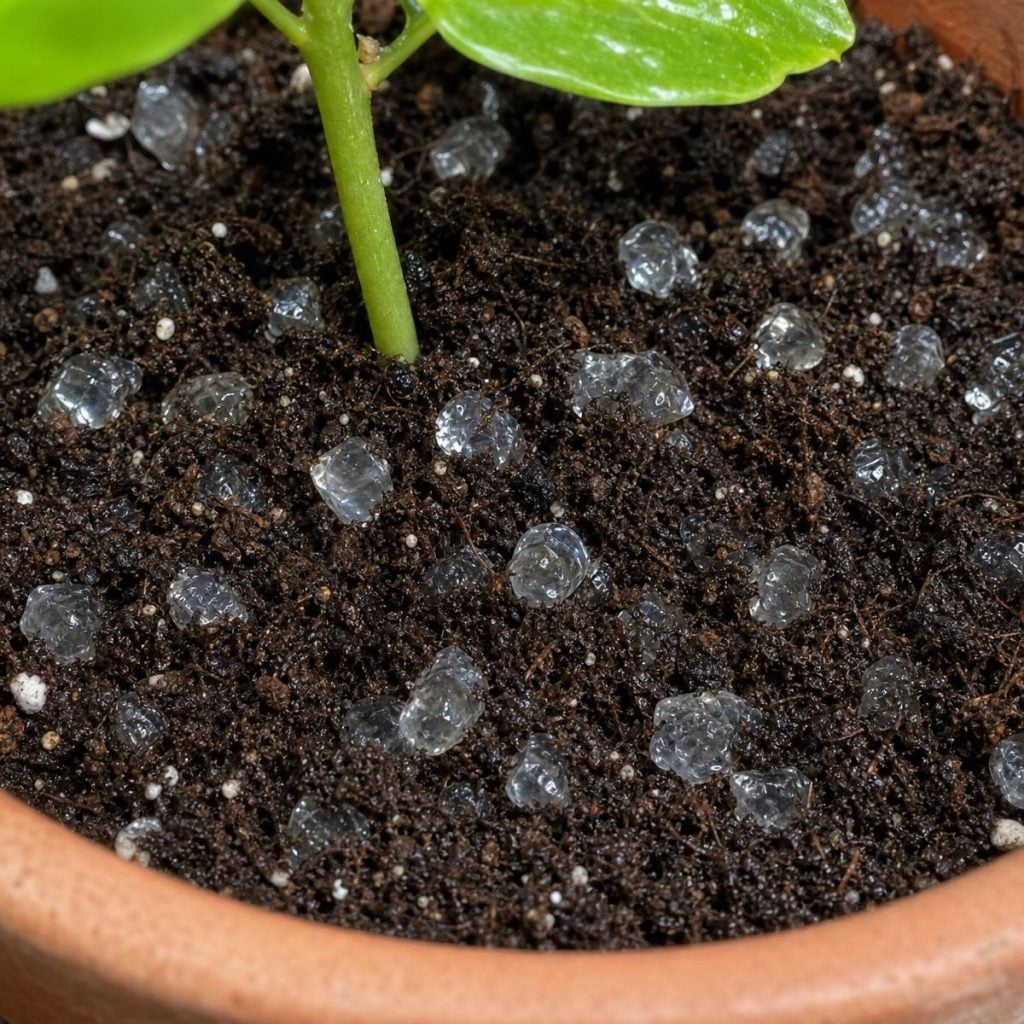
Planting a houseplant in nothing but beads is a decorative look, not a care upgrade. Potted plants grown with these polymers needed watering just as often. Fertilizer salts and mineral-heavy water also work against the gel.
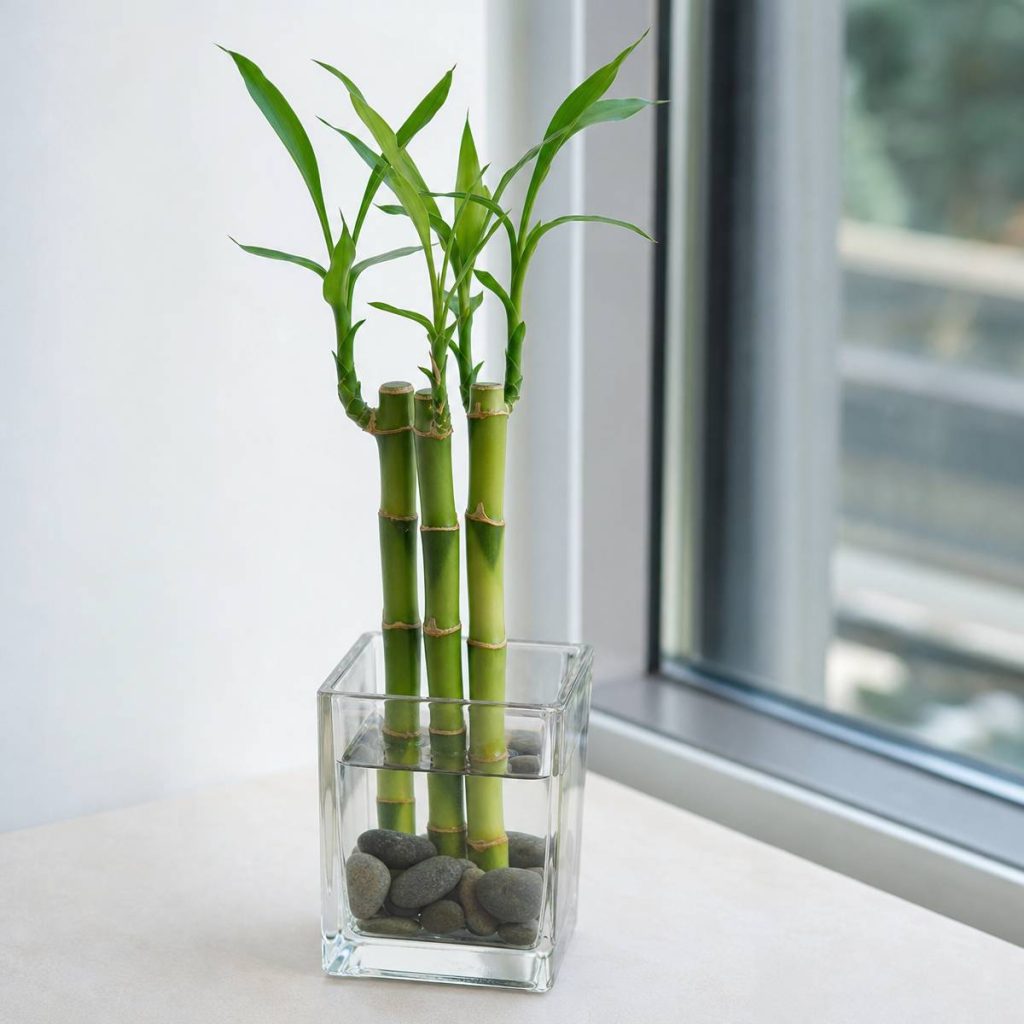
If you love seeing roots in a clear vase, there are simpler options. NC State Extension says lucky bamboo can be grown in chlorine-free water.
Change the water weekly, give it a weak liquid fertilizer, and put some pebbles in the bottom to give the roots a place to grow.
For a reusable growing medium, look at expanded clay pebbles. For lightening up a potting mix, the classic additives are perlite and vermiculite.
If You Already Have Water Beads
- Store them in a secure spot where children and pets can’t get to them.
- Keep them out of any room babies and small children may enter.
- If a toy filled with water beads starts leaking beads, throw it out.
- Used water beads can go in the trash.
- Trying them outdoors? Mix them evenly into soil that’s low in organic matter and mulch over the top, the conditions where trials showed some benefit.
Bottom line? Water beads are a pretty decoration with a serious downside in homes with little ones, and a weak watering tool for most potted plants.
Good soil, a pot that drains and a watering routine you can keep up will do more for your plants. Have you tried water beads with your plants? Tell us how it went.
Frequently Asked Questions
Are Orbeez good for plants?
Not especially. Orbeez is a brand of toy water beads, made from the same kind of superabsorbent polymer first used to hold soil moisture.
Research found little benefit from these polymers in greenhouse crops, and potted plants needed watering just as often. Toy beads are a serious swallowing hazard, so keep them away from babies and small children.
Are water beads and Orbeez the same thing?
Pretty much. Orbeez is a toy brand of water beads, and all water beads are superabsorbent polymers that swell with liquid.
Water bead toys made after March 12, 2026 must meet a federal standard that limits expansion size and acrylamide. Beads not marketed as children’s toys fall outside it, so plant or vase beads may not be covered.
Are water beads bad for the environment?
Experts disagree. Horticulturist Linda Chalker-Scott writes that polyacrylamide hydrogels degrade within 2 to 5 years and release acrylamide. She calls it a neurotoxin that has caused cancer in laboratory animals.
The other view: superabsorbent polymers biodegrade over time, are unlikely to contaminate soil, and used beads can go in the trash. Weigh both views before mixing beads into garden soil.
Do water beads mean I can water less?
Usually not in pots. Plants grown in media with water-absorbing polymers needed watering just as often as plants without them.
The polymers seem to help some in outdoor soil low in organic matter, especially when the soil is mulched. Fertilizer salts also cut how much water the gel can absorb, and salty soil limits their usable life.
What should I do if my child swallows a water bead?
Act right away. Use Poison Control’s webPOISONCONTROL online tool or call 1-800-222-1222, and call 911 if the child is choking.
A swallowed bead can absorb fluid and expand in the intestines, causing a life-threatening blockage. Get prompt medical evaluation when a child is known to have swallowed any water beads, so they can be removed before leaving the stomach.