By: Gary Antosh
Turmeric is cheap, it’s probably already in your spice rack, and it does have a couple of genuinely useful jobs in the garden. It doesn’t have ten.
A lot of what gets repeated about turmeric online turns out to be thin on evidence or flatly contradicts basic plant science.
That includes claims that it drives off ants, cures whatever fungus you’ve got, or works like a rooting hormone. Here’s what the actual research supports, and what I’d skip.
What Turmeric Actually Is
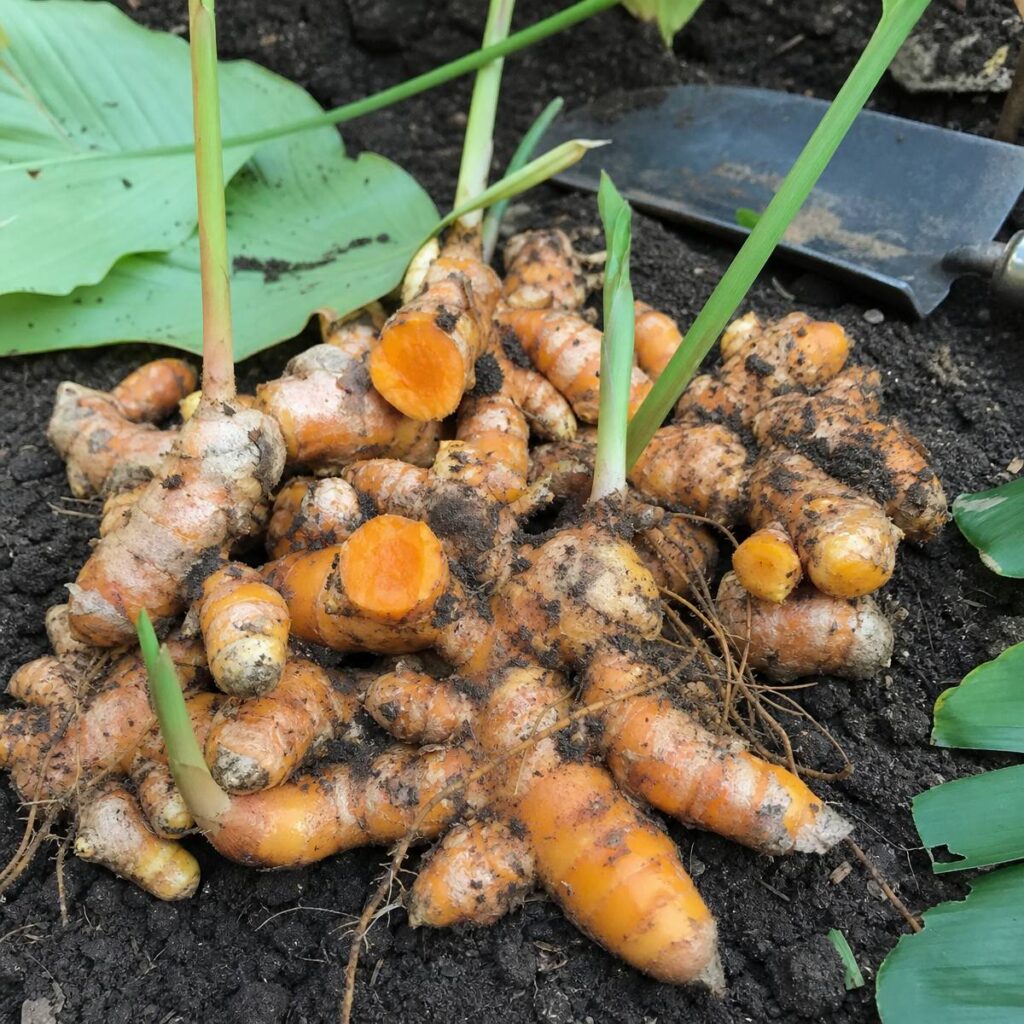
Turmeric powder comes from the dried, ground rhizome of Curcuma longa. Its main active compound is curcumin — the pigment behind that deep yellow-orange color. Curcumin has real, lab-documented antimicrobial properties.
That part isn’t folklore. The real question for each use below is whether a kitchen-strength turmeric mix, at kitchen concentrations, actually does what the lab studies tested. In a few cases here, it doesn’t.
Leaf Spot: The Best-Supported Use on This List
Those black or dark spots disfiguring your plants’ leaves are often anthracnose, caused by Colletotrichum fungi. Peer-reviewed testing found turmeric’s curcumin compounds among the most active of 22 spices tested against exactly these fungi.
To try it: mix 2 teaspoons of turmeric powder into a liter of water, strain, and spray affected leaves, top and bottom, every 7–10 days.
It’s a reasonable, low-cost thing to try on a mild leaf-spot problem. It’s not a guaranteed cure, and not a substitute for removing badly infected leaves.
Powdery Mildew: Weaker Support Than Leaf Spot
This one’s more mixed than the leaf-spot use. A university-published greenhouse trial found that a concentrated dose of crude turmeric extract knocked back the powdery mildew fungus.
But the same study found the isolated turmeric compound turmerone only weakly active against it. Curcumin itself — the compound in your spice jar — wasn’t tested against powdery mildew at all.
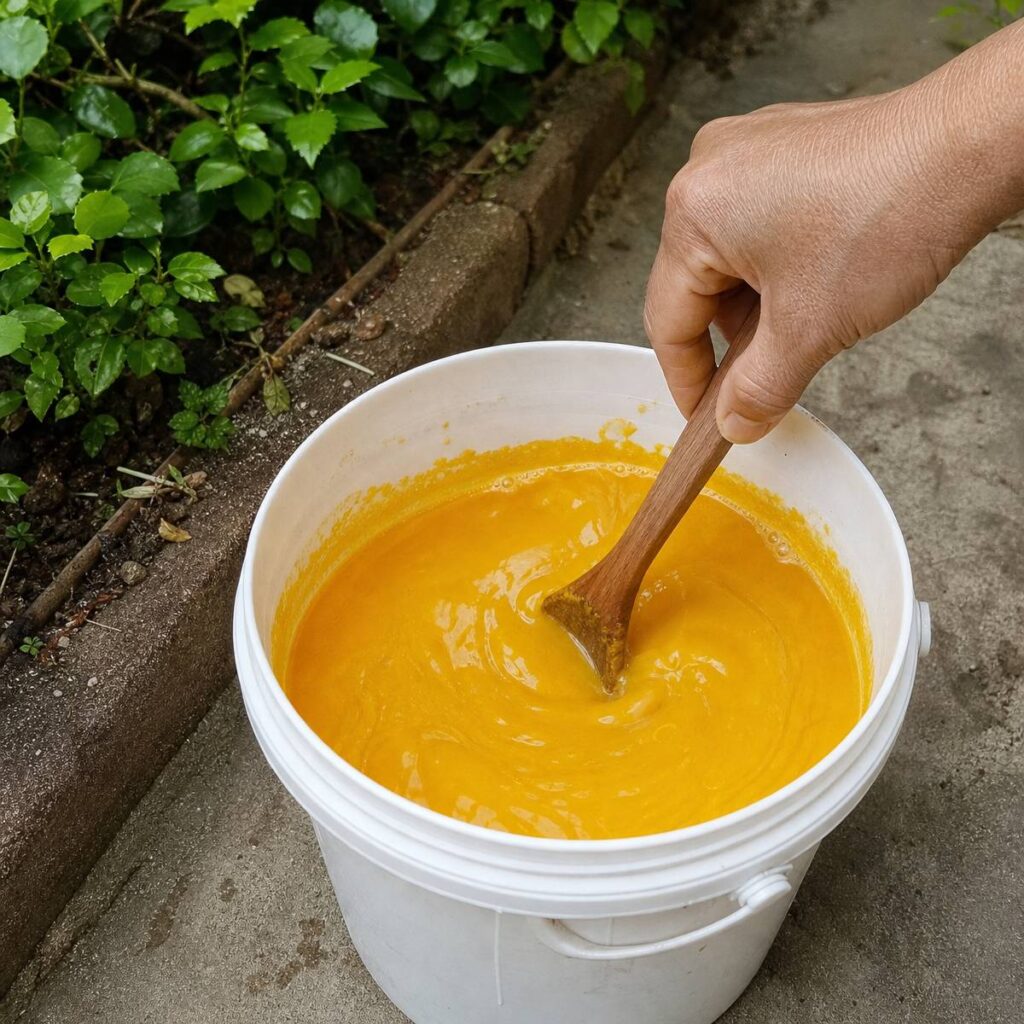
The turmeric-milk-vinegar combination you’ll see recommended online hasn’t been tested as a combination anywhere I could find. If you want to experiment, treat it as a low-stakes trial on a few leaves, not a first choice.
For a mildew treatment with real research behind the specific recipe, see our baking soda uses in the garden guide instead.
Root Rot: Real Lab Support, With an Important Caveat
Curcumin achieved full control of Phytophthora infestans and knocked back Rhizoctonia solani in a controlled greenhouse trial. Both are genuine root and crown rot fungi. That’s real support for turmeric having some fungicidal effect on soil pathogens.
The caveat: most “root rot” in home gardens is a drainage problem, not purely a fungal-identification problem. Soggy soil suffocates roots and invites rot fungi in. A turmeric drench won’t fix compacted or waterlogged soil, and shouldn’t be used as a reason to skip improving drainage.
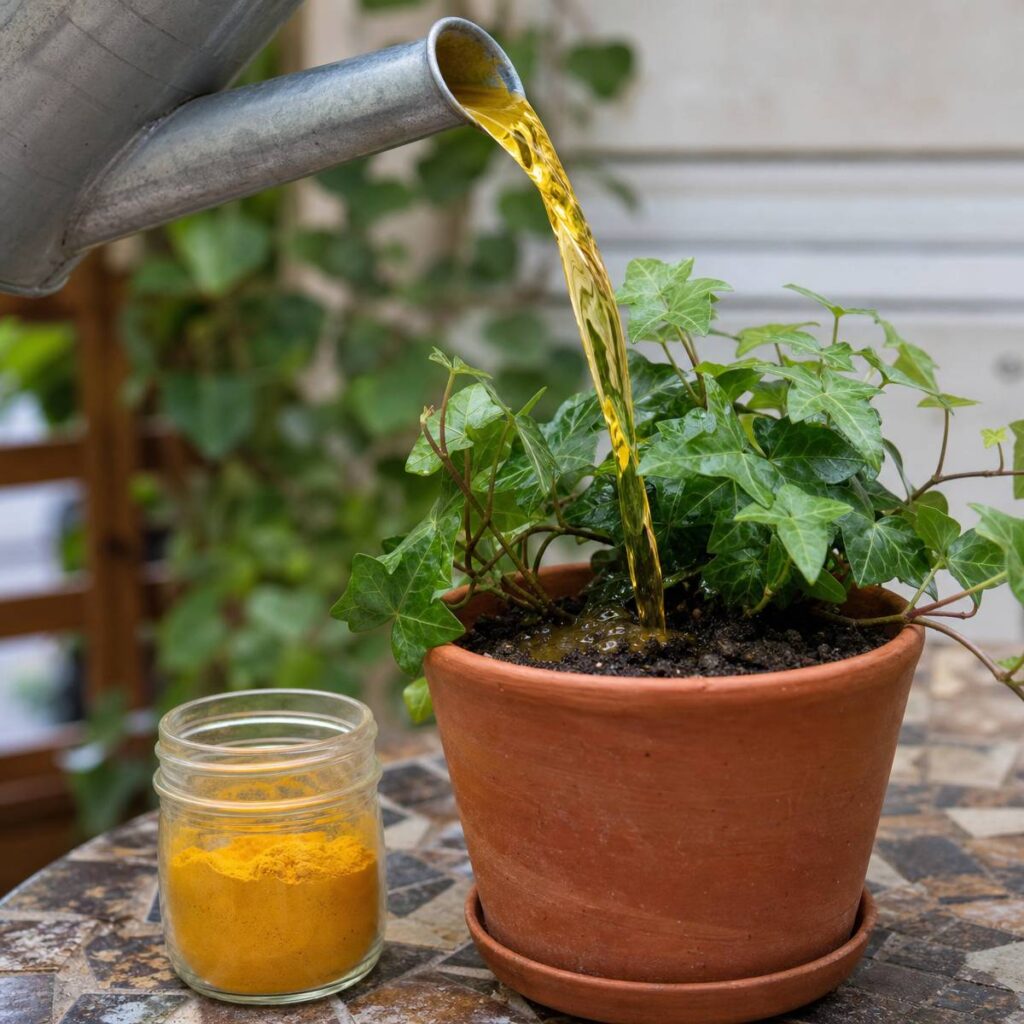
If you want to try it as an added precaution: mix 1 tablespoon of turmeric per 5 liters of potting soil for containers, or water in-ground plants with a turmeric solution occasionally. Treat it as a minor supplement to good drainage and correct watering, not a fix on its own.
Ants and Mealybugs: Early Evidence, Not a Proven Fix
I want to be straight with you here. This is one of the most-repeated turmeric tricks online, and the real research is more interesting — and less settled — than the confident claims you’ll usually see.
Lab research on essential-oil compounds from turmeric and thyme found them repellent and toxic to fire ants, “as effective as some synthetic insecticides.” But that’s an essential-oil extract, not sprinkled powder. It was tested against fire ants specifically, and there’s no field data yet on how long any effect lasts.
A separate small university study tested turmeric powder itself against ordinary outdoor ants and found it “holds significant possibility as a repellent… but needs further study.”
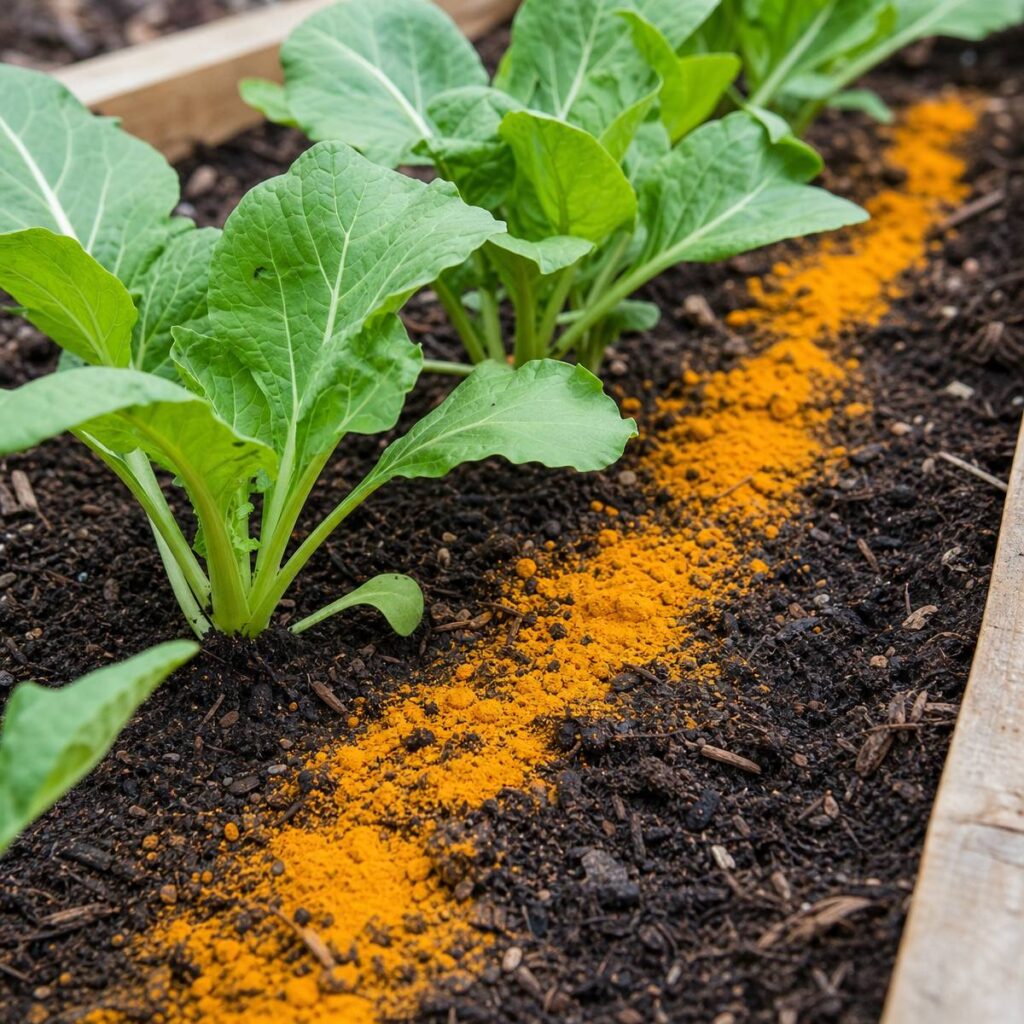
Put together: there’s enough real signal that sprinkling turmeric powder around ant-trafficked plants is a reasonable, cheap thing to try. There isn’t enough to promise it “sends ants packing.”
The follow-on claim that this also solves a mealybug problem only holds up if the ant part works in the first place. Ants do genuinely protect mealybugs for their honeydew, but treat any mealybug improvement as a possible side effect, not something to count on.
Skip the “Natural Pesticide” Claim for Caterpillars
This is the one claim on the page a real study directly tested, and it doesn’t hold up. Researchers applied turmeric powder topically to cabbage loopers in a controlled dose-response test and got only 10–20% mortality.
Turmeric alone is a weak insecticide against this pest. The same study found mortality jumped to 90–97% only when turmeric was combined with a synthetic synergist that isn’t part of any DIY garden recipe.
If cabbage loopers or similar caterpillars are actually damaging your plants, reach for something with real backing instead: Bt (Bacillus thuringiensis), neem oil, or insecticidal soap on young caterpillars.
Protecting a Pruning Cut
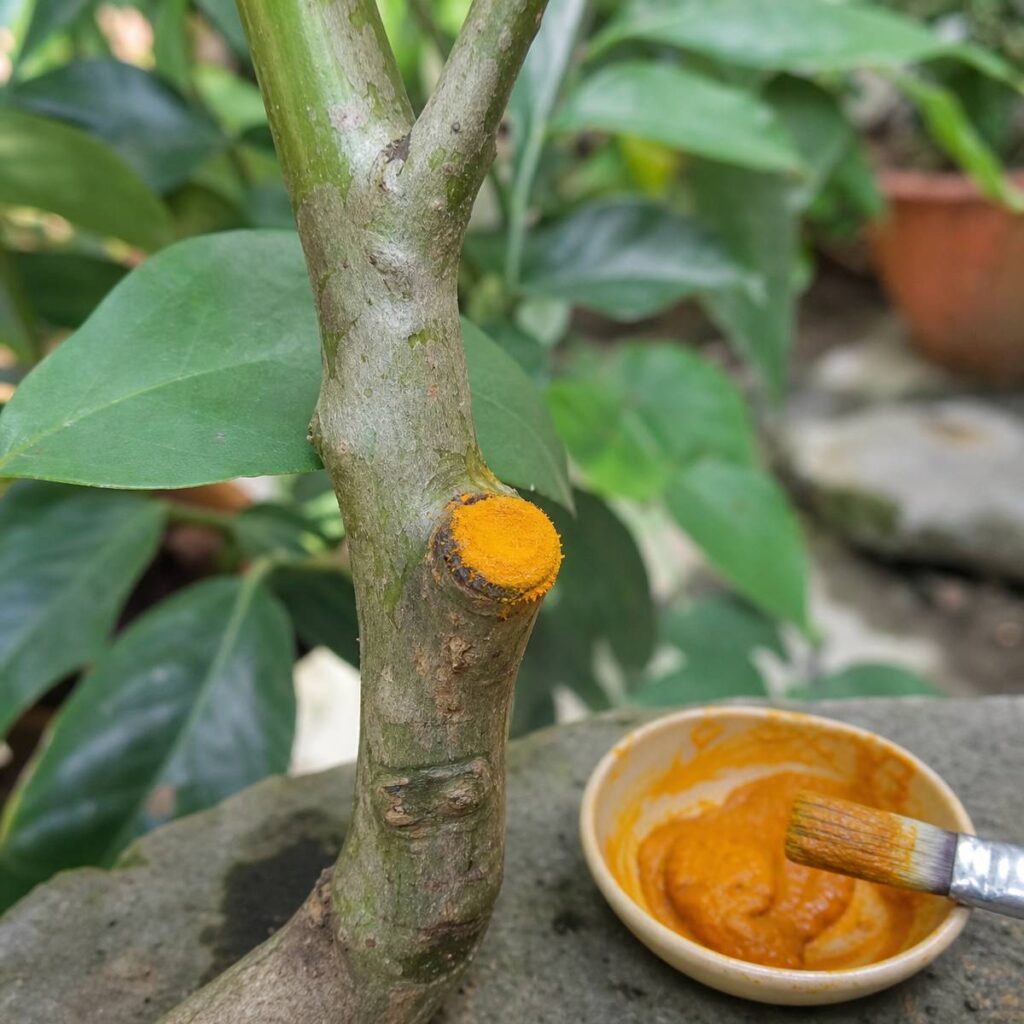
Turmeric’s antimicrobial properties are real chemistry, and a thin dusting on a fresh cut can offer some protection against fungal and bacterial entry while the plant heals. That part of the original advice is reasonable.
Two things worth knowing before you reach for it, though. First, most modern arborists recommend leaving pruning cuts to air-dry rather than sealing them, since a sealed, damp cut can trap moisture and encourage rot instead of preventing it.
If you use turmeric, dust it on thin and let the wound breathe — don’t pack it on or wrap it airtight. Second, turmeric stains skin, tools, gloves, and nearby foliage, so expect that.
For roses specifically, skip the idea that a turmeric paste prevents dieback. I couldn’t find any university extension, botanical garden, or research source linking turmeric to rose dieback.
Every version of that claim traced back to another gardening blog repeating it, not to any original source.
The Royal Horticultural Society‘s actual guidance is to remove dead and damaged wood as soon as you see it and make clean cuts sloped away from an outward-facing bud. It doesn’t mention any sealant. That’s the real fix.
Root Development: Turmeric Is Not a Rooting Hormone
This needs to be said plainly, because it got muddled here before: turmeric does not act like a rooting hormone.
Real rooting hormones work because they supply auxin, a plant hormone that actually triggers root formation. That’s the active ingredient in the powders and gels sold for propagation. Turmeric has no auxin activity. It will not make cuttings root faster.
What it can reasonably do, based on its real antimicrobial properties, is protect the cut end of a cutting from fungal and bacterial rot while roots form on their own. That’s a fair reason some gardeners dust cuttings with it before potting. That’s a supporting role, not a growth boost.
If you want faster, more reliable rooting, use an actual rooting hormone with auxin (look for IBA or NAA on the label). Turmeric is a reasonable extra layer of protection alongside one, not a replacement for one.
A Few Precautions
Turmeric isn’t a registered pesticide or fungicide — there’s no EPA label and no established consumer application rate. Everything above is a low-cost experiment worth trying on a mild problem, not a substitute for a labeled product if you’re dealing with a serious infestation or disease.
Patch-test any spray on a couple of leaves and wait a day before treating a whole plant. And keep it away from anything you don’t want stained. Turmeric leaves a stubborn yellow mark on skin, clothing, tools, and light-colored surfaces.
Frequently Asked Questions
Does turmeric work as a rooting hormone?
No. Rooting hormones work by supplying auxin, a plant hormone that helps with root development, and there is no sourced evidence that turmeric does the same. Don’t count on it to make cuttings root faster. If you want faster, more reliable rooting, use an actual rooting hormone instead of the spice jar.
Does turmeric get rid of powdery mildew?
The support is mixed. A greenhouse trial found a crude turmeric extract knocked back the powdery mildew fungus at a concentrated dose, but the isolated compound turmerone was only weakly active. Curcumin, the compound in your spice jar, was not tested against powdery mildew. For a recipe with real research behind it, see our baking soda uses in the garden guide.
Does turmeric kill caterpillars like cabbage loopers?
Not on its own. In a controlled test, turmeric powder applied to cabbage loopers caused only 10–20% mortality. Mortality reached 90–97% only when turmeric was combined with a synthetic synergist that is not part of any DIY garden recipe. For loopers, Bt (Bacillus thuringiensis) and neem oil are options with real backing.
Does turmeric repel ants?
It might, but the evidence is early. Lab research found essential-oil compounds from turmeric and thyme repellent and toxic to fire ants, though that was an extract, not sprinkled powder, and there is no field data yet. A small university study on turmeric powder and outdoor ants said it holds significant possibility as a repellent but needs further study.
Can turmeric help with root rot?
It has real lab support. In a controlled greenhouse trial, curcumin achieved full control of Phytophthora infestans and knocked back Rhizoctonia solani, both root and crown rot fungi. That makes it a possible minor extra, not a fix for root rot, so put good drainage and correct watering first.