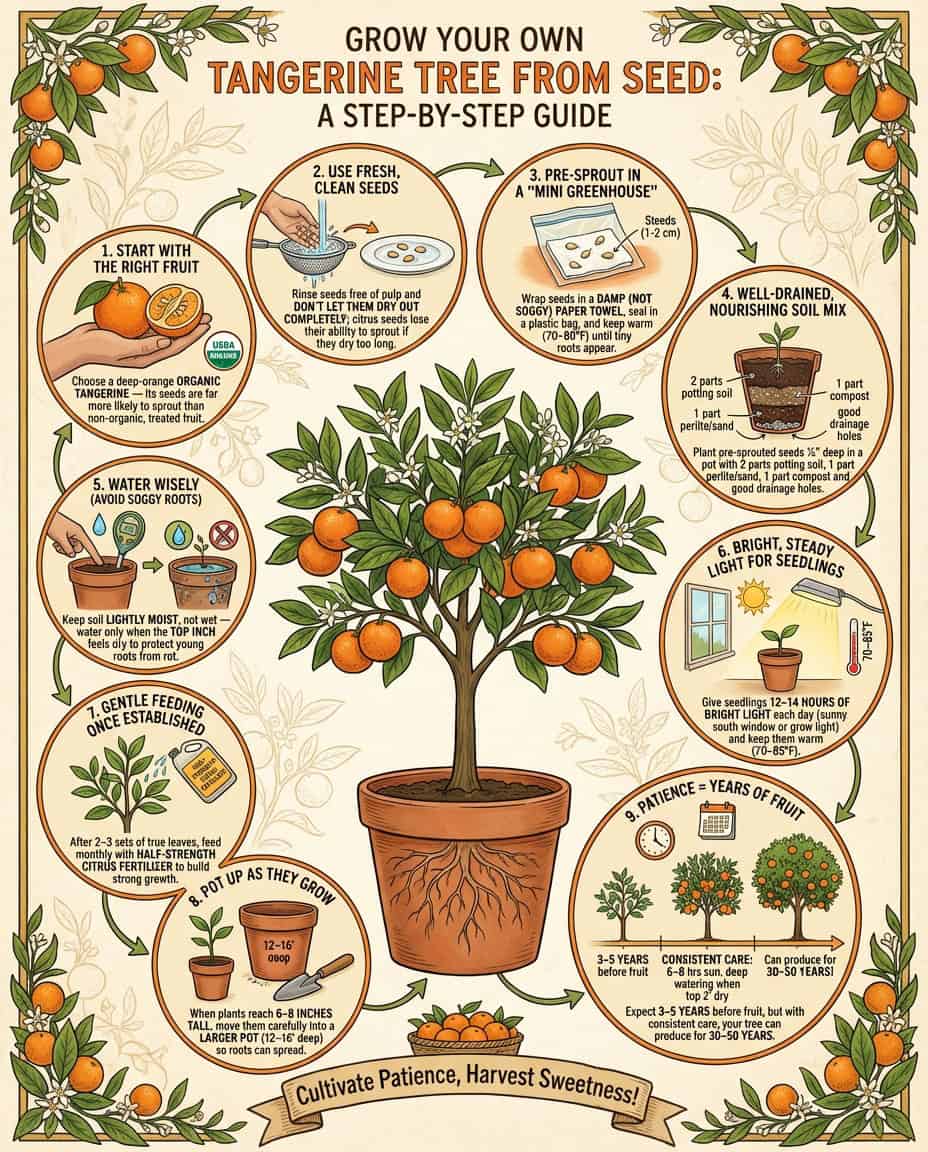
Did you know that the tiny seed inside your tangerine could become a fruit-bearing tree that produces harvests for up to 50 years?
I was surprised to learn that with just a little patience and the right approach, you can grow a thriving tangerine tree from a single grocery store fruit.
You don’t need expensive saplings. Nature already gave you everything you need.
Why Growing Tangerines from Seed Is Worth The Wait
Let’s be real. Growing a tangerine tree from seed isn’t instant gratification. You’re looking at 3-5 years before your first harvest. But this might be one of the most rewarding plant projects you’ll ever tackle.
Here’s what makes it worthwhile:
• One organic tangerine = multiple potential trees
• These trees can produce fruit for 30-50 years
• You’ll enjoy glossy leaves and fragrant blossoms even before fruiting
• Turn food scraps into a real food source
What matters most for your citrus growing journey isn’t fancy equipment or expert knowledge. It’s simply starting with viable seeds and having patience.
The Seed Selection Secret Most Plant Experts Won’t Tell You
Not all tangerines are created equal when it comes to seed viability. Your mission is to find the right candidate.
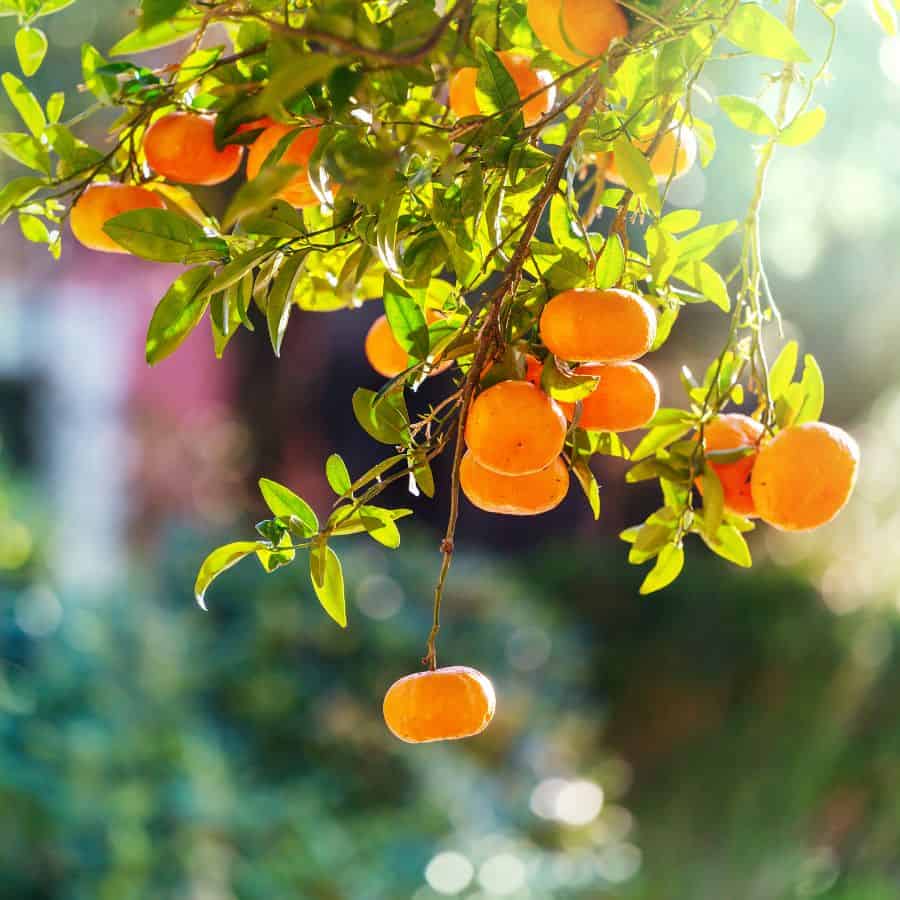
Look for organic tangerines with a deep orange color and firm skin. Commercial non-organic fruits often contain sterilized seeds that won’t sprout.
After enjoying your tangerine, carefully extract those seeds and rinse them clean of pulp. Don’t let them dry out completely.
Unlike some seeds, which can be stored for years, citrus seeds lose viability quickly.
Transform Those Seeds Into Seedlings: The Foolproof Method
Most people make this mistake with their tangerine seeds: they skip the pre-germination step. This single step can really boost your success rate.
Here’s what to do:
- Wrap seeds in a damp paper towel (moist, not soaking wet)
- Seal inside a plastic bag to create a mini-greenhouse
- Store in a warm spot (70-80°F)
- Within 2-4 weeks, you’ll spot tiny roots emerging
When those roots reach about 1-2cm long, your seeds are ready for soil. This simple pre-sprouting trick can cut weeks off your germination time.
Planting Magic: Creating Your Citrus Nursery
Your baby tangerine needs the right home to thrive. Think of soil as its first apartment.
Mix up this soil blend that tangerines love:
• 2 parts potting soil
• 1 part perlite or coarse sand (for drainage)
• 1 part compost (plant food)
Plant those pre-sprouted seeds root-side down about ½ inch deep in a container that’s at least 6-8 inches deep with drainage holes. Cover with plastic wrap to keep moisture in until sprouts emerge in 2-6 weeks.
Here’s the real trick: don’t drown your seedling. Overwatering is the biggest killer of young plants. Water only when the top inch of soil feels dry.
The First 6 Months: Nurturing Your Citrus Baby
Consistent care during these early months is what matters most. Your seedling needs the right support to grow strong.
These care requirements will transform your fragile seedling into a healthy young tree:
• Light: 12-14 hours of bright light daily (south-facing window or grow light)
• Moisture: Consistently damp but never soggy soil
• Temperature: 70-85°F (avoid drafty areas)
• Food: Half-strength citrus fertilizer monthly after 2-3 sets of true leaves appear
Once your seedling hits 6-8 inches tall, it’s ready for a bigger home. Transplant to a pot 12-16 inches deep, handling those roots carefully.
Long-Term Love: Turning Seedlings Into Fruit Factories
The difference between new and experienced plant parents is simply consistency. As your tangerine tree matures, its care needs evolve.
Your growing tree needs:
• Sunshine: 6-8 hours of direct sunlight daily
• Strategic watering: Deep drinks when the top 2 inches of soil dry out
• Seasonal feeding: Citrus fertilizer every 4-6 weeks during the growing season
• Pruning: Remove weak branches annually to create a strong structure
If you live in USDA zones 9-11, your tree can transition outdoors permanently. For everyone else, container growing is your best option.
Triggering the Fruit Magic: From Flowers to Harvest
Patience is key here. This is where most gardeners give up, but you’re about to learn how to encourage fruiting.
I was surprised to learn that temperature fluctuations are actually helpful for citrus trees. They need to feel seasonal changes to trigger flowering. Give your tree slightly cooler temperatures (55-60°F) in winter, followed by warmth in spring to stimulate those blossoms.
Boost flowering and fruit set with these techniques:
• Switch to a fertilizer higher in phosphorus and potassium before bloom season
• Play pollinator by gently brushing flowers with a small paintbrush
• Ensure proper light penetration through strategic pruning
When harvest time finally arrives, look for fruit that is bright orange and slightly soft when gently squeezed. Unlike some fruits, tangerines don’t continue ripening after picking, so patience pays off with better flavor.
Troubleshooting Like a Pro: Rescue Your Tree From Common Problems
Even the most dedicated plant parents face challenges. If your tree starts showing signs of distress, don’t panic.
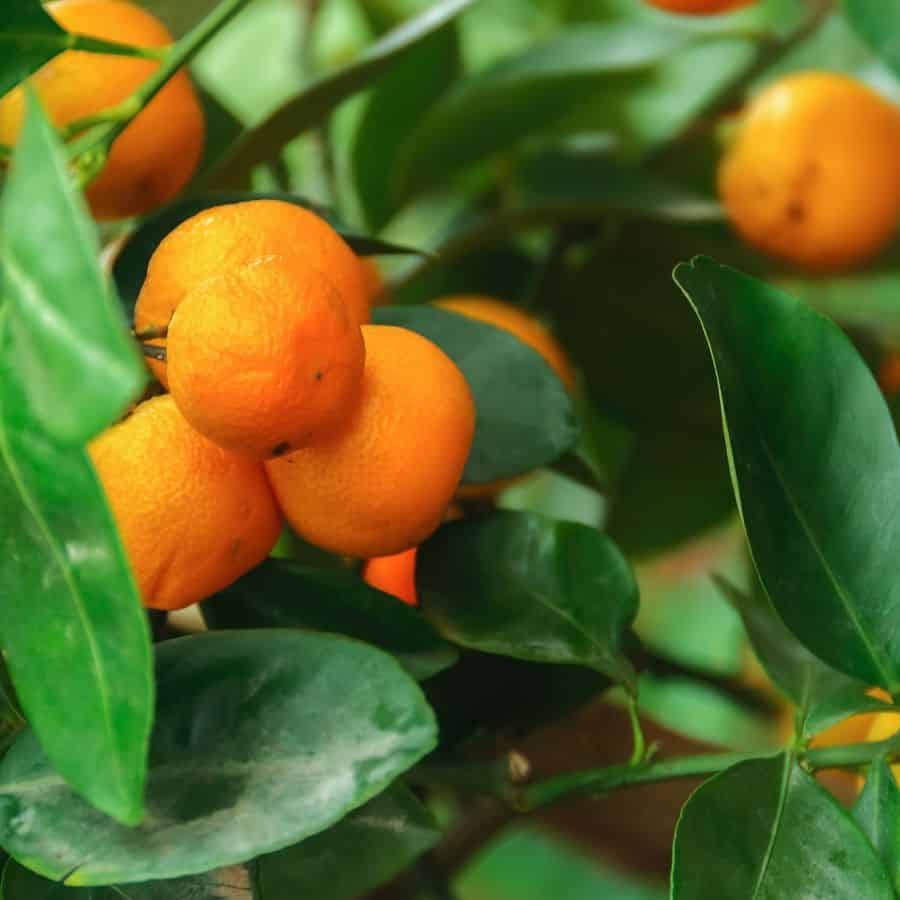
Quick solutions for common tangerine tree problems:
• Yellowing leaves? Your tree likely needs nutrients. Feed with balanced citrus fertilizer.
• Dropping leaves? Check for watering issues or sudden temperature changes.
• Pest invasion? Neem oil works well against aphids, scale, and spider mites.
• No flowering? Be patient. Also, check light levels and reduce nitrogen fertilizer.
Remember that seed-grown trees take longer than store-bought saplings, but they develop stronger root systems and often live longer. Your patience will be rewarded with decades of tangerine harvests.
The Sweet Rewards: More Than Just Delicious Fruit
Growing your own tangerine tree delivers benefits that go far beyond the fruit bowl.
Your homegrown tangerines will contain up to 30% more vitamin C than store-bought varieties because you’ll harvest them at peak ripeness.
Each tangerine you grow provides:
• Immune-boosting vitamin C (one medium fruit provides 50% of your daily needs)
• Antioxidants that fight inflammation
• Heart-healthy potassium and folate
• Chemical-free, truly organic fruit (you control every input)
Plus, your tree creates a mini-ecosystem that supports pollinators, purifies your home’s air, and connects you to the cycle of growth that many people never experience. That’s something no store-bought fruit can offer.