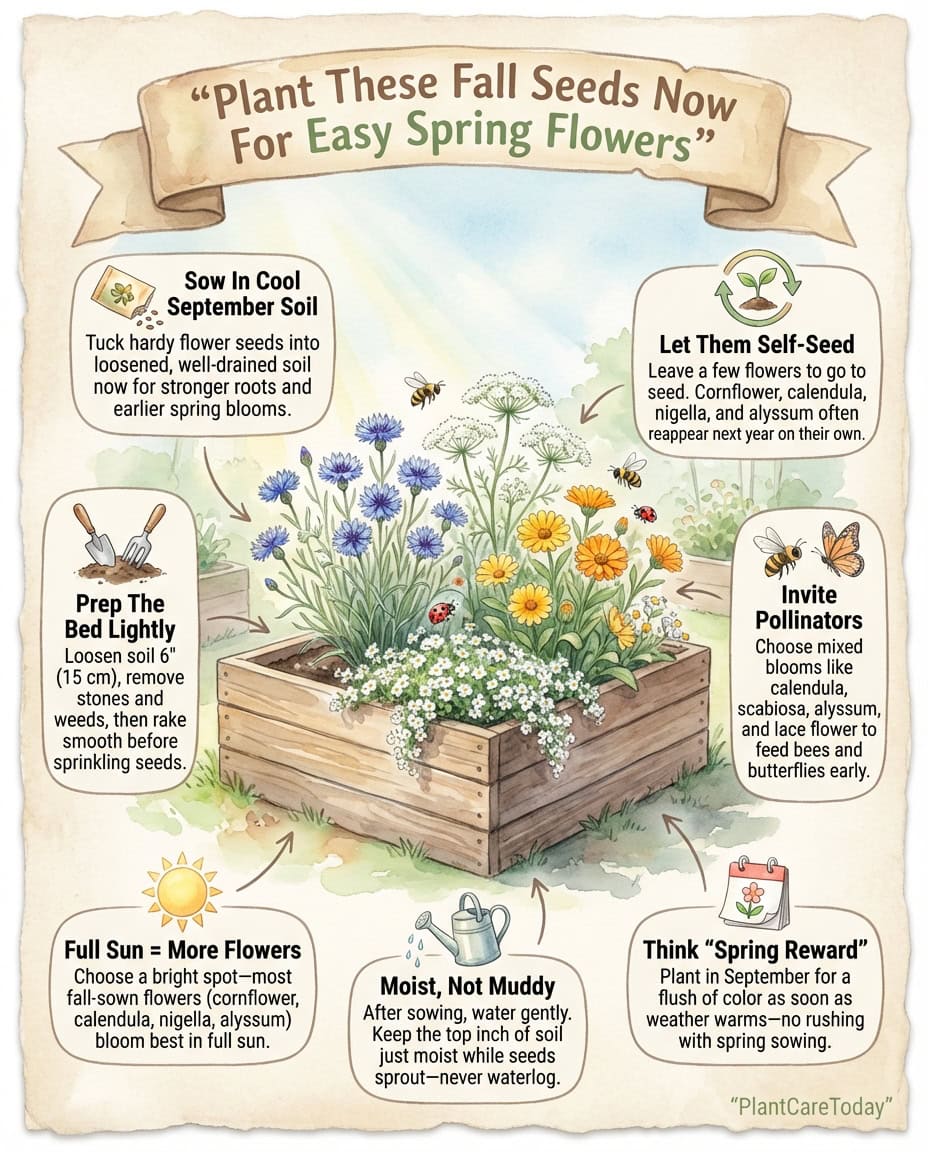
September is a great time to start planting flower seeds for next year’s garden.
Many flowers benefit from being planted in the fall. By sowing seeds now, gardeners can enjoy beautiful flowers earlier in the season.
Planting flower seeds in September can lead to stronger plants and more abundant blooms.
The cooler temperatures and increased rainfall provide ideal conditions for seed germination and root development.
In this article, we’ll look closely at nine types of flowers that particularly thrive when planted in September.

1) Cornflower – Centaurea cyanus
Cornflowers are easy-to-grow annuals that bring vibrant blue colors to gardens. They thrive in well-drained soil with a pH between 6.0 and 7.0.
Gardeners can sow cornflower seeds directly in the garden in September to enjoy spring blooms. These plants are perfectly suited for beginners due to their adaptability to a wide range of conditions.

Cornflowers have slender stems and narrow leaves. Their flowers feature blue petals surrounding a central cluster of smaller florets.
To prepare the soil, loosen it to a depth of at least 15 cm, remove any debris, and rake the area smooth before planting.
For earlier flowers, gardeners in zones 6-9 can try fall sowing of cornflower seeds. This gives the plants a head start for the coming spring.
2) Scabiosa – Pincushion Flowers
Scabiosa, also known as pincushion flowers, are charming blooms that enhance gardens with their texture and vibrant colors.
These flowers are available in a variety of shades, including blue, pink, purple, and white.
Gardeners can sow Scabiosa seeds indoors 6-8 weeks before the last frost, which ensures strong seedlings are ready when spring arrives.
For direct sowing, it’s best to wait until after the last frost date. Scabiosa seeds need light to germinate, so they should be pressed into the soil surface rather than buried.

Scabiosa prefers full sun and well-draining soil. They thrive in temperatures between 65°F and 70°F (18°C and 21°C) during germination.
Once established, these flowers are relatively low-maintenance. They attract pollinators like bees and butterflies, making them a great addition to any garden.
3) White Lace Flower – Orlaya Grandiflora
The White Lace Flower is a charming annual plant known for its delicate, pure-white flowers. It is easy to cultivate and brings an elegant flair to both gardens and bouquets.

It’s best to sow Orlaya grandiflora seeds in September to encourage early spring blooms. This gives the plants a head start. Plant the seeds indoors in pots about 6 weeks before the expected last spring frost.
The plants prefer full sun to partial shade and well-draining soil. They grow to about 2 feet tall and spread 12-18 inches wide.
White Lace Flower blooms from late spring through summer. Regular harvesting encourages more flowers to grow. Cut stems at ground level for best results.
This plant attracts pollinators and makes an excellent filler in flower arrangements. Its fern-like foliage adds texture to garden beds and borders.
4) Nigella – Love in a Mist
Nigella, also known as Love-in-a-Mist, is a charming annual flower that effortlessly adds a touch of whimsy to any garden.
It grows easily from seeds and boasts blooms in late spring, bringing life and color to your garden spaces.
The Nigella plant features delicate, lacy foliage and fluffy flowers in shades of blue, purple, pink, and white. Its unique seed pods also add interest to dried flower arrangements.

Nigella thrives in full sun and average, well-draining soil. Sow seeds directly in the garden as soon as the soil can be worked in spring. For a continuous display, plant seeds every 2-3 weeks.
This flower is perfect for filling gaps after spring bulbs finish blooming and is also a great choice for cut-flower gardens.
Nigella is low-maintenance and self-seeds readily, ensuring future blooms with minimal effort. Its versatility and ease of care make it an excellent choice for both novice and experienced gardeners.
5) Calendula – Pot Marigold
Calendula, also known as pot marigold, is a cheerful flower that’s easy to grow. It blooms from spring through fall in cool climates, taking a break during intense summer heat.

Planting calendula seeds in September can yield early blooms in spring. To do this, plant the seeds about 1/4 inch deep, either in pots or directly in your garden. They germinate best in temperatures between 70-75°F (21-24°C).
Calendula also thrives in sunny spots and well-draining soil. Beyond their beauty, these flowers are also practical. Their petals are edible and add a splash of color to salads.
These plants have the ability to self-sow, which means you might enjoy additional blooms the next spring without needing to replant. Calendula also attracts pollinators, enhancing the health and beauty of your garden.
6) Sweet Alyssum – Lobularia maritima
Sweet Alyssum is a low-growing annual that produces clusters of tiny, fragrant flowers. It’s easy to grow and makes a great addition to gardens, borders, and containers.

Sweet Alyssum seeds can be sown directly in the garden after the last frost. Gardeners can also start them indoors 6-8 weeks before the last frost date.
The plant prefers full sun but can tolerate partial shade. It grows best in well-draining soil and reaches a height of 3-8 inches with a spread of 10-12 inches.
Sweet Alyssum blooms quickly, usually within 50-60 days of planting. It produces abundant small white, pink, or purple flowers that attract pollinators to the garden.
Additionally, it’s deer-resistant and adapts to various climates, making it suitable for USDA Plant Hardiness Zones 5-9. Regular deadheading encourages continuous blooming throughout the growing season.
7) Crimson Clover – Trifolium incarnatum
Crimson clover is a stunning annual flower that grows quickly and easily. It’s known for its bright red blooms that appear in spring.

The plant adapts well to a variety of soil types and conditions, allowing gardeners to sow its seeds from late summer to early fall.
When fully mature, crimson clover stands 12 to 36 inches tall. It prefers cooler climates and requires well-drained soil to thrive.
As a cover crop, crimson clover fixes nitrogen in the soil, which makes it great for improving soil health in gardens and meadows.
The plant’s large seeds make it easy to establish, allowing gardeners to simply broadcast the seeds in untilled areas for good results.
8) Hellebore – Lenten Rose
Hellebores are perfect for adding color to shady gardens in late winter and early spring.
They are available in white, pink, purple, and green, and these hardy plants can spread naturally under the right conditions.

These hardy perennials are easy to grow from seed, making them a great choice for September sowing.
To successfully grow hellebores, remember that their seeds need a cold period to germinate. Plan to sow them in pots or in the garden in September.
When sowing, lightly press the seeds into the soil’s surface without covering them completely.
It’s crucial to keep the soil consistently moist and to have patience, as it can take several months for hellebore seeds to sprout. Expect the young plants to flower in their second or third year.
Hellebores also prefer partial shade or shade and well-drained soil. Remember to always wear gloves when handling Hellebores, as every part of the plant is toxic if consumed.
9) Asters
Asters are beautiful fall-blooming flowers that can be sown in September. These daisy-like blooms come in various colors, including purple, pink, and white.

Asters prefer full sun but can tolerate partial shade. They grow well in most soil types, as long as the soil is well-drained.
When planting aster seeds, lightly cover them with soil and keep the soil moist until germination occurs, typically within 1-3 weeks.
Asters attract butterflies and bees, making them a great addition to pollinator gardens. They also make excellent cut flowers for bouquets.
These hardy plants generally require low maintenance once established. Regular deadheading can help prolong their blooming period, which typically lasts from late summer through fall.
Soil Preparation and Fertilization
To prepare your garden effectively, start by removing weeds and debris. Remove any plants that have finished blooming.
Loosen the soil with a garden fork or tiller to a depth of 6-8 inches. Then add organic matter, such as compost or well-rotted manure. This improves soil structure and fertility.
Mix it thoroughly into the existing soil. For clay soils, add some sand to improve drainage.
Don’t forget to test your soil pH. Most flowers prefer slightly acidic to neutral soil (pH 6.0-7.0). Add lime to raise pH, or sulfur to lower it, as needed.

Apply a balanced, slow-release fertilizer. Look for one with equal parts nitrogen, phosphorus, and potassium (like 10-10-10). Work it into the top few inches of soil.
Ideal Locations and Sunlight Requirements
For optimal flowering, choose spots that receive at least 6 hours of direct sunlight daily. Some plants, such as poppies and lupines, prefer full sun.
Consider your garden’s microclimates. South-facing areas are warmer, while north-facing spots are cooler. Use this to your advantage when placing seeds.
Avoid areas with poor drainage or where water pools after rain. Raised beds can help if your soil drains slowly.
Plant tall flowers like sunflowers on the north side of your garden. This prevents them from shading shorter plants.
Think about winter protection. Areas near walls or fences can shelter delicate seedlings from harsh winds.
Tips for Successful Germination
Proper germination techniques are key to healthy flower growth. These tips focus on two crucial factors: water and temperature management.
Optimal Watering Practices
To ensure successful germination, consistent moisture is vital. Water the soil gently to avoid displacing seeds.
Don’t forget to keep the top layer damp but not waterlogged. A spray bottle works well for light, even watering.
Next, cover the seed trays with plastic wrap to maintain humidity, and remove it only once the seedlings emerge.
For outdoor sowing, water deeply before planting to prepare the soil and reduce the need for frequent watering afterward. Mulch around seeds to retain moisture and prevent soil from drying out.

Check soil moisture daily. Water when the surface feels dry to the touch. Avoid overwatering, which can lead to fungal issues and seed rot.
Temperature Considerations
Flower seeds generally germinate best in warm conditions, with the ideal soil temperature between 65-75°F (18-24°C). Always use a soil thermometer to check the temperature.
When starting seeds indoors, use a seedling heat mat to provide bottom heat. This accelerates germination and improves success rates. Be sure to remove the heat source once the seedlings have emerged.
For seeds sown outdoors, select a location that gets plenty of sun. Warmer soil temperatures lead to faster germination.
Some seeds, such as columbine, require a cold period before germinating. To achieve cold stratification, place these seeds in the refrigerator for a few weeks before sowing.
It’s important to shield newly sown seeds from extreme temperature changes. Use row covers or cloches to maintain stable conditions. However, on warm days, remove the covers to prevent overheating.
Long-Term Care for Spring and Summer Blooms
Caring for flower seeds sown in September requires ongoing attention. Regular maintenance and protecting plants from pests and diseases help ensure beautiful blooms in spring and summer.

Seasonal Maintenance
Water new seedlings regularly to keep the soil moist but not waterlogged.
As plants grow, adjust watering based on rainfall and temperature.
Fertilize flowers every 4-6 weeks during the growing season. Use a balanced, water-soluble fertilizer for best results.
Deadhead spent blooms to encourage more flowering. This also keeps plants looking tidy.
Mulch around plants in late fall to protect roots from winter cold. Remove mulch in early spring to allow soil to warm.
Stake tall flowers like snapdragons to prevent wind damage. Use bamboo stakes or metal supports.
Divide perennials every 3-4 years to maintain vigor and prevent overcrowding.
Pest Control and Disease Prevention
Inspect plants regularly for signs of pests or diseases. Common issues include aphids, slugs, and powdery mildew.
Use organic pest control methods when possible, such as Neem oil sprays, which can deter many insects.
Improve air circulation by spacing plants properly and pruning as needed. This helps prevent fungal diseases.

Remove any diseased plant material promptly to prevent spread, and dispose of infected parts in the trash, not compost.
Companion planting can help deter pests naturally. For example, marigolds repel many garden pests.
Apply fungicides preventatively in humid climates to protect against common plant diseases.
Frequently Asked Questions
Sowing flower seeds in September can lead to beautiful blooms in spring and summer. Proper timing and care are key to success when planting in the fall.
Is September a good time to plant seeds for spring and summer flowering?
September is an excellent time to plant many flower seeds.
Cool-season annuals such as cornflowers and calendulas perform well when sown in early fall. Some perennials also benefit from fall planting.
Hardy annuals like scabiosa can be sown directly outdoors in September.
This gives them time to establish roots before winter, leading to stronger plants and earlier blooms in spring.

Are there any special considerations when sowing flower seeds in the fall for spring growth?
When planting in the fall, choose a sheltered spot with well-draining soil.
Protect seedlings from harsh weather with cloches or cold frames if needed.
Water seeds gently and keep the soil moist but not waterlogged.
Mulch around plants to insulate roots from freezing temperatures.
How late in the fall can I sow flower seeds to ensure successful blooms in spring and summer?
The ideal planting time varies by flower type and your local climate.
In general, aim to sow seeds at least 6-8 weeks before the first frost date in your area.
Hardy annuals like nigella and calendula can often be planted as late as October in many regions.
For best results, check seed packets for specific timing recommendations.