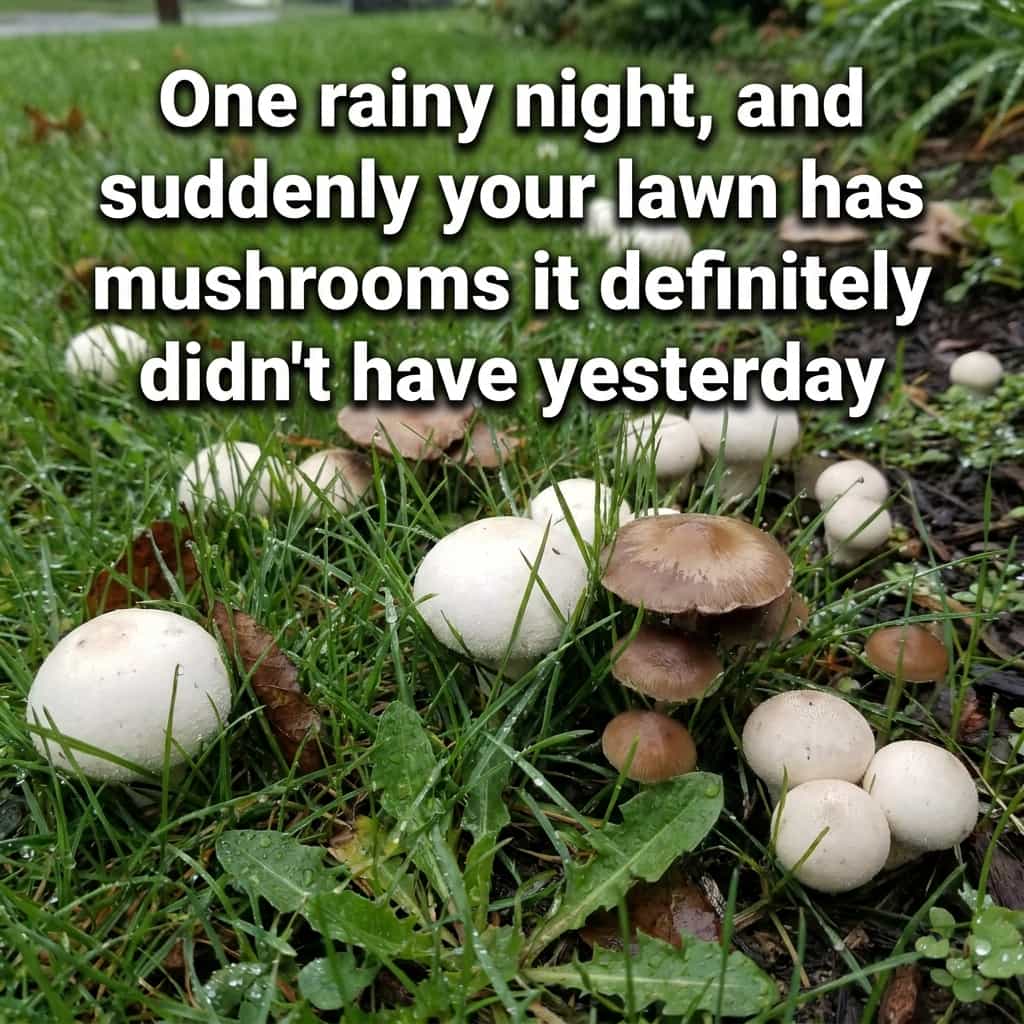
If mushrooms or puffballs have been popping up in your lawn or flower beds — seemingly overnight, usually right after a good rain — you’re not imagining it, and you haven’t done anything wrong. It’s one of the most common late-summer garden questions there is.
The good news is that what’s happening underground is harmless to your lawn in almost every case. The less good news, if you were hoping for a quick spray-on fix, is that there isn’t one — but there is a real, permanent fix if you’re willing to look at what’s under the mushrooms instead of just at the mushrooms.
Why Mushrooms and Puffballs Show Up
A mushroom or puffball is just the visible reproductive structure of a much larger fungal network living in the soil. That network has usually been there a while, quietly breaking down old tree roots, buried scrap wood, stumps, thatch, or mulch. Warm, wet weather triggers it to fruit all at once, which is why mushrooms seem to appear overnight after rain, and why they tend to reappear in the same spot year after year.
Are They Actually a Problem?
For nearly all lawn and garden mushrooms, no. They aren’t attacking your grass or plants — they’re decomposers, recycling nutrients back into the soil. One separate condition, fairy ring, can occasionally stress turf by making soil water-repellent in a ring pattern, but that’s its own distinct diagnosis, not what’s typically meant by scattered mushrooms or puffballs turning up after rain.
What Actually Gets Rid of Them
Since the mushrooms aren’t the real issue, spraying them doesn’t solve anything — fungicide included. University extension research is consistent: no home fungicide reliably eliminates lawn or garden mushrooms, because it only reaches what’s above ground while the fungal network doing the actual work stays protected below.
What works instead is mechanical and cultural: rake or mow off mushrooms as they appear, dig out buried wood or stumps where realistic, improve drainage and aeration in soggy spots, and thin excess mulch or thatch holding moisture. None of that eliminates decomposer fungi overnight, but it removes their food source — the only thing that stops them for good.
The Bottom Line
Mushrooms and puffballs in the lawn or a flower bed look alarming, but they’re almost always ordinary decomposition, not a problem that needs treating. Rake them off, address what’s feeding them where you can, and keep pets and small children away from anything you can’t positively identify.
Frequently Asked Questions
Will spraying a fungicide get rid of mushrooms in my lawn?
No. Extension research confirms no fungicide reliably eliminates lawn or garden mushrooms, since it only treats what’s visible above ground while the fungal network below stays untouched.
Are the mushrooms in my yard dangerous to pets or kids?
Possibly — it depends on the species, and many lawn mushrooms look alike even though only some are toxic. Remove any mushroom growing where pets or children play and keep both away from unidentified fungi as a standing precaution.
Why do mushrooms keep coming back in the same exact spot?
Because the underground fungal network hasn’t gone anywhere — it’s still decomposing whatever buried organic matter triggered it in the first place.
[B7RFQ]