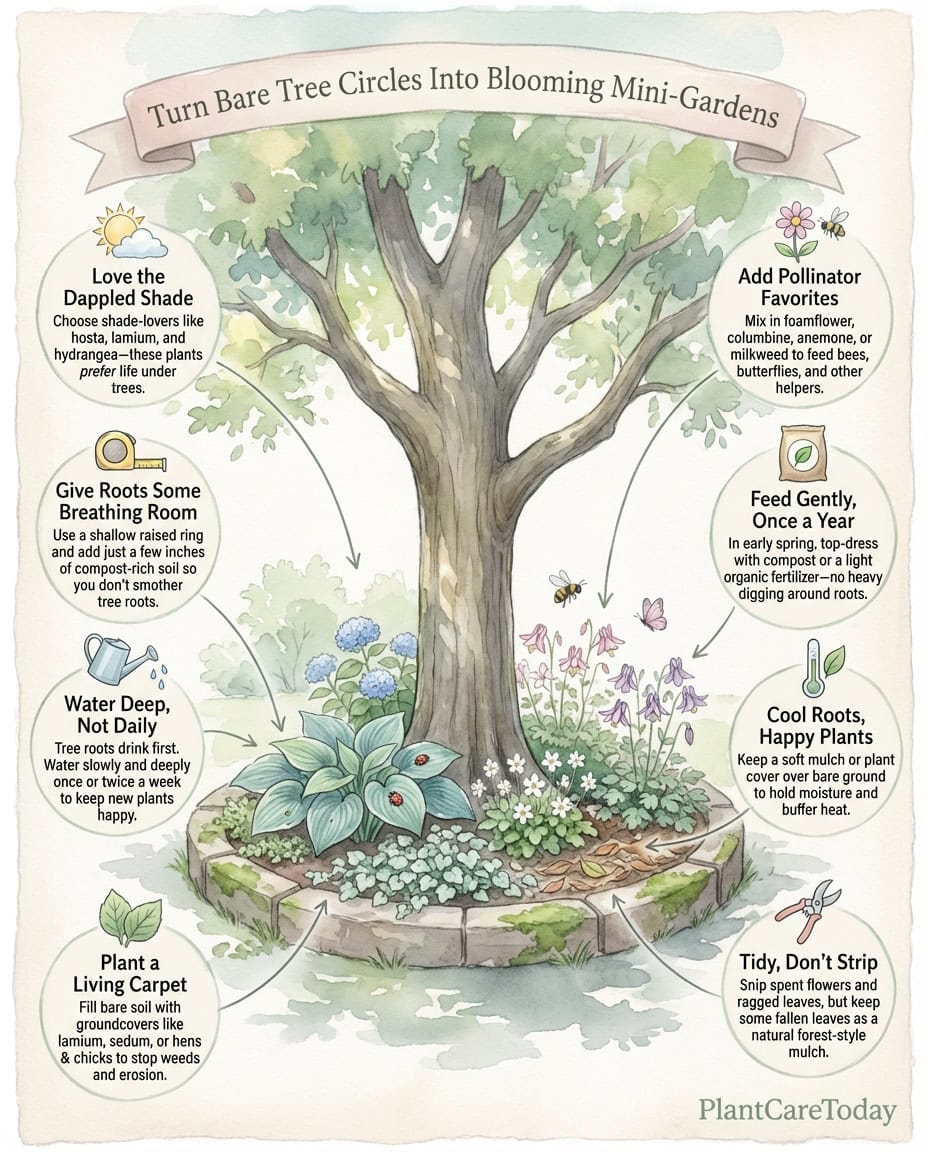
That barren dirt circle under your tree doesn’t have to stay a sad, empty wasteland! Forget what you’ve heard about nothing growing under trees.
The secret most plant experts won’t tell you is that the right plants don’t just survive there.
They absolutely thrive and flourish in those conditions, transforming that neglected space into your garden’s stunning focal point.
Why Planting Under Trees Is Pure Garden Genius
Tree bases naturally collect moisture, provide shelter from harsh elements, and create that elusive dappled light that certain plants crave like we crave coffee on Monday mornings.
Did you know that plants growing under trees can reduce soil erosion by up to 45%? That’s not just pretty; it’s smart gardening!
The game-changer for your tree bases isn’t what you think. It’s not about fighting nature but working with it.
Trees and understory plants have evolved together for millions of years. Your garden is simply recreating what forests do naturally!
Ground Covers That Create Living Carpets
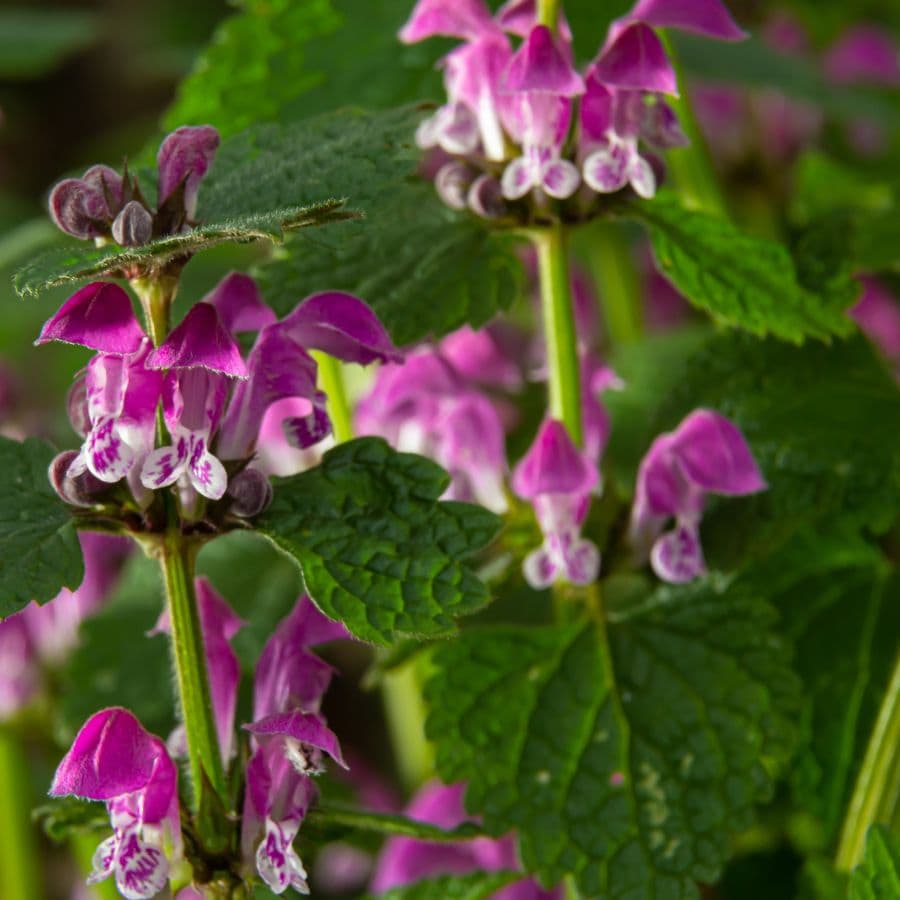
Lamium is like the Swiss Army knife of ground covers. It conquers deep shade where other plants wave the white flag of surrender.
Its silver-splashed leaves light up dark corners, and those delicate pink, purple, or white flowers?
Pure bonus! It spreads faster than gossip in a small town, quickly covering bare spots.
Hostas are the undisputed shade champions with over 3,000 varieties. (Yes, you read that right. 3,000!)
From tiny ‘Blue Mouse Ears’ to massive ‘Empress Wu’ that can reach 4 feet tall, there’s a hosta for every spot.
Their lush foliage unfurls like a living sculpture, and some even surprise you with fragrant summer flowers.
Foam Flowers create a frothy carpet of delicate blooms that hover above attractive foliage like tiny clouds. Pollinators go absolutely crazy for them, turning your tree base into buzzing biodiversity central.
Sedum is for the “I always kill everything” gardener. These succulents laugh at drought and poor soil, creating a living mulch that’s practically indestructible. If zombies had houseplants, they’d grow sedum.
Flowering Stunners That Defy The Shade
Columbine brings the drama with its uniquely spurred flowers that look like tiny hovering hummingbirds.
They self-seed so enthusiastically, you’ll wonder if they’re planning a garden takeover. (Let them. It’s worth it!)
Tree Peonies are the divas of the shade garden. Their dinner-plate-sized blooms will make your neighbors’ sun-loving flowers look positively inadequate.
These long-lived shrubs produce flowers that last three times longer than regular peonies, giving you weeks of spectacular color.
Primroses are like nature’s alarm clock, often blooming while snow still dusts the ground.
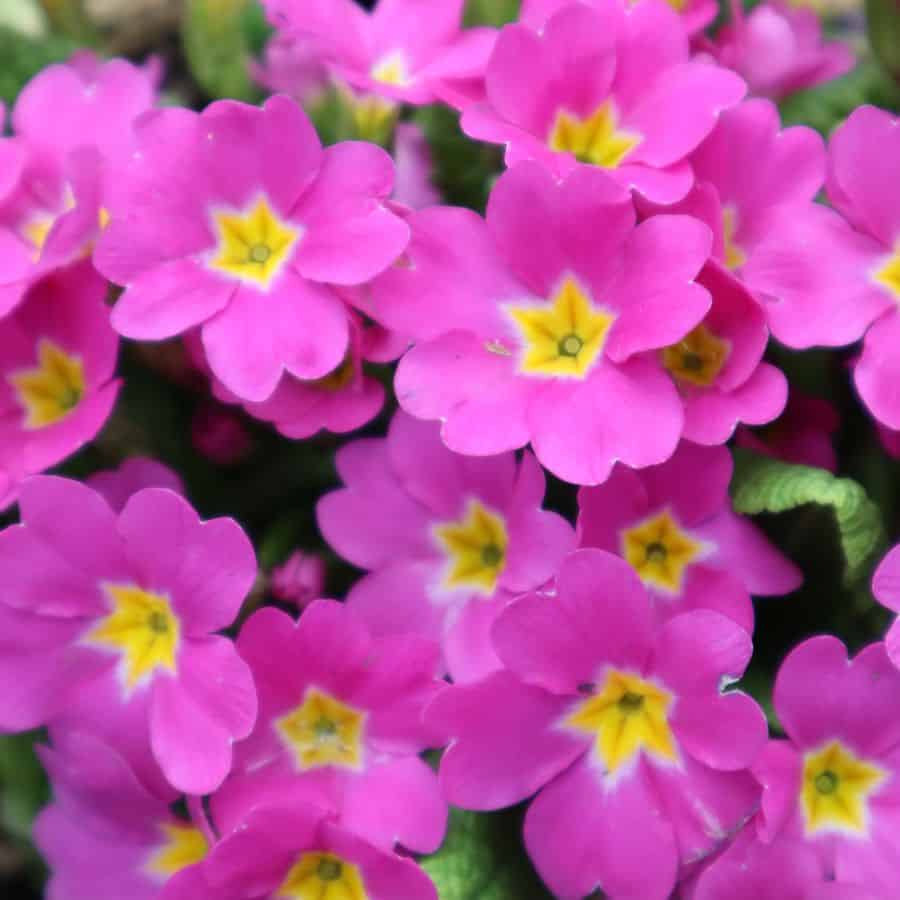
Their cheerful colors announce “spring is coming!” before anything else dares to bloom. Plant them where winter feels longest. They’ll give you hope in February.
Anemones dance on tall, slender stems that move with the slightest breeze. I was shocked to discover that these delicate-looking flowers are actually tough-as-nails perennials that bloom when most other plants are calling it quits for the season.
Shrubs That Create Year-Round Structure
Snowberry might be the most underrated shrub in the garden world. Those pearl-like white berries persist well into winter, creating a magical snow globe effect beneath your trees.
Birds treat them like nature’s buffet, bringing life to your garden even in the coldest months.
Ninebark’s exfoliating bark creates winter interest like tree-bark art installations. Choose varieties with purple or copper foliage, and you’ve got three-season color without lifting a finger. It’s like getting multiple plants for the effort of growing just one.
Azaleas and Rhododendrons transform shaded areas into springtime riots of color. These acid-loving shrubs put on a show so vibrant it’s almost aggressive.
Their one demand? Don’t plant them in alkaline soil unless you enjoy watching plants throw spectacular temper tantrums.
Hydrangeas are the chameleons of the plant world. The same variety can produce blue, purple, or pink flowers depending on your soil pH.
Most varieties thrive in dappled shade, producing flowers so large you’ll wonder if they’re showing off. (They are.)
Unexpected Shade Superstars
Oregon Grape Holly isn’t a holly or a grape, but this evergreen shrub does produce edible blue berries after its brilliant yellow spring flowers fade.
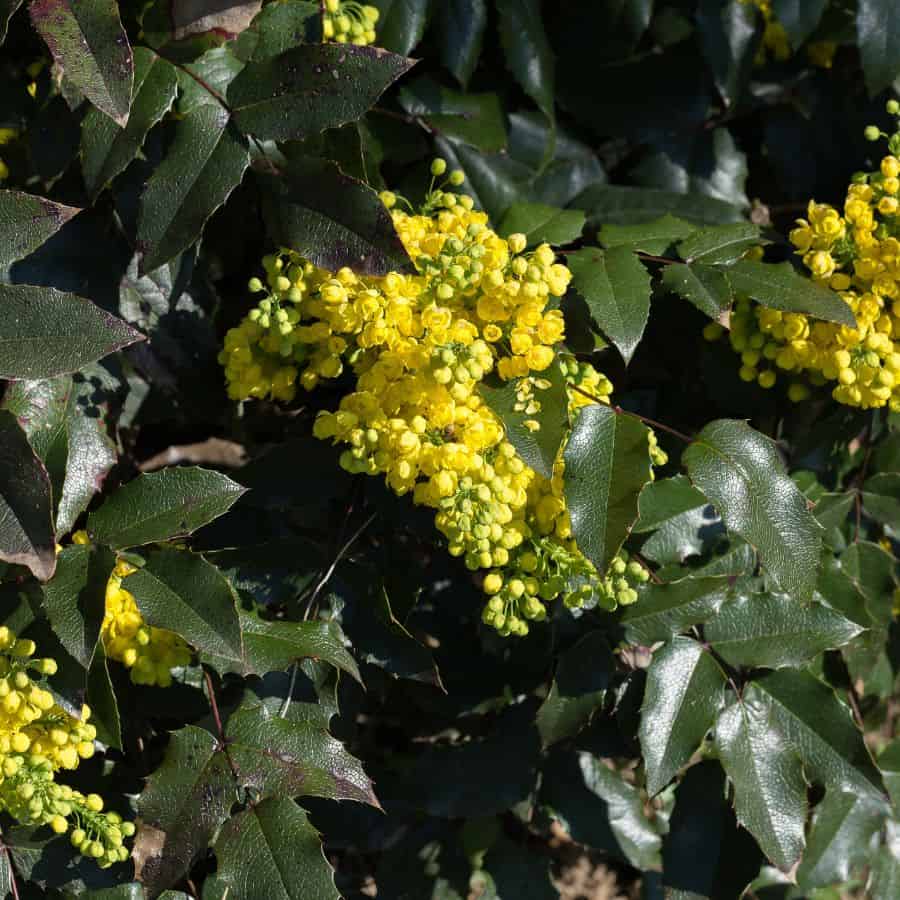
Its architectural form stands proud through winter, giving structure when other plants have gone dormant.
Milkweed isn’t just a plant. It’s a Monarch butterfly maternity ward! Most people make this mistake with their butterfly gardens: planting them only in full sun.
Many milkweed varieties actually prefer partial shade, making tree bases the perfect habitat for these pollinator magnets.
Hens and Chicks prove that succulents aren’t just for sun-baked rock gardens. These rosette-forming plants create living mosaics in dappled shade, multiplying faster than rabbits (hence the name). They’re the perfect “plant it and forget it” option for busy gardeners.
Seasonal Color Explosions
Impatiens are the workhorses of shade gardens, blooming nonstop from spring until frost. The difference between amateur and pro plant parents is simply knowing which annuals will perform in shade, and impatiens tops that list.
Coleus doesn’t need flowers to steal the show. Its psychedelic foliage patterns come in combinations so wild they look digitally enhanced. New varieties are so sun-tolerant that they bridge the gap between deep shade and dappled light with ease.
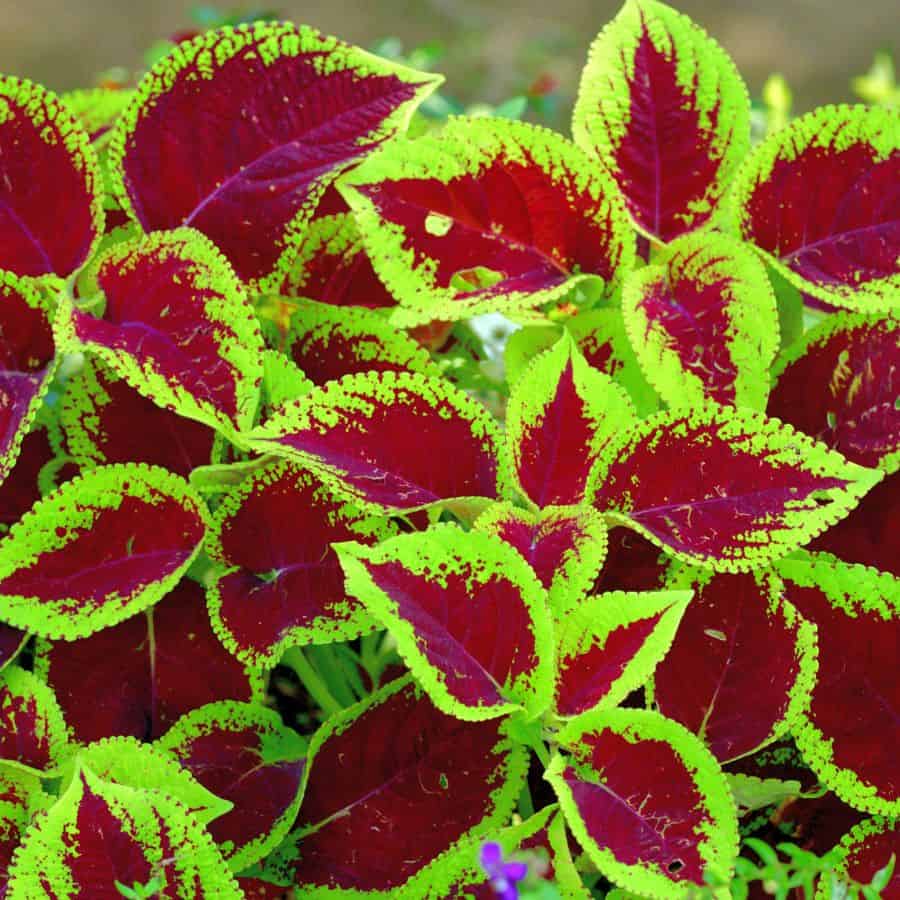
Begonias transform from ordinary to extraordinary in the shade. Their stained-glass leaves and non-stop flowers perform like Broadway stars while other plants wilt in summer’s heat. Your tree base isn’t a challenge. It’s their ideal stage!
Your trees are trying to tell you something important: they don’t want to stand alone! They evolved in forests surrounded by companion plants.
By adding these spectacular understory plants, you’re not just beautifying your yard; you’re creating a balanced ecosystem that benefits everything from soil microbes to butterflies to your property value.
Remember: that challenging spot beneath your trees isn’t a gardening problem. It’s your garden’s most exciting opportunity!