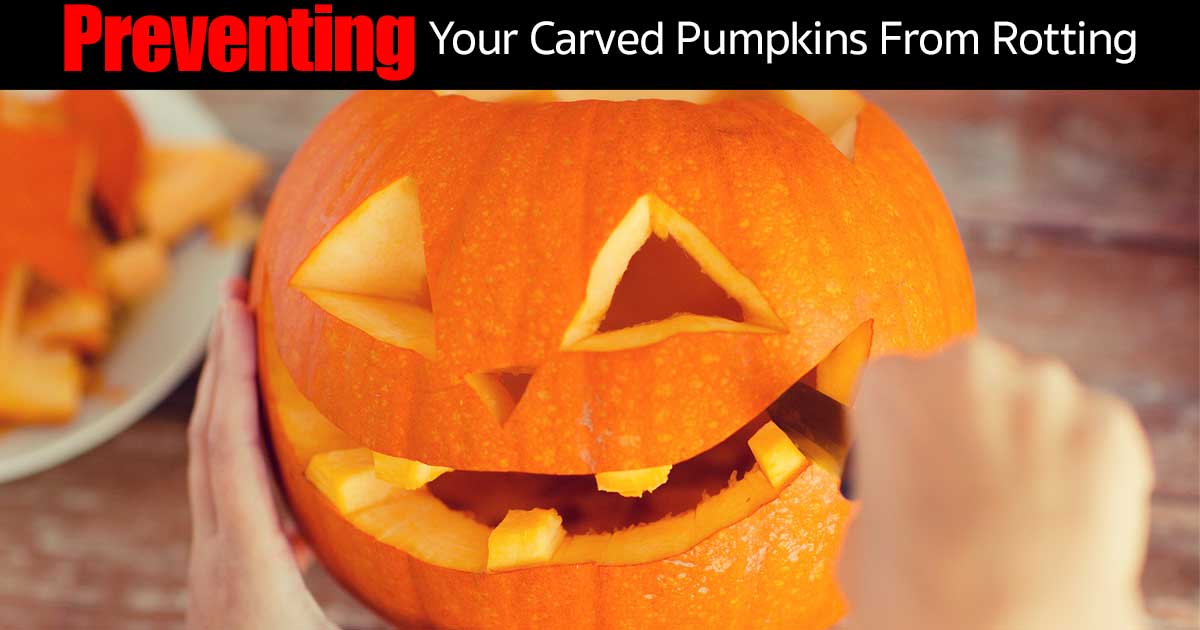
You carved it, it looks fantastic, and now the clock is ticking. Utah State University Extension says a carved pumpkin often starts to wither and rot just a few days later, and eventually mold takes over.
Here’s the honest part: the goal is to slow the rot down. Cutting into a pumpkin exposes the inside, and Utah State says that makes it more susceptible to infection through air flow.
Mold spores travel through the air, and they can cause carved pumpkins to shrivel, soften and grow fuzzy, grey mold. The good news is that a handful of small steps really do help.
NC State Extension says that with its full routine, most of which is in this guide, a carved pumpkin should last between 8 and 11 days.
Here are seven ways to give yours the best shot.
1. Carve As Late As You Can
The cheapest preservative there is is timing. NC State’s advice is short: do not carve too soon. Even with every step in this guide, it’s routine to carve a pumpkin about 8 to 11 days, so count backward from the day you want it on display, not forward from the day you bought it.
If you garden in Florida, UF/IFAS horticulturist Danielle Treadwell says you can put out a pumpkin you’re not carving a few days before Halloween, as long as the weather is dry and warm and the spot is out of direct sun. If you are carving it, you can put it out on Halloween.
2. Start With a Clean, Healthy Pumpkin
Pick one with a strong stem and no signs of mold, as UF/IFAS advises. Mississippi State University Extension adds that you should skip pumpkins with bruises or signs of rotting, and NC State says pumpkins with soft spots rot much quicker. Handle it as little and as gently as you can.
Before you cut, wash off any soil and make sure the pumpkin is completely dry. NC State advises washing the pumpkin in the same 10 percent bleach solution described below and letting it dry completely before carving. Utah State also says to sterilize spoons, knives, and other carving tools before you use them, especially between pumpkins.
Then scoop out every bit of the insides. Utah State says removing all of it reduces the surface area where potential fungi can grow, and NC State says to dry the inside afterward. NC State also suggests cutting a hole in the back, as small as is necessary, instead of the top.
3. Give the Finished Carving a Bleach Bath
This is the treatment Utah State, South Dakota State University Extension and NC State all agree on: dip, wash, or spray the finished carving with a 10 percent bleach solution, which Utah State says will kill any microorganisms on your pumpkin. NC State spells out what 10 percent means: 1 part chlorine bleach to 9 parts water.
Make sure every cut surface gets wet. NC State’s full routine submerges the finished carving in the solution for 24 hours, dries it completely, and then sprays it with the same solution every day. Utah State and South Dakota State don’t give a soak time. South Dakota State also lists other disinfectants, such as soaps, as an option if you’d rather skip bleach.
Bleach Safety
Bleach is a strong chemical, so read the label on the one you buy. The Washington State Department of Health says not to mix bleach with ammonia, acids or other cleaners. Mixing it with ammonia or acids (vinegar is one) gives off toxic gases, and it also reacts with some oven cleaners, hydrogen peroxide and some insecticides.
Hydrogen peroxide comes up as a bleach alternative, but none of the extension guides above recommend it, and bleach reacts with it, so keep the two apart.
Don’t eat or compost a pumpkin you’ve treated with bleach, sprays or oils, and keep it where pets and wildlife can’t chew on it.
4. Seal the Cut Edges
Once the pumpkin is completely dry, rub petroleum jelly on the cut areas. Utah State says it helps lock in the moisture and slow the drying process, and Mississippi State says it also creates a barrier to bacteria. Coat every exposed surface, including the inside and the cut-out pieces. NC State says vegetable oil works for sealing the cuts too.
5. Light It Without a Flame
Skip the real candle. Utah State, South Dakota State and NC State all say to use an electric light or glow stick instead, because a candle’s heat cooks the pumpkin from the inside and speeds up spoilage.
It’s a safety call too. NC State warns that petroleum jelly and vegetable oil are flammable and says not to use a real candle, and the National Fire Protection Association says it is safest to use a flashlight or battery-operated candles in a jack-o-lantern.
6. Keep It Cool, Shaded and Out of the Wet
South Dakota State recommends a temperature range of 50 to 60 degrees Fahrenheit for a carved pumpkin. Warmer temperatures speed up the microbes behind decay, while freezing temperatures below 32 degrees damage the pumpkin’s tissue; once thawed, frozen tissue decays quickly.
So park it in a protected spot away from direct sun, rain and frost, as NC State recommends, and avoid wet areas, per Mississippi State. For a decorative pumpkin you haven’t carved, UF/IFAS says to keep it cool and dry, out of direct sunlight, preferably in the house, in the air-conditioning.
7. Paint Instead of Carving
The surest way to avoid a rotting carving is not to cut one. NC State says a pumpkin decorated with paint or markers will last much longer, and Mississippi State says painting keeps a pumpkin fresh longer because there are no cuts in the surface.
As a bonus, a University of Georgia article suggests nontoxic paint or marker pens for the jack-o’-lantern face, so you can still harvest the pumpkin after the holiday.
Uncarved pumpkins last longer than carved ones, as Mississippi State notes. Reid Nevins, a Mississippi State extension agent and longtime pumpkin grower, wipes pumpkins down with 1 part bleach to 10 parts water to kill bacteria before setting them outside. NC State says a pumpkin that’s properly cured and stored can last up to 3 months, so ask your grower whether theirs were cured.
Sharing the porch with ornamental gourds? They need their own care, and our guide to how ornamental and hard-shell gourds are cured covers it.
What About Hairspray, WD-40 and Other Tricks?
You’ll find hairspray, acrylic finish spray, WD-40, rubbing alcohol, floor cleaner and store-bought pumpkin preservatives all over the internet. The extension guides from Utah State, South Dakota State and NC State don’t list any of them, so there’s no university-backed recipe to pass along.
What you should know is that some of them carry fire warnings. WD-40’s safety data sheet labels its aerosol as extremely flammable and says not to spray it on an open flame or other ignition source, and Poison Control says never to use hairspray near an open flame, hot surface or other source of ignition. That’s one more reason to light your pumpkin with a battery light or glow stick.
Final Thoughts
You can’t make a carved pumpkin last forever, but you can buy yourself days. Carve late, start clean, give it a bleach bath, seal the cuts, light it without a flame, and keep it cool and out of the sun. Or paint it and skip the rot altogether. Which one are you trying this year?
Frequently Asked Questions
How long does a carved pumpkin last?
Often just a few days before it starts to wither and rot, according to Utah State University Extension. NC State Extension says its full routine (a 10 percent bleach soak, sealed cuts, a protected spot, a glow stick or electric candle, and a daily bleach spray) should get you 8 to 11 days. So carve as close to display day as you can.
What is the best way to keep a carved pumpkin from rotting?
Start with a clean pumpkin and scoop out every bit of the insides. Then dip, wash or spray the finished carving with a 10 percent bleach solution, which NC State defines as 1 part bleach to 9 parts water. Rub petroleum jelly on the cut areas to lock in moisture, and keep the pumpkin out of direct sun, rain and frost.
Are hairspray and WD-40 good ways to preserve a carved pumpkin?
The extension guides from Utah State, South Dakota State and NC State don’t recommend either one. Both come with fire warnings: WD-40’s safety data sheet calls its aerosol extremely flammable, and Poison Control says never to use hairspray near an open flame, hot surface or other ignition source. Extension guides point to petroleum jelly on the cut edges instead.
Can I put a real candle in a pumpkin sealed with petroleum jelly?
NC State Extension warns that petroleum jelly and vegetable oil are flammable and says not to use a real candle. Utah State, South Dakota State and NC State all suggest an electric light or glow stick, which also keeps the pumpkin from cooking and spoiling faster. The National Fire Protection Association calls a flashlight or battery-operated candle the safest choice.
Will a painted pumpkin last longer than a carved one?
Yes. NC State Extension says a pumpkin decorated with paint or markers will last much longer, and Mississippi State Extension says painting keeps a pumpkin fresh longer because there are no cuts in the surface. A University of Georgia article adds that with nontoxic paint or marker pens you can still harvest the pumpkin after the holiday.