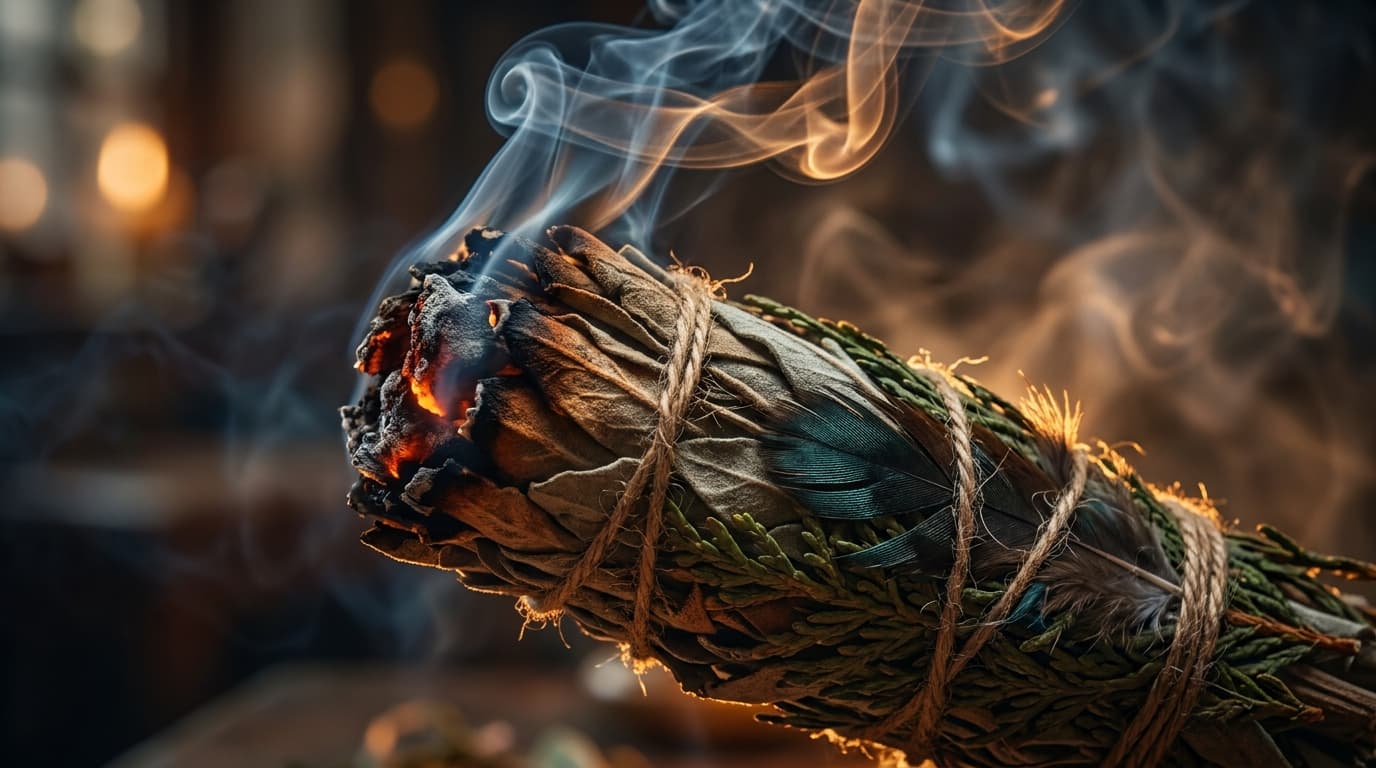
No. Not the way the internet tells it. The famous 94% number came from a 2007 study that burned a Hindu ritual blend called havan sámagri over mango wood. Sage was never in the mix. We shared that claim with a sage bundle in this AI picture, and that was our mistake. Here is the straight story, including why smoke in a closed room deserves more respect than it gets, especially around kids.
Where Did the 94% Number Come From?
Scientists in Lucknow, India, published the study in the Journal of Ethnopharmacology in December 2007. They burned about a kilogram of mango wood in a closed room. Bacteria counts did not budge. Then they added half a kilogram of havan sámagri, a fragrant blend of roots and herbs used in fire rituals. Within an hour, airborne bacteria dropped by about 94%, and counts stayed low for the next day.
Twelve years later, websites retold the study as a sage story. Fact-checkers at Science Feedback traced it back and found the obvious problem. The blend has no sage in it. They also flagged a weak spot in the design: the room was compared against a single mango-wood sample, so it is hard to say how much of the drop came from the herbs themselves.
What Is Actually Inside a Sage Leaf?
This part of the story is real. Sage leaves are loaded with volatile oils. Researchers at Sandia National Laboratories steam-distilled white sage and found its oil was 71.6% 1,8-cineole, the same sharp compound in eucalyptus and rosemary. Garden sage carries camphor, cineole and thujone.
In lab dishes, 1,8-cineole slips into a bacterium’s outer membrane and makes it leaky. The cell spills its insides and dies. Plants did not make these oils for us. They make them to fend off microbes and chewing insects, which is why crushed thyme and rosemary smell so strong.
But a measured dose of pure oil in a dish is a long way from a smoldering bundle in a living room. No high-quality study has shown that sage smoke cleans household air.
Smoke Is Still Smoke
Here is what does have good data. The National Research Council Canada tested smudging materials, including white sage and black sage, for Canada’s prison service. They burned one teaspoon, about half a gram, on a hot plate in a room the size of a small bedroom.
Fine particles, the tiny PM2.5 kind that reach deep into the lungs, stayed above 80 micrograms per cubic meter for the first 20 minutes. That figure is an hourly outdoor guideline. Canada’s 24-hour standard is 28. The smoke also carried formaldehyde, carbon monoxide and other irritants. Those gases stayed under workplace limits in the test math, but the researchers concluded that the particles posed a real risk and recommended smudging outdoors or in well-ventilated spaces.
Kids, Asthma and Indoor Smoke
Children’s lungs are still growing. The American Academy of Pediatrics notes that kids spend 80 to 90% of their time indoors, and says removing the source of pollution works better than trying to clean the air afterward.
There is no sage-and-children study. The closest is a Taiwanese study of 3,764 seventh graders, published in the European Respiratory Journal. More frequent incense burning at home was tied to wheezing during exercise, and the link with current asthma was borderline. The risk ran highest in children who lacked a gene that helps the body handle toxic chemicals. That was incense, not sage, but it is plant smoke in a closed room.
If sage burning is part of a household’s practice, a few simple habits keep it gentler:
- Keep babies, toddlers and any child with asthma out of the room until the smoke has cleared.
- Burn outdoors when possible. Indoors, open a window and use a small amount for a short time.
- Keep lit bundles, embers and ash out of a child’s reach, and never leave smoldering sage alone.
- Do not count on smoke to disinfect. Fresh air, cleaning and handwashing do that job.
- Call a pediatrician if a child coughs or wheezes after smoke exposure.
Respect the Plant, Too
White sage grows wild only in Southern California and Baja California, and Indigenous peoples there have used it in ceremony for generations. Demand has driven poaching, and United Plant Savers lists it as an at-risk plant. Buy cultivated bundles, or skip the bundle and grow something fragrant instead.
Garden sage, rosemary and thyme all hold those same sharp oils, and all of them grow happily on a sunny windowsill. Brush a leaf and the scent fills the room. The old healers had good noses. They just did not have the full chemistry. Now we do, and it says: enjoy the plant, open the window, and save the smoke for the backyard.
Frequently Asked Questions
Does burning sage kill bacteria in the air?
There is no good evidence that it does in a real home. Sage oils such as 1,8-cineole can damage bacteria in lab tests, but no high-quality study has tested whether sage smoke kills bacteria. The often-shared 94% result came from a different herb blend.
Where does the 94% bacteria claim come from?
It comes from a 2007 Indian study that burned mango wood plus havan sámagri, a ritual blend of roots and herbs, in a closed room. Bacteria fell about 94% in an hour. The blend contained no sage, so the result does not apply to sage bundles.
Is burning sage safe around children?
It is best to keep babies, toddlers and children with asthma out of the room until any smoke clears. Plant smoke adds fine particles to indoor air, and young lungs are more sensitive. Burning outdoors, or with a window open and a small amount, lowers exposure. Keep embers out of reach.
Can sage smoke trigger asthma?
It can for some people. Any plant smoke releases fine particles and irritants, and smoke is a known asthma trigger. A study of Taiwanese seventh graders linked frequent home incense burning to exercise wheeze. People with asthma or heart or lung conditions are wise to avoid smudging smoke indoors.
What is a better way to freshen indoor air?
Open windows, run kitchen and bath fans, and remove the source of odors or smoke. A portable HEPA air cleaner can help as an extra step. For a natural scent with no smoke, grow aromatic herbs like rosemary, sage and thyme and brush the leaves now and then.