Does Epsom salt stop tomato blossom end rot? It’s one of the most repeated tomato tips out there, so let’s get straight to the answer.
No. Epsom salt won’t prevent blossom end rot. Worse, adding too much magnesium to your soil can keep calcium from getting into your plants, which makes blossom end rot even worse.
Epsom salt has a long reputation in the garden, and it is touted as a common garden cure-all. Gardeners sprinkle it around tomatoes or drop a spoonful into the planting hole, hoping for healthier plants. Here’s what it really does, what actually causes blossom end rot, and what helps.
What Is Blossom End Rot?
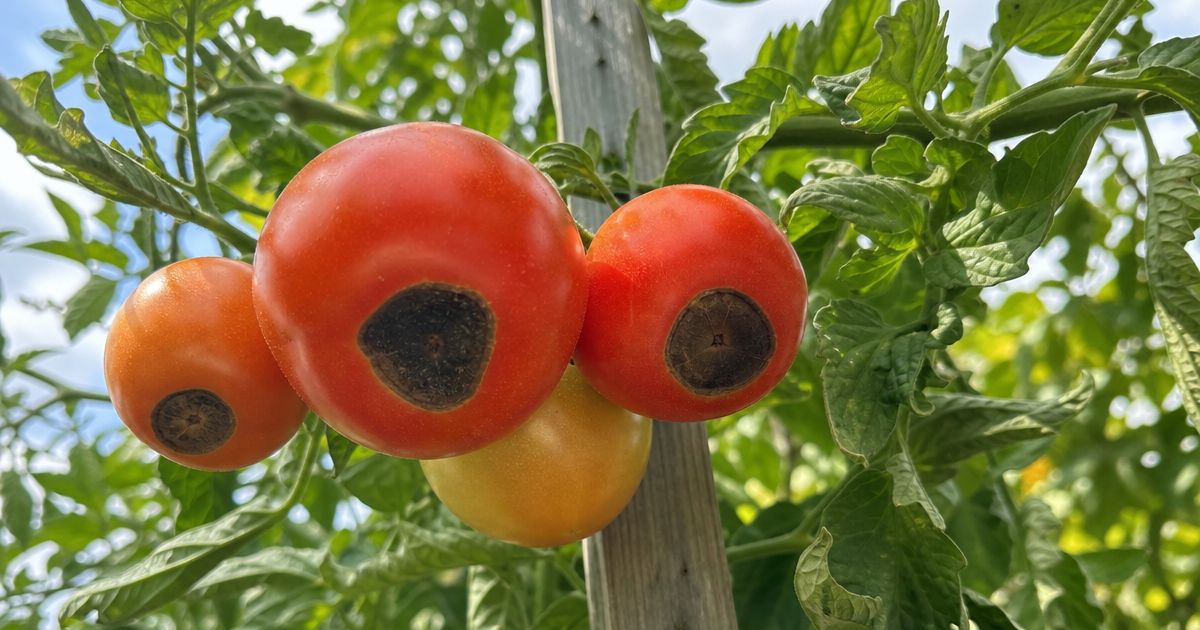
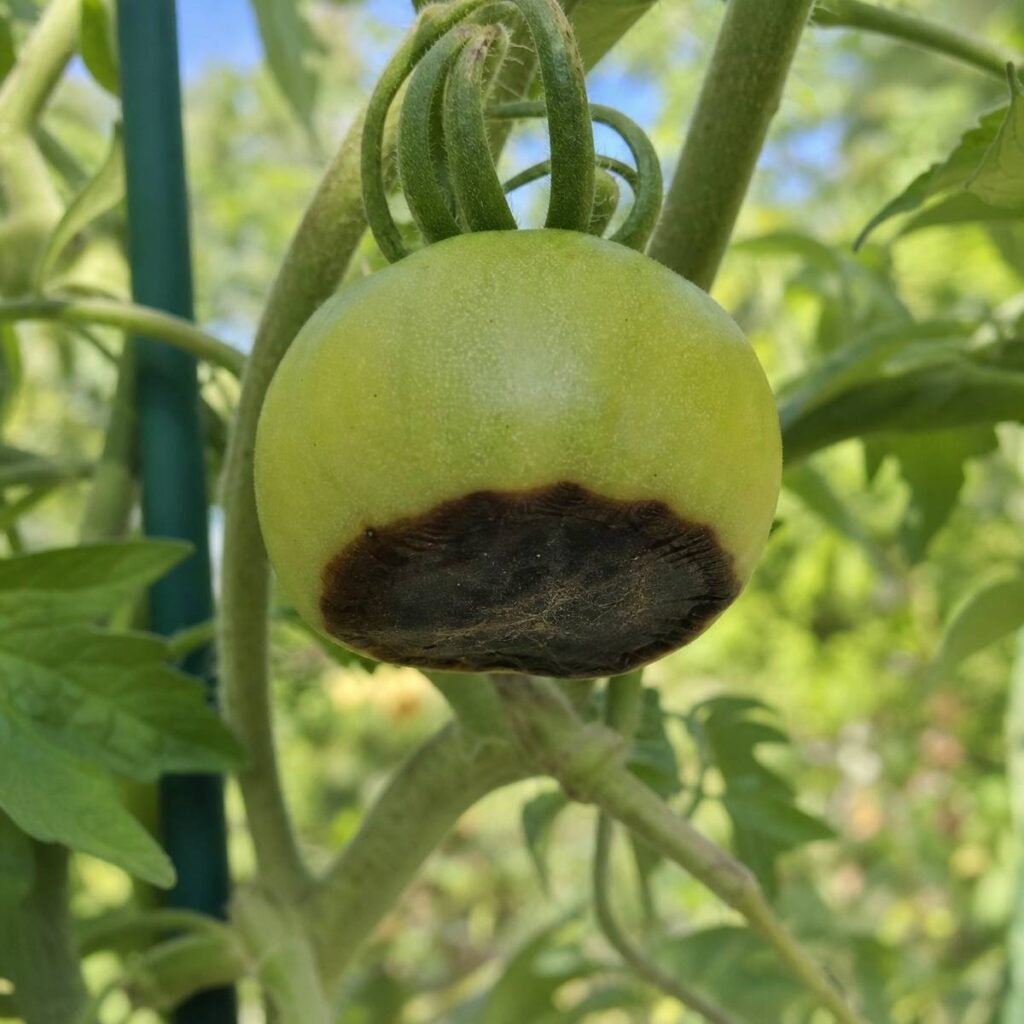
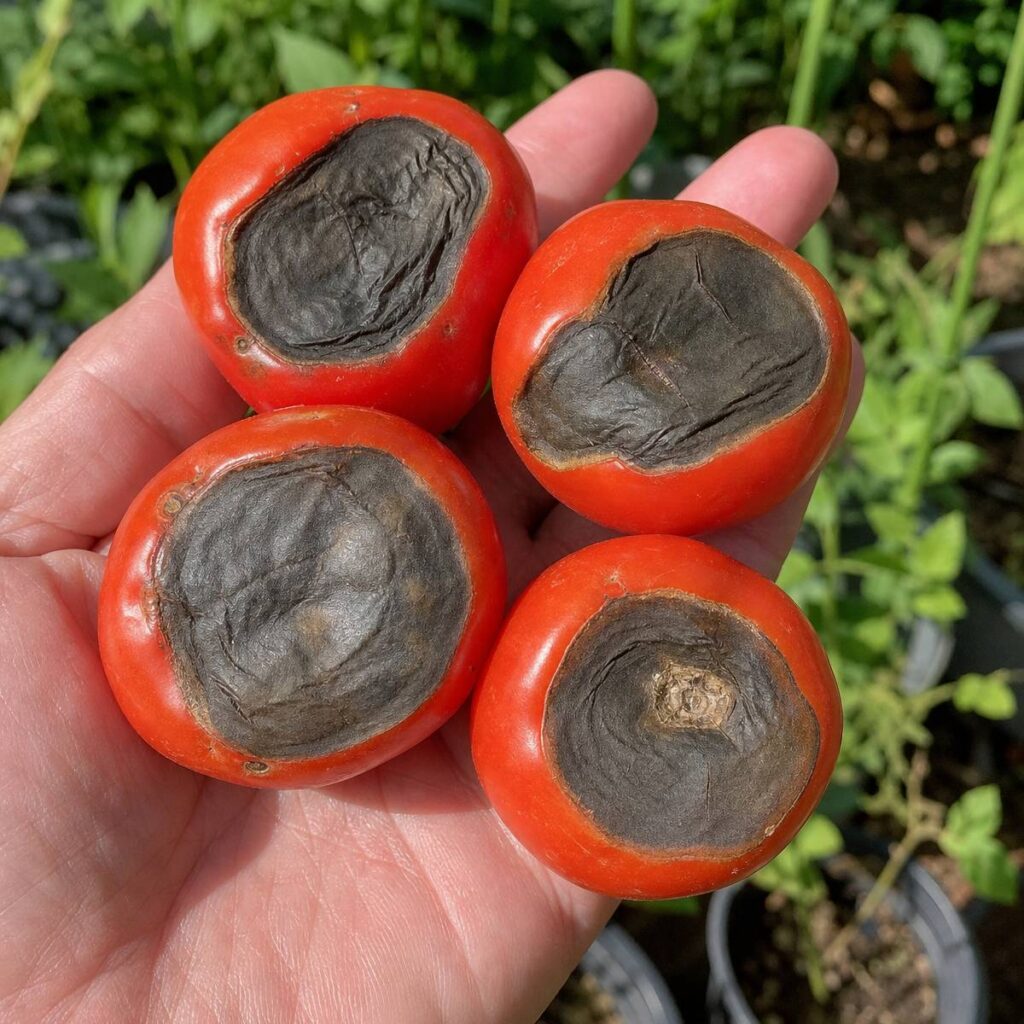
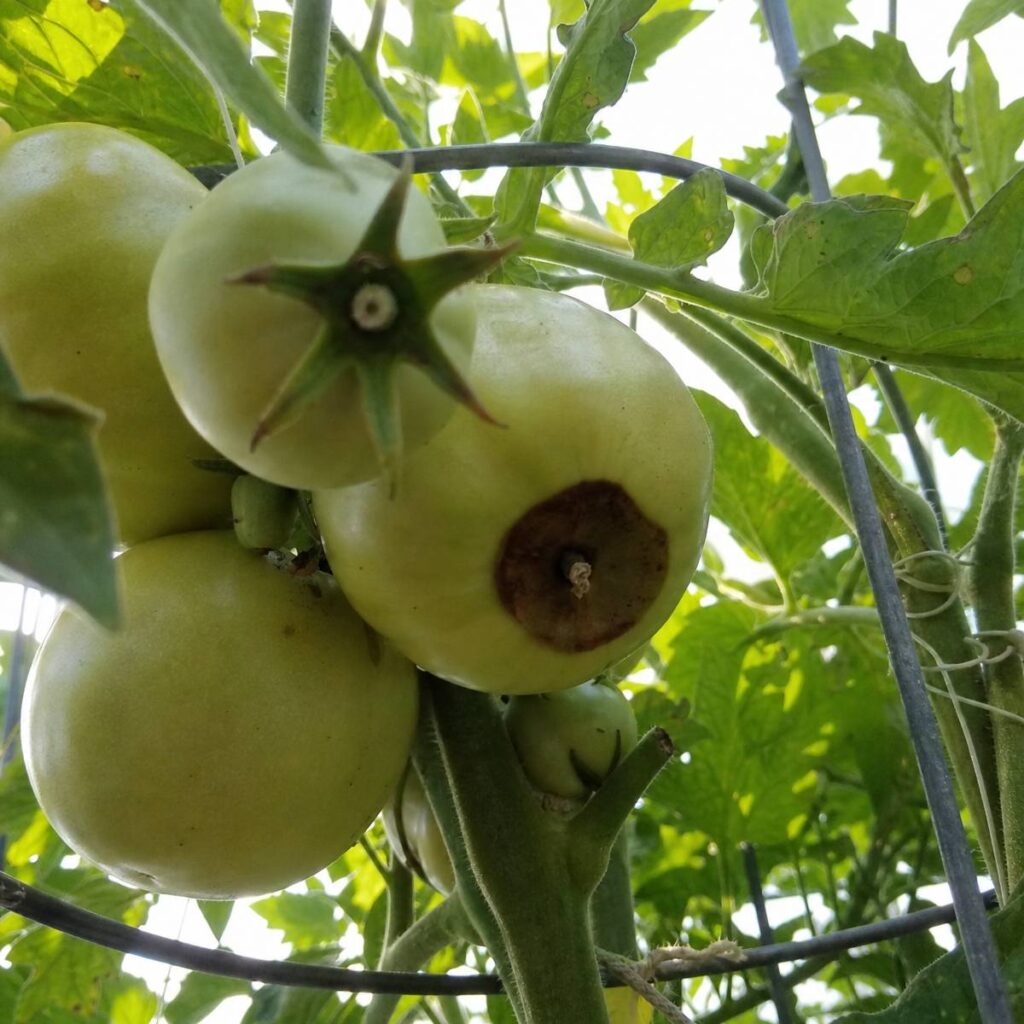
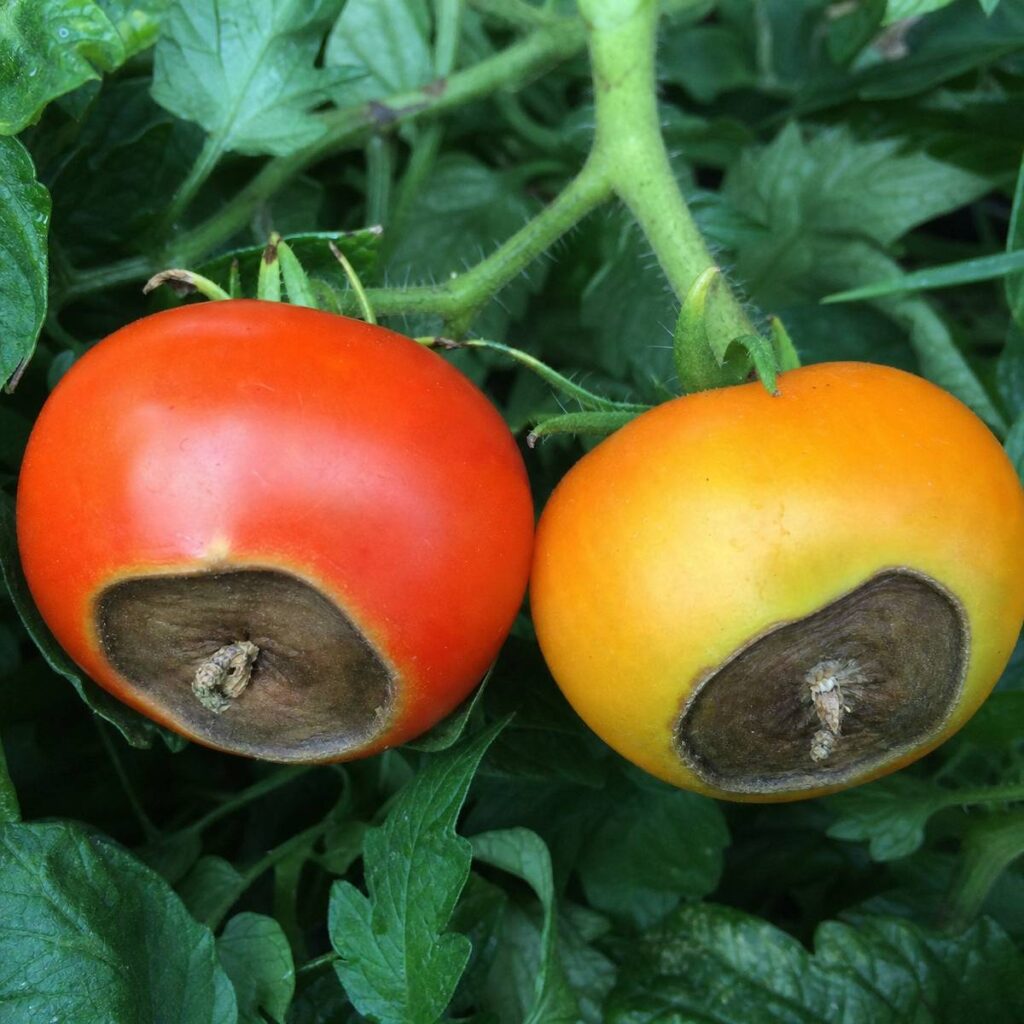
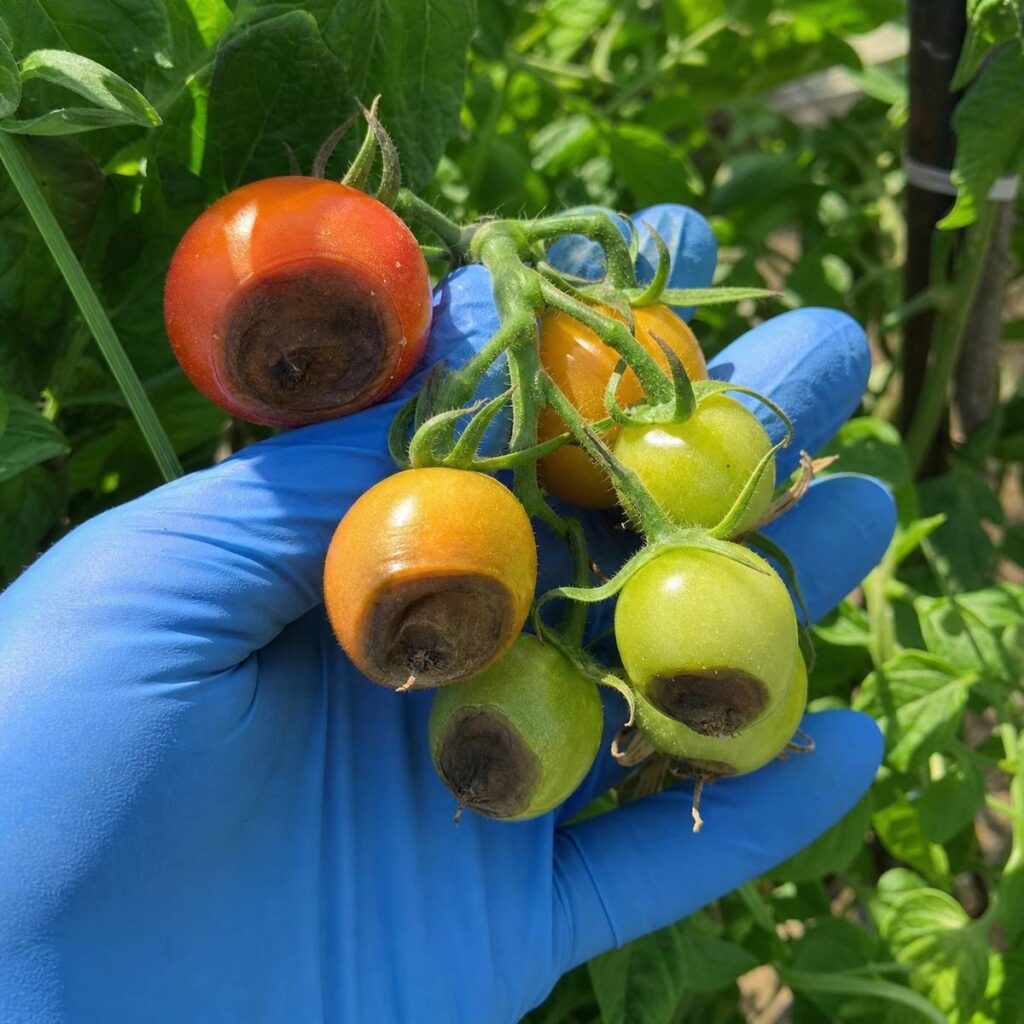
Blossom end rot shows up on the blossom end of the fruit, the bottom end away from the stem. It starts as water-soaked spots that enlarge and turn black, and University of Maryland Extension says the blemishes may grow until the entire bottom of the fruit becomes dark, shrunken and leathery.
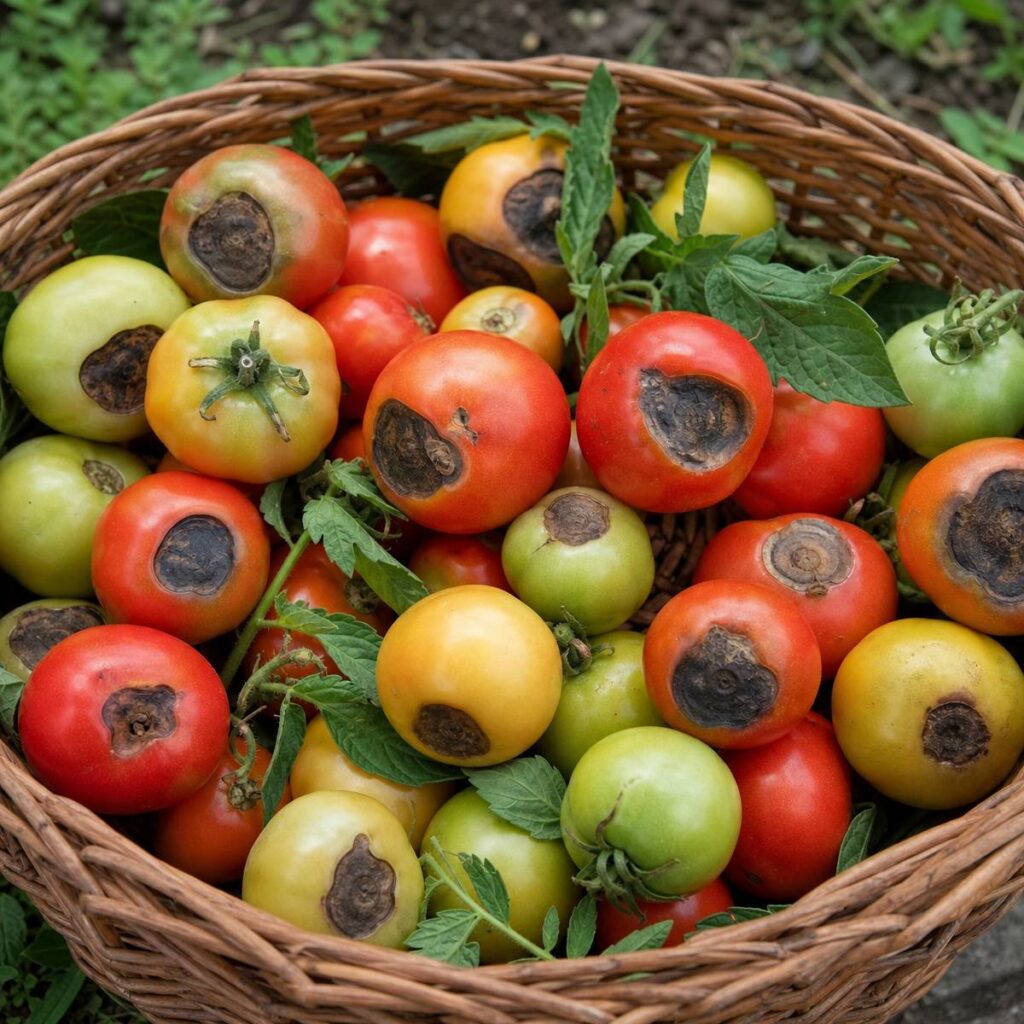
It is not a disease, and it is not caused by an insect pest. It is a physiological disorder. Iowa State University Extension says it is not caused by a pathogen, although secondary fungi and bacteria may move into the dead tissue and make it rot. Because it isn’t an infection, it doesn’t pass from plant to plant, and fungicide or insecticide sprays won’t treat it.
It is most often found on tomatoes, but peppers, eggplant, pumpkin, squash and watermelon get it too. It typically shows up when plants are growing rapidly and often affects the first developing fruits. It is rarely seen on cherry tomatoes and most often on large plum or paste-type tomatoes.
For identification, prevention and treatment in more depth, see our main guide to blossom end rot.
What Causes Blossom End Rot?
Blossom end rot is a calcium problem, but usually not a soil-calcium problem. Most Minnesota soils already have plenty of calcium for garden plants, and this kind of calcium deficiency signals a water transport issue in the plant. Florida’s native soils often have plenty of calcium, too, and irrigation water often has more.
Here’s why. Calcium enters the plant only through the actively growing root tips and moves into the fruit along with water. Put simply: if watering is erratic, the supply of calcium to the developing fruit is erratic too.
UF/IFAS Extension names three main causes:
- Inconsistent watering. Calcium travels up through the plant in water.
- Too much nitrogen. Excess nitrogen pushes leaf growth and redirects water, and the calcium in it, from the fruit to the leaves. The ammonium form of nitrogen can also inhibit calcium uptake.
- Calcium the plant can’t get. An excess of soil magnesium or potassium, too little soil moisture to move the calcium, or damaged root tips can all keep it out of reach.
Other extension sources add to the list: excess soil moisture, damage to the root system and high salinity; root pruning during cultivation; and rainy or cloudy weather with high humidity, cool temperatures, and too much ammoniacal nitrogen, potassium or magnesium fertilizer.
Related reading: Tips On Deep Watering Your Tomatoes
Why Epsom Salt Can Make Blossom End Rot Worse
Epsom salt is magnesium sulfate. It has no calcium in it, so it can’t supply what the fruit is missing. University of Minnesota Extension is blunt: blossom end rot is caused by a calcium deficiency and not a magnesium or sulfur deficiency, so Epsom salts will not prevent it.
The bigger issue is competition at the roots. Clemson’s Home & Garden Information Center says that if soil magnesium levels are already sufficient, too much magnesium inhibits calcium uptake. The more magnesium in the soil, the less likely calcium will be absorbed, and that can worsen blossom end rot on tomatoes, peppers and eggplant. UConn Extension explains that when ammonium, potassium and magnesium are over-applied, they compete with calcium for uptake at the roots, because they are all positively charged ions.
Salt is the other concern. Epsom salt is a magnesium salt, and too much can build up around the root zone and block the plant’s ability to take up water.
That’s why the old habit of dropping a spoonful of Epsom salt into every planting hole isn’t a safe default. Don’t apply Epsom salt to garden soil unless a recent soil report indicates a magnesium deficiency.
It won’t make your plants more productive, either. There’s no evidence that Epsom salt makes peppers and tomatoes more productive unless your soil is deficient in magnesium. More on that in our guide to what Epsom salt does and doesn’t do for tomatoes.
When Does Epsom Salt Make Sense?
Only when a soil test shows your soil is short on magnesium. Epsom salts can be a good source of magnesium, but use them only if a soil test indicates a magnesium deficiency. In Minnesota home gardens, those deficiencies are most likely on sandy, low-pH soils. Magnesium levels in most garden spaces, especially those amended with organic matter, are generally already sufficient.
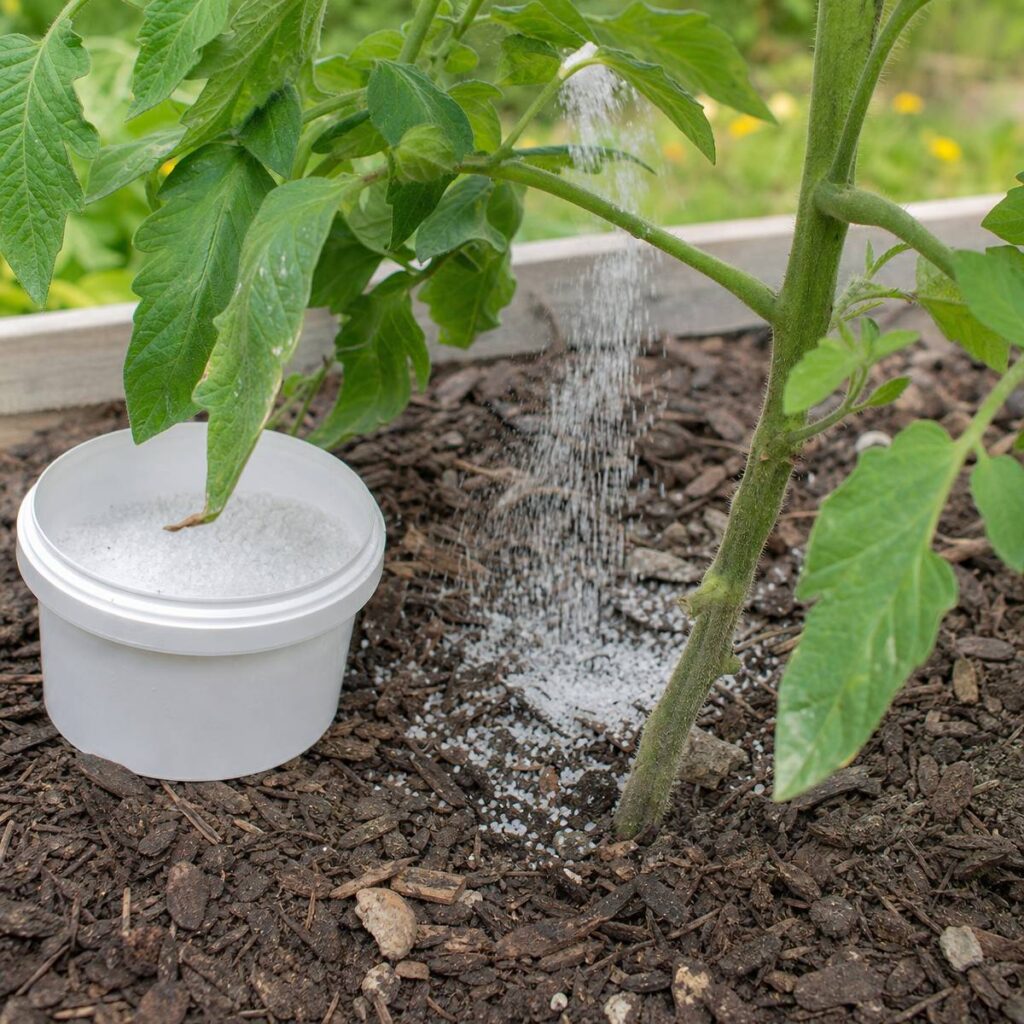
Get that test from an accredited lab. At-home soil test kits can give inaccurate or inconsistent results, your county Extension office can help you get a test, and the results will include fertilizing recommendations if adjustments are needed.
Two more cautions: spraying Epsom salt solutions on plant leaves can cause leaf scorch, and excess magnesium can add to mineral contamination in water that percolates through the soil.
What about palms? Yellowing palms can be a real magnesium story. Magnesium deficiency in palms is mainly a result of improper fertilization and can show as bright yellowing along the margins of the older leaves, and if a palm needs supplemental nutrition, a palm fertilizer that includes magnesium is the recommendation. That’s a palm question, though, not a tomato one.
How To Prevent Blossom End Rot

Prevention is the whole game here, because once a fruit has blossom end rot, that one can’t be fixed. These steps come straight from extension guidance:
- Test your soil at the start of the season. Get a soil test and fertilize by its results. Lime according to the soil report to bring the pH to 6.5 and provide adequate calcium.
- Water consistently. Keep the soil evenly moist, with adequate water but not too much. Water weekly in dry weather; tomatoes need about 1 to 1.5 inches of water a week, and some guidance says 1 to 2 inches.
- Mulch. Mulch around tomato plants conserves and maintains uniform soil moisture.
- Go easy on nitrogen. Avoid large amounts of nitrogen, avoid high-nitrogen fertilizers like urea, and don’t use ammoniacal nitrogen for side-dressing.
- Protect the roots. Don’t cultivate too close to the base of the plant.
- Skip extra magnesium and potassium unless a soil test calls for them. They compete with calcium for uptake.
- Pick off damaged fruit. Removing affected fruit lets the plant channel its resources into the rest.
We like growing tomatoes in raised beds with soil made for raised beds, for better control over soil quality. Adding calcium to the soil may be a solution especially in a raised bed or container, so a soil test is worth doing there too.
Related reading: What’s The Deal On Tomato Flower Dropping?
Do Calcium Sprays Help?
Not much, according to most of the sources. Calcium solutions on the leaves are generally ineffective because the plant can’t move calcium from the leaves to the fruit, and foliar calcium is not effective at reducing blossom end rot. A foliar spray can be made when the fruit is young but is not the most effective method, though a calcium chloride spray may offer some temporary relief.
So put your effort into watering and feeding, not spraying. If a soil test shows calcium is low but the pH is already right, work gypsum (calcium sulfate) into the soil before planting.
The Bottom Line
Epsom salt isn’t a blossom end rot fix, and on soil that already has enough magnesium it can make the problem worse. Test your soil, water evenly, mulch, and go easy on nitrogen. Save the Epsom salt for a magnesium deficiency that a soil test has confirmed.
Have you battled blossom end rot? Tell us what turned it around in your garden.
Frequently Asked Questions
Does Epsom salt stop blossom end rot?
No. Blossom end rot is caused by a calcium deficiency, not a magnesium or sulfur deficiency, so Epsom salts will not prevent it. Epsom salt is magnesium sulfate. Too much magnesium in the soil can also keep adequate calcium from getting into your plants and make blossom end rot even worse.
Can Epsom salt make blossom end rot worse?
Yes, when soil magnesium is already sufficient. Too much magnesium inhibits calcium uptake and can worsen blossom end rot on tomatoes, peppers and eggplant. Don’t apply Epsom salt to garden soil unless a recent soil report shows a magnesium deficiency.
How much Epsom salt should I use for tomatoes?
None, unless a soil test shows a magnesium deficiency. Use Epsom salts only if a soil test indicates one; magnesium levels in most garden spaces are generally already sufficient. Lab test results include fertilizing recommendations if adjustments are needed. Spraying Epsom salt on leaves can cause leaf scorch.
What causes blossom end rot on tomatoes?
Not enough calcium reaching the developing fruit. There are three main causes: inconsistent watering, too much nitrogen, and soil calcium the plant can’t take up, for example because of excess soil magnesium or potassium, dry soil, or damaged root tips. It is most often the result of erratic watering.
Can you save a tomato with blossom end rot?
That fruit can’t be fixed, but you can protect the ones still developing. Pick and discard affected fruit so the plant can channel its resources into the rest. Then water consistently, mulch and get a soil test. Calcium sprays on the leaves are generally ineffective.