Growing tomatoes is a much-debated topic among gardeners. A key point of contention is watering. Tomato plants need lots of water. However, tomato plants are also quite susceptible to both over-watering and under-watering.
Deep watering systems, if carefully thought out, can help ensure that each tomato plant receives just the amount of water per week it needs to make delicious fruit at harvest time.
Before watering tomatoes, it’s important to check soil moisture first. To do this, push your finger into the dry soil about an inch or two.
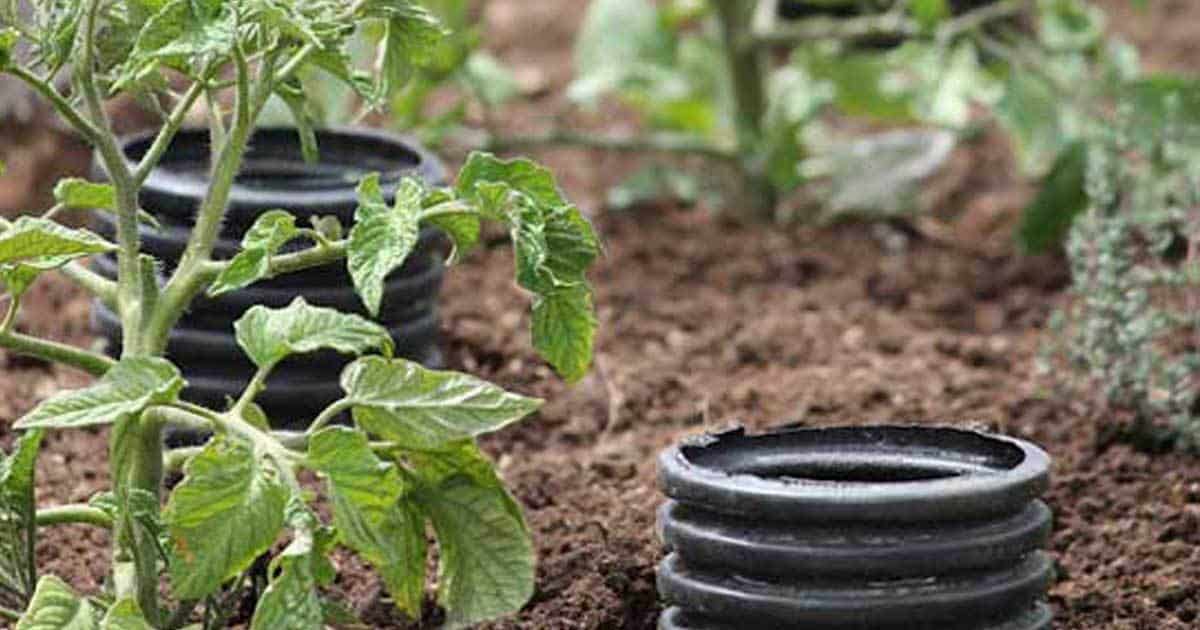
At transplanting, the tomato seedlings need a good soaking when first placed in the ground. Given that they are quite small, it is probably sufficient to soak the ground around the plant. The root system of the seedling is not extensive enough to benefit from the deep watering pipe next to it.
Mulching your tomatoes is also important and should be done immediately after planting. Applying a layer of mulch will help grow robust plants with juicy tomatoes. Spreading organic materials, such as shredded leaves, grass clippings, straw, and peat moss, are preferred. Aside from organic mulch, you can also apply inorganic mulch, such as black or red plastic.
To transplant larger plants, you should also soak the ground around them directly. Once the tomato plants have grown larger, they will use water intensively and need more frequent watering. Also, tomatoes will require more regular watering during hot weather.
Make sure you have regular watering with sufficient water, as inconsistent watering can cause blossom end rot, root rot, cracked tomatoes, and stressed tomato plants.
Moreover, over-watered tomato plants will often look depressed and have yellow leaves that would turn brown around the edges. Other early signs of overwatered plants include cracked fruits and blisters on the lower tomato leaves.
Similarly, tomatoes will need less water, or none at all, after heavy rainfall storms have soaked the soil naturally.
Once the tomato plants begin to set fruit, the plants still require a steady supply of water. However, you must observe the plants carefully at this stage when watering. Excessive water will cause the tomatoes to split as they develop. Also, reducing the water slightly may enhance the flavor of the tomato fruit.
However, the tomato flavor may still depend on various factors, including variety, chemistry, and care, so it’s important to optimize these factors if you want the most flavorful tomato harvest possible.
When watering garden tomatoes, simply pour sufficient water into the pipe until it fills. It will drain away slowly into the soil and be available to all parts of the root system of the tomato plants next to it.
If you wish to add an occasional dose of liquid fertilizer, whether a natural tomato fertilizer or artificial, that can be added to the water and poured right in.
The general rule for tomatoes is that they should receive 1.5″ water per square foot of soil per week. Practically, it may be easier to think in terms of gallons rather than inches of water. This translates to about 1 gallon per week per square foot.