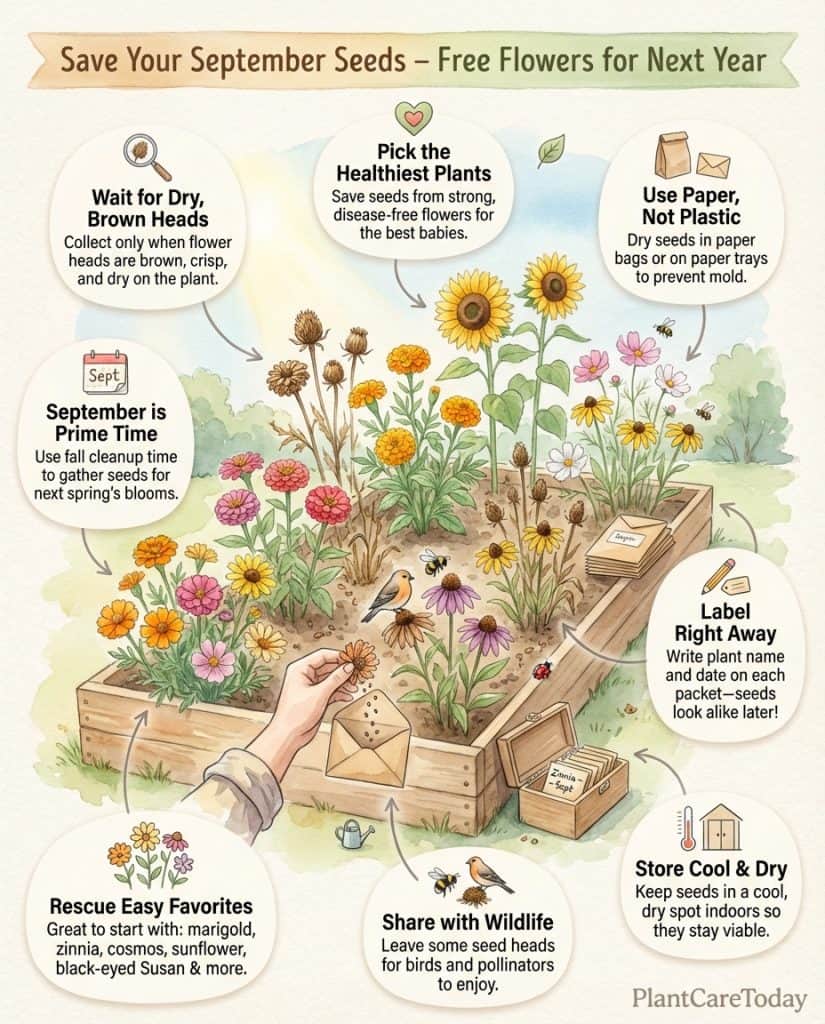
Did you know that September is like nature’s free seed catalog come to life? While most gardeners are busy cleaning up, they’re actually tossing potential garden gold into the compost pile!
I was shocked to discover that a single marigold plant can produce up to 100 seeds. That’s $15-20 worth of free plants just waiting to be harvested from your garden right now.
Why September Seed Collecting Will Transform Your Garden
Forget what you’ve heard about gardening winding down in fall. September is actually prime time for seed collecting, like a treasure hunt where X marks every fading flower. Your garden isn’t dying. It’s preparing its legacy!
Most people make this mistake with their flowers: they deadhead everything for neatness, accidentally throwing away next year’s garden in the process.
The secret most plant experts won’t tell you is that collecting your own seeds not only saves serious money but often produces plants better adapted to your specific growing conditions.
Think of each drying flower head as a tiny time capsule, a garden-in-waiting that costs absolutely nothing to acquire.
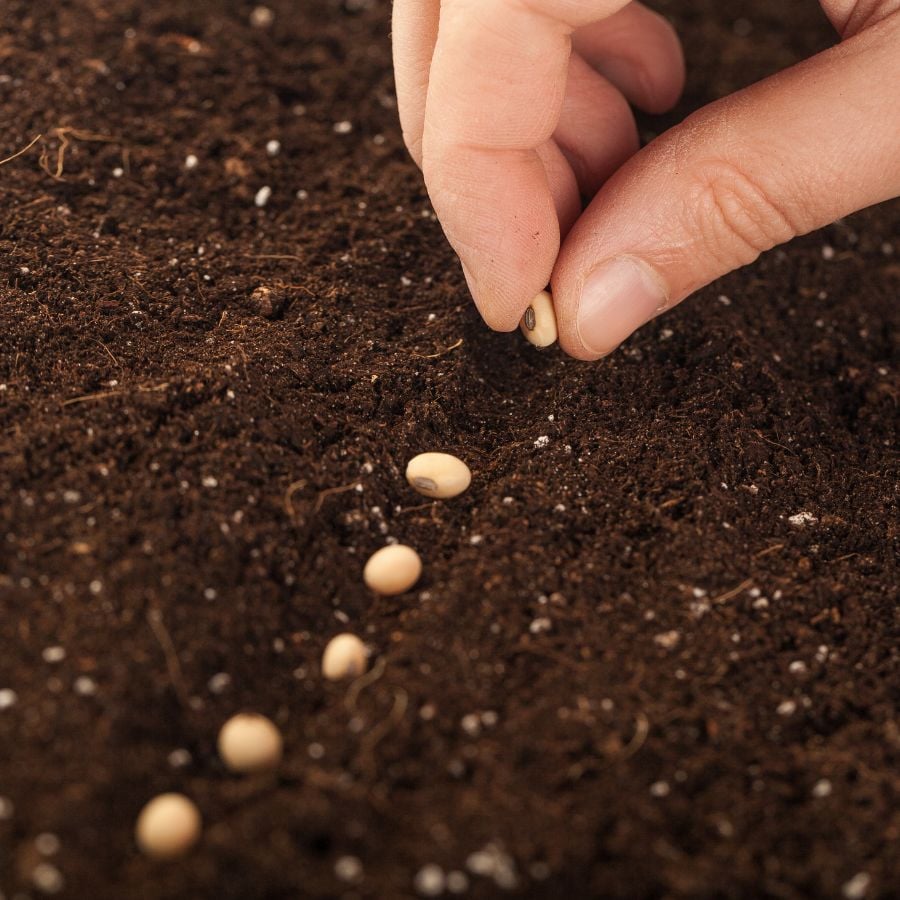
Seed Collecting Essentials: Set Yourself Up for Success
Before you dash out with scissors in hand, let’s cover some game-changing basics. These aren’t just suggestions. They’re the difference between amateur and pro plant parents:
- Health is wealth: Only collect from vigorous, disease-free plants. Sick plants produce weak offspring, just like in the animal kingdom
- Ditch the plastic: Always dry seeds in paper bags or trays. Plastic traps moisture and can trigger premature germination or mold
- Label obsessively: Trust me, you will NOT remember which tiny black seed is which by spring
- Store smart: Cool, dry places preserve viability. Think of seeds as tiny sleeping babies that need the right conditions to rest
(Remember: Leave plenty of seeds for the birds and pollinators. They’re your garden partners, not competitors!)
10 Spectacular Flowers Begging You to Collect Their Seeds Now
1. Marigolds: Nature’s Golden Opportunity (Zones 2-11)
Wait for those cheerful heads to turn completely brown and crispy, like nature’s version of perfectly toasted bread.
Break apart those spent blooms to find black, spear-shaped seeds hiding among the dried petals. A single plant can yield enough seeds to fill a border next year!
2. Zinnias: The Gift That Keeps Giving (Zones 3-10)
The game-changer for your zinnias isn’t deadheading. It’s patience! Let those flower heads transform from vibrant blooms to dark, crisp cones.
The center holds your treasure: seeds that will bring back those same spectacular colors next season.
Pro tip: Open-pollinated varieties return truest to type.
3. Cosmos: Stars for Your Garden’s Future (Zones 2-11)
Look for curved, dry seed heads. They’re practically waving at you, saying, “I’m ready!”
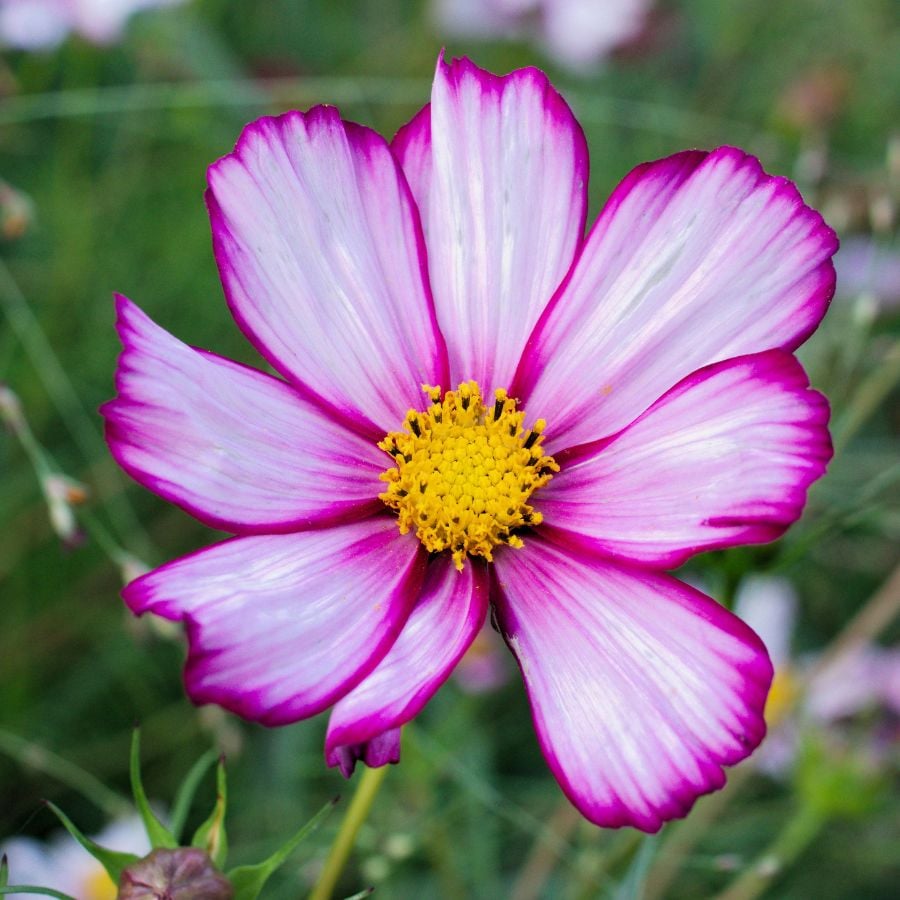
Gently crumble these over a tray to reveal thin, dark seeds that look like tiny paintbrushes. If you’re growing multiple colors, label them now or prepare for a surprise garden next year!
4. Sunflowers: Nature’s Bird Feeders (Zones 3-9)
These giants signal their readiness with heads that hang heavy and brown. Simply rub the center to release seeds with almost no effort, as nature designed them for harvesting!
Share some with goldfinches for one of gardening’s most magical moments. Your garden becomes their dining table!
5. Nigella: The Balloon of Bounty (Zones 4-9)
Nigella’s seed pods are botanical marvels: hard, balloon-shaped capsules that crack open when dry. They transform from green to papery brown when ready, signaling it’s time to collect their black treasures.
They look like something from an alien landscape, but they’re just extraordinary garden magic!
6. Calendula: The Self-Sufficient Beauty (Zones 3-10)
When calendula seeds form their distinctive C-shape, they’re practically spelling out “Collect me!”
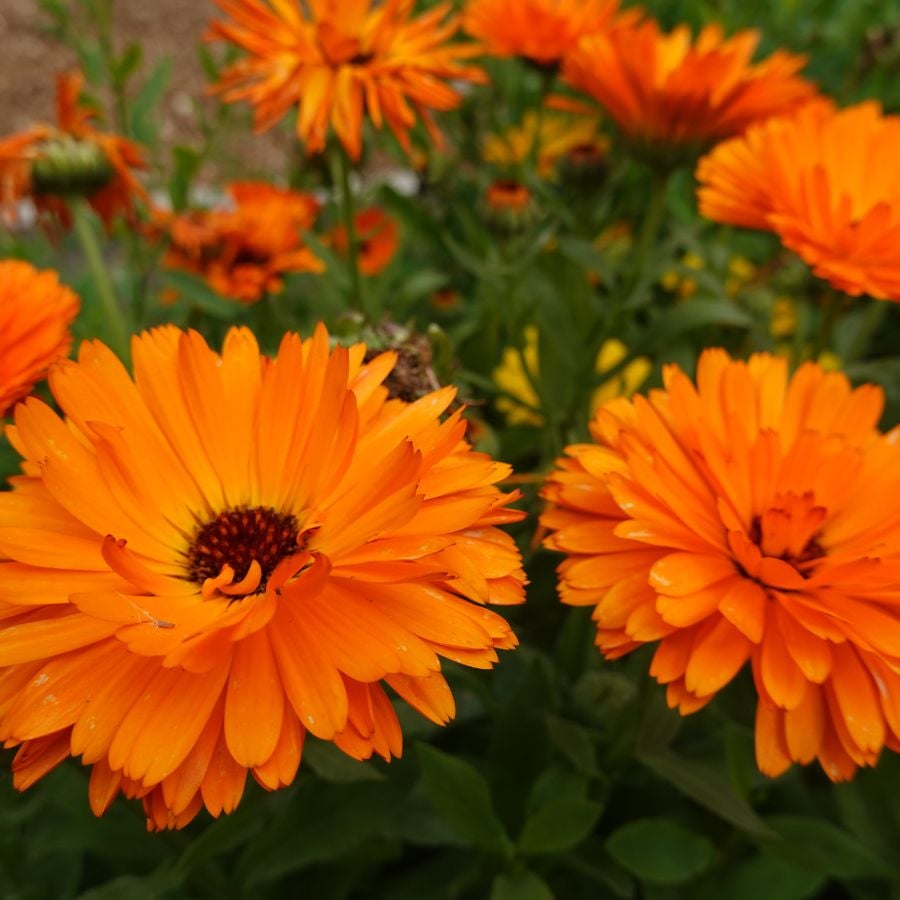
These eager self-seeders will happily do the work for you if you’re feeling lazy, but collecting gives you control over next year’s garden design. Your calendula is trying to tell you something important. It wants to stick around!
7. Coneflowers: The Prickly Prize (Zones 3-9)
Those spiky seed heads aren’t just sculptural garden art. They’re packed with potential. Let them fully darken before harvesting, and wear gloves.
These seeds mean business with their sharp edges. Think of them as the cactus of the seed world, prickly but worth the effort.
8. Black-Eyed Susans: Easiest Seed Harvest Ever (Zones 3-9)
If you’re new to seed saving, start here! These generous plants produce tiny, dark seeds that fall off the plant when ripe.
Just tap the dried heads over a container and watch the bounty rain down. Even hybrid varieties will give you cheerful blooms, though they might surprise you with their exact appearance!
9. Snapdragons: Where Flowers Become Pods (Zones 5-10)
Snapdragons perform a magical transformation, where bright flowers once stood, tiny seed pods emerge.
When they dry and darken, gently shake them to release hundreds of dust-like seeds. It’s like each flower becomes its own salt shaker of garden potential!
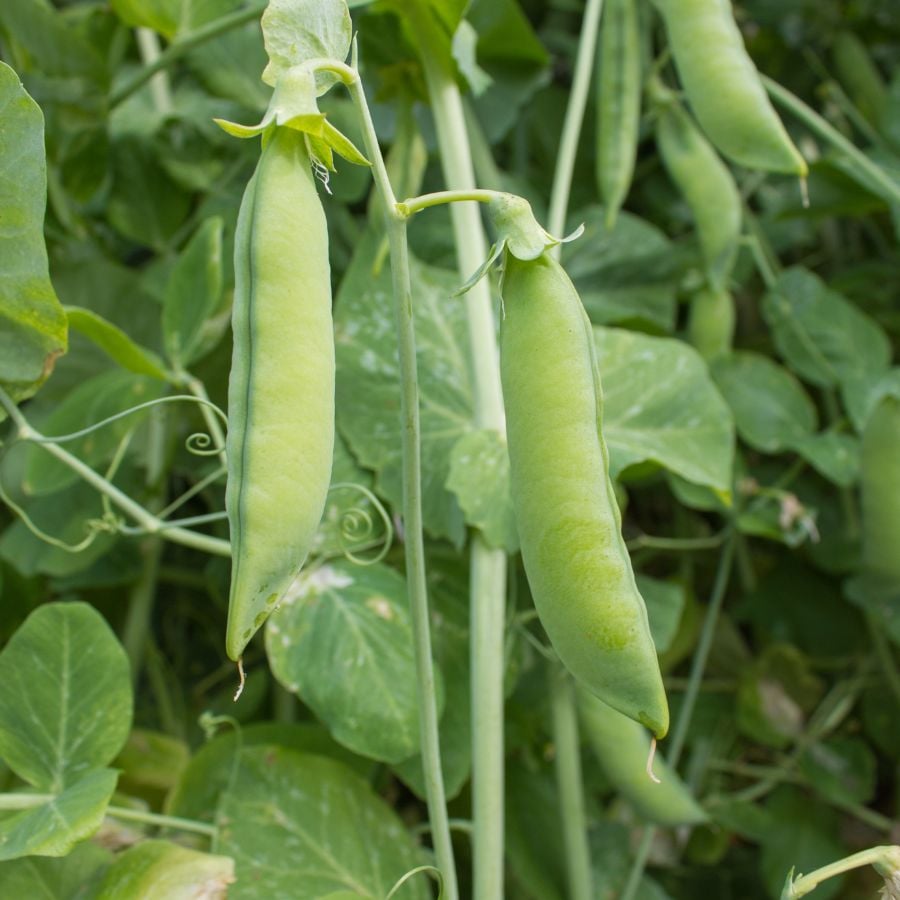
10. Sweet Peas: Pods of Promise (Zones 5-9)
Wait for those delicate pods to turn crispy and brown. They’ll rattle slightly when ready.
Inside, round seeds hold the fragrance and beauty of next year’s display. Since a wide variety of plants look identical as seeds, labeling is crucial unless you enjoy garden surprises!
Your September Seed-Saving Action Plan
September seed collecting is like preparing for a garden revival. Your efforts now will flourish into free plants next spring.
Make it a family treasure hunt or a meditative solo activity; either way, you’re participating in one of gardening’s oldest and most rewarding traditions.
The transformation from fading flower to next year’s garden happens right under our noses, but only if we recognize and capture it.
So grab a paper bag, some labels, and start your seed-saving journey today. Your future garden (and wallet) will thank you!
Remember: Always leave some seeds behind for wildlife. That goldfinch balancing on your coneflower is counting on your generosity!