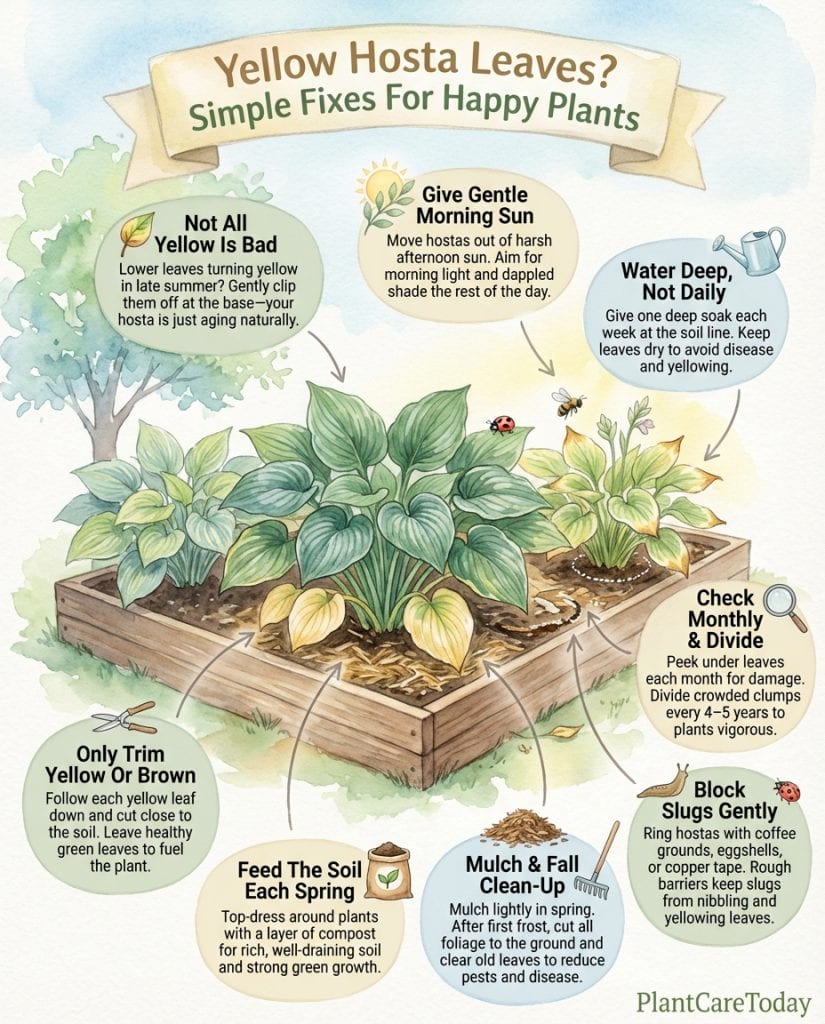
Your hostas are turning yellow, and those leaves are trying to tell you something. Yellow leaves aren’t just a cosmetic issue. They’re signals from your plants.
Many new gardeners worry at the first sign of yellow, but understanding what’s happening will help you know exactly what to do.
What Yellow Leaves Actually Mean
Here’s the thing about yellowing hosta leaves: they can mean several different things. Before you start cutting, it helps to figure out what’s going on.
Yellow leaves aren’t always a problem. Sometimes it’s just natural aging. About 80% of yellowing in late summer is simply leaves at the end of their life cycle. That bottom ring of leaves is supposed to fade eventually.
But when yellowing happens out of season or spreads quickly across your hostas, something else is going on. Here’s what might be happening:
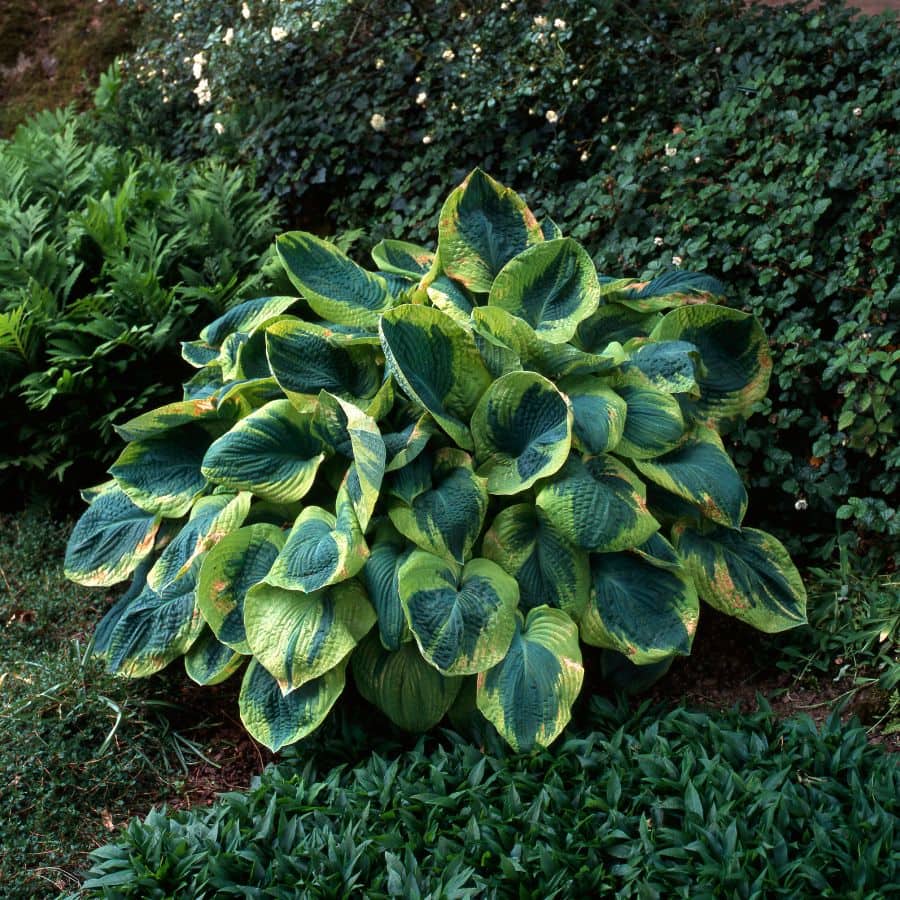
- Sun exposure: Hostas are shade plants. Too much afternoon sun will turn them yellow fast.
- Watering issues: Both overwatering and underwatering cause problems. Too much drowns the roots, while too little stresses the plant.
- Pests: Slugs and snails love hostas, and their feeding can cause yellowing leaves.
- Soil quality: Poor soil conditions make it hard for hostas to get the nutrients they need.
How to Trim Yellow Leaves
The real trick is knowing when and how to cut. The difference between new and experienced gardeners often comes down to when to trim.
Is it okay to cut yellow leaves during the growing season? Yes. It’s actually good for your plant. Here’s how to do it properly:
- Use clean, sharp scissors or pruning shears. Dirty tools can spread disease.
- Follow the yellow leaf down to its base near the soil.
- Make one clean cut close to the ground.
- Leave all healthy green growth alone. Your hosta needs those leaves for energy.
- Remove the trimmings right away since they attract slugs.
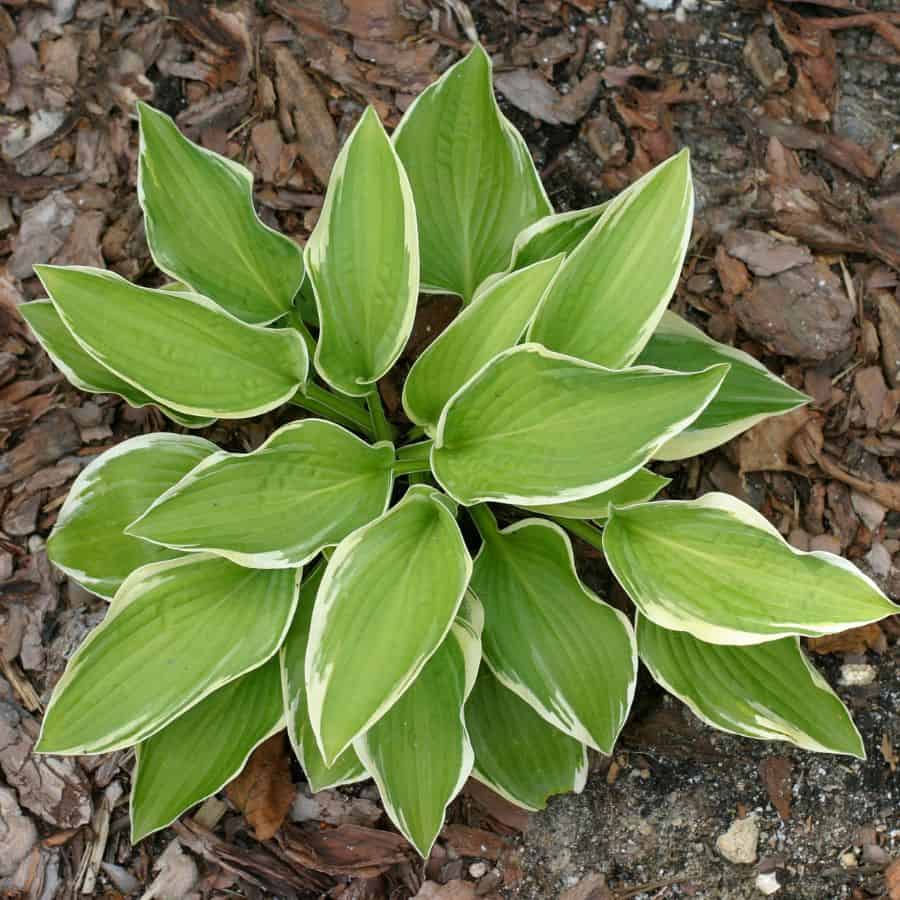
One important note: cutting green leaves mid-season can drain a hosta’s energy reserves by up to 40%. Only remove leaves that are actually yellow or brown.
When to Trim Throughout the Year
Timing matters when it comes to hosta care. Here’s what to do during each season:
- Spring and Summer: Only remove yellow or brown leaves as they appear. This is spot maintenance, not a major cutback.
- Late Fall: After the first frost collapses the foliage, cut everything down to the ground. This prevents pests and disease from overwintering.
- What to avoid: Don’t cut back all the green leaves mid-season. The plant needs them.
Fixing the Real Problem
Trimming alone won’t solve ongoing yellowing. It tidies things up but doesn’t address what’s causing the issue in the first place.
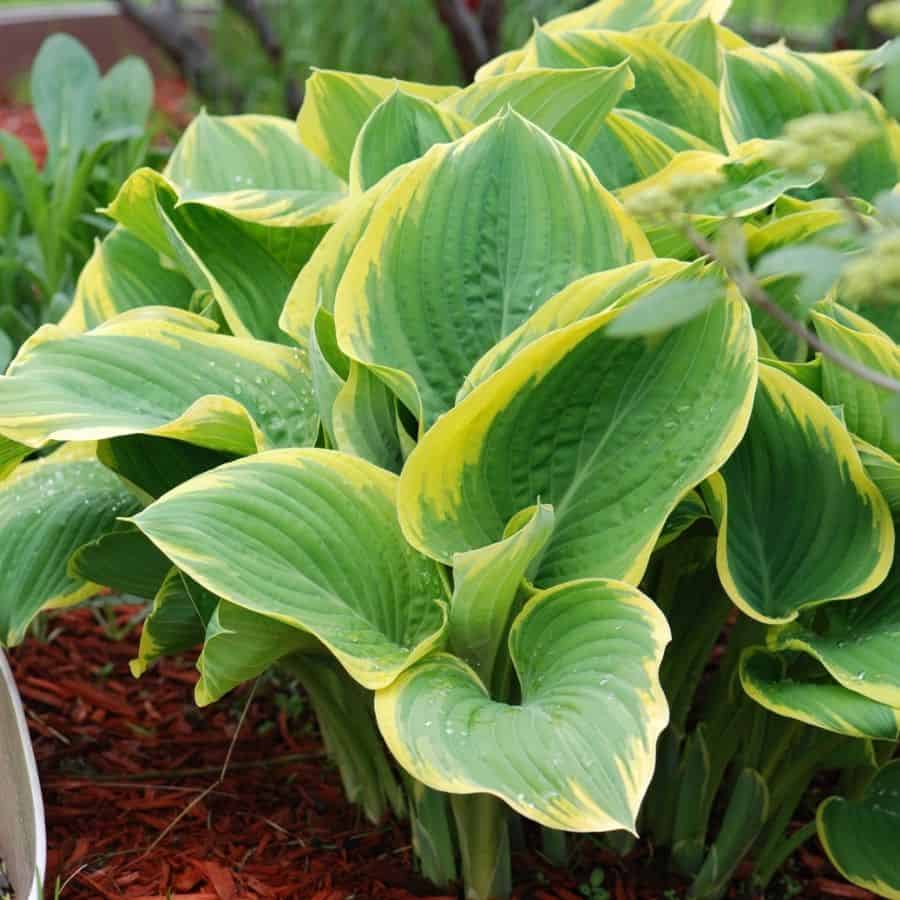
To get your hostas healthy again:
- Water properly: One deep watering per week is better than daily light watering. Water the soil, not the leaves, as wet foliage can encourage disease.
- Provide the right light: Move sun-damaged plants to spots with morning sun only. Hostas need protection from harsh afternoon sun.
- Deal with slugs: Create barriers with coffee grounds, eggshells, or copper tape. Slugs avoid rough surfaces.
- Improve the soil: Add quality compost each spring. Rich, well-draining soil helps hostas thrive.
A single healthy hosta can live for over 30 years when properly cared for. Good maintenance now means years of nice foliage later.
Keeping Hostas Healthy
The best approach is catching problems before they get serious. Here are some simple preventative steps:
- Divide plants every 4-5 years to keep them healthy and less prone to yellowing
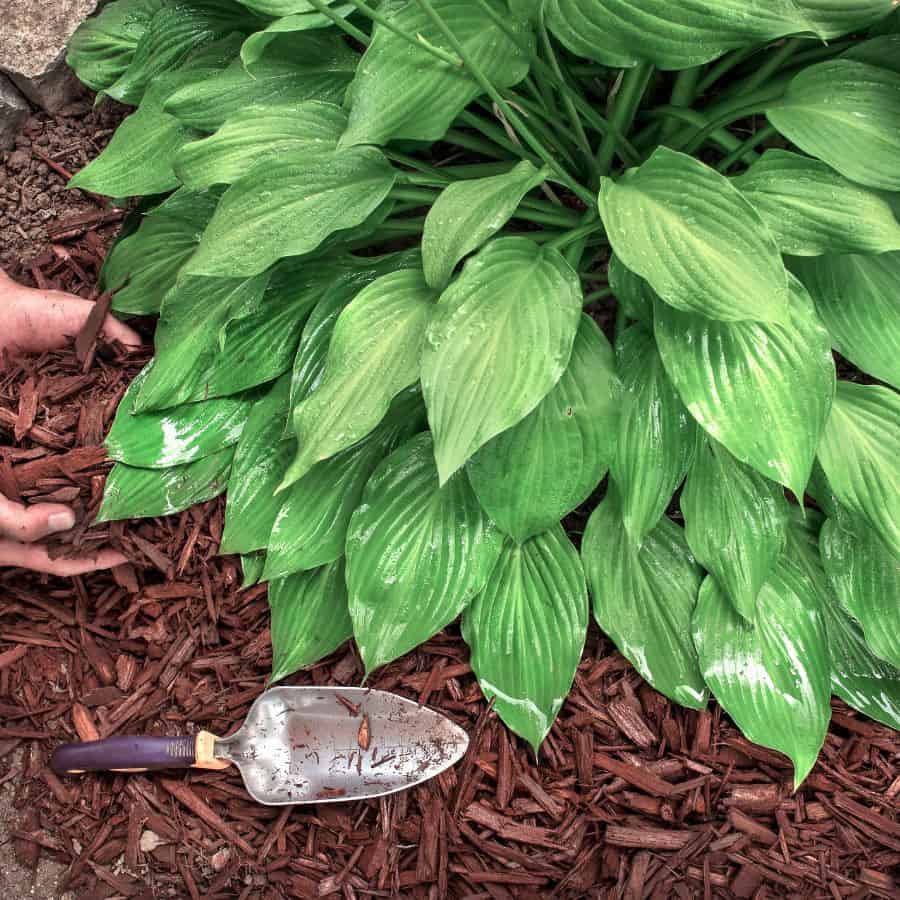
- Add mulch in spring to prevent soil from splashing onto leaves (which spreads disease)
- Check your plants monthly so you can catch issues early
Healthy hostas are pretty low-maintenance. When they start yellowing unexpectedly, they’re letting you know something needs attention.
The next time you spot yellow leaves in your hosta patch, you’ll know what to look for and how to help. A little troubleshooting goes a long way toward keeping these plants looking their best.