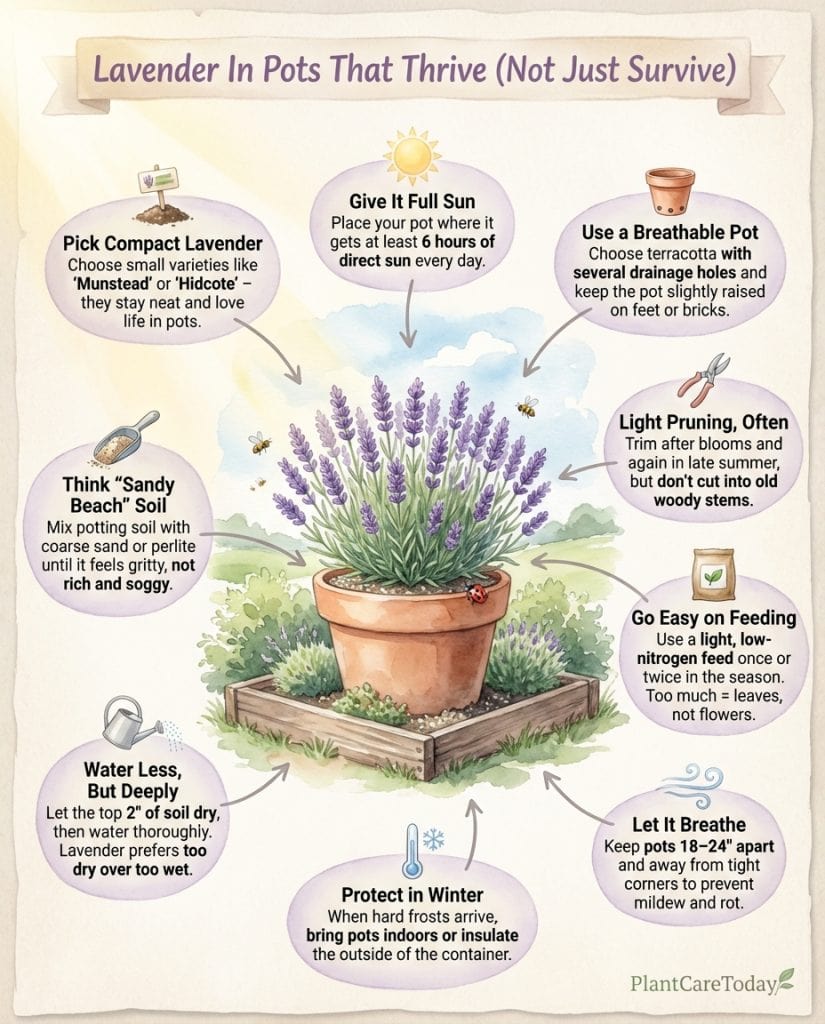
Did you know that over 80% of potted lavender plants die within their first year? I’ve spent years learning how to grow lavender that actually thrives in containers.
The best part is that lavender in pots can do just as well as garden-grown plants, sometimes even better, once you know what you’re doing.
Why Growing Lavender in Pots Makes Sense
Pots give you complete control over your lavender’s growing conditions.
You can move containers around to follow the sun throughout the day and across seasons. They also make it easy to bring plants inside during harsh winters when temperatures drop.
And if you don’t have garden space, pots work almost anywhere, balconies, patios, even kitchen windowsills. You don’t need a big yard to enjoy fresh lavender.
Common Mistakes That Kill Potted Lavender
Most people treat lavender like other flowering plants, watering it regularly. But lavender comes from the Mediterranean, where it grows in rocky, well-drained soil with very little rainfall.
The three biggest problems are:
• Root rot from poor drainage (lavender roots should never sit in water)
• Poor air circulation that encourages fungal diseases
• Skipping pruning, which leads to woody, overgrown plants
What surprised me most is that lavender plants can live 20+ years in containers with proper care, much longer than most people think.
11 Tips for Healthy Potted Lavender
1. Choose Compact Varieties
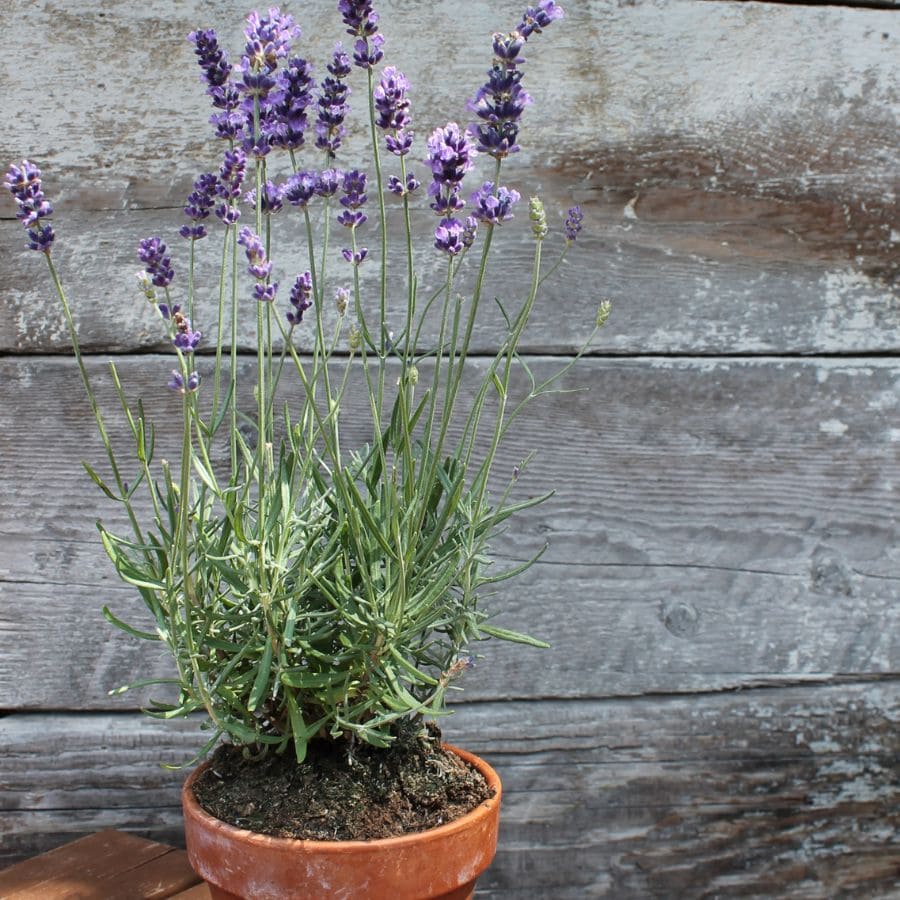
Not all lavender works well in containers. Compact varieties like Munstead and Hidcote are perfect for pots.
Spanish lavender handles heat really well. Skip the large woody varieties unless you have very big planters.
2. Pick the Right Container
Your pot needs good drainage and airflow. Terracotta or unglazed ceramic pots work best because they let excess moisture evaporate.
Use pots at least 12-14″ deep with multiple drainage holes. Elevating pots slightly on feet or bricks helps drainage even more.
3. Use the Right Soil Mix
Forget rich, moisture-holding soil. Lavender needs something closer to a sandy beach. Mix regular potting soil with coarse sand or perlite until it feels gritty.
Avoid peat-based mixes that hold too much water. You can add a bit of wood ash to make the soil slightly alkaline, which lavender prefers.
4. Give It Full Sun
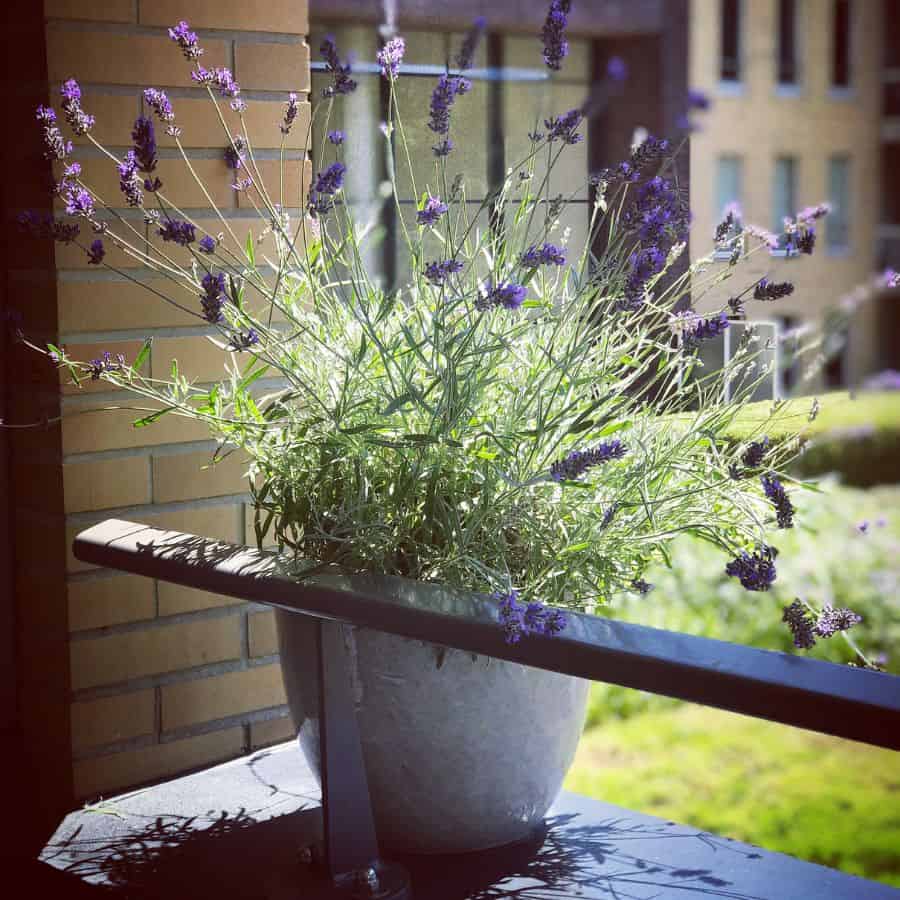
Lavender needs at least 6 hours of direct sunlight daily. South or west-facing spots work best. Rotate the pot occasionally so all sides get even light.
5. Water Less Than You Think
The real trick with lavender is watering less, not more. Stick your finger 2″ into the soil. If it’s dry, water thoroughly. If it’s still damp, wait.
Even in summer, once-weekly watering is usually enough. In winter, water even less. Lavender would rather be too dry than too wet.
6. Prune Regularly
Trim lightly after the first bloom, then do a more serious pruning in late summer or early fall.
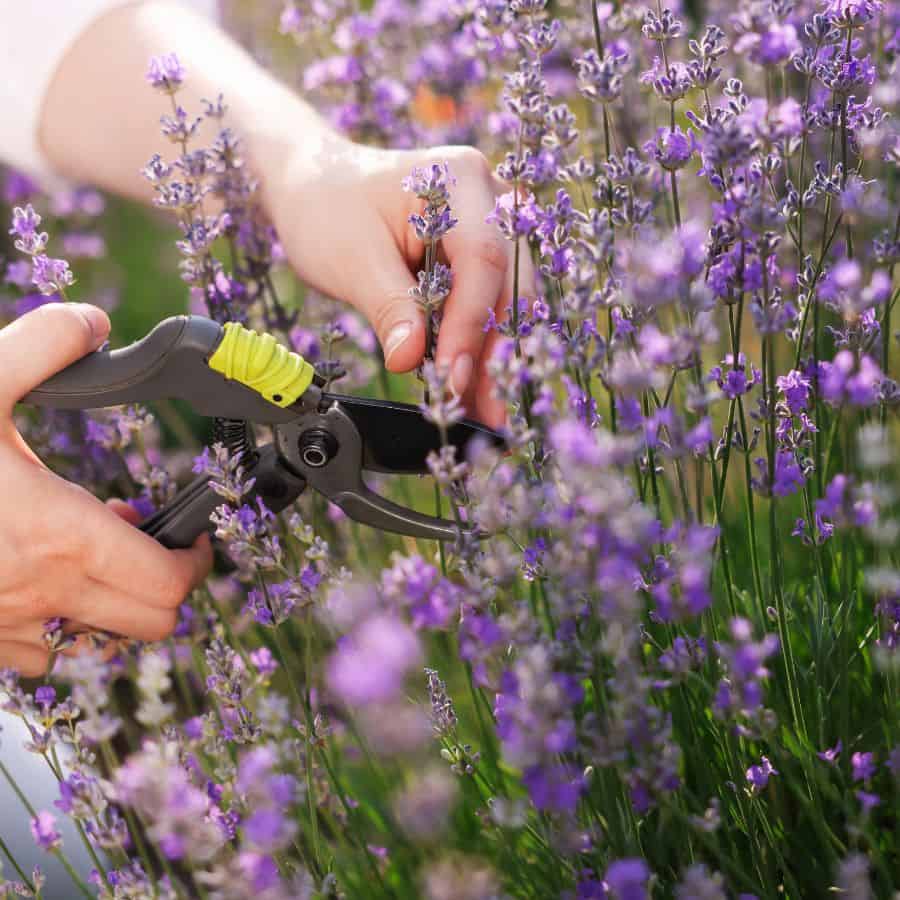
Just don’t cut into the old woody stems at the base; those won’t regrow. Regular pruning keeps plants compact and encourages more flowers.
7. Go Easy on Fertilizer
Lavender doesn’t need much feeding. Use diluted compost tea or low-nitrogen fertilizer once or twice during the growing season.
Too much nitrogen creates lots of leaves but fewer flowers. Think of fertilizer as an occasional treat, not a regular meal.
8. Provide Good Air Circulation
Space pots 18-24″ apart and don’t crowd them against walls. Good airflow prevents mold and mildew, which can quickly damage container plants. Air movement keeps your lavender dry and healthy.
9. Protect Plants in Winter
When temperatures drop below freezing, bring pots indoors or into a garage. If that’s not possible, insulate them with straw or bubble wrap. The difference between new and experienced gardeners often comes down to winter planning.
10. Deadhead Spent Blooms
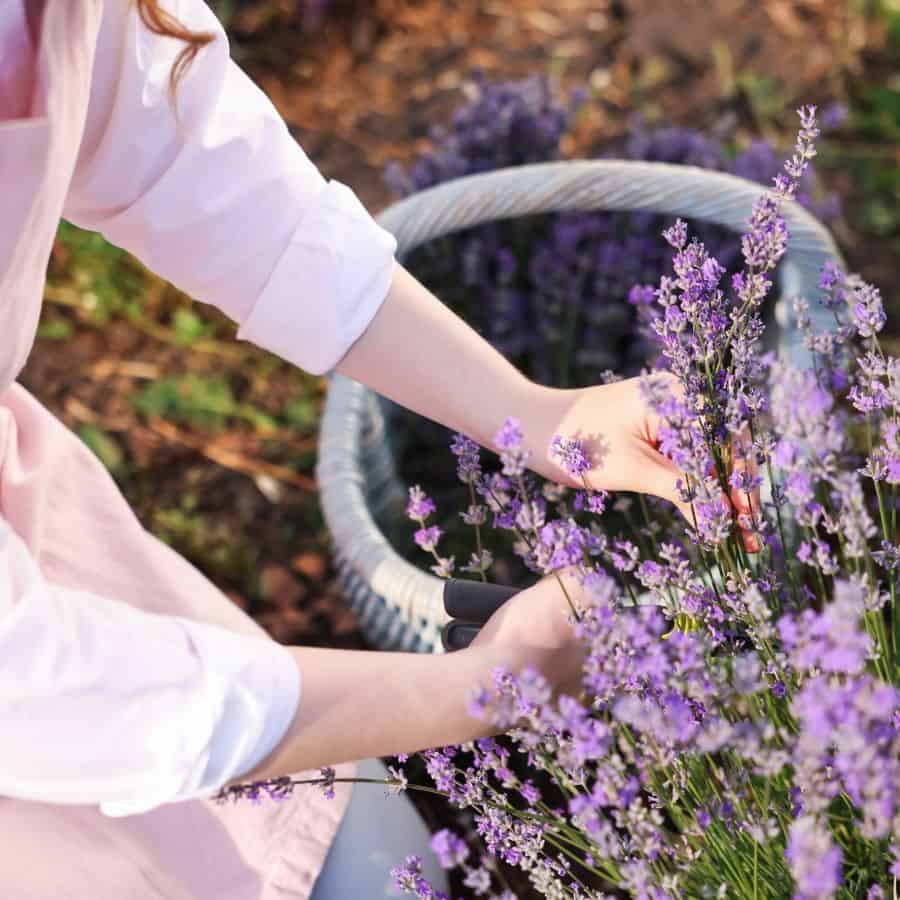
Snip off faded flowers to encourage more blooms. Use clean shears and cut just above the foliage. Bonus: those trimmed stems make great sachets for drawers and closets.
11. Repot Every Few Years
Every 2-3 years, give your lavender fresh soil and lightly trim the roots. Spring is the best time for this, before new growth starts. It refreshes the plant and keeps it healthy for years to come.
Getting Started
With these tips, you can grow lavender that actually thrives in containers. Most people see a real difference within one growing season.
Potted lavender gives you fresh scent, pretty purple flowers, and a bit of Mediterranean charm wherever you need it. It just takes knowing what these plants actually need to succeed.