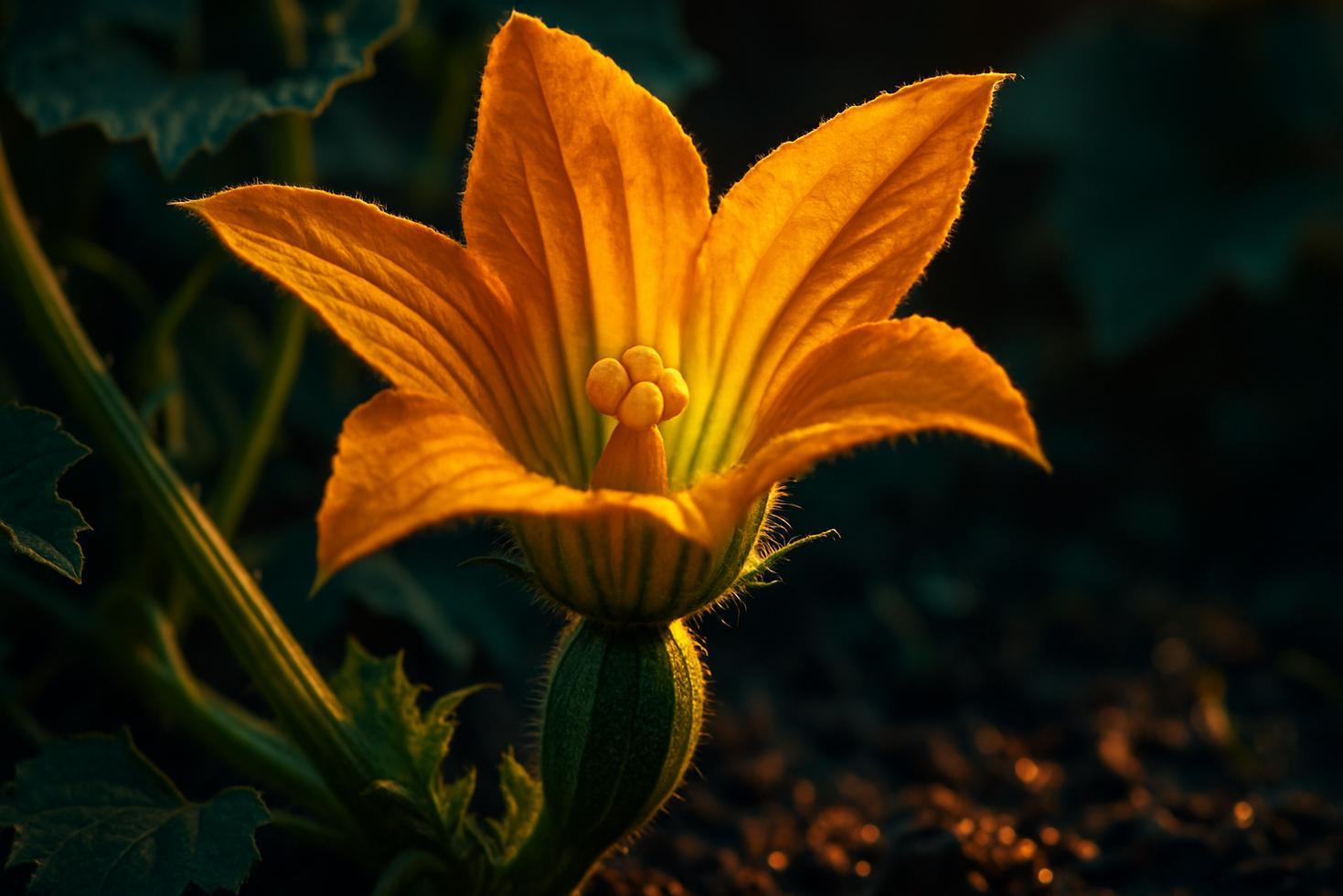
A zucchini female flower opens for one morning only — pollen must reach three stigma lobes before 10 a.m., or the plant quietly reabsorbs the fruit entirely.
Zucchini plants drop immature fruits when fertilization fails, not because of disease or neglect, but because the pollination window closed without a successful pollen transfer. The same vine produces two distinct flower types, and each one runs on its own schedule. That mismatch is where most gardeners lose fruit without ever knowing why.
Male flowers appear first on longer, thinner stems, making pollen available before any female opens. The female flower carries a swollen ovary at its base — a miniature zucchini the plant built before knowing the outcome — and a three-lobed stigma that must receive pollen to trigger fertilization.
How Zucchini Male and Female Flowers Are Sequenced
The plant’s monoecious structure — separate male and female flowers on the same vine — means pollination requires a transfer event, not just proximity. Male flowers appear first to ensure pollen is present when females open. The female’s swollen base becomes the fruit only after fertilization; without it, that tissue is reabsorbed or yellows and drops.
Male flowers arriving before females is the plant’s built-in reliability mechanism, not a timing accident. Extension sources describe several insect visits as typically needed to complete fertilization under natural conditions.
The One-Morning Pollen Transfer Window
Once a female flower opens, its receptive period lasts roughly one day. Extension sources narrow the best transfer time to 6:00–10:00 a.m., when blossoms are freshly open. Miss that window and the ovary never swells.
Hand pollination follows the same timing: take a freshly opened male flower in the morning, peel back its petals, and dab pollen-covered anthers across the three-lobed stigma of the female. One protocol uses two to three male flowers across a single female. Ovary elongation becomes visible around day four; by day seven, summer squash can reach two to four inches in length.
What Fruit Abortion in Zucchini Actually Means
When fertilization does not happen, the plant withdraws resources from the unfertilized ovary. The tiny fruit shrivels or yellows and falls. This is a normal reallocation, not a symptom of rot, pest damage, or poor soil.
Growers who see the first few female flowers drop consistently are often experiencing early-season pollinator scarcity combined with the narrow morning window, rather than any problem with the plant itself.
Zucchini reproductive timing rewards attention to the clock more than attention to the soil. One morning, one transfer, thirty-six hours to know the result — the entire outcome is decided before most gardens are watered.
Frequently Asked Questions
Why does my zucchini plant have flowers but no fruit?
Female flowers require pollen transfer to the three-lobed stigma before fertilization can occur; without it, the plant reabsorbs the immature ovary and drops it.
When is the best time to hand-pollinate zucchini?
Extension sources recommend hand pollination between 6:00 and 10:00 a.m., when freshly opened blossoms are most receptive.
How do I know if zucchini pollination worked?
The ovary at the base of the female flower begins to swell within 36–48 hours of successful fertilization; no swelling after 72 hours indicates failure.
How do I tell male and female zucchini flowers apart?
Female flowers have a swollen, miniature-squash-shaped ovary at their base; male flowers sit on longer, thinner stems with no swelling beneath the bloom.