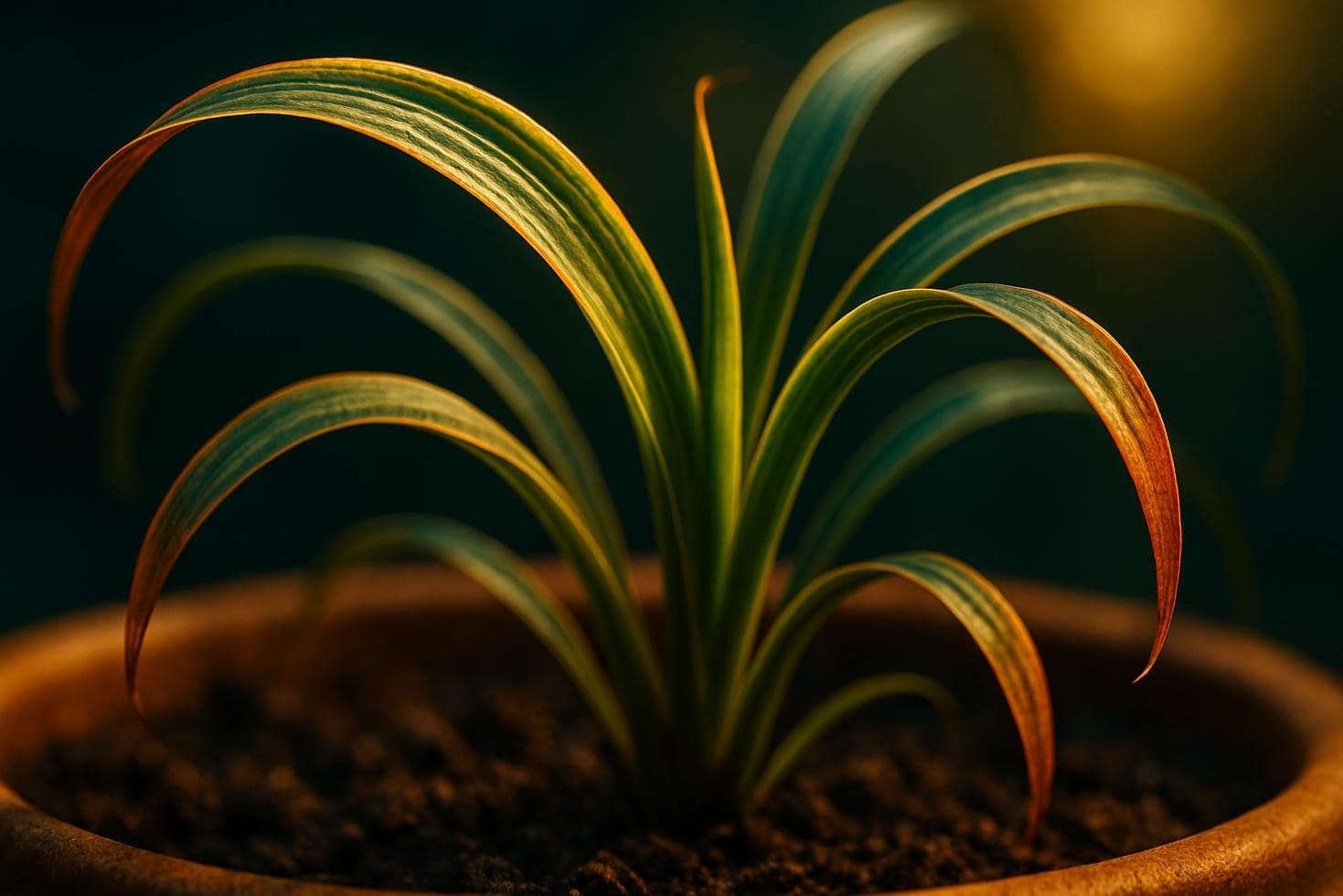
0.7 ppm fluoride in tap water sounds harmless — but repeated waterings concentrate it at the exact spot where moisture leaves the leaf, destroying cells while the rest of the plant stays completely green.
Spider plants develop brown leaf tips when fluoride and dissolved salts from tap water accumulate at the leaf edges — not because the plant is thirsty or dying. What makes this genuinely strange is the pattern: the damage is local and precise, confined to the very tip, while the rest of the leaf continues working normally.
Water exits a leaf fastest at its outermost edges, through evaporation. Everything dissolved in that water — fluoride, calcium, magnesium, bicarbonates — gets left behind at that address. Each watering adds a small deposit. Over months, the concentration builds until the cells at the tip can no longer function.
How Fluoride and Dissolved Salts Reach the Leaf Tip
Fluoride doesn’t stop at the roots. It travels with water up through the plant’s vascular system, all the way to the outermost leaf tissue. As moisture evaporates from the tip, dissolved minerals left behind at leaf edges keep accumulating — not flushing away on their own.
Potting soil in a small container has limited capacity to disperse salts. Every watering that doesn’t drain completely adds to the existing load. The tip registers this history visibly, one dead cell at a time.
Other Confirmed Contributors to Spider Plant Tip Burn
Fluoride is not the only cause. University extension and horticultural references consistently list dry soil, low humidity, and overfertilizing alongside tap water chemistry as documented reasons for tip burn.
Low ambient humidity accelerates moisture loss from leaf edges, which speeds up the concentration process. Overfertilizing introduces additional soluble salts through a different route but produces the same endpoint: excess dissolved material that the plant cannot clear.
How Growers Address Salt and Fluoride Buildup
The most commonly recommended response is periodic leaching — running enough water through the pot to flush accumulated salts out through the drainage hole. Some sources suggest doing this monthly for sensitive plants.
Switching to distilled water or allowing tap water to sit overnight reduces the chlorine load, though fluoride does not dissipate from standing water. Distilled water eliminates fluoride entirely at the source, which is why it appears in nearly every guide addressing this specific symptom.
Checking soil moisture at the top 2 inches before each watering, and ensuring the pot drains fully, limits both salt accumulation and the separate risk of overwatering.
The tip knows. Even as the rest of the spider plant stays lush and functional, that outermost edge keeps a running tally of every watering. It’s not damage spreading from a sick plant — it’s chemistry arriving at a very specific destination.
Frequently Asked Questions
Does standing tap water overnight fix the fluoride problem for spider plants?
No. Chlorine dissipates from standing water, but fluoride does not. Distilled or filtered water is needed to eliminate fluoride.
Is low humidity also causing brown tips, or is it just the water?
Both are documented causes. Low humidity accelerates evaporation at leaf edges, which can worsen salt concentration and cause tip burn independently.
How often should the soil be leached to reduce salt buildup?
Some care guides recommend leaching as frequently as once a month for sensitive plants, though frequency depends on watering habits and pot size.
Can brown tips turn green again after fixing the water source?
No. Cells already damaged at the tip do not recover. New growth after switching water sources will grow in without the discoloration.