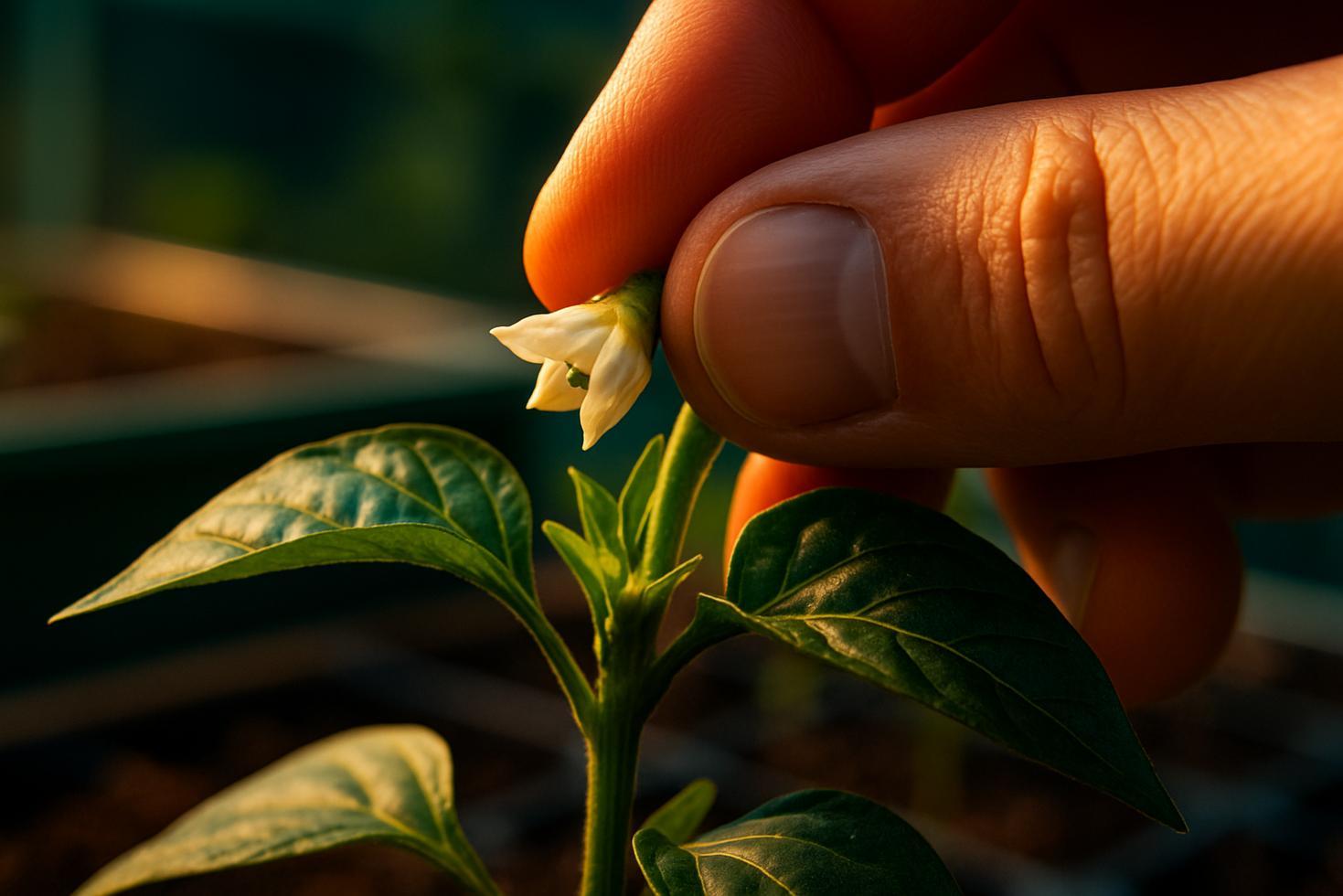
First flowers signal the plant is already betting on reproduction — removing early buds for 2–3 weeks after transplanting shifts resources back toward stems and side shoots instead.
Pepper plants allocate resources between two competing priorities: building vegetative structure and producing fruit. When a plant flowers early, it begins diverting energy toward reproduction before its branch network is wide enough to support a meaningful harvest.
That first bud is not a milestone. It is a signal that the plant has already started making a trade-off.
How Apical Dominance Controls Pepper Plant Branching
The underlying mechanism is apical dominance. A pepper plant’s dominant growing tip produces hormonal signals that suppress lateral shoot development. While that suppression holds, the plant grows narrow rather than wide.
Removing early flowers reduces the reproductive sink pulling resources downward. Lateral buds respond by resuming active growth, and stems begin to thicken. The plant’s architecture expands instead of locking into a single early fruiting cycle.
This shift depends on more than one pruning decision. Cultivar, temperature, light, and nutrition all influence how strongly and quickly the plant responds.
The 2–3 Week Window After Transplanting
PepperGeek and other growers recommend removing flowers for roughly 2–3 weeks after transplanting. That window gives roots time to anchor and branches time to develop before fruit set begins.
PepperGeek also notes that very early flowering can indicate the plant needs up-potting — a cramped root system can push a plant toward reproductive mode prematurely.
After those first weeks in the plant’s final location, flower removal is generally no longer necessary. The plant’s structure, at that point, is better prepared to carry fruit to maturity.
What Verified Research Actually Supports
The sources do not support dramatic claims about branch counts doubling within two weeks from a single pruning cut. The documented effect is more measured: early flower removal can temporarily redirect growth toward vegetative development, with the degree of response varying by plant and conditions.
Pepper plants flower in response to temperature and light, not pruning alone. Daytime temperatures of 70–85°F and overnight temperatures of 60–70°F support healthy flowering. Adequate warmth and light drive the fruiting response, not the presence or absence of one early bud.
Early removal does not trick the plant. It simply delays the reproductive commitment long enough for the plant to build a frame worth fruiting on. A wider structure means more eventual flower sites, and more flower sites mean a longer, more productive season.
The harvest doesn’t begin at the first flower. It begins at the first removal.
Frequently Asked Questions
Why do pepper growers pinch off early buds?
Removing early buds reduces the reproductive pull on the plant’s resources, allowing stems and lateral shoots to develop more fully before fruit set begins.
How long should early pepper flowers be removed?
Most growers recommend removing flowers for 2–3 weeks after the plant has been placed in its final growing location.
Does removing pepper flowers actually increase yield?
Verified sources support resource reallocation toward vegetative growth, but confirmed yield increase figures from controlled studies are not available in the reviewed research.
Why is my pepper plant flowering so early?
Very early flowering can indicate a root-bound plant that needs up-potting, or it may reflect the plant reaching reproductive maturity under favorable temperature and light conditions.