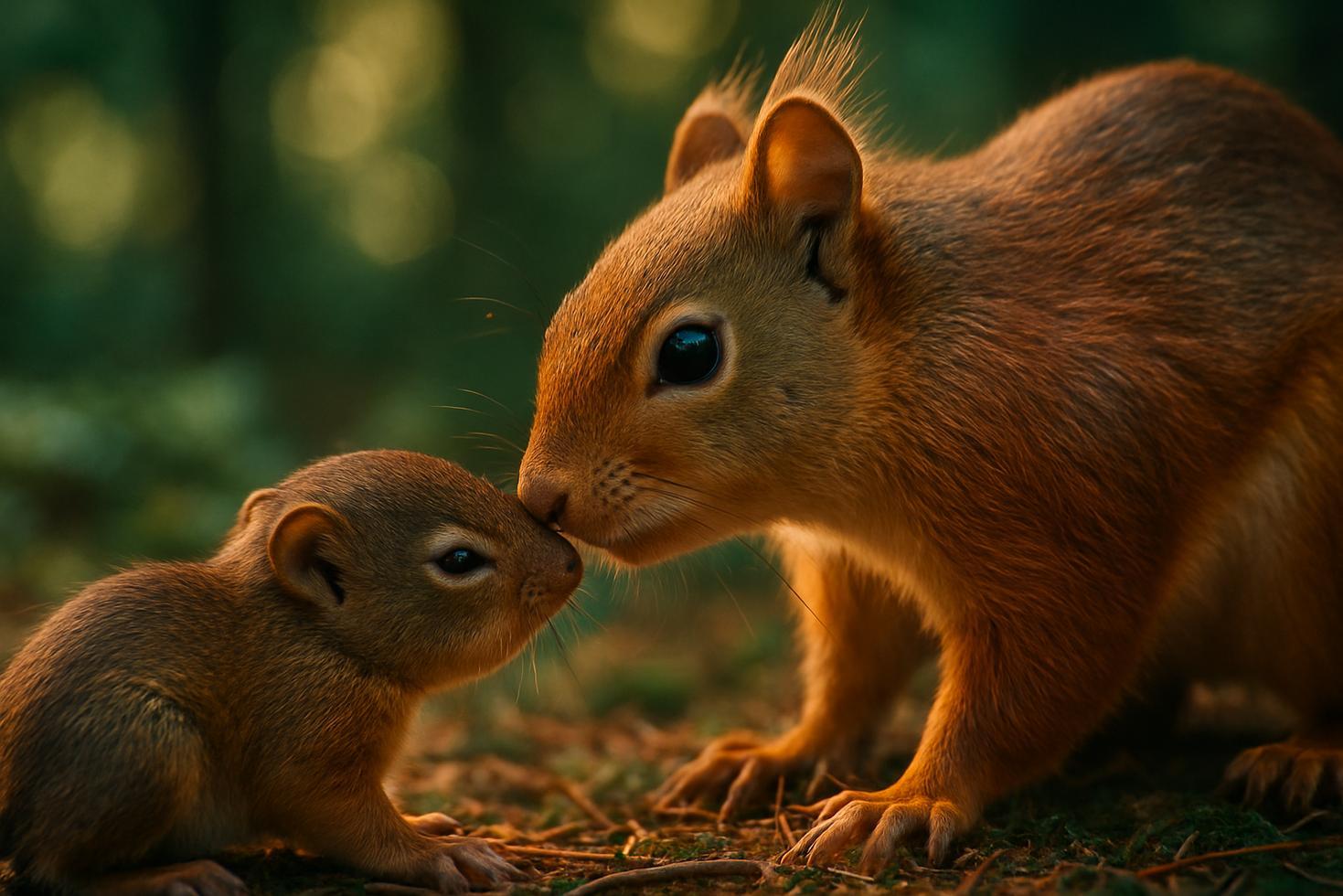
A female red squirrel shares about 25% of her DNA with a niece or nephew. That fraction is enough to make adoption worthwhile — but only if her own litter isn’t already too large to absorb the cost.
Female red squirrels sometimes adopt orphaned young, but the behavior is governed by kin selection, not general maternal instinct. What looks like compassion is a measurable cost-benefit calculation tied directly to genetic relatedness. In the studied population, unrelated orphans were never adopted — not once.
Nature Alberta documents cases where a female takes in a relative’s pup after a nearby female dies, raising it alongside her own litter. The operative word is relative. Genetic proximity is the filter, every time.
How Kin Selection Drives Red Squirrel Adoption Decisions
A female red squirrel shares roughly 25% of her DNA with a niece or nephew — the same fraction that makes adoption a plausible fitness move under kin selection theory. Raising that orphan can still pass her genes forward, indirectly.
But the threshold shifts with litter size. Larger litters raise the relatedness bar before a female will accept an additional pup. Each extra mouth pulls calories away from her own surviving offspring, so the genetic return on the orphan has to be proportionally higher.
This isn’t a loose tendency. The research synthesis is specific: females became measurably more selective as their own litter grew.
What Verified Research Actually Shows About Red Squirrel Maternal Care
Pups are born altricial — blind, hairless, and completely dependent. Mothers provide warmth and milk through a nursing period that ends at roughly 10 to 12 weeks. Young first venture outside the nest at 6 to 7 weeks. Maternal defensive care can continue for up to two weeks after weaning.
One claim circulating online suggests females spend up to three days searching for an orphan’s original parents before adopting. No reliable source supports this figure. The strongest available evidence does not establish any standardized search period.
Females will move kits to an alternate nest if disturbed, which may be the observed behavior that generated the “searching” story — but that is not the same thing.
Frequently Asked Questions
Do red squirrels ever adopt unrelated orphans?
No. In the studied population, unrelated orphans were never adopted under any conditions.
What makes a red squirrel female accept an orphaned pup?
The orphan must be a close enough genetic relative — such as a niece or nephew — and the cost to her own litter must be low enough to make the inclusive fitness math positive.
Do male red squirrels help raise young?
No. Male red squirrels play no role in rearing pups; females are the sole caregivers from birth through weaning.
When do red squirrel pups become independent?
Pups first leave the nest at 6 to 7 weeks and are fully weaned by 10 to 12 weeks, with maternal defensive behavior sometimes continuing up to two weeks past weaning.