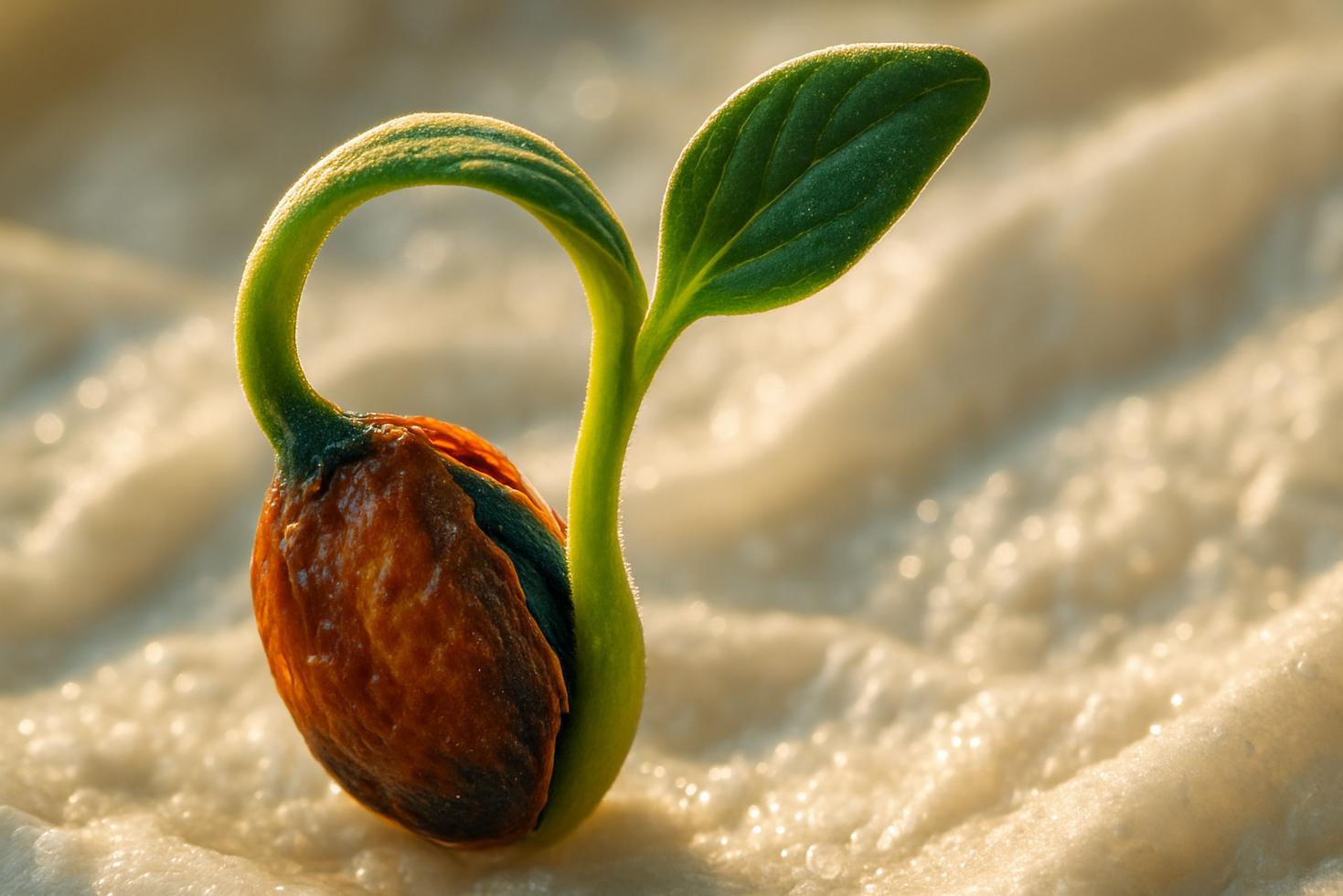
A 2017 pepper seed test found three-year-old seeds still germinating at up to 82% — yet strong seedlings emerged only 33% of the time in the same batch. Germination is the first gate. Vigor is the one that matters.
A seed does not flip from alive to dead. Viability declines gradually, and a 2017 test of three-year-old pepper seeds recorded germination rates between 58% and 82%. That range sounds reassuring — until the same batch is examined for seedling vigor, where strong-plant rates fell to just 33% to 73%.
The gap exists because aging attacks different systems at different speeds. Membrane integrity weakens, protein reserves degrade, and the cellular machinery for building roots and shoots deteriorates — all before a seed loses the ability to crack open at all. The sprout that emerges from an aged seed may be running on a depleted engine.
What the Paper Towel Test Actually Measures — and Misses
The paper towel germination test counts which seeds crack open and produce a root or cotyledon. It does not measure what those seedlings do next. Germination rate and seedling vigor are separate metrics, and aging affects them on different timelines.
Illinois Extension notes that many seeds germinate within 7 to 10 days, so reading results at 5 days can undercount slower species. The math is also only as reliable as the sample. Testing 10 seeds and multiplying by 10 gives an estimate, but the margin of error is wide enough to mask a meaningful drop in performance.
Why Sample Size Changes What the Test Can Show
Iowa State University recommends a minimum of 20 seeds, 50 for a better estimate, and 100 for the most reliable result. Ten seeds cannot distinguish between a 70% germination rate and a 40% vigor rate — the variation hides inside small numbers.
A small sample makes batch decline invisible. Seven sprouts out of ten looks like success. The same batch at 50 seeds might reveal a pattern of thin stems and slow starters that ten seeds never could.
How Viability Declines by Species and Storage Conditions
Seed longevity is not uniform. Iowa State Extension lists expected viability under proper cool, dry, dark storage: onions last 1 year, peppers and corn 2 years, carrots and beans 3 years, tomatoes and squash 4 years, and cucumbers and lettuce up to 5 years. Storage conditions shift those numbers in either direction.
The batch does not fail all at once. One lost percentage point at a time — that is the actual shape of seed aging, quiet and uneven across every seed in the container.
A paper towel covered in sprouts feels like proof. What it actually shows is which seeds cleared the first gate. The second gate — vigor, stem strength, root depth — only opens in the ground, weeks later.
Frequently Asked Questions
How long do pepper seeds stay viable?
Iowa State Extension lists peppers at 2-year expected viability under proper cool, dry, dark storage, though a 2017 test showed some three-year-old pepper seeds germinating at up to 82%.
Why do old seeds germinate but produce weak plants?
Aging degrades membrane integrity and protein reserves inside the seed, reducing seedling vigor even when germination still occurs.
How many seeds should be tested for an accurate germination rate?
Iowa State University recommends at least 20 seeds, with 50 giving a better estimate and 100 providing the most reliable result.
Is a 58% germination rate worth planting?
It depends on the crop and available space, but extension guidance generally suggests reconsidering a seed lot when rates fall below 50%–60%.