One dry day, one cloudy stretch, one night a few degrees cooler — any of those can restart the shedding response before the next morning. The healthiest-looking tree is already letting go.
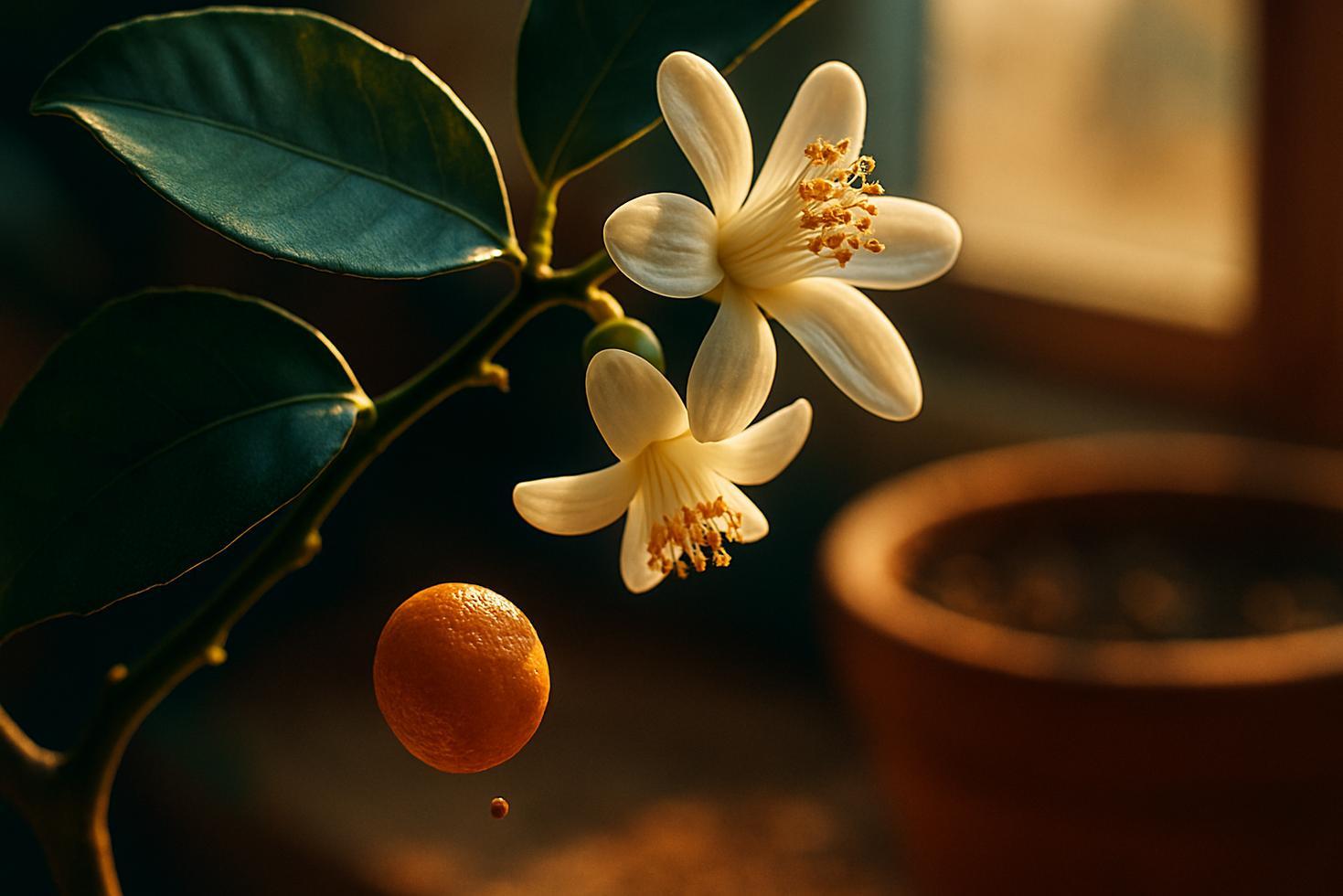
A Meyer lemon dropping blossoms while still carrying developing fruit is not malfunctioning — it is running a resource calculation it repeats continuously. That image of a lush, flower-covered tree in a sunny window can coexist with invisible, ongoing abscission because citrus treats every flower and immature fruit as a line item that gets cut the moment reserves run short. What makes this so quietly striking is how little disruption it takes to trigger the response again and again.
Indoor potted citrus are especially vulnerable to this cycle. Unlike a tree growing in outdoor ground, a potted plant has no buffer — no deep soil volume, no rainfall, no natural air movement to smooth out the swings. Small fluctuations in light, moisture, temperature, or humidity can repeatedly push the plant past its physiological tolerance and restart abscission each time.
How Indoor Conditions Repeatedly Trigger Flower and Fruit Abscission
Every stress event — a single dry day, one overcast stretch, a nighttime temperature dip — can restart the shedding cycle before conditions stabilize. Abscission activates when light, water, or root function turns marginal, and the plant sheds reproductive structures first because leaves and roots are more essential to future survival. Root-zone oxygen deprivation from compacted potting mix or waterlogged soil is another documented contributor. So is incomplete pollination: indoors, without insects or wind, pollen transfer is unreliable, and unpollinated flowers abort early.
What Steady Conditions Actually Look Like for a Potted Meyer Lemon
Sources consistently identify environmental inconsistency — not disease — as the main cause of repeated fruit drop in indoor citrus. Light needs to reach at least 6 hours of direct sun daily. Rotating the pot every three weeks keeps exposure even. Soil moisture must remain steady between checks: water when the top 1.5 to 2 inches are dry, and avoid the drought-and-soak cycle that stresses roots and can restart abscission on its own. Humidity between 40 and 60 percent and avoiding sudden temperature shifts greater than 5°F round out the conditions that reduce repeated stress events.
A Meyer lemon can look like abundance and behave like rationing at the same moment. The biology underneath that contradiction is simply a plant protecting its infrastructure so it can try again. That is not failure — it is the most efficient thing in the room.
Frequently Asked Questions
Why does a Meyer lemon drop flowers when it looks perfectly healthy?
The plant sheds flowers and young fruit as a physiological stress response to low-grade environmental inconsistency — not disease. A tree can appear green and vigorous while still operating near its stress threshold.
Does indoor Meyer lemon fruit drop mean the plant won’t fruit again?
Not necessarily. Abscission is a repeating response to repeated stress. Stabilizing light, moisture, temperature, and humidity reduces how often the cycle restarts.
Does hand pollination help indoor Meyer lemons keep their fruit?
Yes. Indoors, without insects or wind, pollination is often incomplete. Hand pollination improves pollen transfer and can improve fruit retention.
How much light does a Meyer lemon need to keep its blossoms?
At least 6 hours of direct sunlight daily is the consistently verified threshold for sustaining flowering in indoor citrus.