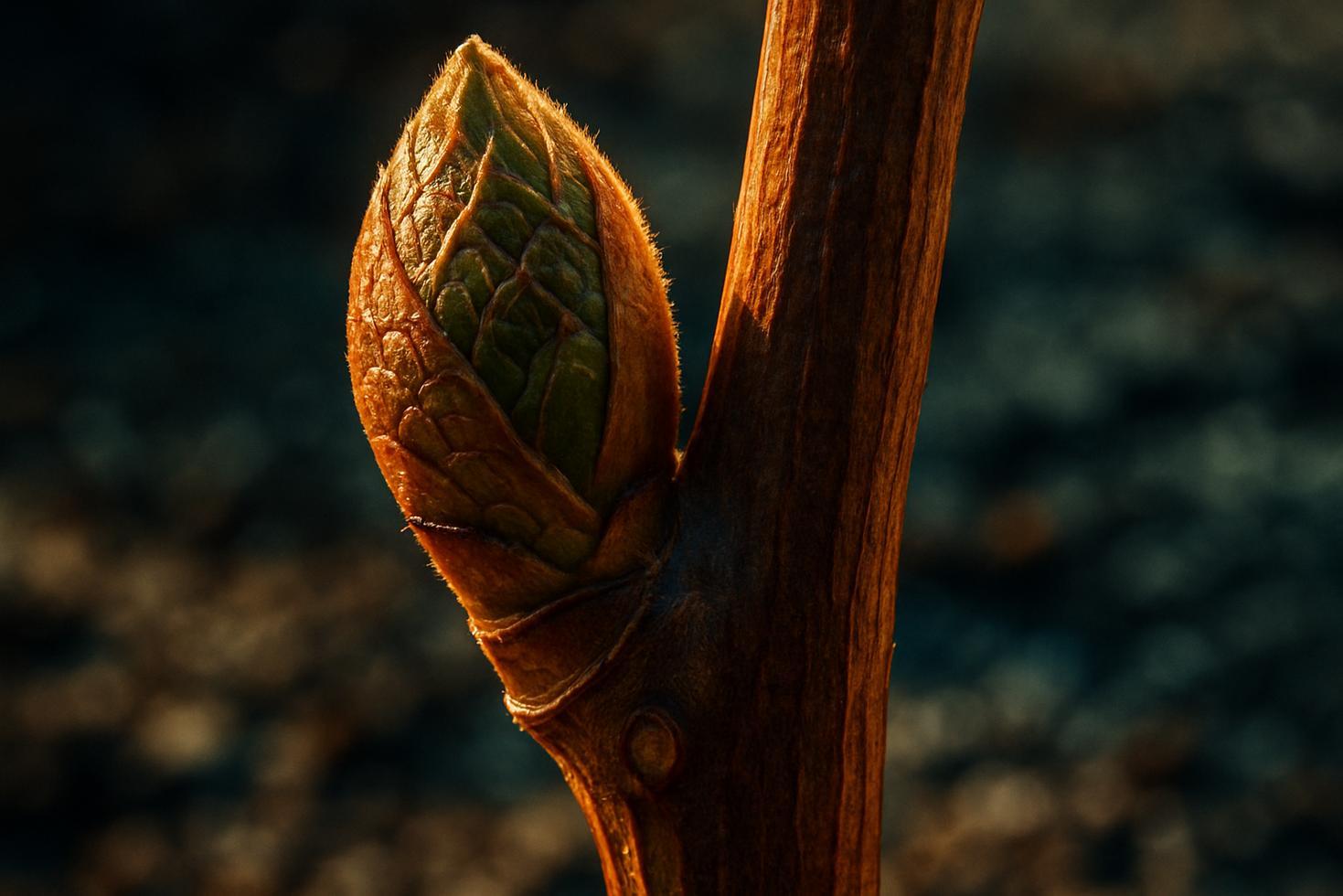
Bigleaf hydrangeas finish building next year’s flower buds by mid-September — a fall trim doesn’t clean up the plant, it removes blooms that were already there.
Bigleaf and oakleaf hydrangeas set next year’s flower buds on the current season’s stems, and those buds are already forming before the plant goes dormant. Washington State University identifies improper pruning as the most common reason these hydrangeas fail to bloom entirely. A plant that flowered beautifully one year and produced nothing the next likely lost its buds to a pruning cut, not to disease or soil problems.
The mechanism is worth sitting with for a moment. By the time a bigleaf hydrangea finishes blooming in summer, it is already beginning to build buds for the following year on those same stems. The bud is not forming in spring when everything looks active. It is sealed into the wood before the plant ever goes quiet for winter.
How Old-Wood Bud Set Works in Bigleaf and Oakleaf Hydrangeas
Bigleaf hydrangea (Hydrangea macrophylla) and oakleaf hydrangea (H. quercifolia) both flower exclusively on previous-season growth. One secondary source, citing Penn State Extension, places bud initiation from late July to mid-September. Cutting stems after that window removes the only wood carrying next season’s flowers. Nothing underground produces a replacement.
This is not a risk that applies to all hydrangeas. Panicle (H. paniculata) and smooth (H. arborescens) hydrangeas bloom on current-season growth and tolerate pruning in fall or early spring without bloom loss. The pruning rules are genuinely different species to species.
When Old-Wood Hydrangeas Should Actually Be Pruned
The safe window for pruning old-wood types is immediately after flowering, before buds for the following year have initiated — roughly late June through early August depending on the source. Pruning in fall, winter, or early spring all carry the same risk: the buds are already present and will be removed.
WSU also notes that late spring frosts and freezing winter temperatures can kill overwintering buds even when pruning timing is correct. That is a separate cause of bloom failure worth ruling out before assuming a pruning mistake.
The plant is not failing. The blooms were already there, stored in stems that got removed before winter arrived. Understanding which wood carries the buds changes everything about how a gardener reads that silence in spring.
Frequently Asked Questions
Why did my hydrangea not bloom this year after blooming fine last year?
Improper pruning is the most common cause, according to Washington State University — removing old-wood stems in fall or early spring eliminates buds already set for the coming season.
When is it safe to prune bigleaf or oakleaf hydrangeas?
Prune immediately after flowering, before mid-summer bud set begins — one secondary source citing Penn State Extension suggests pruning before August 1 as a general guide.
Do all hydrangeas have the same pruning rules?
No. Panicle and smooth hydrangeas bloom on current-season growth and can be pruned in fall or early spring without affecting bloom.
Can something other than pruning cause a hydrangea to skip blooming?
Yes — Washington State University identifies late spring frosts, very cold winter temperatures, and deeply shaded locations as additional causes of bloom failure.