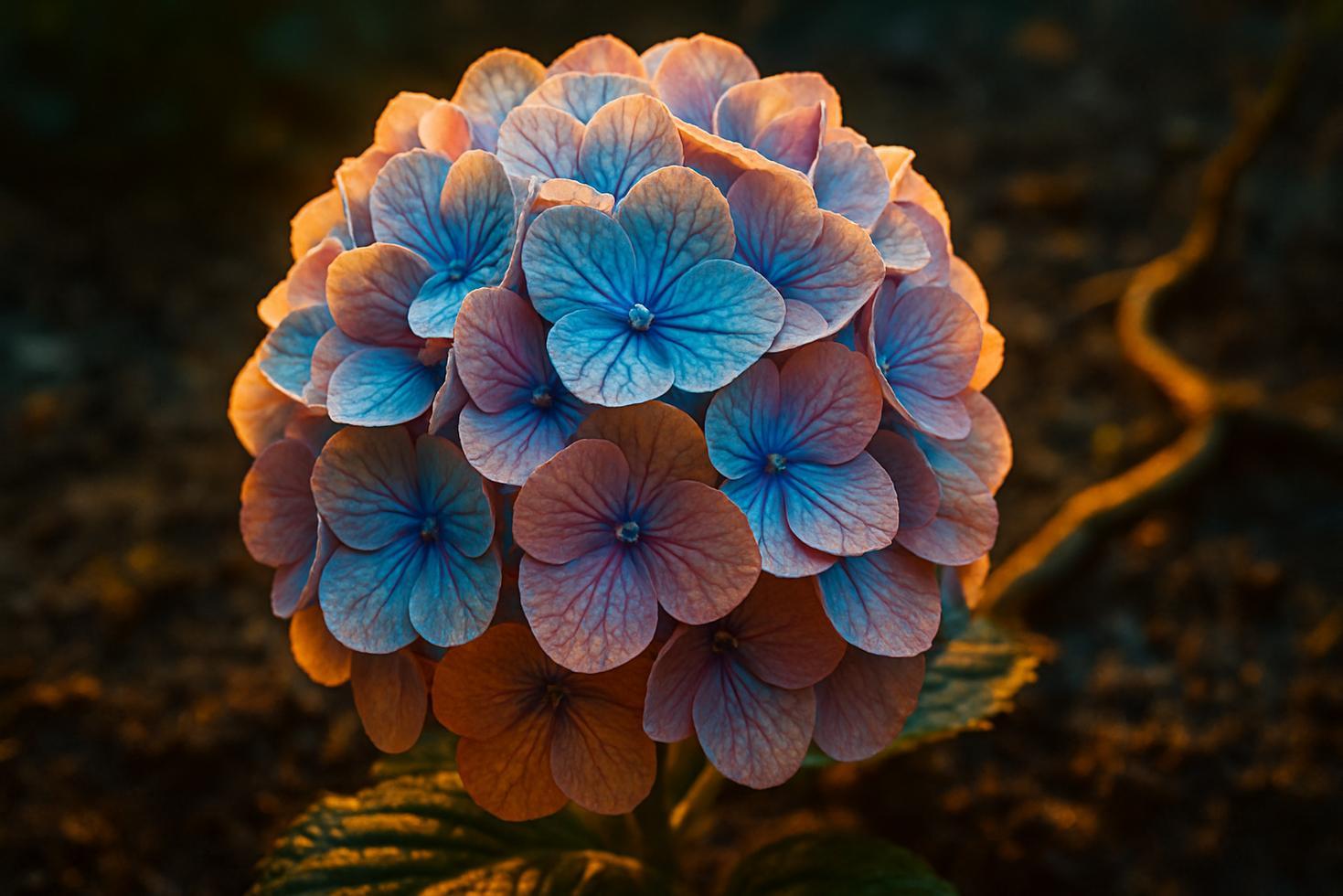
Soil pH 5.5 or lower frees aluminum already in the ground. That aluminum travels to the petals, locks onto pigment, and turns blooms electric blue — across a window smaller than 2 pH units.
Hydrangea bloom color is controlled by aluminum availability, and aluminum availability is controlled by soil pH. That’s the whole mechanism. What looks like the plant making a choice is actually the soil chemistry making it for them.
Aluminum sits locked inside mineral compounds in most garden soils — completely inert, completely unavailable. Then soil pH drops below roughly 5.5, and that aluminum dissolves into soil water. It enters the roots, travels upward through the xylem as a citrate-aluminum complex, reaches the sepals, and binds to a delphinidin-based anthocyanin in a precise 1:1:1 ratio with aluminum ion and acylquinic acid copigments. The pigment molecule itself doesn’t change. The chemistry surrounding it does.
How Aluminum Moves From Soil Into Petals
Above pH 6, aluminum combines with hydroxide ions and precipitates as aluminum hydroxide — a form the plant cannot absorb. Below pH 5.5, that compound dissolves back into free aluminum ions. Hydrangea roots exude citric acid, which forms a citrate-aluminum complex that the xylem can transport directly to the sepals.
Once there, aluminum binding shifts the anthocyanin complex toward blue. North Carolina Cooperative Extension places blue-associated soil pH between 5.0 and 5.5, and pink-associated pH at 6.0 or above. University of Georgia Extension sets the pink threshold at pH 7.0 or higher, where aluminum availability drops sharply.
Why Coffee Grounds Don’t Reliably Shift Hydrangea Color
The coffee grounds shortcut has a chemistry problem. Used coffee grounds are nearly pH neutral — most of the acidity ends up in the brewed coffee, not the grounds themselves. What gets scattered around the shrub adds negligible acidity to the surrounding soil.
Crossing the aluminum-release threshold requires meaningful pH change. Coffee grounds alone don’t reliably cross it. The blooms respond to whether aluminum is actually freed and transported — not to the presence of any mildly acidic amendment sitting on the surface.
What the Color Range Actually Looks Like
The spectrum from blue to crimson spans less than 2 pH units total. Peer-reviewed research places blue-complex formation in aqueous solution at approximately pH 4.0. Extension guidance puts deep blue soils at pH 5.0–5.5, shifting through lavender around 5.5–6.0, then pink at 6.0–6.5, and crimson at 6.5 and above. That’s the full visual range of the flower — compressed into a narrow chemical corridor the plant walks every season.
Every bloom is a readout of what happened underground. The soil isn’t the backdrop. It’s running the show.
Frequently Asked Questions
What soil pH produces blue hydrangeas?
Soil pH between 5.0 and 5.5 is associated with blue blooms, where aluminum remains soluble and available for uptake.
What makes hydrangeas turn pink?
At pH 6.0 and above, aluminum precipitates as aluminum hydroxide and cannot enter the plant, leaving blooms pink.
Do coffee grounds change hydrangea color?
Used coffee grounds are nearly pH neutral and are not shown to reliably shift soil pH enough to alter aluminum availability or bloom color.
What is the chemical mechanism behind blue hydrangea color?
Blue color forms when aluminum ion binds with delphinidin-based anthocyanin and acylquinic acid copigments in a 1:1:1 complex inside the sepal vacuoles.