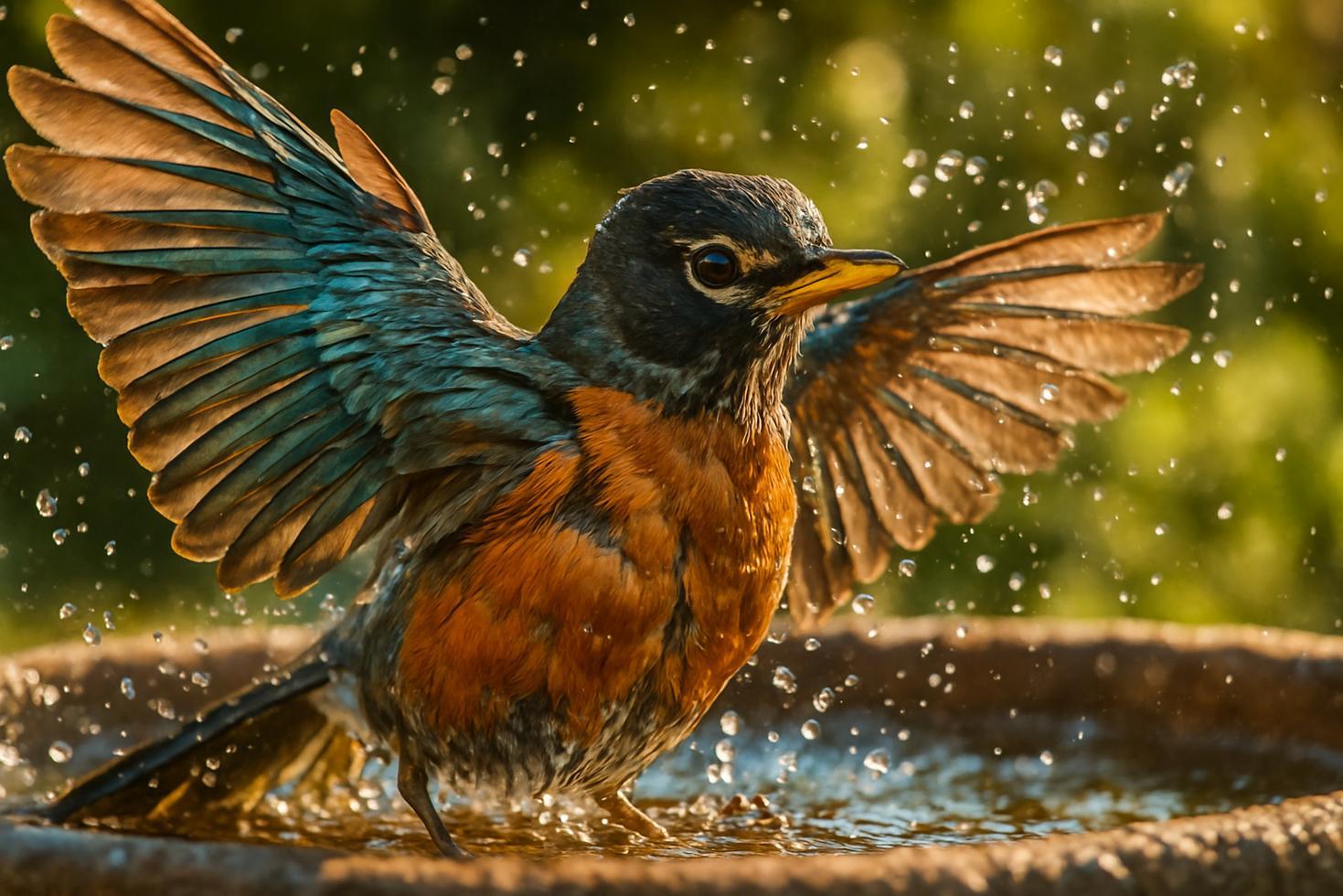
One missed water change can leave a bird flying home with stripped feather oils and no way to know the damage is done. Refreshing birdbath water every 1–2 days is the single most verified protective step available.
Birds don’t bathe to remove dirt. Every splash is a mechanical reset — loosening feathers just enough to press them back into precise alignment, then spreading oil from a gland near the tail across the entire surface. That oil is what keeps insulation, waterproofing, and flight functioning.
The biology matters because birdbath water quality can interfere with it. Algae-coated water, stagnant buildup, or chemical residue from cleaning products can strip the coating birds just worked to restore. The bird flies away trusting the process worked. It has no feedback loop telling it otherwise.
Quick Facts:
– Birds bathe to realign feathers and redistribute natural preening oils — not primarily to clean themselves.
– The oil from a gland near the tail supports insulation, waterproofing, and aerodynamics.
– Cornell Lab of Ornithology recommends refreshing birdbath water daily or every 1–2 days.
– Birdbaths should be 1–2 inches deep — shallow enough for safe footing during bathing.
– Placement roughly 10 feet from protective cover gives birds a quick escape route.
How Feather Structure and Preening Oil Actually Work
Each feather contains interlocking branches that function like a zipper — trapping air, shedding water, and reducing drag in flight. Bathing loosens those interlocked branches temporarily. Preening presses them back together and distributes oil across every surface.
The oil itself drives the whole system. Without it, insulation collapses and waterproofing fails. The bathing motion is the delivery mechanism, not a cleaning act.
What Birdbath Water Chemistry Can and Cannot Do to Feathers
Stagnant or algae-coated water is the primary documented risk. The Sacramento Audubon Society recommends a vinegar-and-water scrub and specifically advises against household cleansers, because residue may affect feather oils.
Dilute bleach — one part bleach to nine or ten parts water — appears in several sources as an occasional option when algae is present, only if rinsed extremely thoroughly afterward. The Cornell Lab and Oklahoma Department of Wildlife Conservation both flag this as a rinse-dependent step, not a routine one.
No verified research in available sources shows that leaf tannins in birdbath water improve feather condition or provide measurable biological benefit. Tannins may slightly slow some microbial growth, but discolored water can still harbor bacteria and should still be cleaned on the same schedule.
Verified Birdbath Maintenance Numbers
Water changes every 1–2 days is the figure most consistently cited, with daily changes recommended in hot weather. Depth should stay at 1–2 inches maximum. Scrubbing should happen weekly. These aren’t precautionary suggestions — they reflect the gap between how fast algae colonizes standing water and how quickly a bird returns to the same bath.
The bath doesn’t announce when it becomes a problem. That’s the whole dynamic worth understanding.
Frequently Asked Questions
Why do birds bathe if they aren’t dirty?
Bathing realigns feather branches and helps redistribute preening oil from a gland near the tail — both critical to insulation, waterproofing, and flight performance.
How often should birdbath water be changed?
Cornell Lab of Ornithology recommends daily or every 1–2 days, with daily changes during hot weather when bacterial growth accelerates.
Can cleaning products harm birds at a birdbath?
Household cleanser residue may interfere with feather oils; vinegar-and-water scrubbing is the recommended cleaning method, with thorough rinsing after any dilute bleach use.
How deep should a birdbath be?
One to two inches is the verified safe range — deep enough to splash in, shallow enough for stable footing.