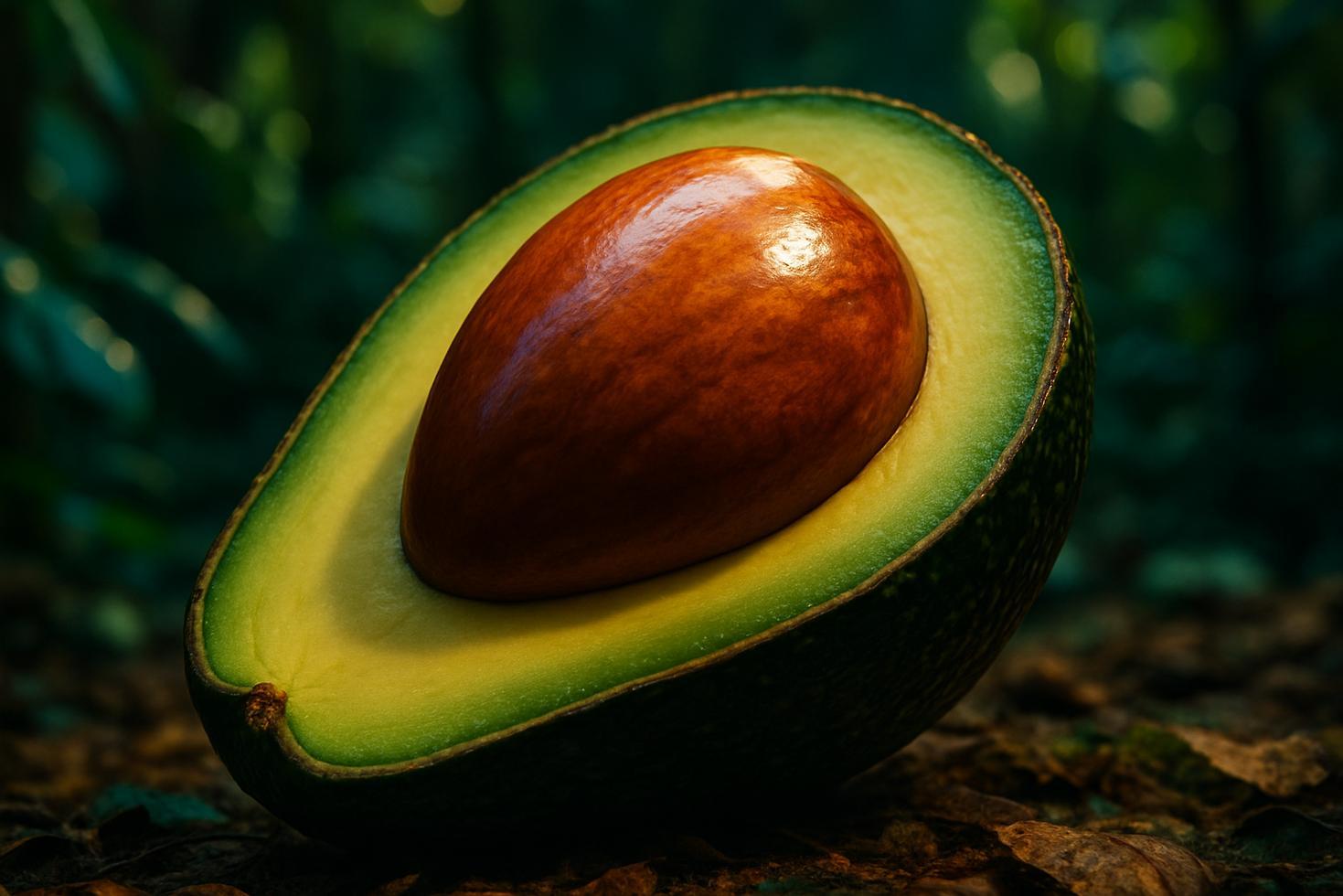
Avocado pits from 10,000 years ago measured just 2 cm across — roughly half today’s size. The giant sloth gets the mythology. Humans get the receipt.
The avocado pit grew larger after humans began farming the fruit, not because of giant ground sloths. That’s the part the popular story leaves out. The sloth-and-avocado narrative is everywhere — but the fossil and archaeological record tells a messier, more interesting version.
Wild avocados still exist today, thousands of years after giant ground sloths vanished. That persistence alone complicates the idea that avocados depended on sloths for survival.
What the “Evolutionary Anachronism” Hypothesis Actually Claims
The idea is that large-seeded plants like avocados evolved traits for animals that no longer exist. Giant ground sloths — some reaching 15 feet tall and four tons — were large enough to swallow avocado fruits whole. The seed, undigested, could then travel far from the parent tree and germinate in a new location.
This is a plausible biological mechanism. Large frugivores disperse seeds to lower-competition sites. But plausible isn’t proven. No study has produced direct evidence — no gut contents, no coprolites — linking sloths to avocado consumption.
How Human Domestication Better Explains Modern Pit Size
Archaeological seeds recovered from roughly 10,000-year-old Mesoamerican sites measured about 2 cm across. Modern avocado pits are roughly double that size.
That size increase tracks human arrival and selective cultivation, not sloth ecology. Fruit flesh and seed size increase together in the same plant — select for more flesh, and the pit grows as a biological side effect, generation after generation.
The sloth hypothesis can’t explain why pit size grew after the sloths were already gone for thousands of years. Human selection pressure can.
What This Means for How Avocado Dispersal Actually Works Now
The avocado is now one of the most widely cultivated fruits on Earth. It found a new dispersal partner without waiting. Humans plant, transport, and propagate it across continents — a relationship that has proven more effective for the species than any ancient megafauna partnership.
Wild populations persist on their own. Cultivated populations spread globally. The avocado didn’t need rescuing when the sloths disappeared.
The giant sloth story makes a great origin myth. The actual story — appetite-driven selection, archaeological seeds the size of a large grape, and a fruit that outlasted its supposed savior by 13,000 years — is stranger and better.
Frequently Asked Questions
Did giant ground sloths actually eat avocados?
No direct fossil or coprolite evidence confirms it. The sloth-avocado connection is a widely repeated hypothesis, not a demonstrated fact.
Why are modern avocado pits so large?
Archaeological evidence suggests human domestication — selecting for larger, meatier fruits — caused pit size to grow as a side effect, with seeds from 10,000 years ago measuring only about 2 cm across.
When did giant ground sloths go extinct?
Giant ground sloths disappeared approximately 13,000 years ago.
Can avocados survive without a large animal to disperse their seeds?
Yes. Wild avocado populations still exist today, and cultivated avocados spread globally through human agriculture.